

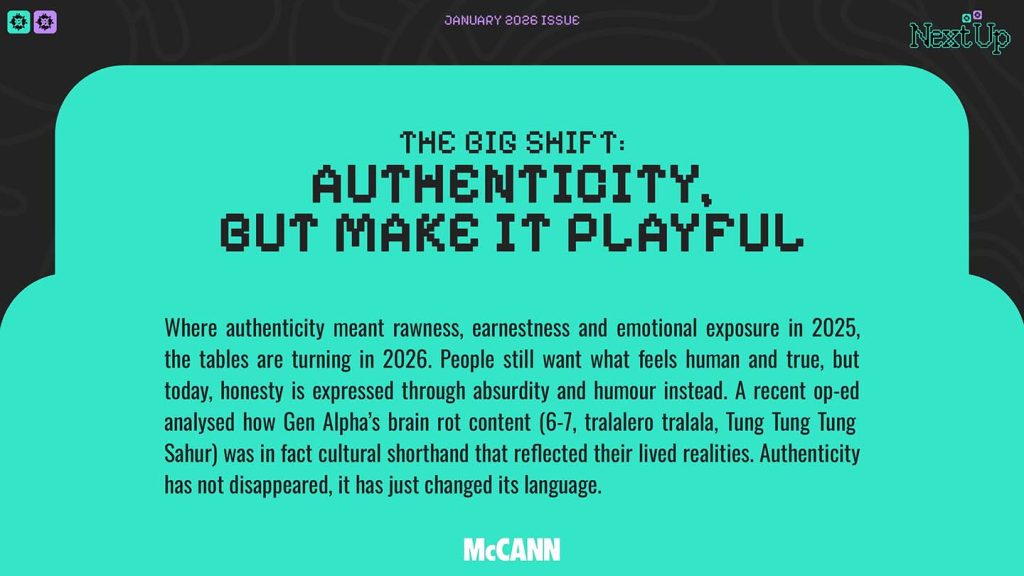
SINGAPORE – In its January 2026 issue, Next Up, McCann explores a cultural shift in how authenticity is being expressed. Where being “real” once meant emotional exposure, rawness, and seriousness, the report argues that sincerity is now taking on a lighter, more playful form.
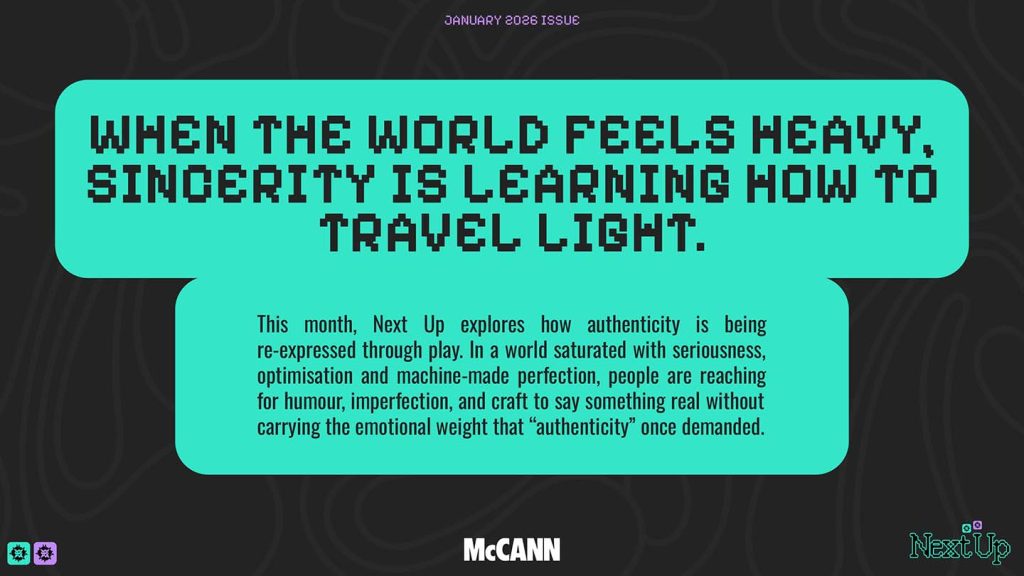
The issue frames this change with a simple question: if authenticity is about being real, why does it suddenly look so playful? In a world saturated with seriousness, optimisation, and machine-perfect outputs, people are reaching for humour, imperfection, and craft to communicate something genuine without the emotional heaviness that authenticity once demanded.
Rather than disappearing, authenticity has simply changed its language. The report notes that while audiences still want what feels human and true, honesty is increasingly expressed through absurdity, humour, and visual play. Even so-called “brain rot” content popular among Gen Alpha is interpreted as a form of cultural shorthand that reflects their lived realities.
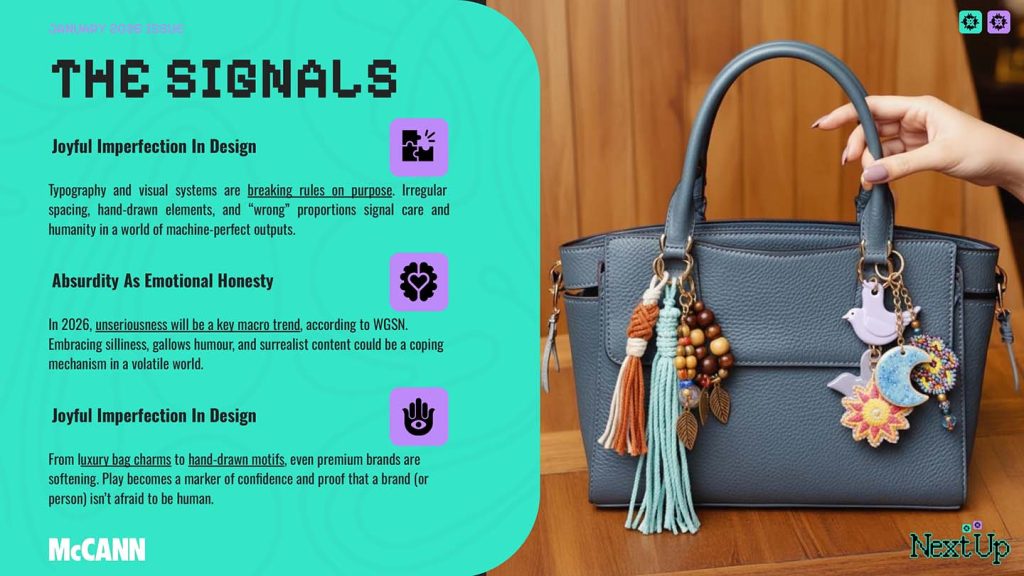
Several signals point to this shift. Typography and visual systems are deliberately breaking traditional rules, with irregular spacing and hand-drawn elements used to signal care and humanity. According to WGSN, unseriousness will be a key macro trend in 2026, with silliness, gallows humour, and surrealist content serving as coping mechanisms in an uncertain world.
Even premium brands are embracing softer, more playful cues from bag charms to hand-drawn motifs as a way to demonstrate confidence and approachability. Play becomes a marker of humanity, proof that a brand is not afraid to loosen its grip on perfection.
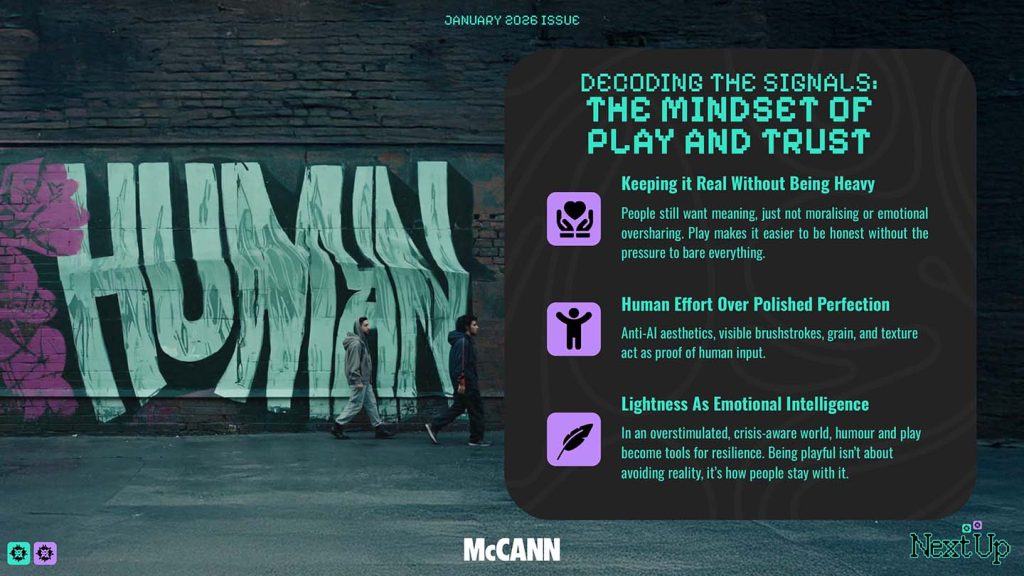
Underlying these signals is a broader mindset shift. People still want meaning, but not moralising or emotional oversharing. Play allows for honesty without the pressure to reveal everything. At the same time, visible textures, brushstrokes, and other anti-AI aesthetics are gaining traction as proof of human effort in an era of automated perfection.
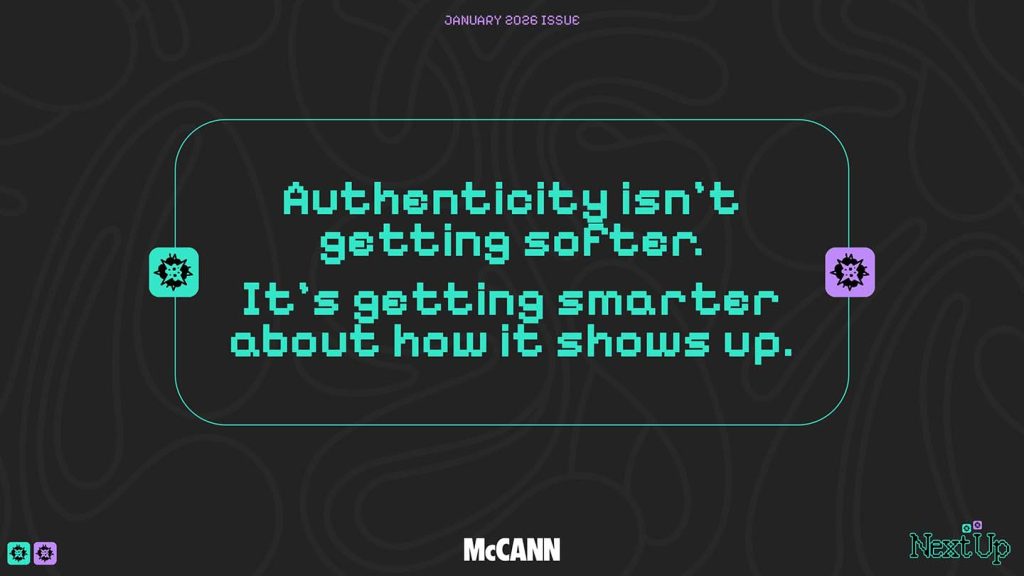
In an overstimulated, crisis-aware world, humour and play are framed as tools for resilience. As the issue puts it, authenticity is not getting softer – it is getting smarter about how it shows up.
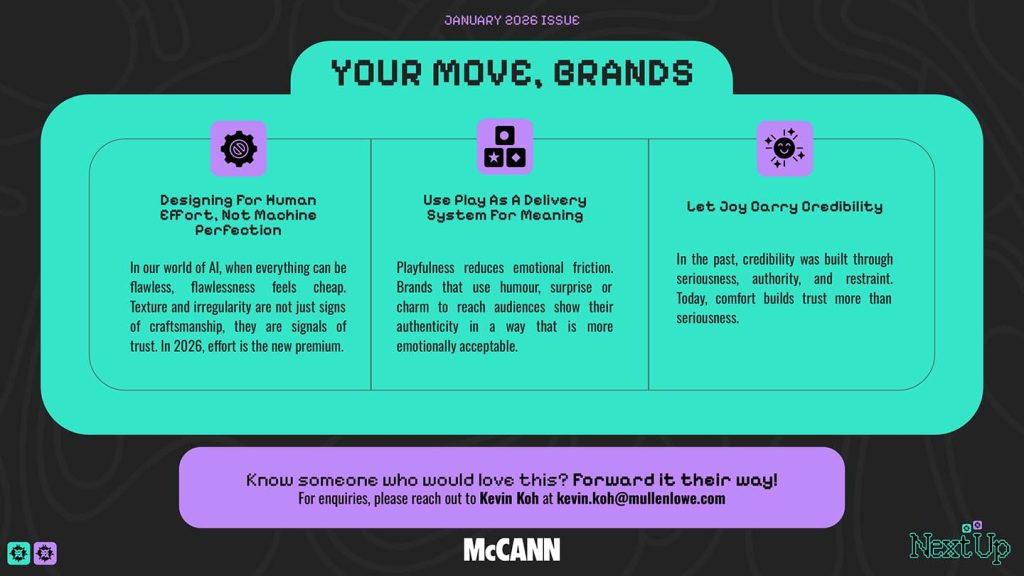
For brands, the implications are clear. When everything can be flawlessly generated, flawlessness begins to feel cheap. Texture, irregularity, and visible effort become signals of trust, with effort positioned as the new premium. Playfulness, meanwhile, can act as a delivery system for meaning, reducing emotional friction and making authenticity more acceptable.
Where credibility was once built through seriousness, authority, and restraint, the report suggests that comfort and emotional ease now build trust more effectively.