
Creativity with the use of sound is a given. Showcasing creativity using sound alone, however, stretches one’s creativity further.
The Audio & Radio Lions category at the Cannes Lions International Festival of Creativity celebrates work that, according to the official website, “communicates a brand message through audio excellence, sonic innovation or superior aural storytelling across the airwaves and digital streams.”
The criteria for judging sound pretty straightforward: idea, execution, and impact. And yet, judging entries under such a category is no small feat. One might imagine it as trying to determine the level of creative excellence with eyes closed. To perceive color that one can’t see, and texture that one cannot feel.
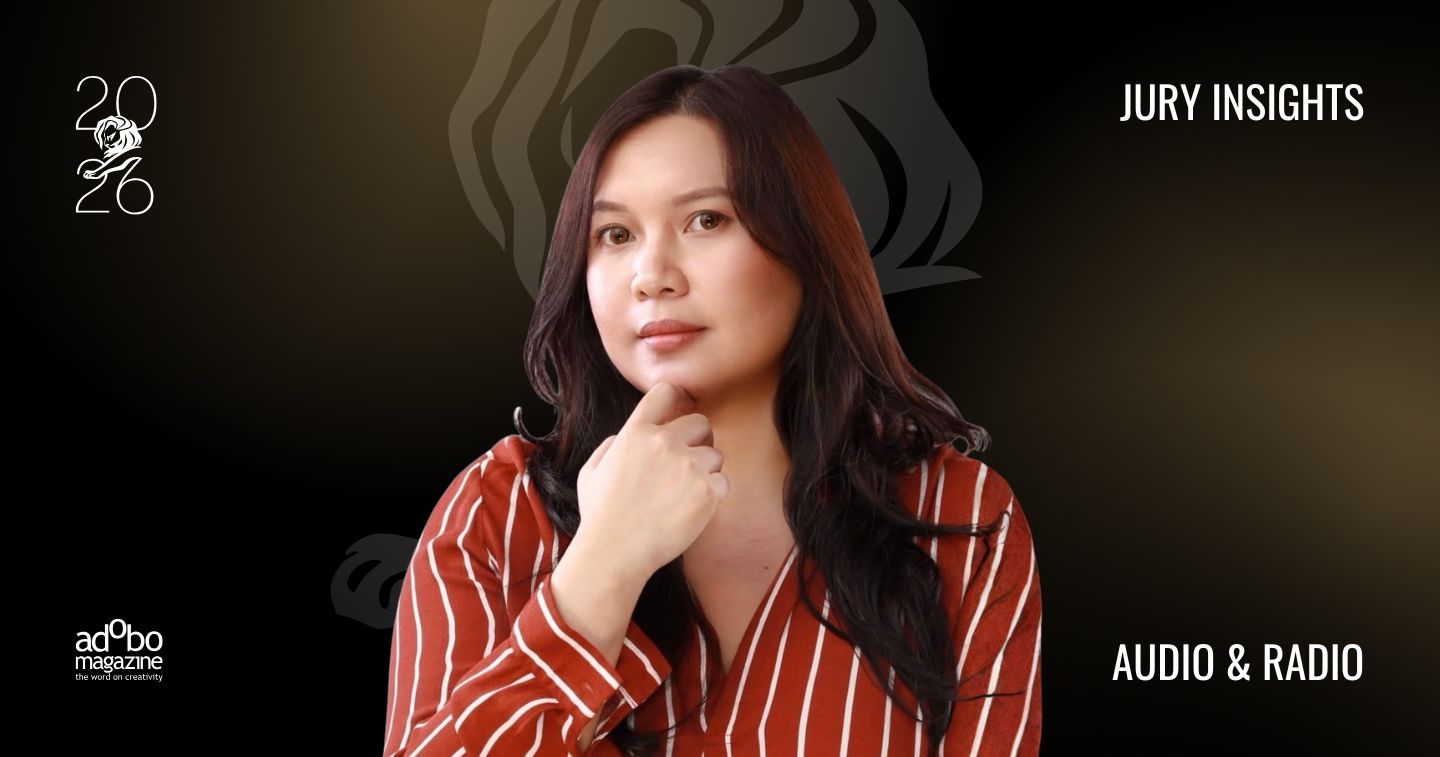
Fran Palines’ work has been judged by probably more jury members than she can count on her fingers. Her work for bookstore chain Fully Booked secured the Philippines’ fifth Gold Lion, whereas her radio spots for Nestlé Maggi earned a Silver before going on to win across nearly every major award show — ultimately becoming the most-awarded radio campaigns in Philippine advertising history.
Fran has served as a juror for NYF, Spikes Asia, and Gerety, but it’s her first time sitting on the other side of the table at Cannes. Now a creative director at VML Manila, she is one of the jurors for the Audio & Radio category.
Knowing that it’s every creative’s dream to be in Cannes — whether as a delegate, an entrant, or a juror — earning that seat at the Cannes jury table must have been a pipe dream for her, given the toil she’s gone through to be recognized in the same category.
“Being a juror is honestly surprising and humbling at the same time, especially for this category because I am a copywriter,” Fran tells adobo Magazine Founder, President, and Editor-in-Chief Angel Guerrero in an exclusive interview.
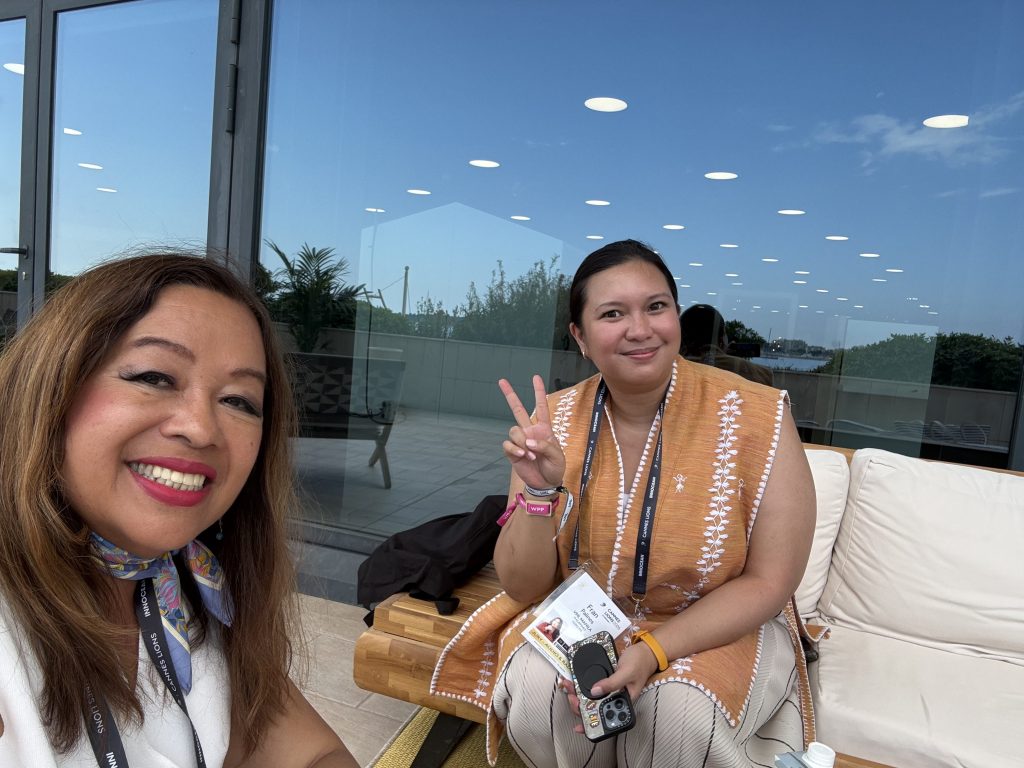
“I love radio. We’ve done it many times. We’ve failed at it. We got better at it, so this category means a lot to me. I’m still relishing the idea of being part of this huge community of creatives and being inspired by the work.”
Judging exceptional work from across the globe hits different because, according to Fran, crafting radio campaigns requires so much intent. It entails going in every direction and past multiple hurdles.
“Being able to see so many entries at their final execution is a bit surreal,” she says, “because you need to understand the idea at that final stage without any background context. Seeing what markets are doing creatively with audio and radio – through the case films, the write-ups – is all very inspiring.”
Trends in Audio & Radio
The category has been broader than it’s ever been since its inception in 2005, with a plethora of formats and executions coming in over the last two decades. “Classic creativity,” however, remains at the center, says Fran, even if it’s changed a lot.
While deliberating on the entries for Audio & Radio, the jurors kept coming back to the following questions:
Can this survive as an audio idea alone?
If you take away the audio, does it still retain the same excitement, the feeling, everything that makes it good — without the whole idea collapsing?
“At times, you feel like audio was just a certain leg or execution of a campaign, versus really feeling through intuition that audio was the primary driving creative force for the idea,” Fran says.
While scouring through the entries, she noticed that audio is “still being used as a hijack” for brands to enter conversations they weren’t originally part of. It’s also being used as a tool for preserving cultural identity or a historical moment.
The reason behind this, for Fran, is plain to see: “Audio does something that images and pictures don’t do as well alone: it can give a clear, nuanced feeling.”
“There’s always been a craft to it,” she adds.
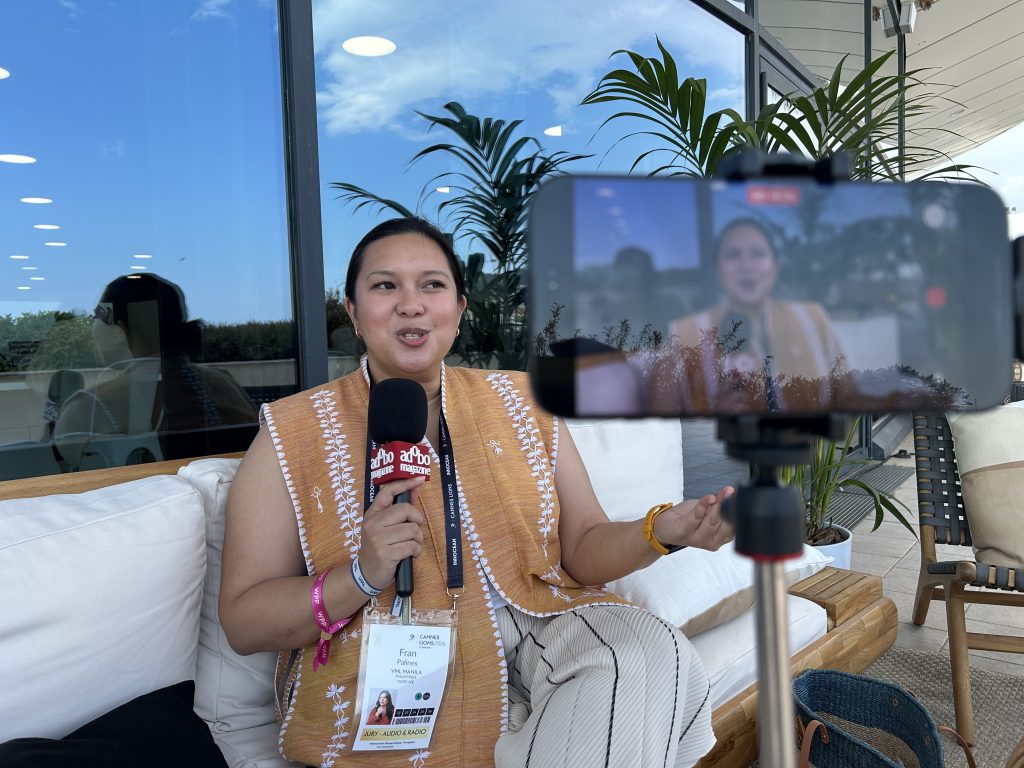
According to her, the standards for traditional storytelling are at an all-time high. The most memorable campaigns awarded for scriptwriting excellence in Audio & Radio were simple in form, and Fran frames it as “just a voice and a good script” — leading her to the conclusion that the bar for scriptwriting is just as high as it was 20 years ago.
“Every line has to earn its place,” she concludes.
Fran admittedly saw out-of-the-box executions throughout the jury deliberation process, and one example is IKEA’s, which she believes is grounded in human insight.
The Scandinavian furniture and houseware brand knew that people no longer saw authenticity in product reviews and no longer believed them, so it launched a trust campaign, the IKEA Sleep Talk Reviews. IKEA recruited sleep talkers to test its mattresses, and that became central to the said campaign.
“While they had radio spots, the core insight and behavior was audal. Take it away and the whole idea collapses. It’s one of those campaign ideas that feel like it’s been sitting inside the room waiting for someone to notice,” says Fran.
Fran also caught fresh audio ideas stemming from not-for-profit brands.
New is great, but serve a purpose
The variety and novelty may have been due to the introduction of new platforms and technology— podcasts, streaming platforms, sonic branding, and voice tech — that have allowed brands to reach a broader audience beyond traditional broadcast radio.
“What that tells us is that audio-led creativity can be anything, as long as it goes back to the creative idea,” Fran explains. “Is it led by a specific consumer insight? Is it making something possible through sound that was otherwise largely impossible?”
She warns against fanfare for the sake of spectacle alone, and nouvelle vague for the sake of shock value. New tools, for her, should be used as a means for ideas to come to life.
“But if it’s not serving a very clear, specific purpose, then it’s short of a full creative thought. There’s really no excuse now for not executing something well.”
Exemplary audio work across regions
Entries from Latin America surprised Fran with audio executions rooted in specific cultural insights, and that transcend the usual traditional radio spots.
“They’ve found a way to make audio feel refreshing,” she says.
Work from South America, on the other hand, remains strong with its high level of craft and storytelling, buoyed by well-written scripts.
Asia likewise bagged some metals — for China and Japan, specifically.
“It’s my hope that we move up from there,” Fran admits, but also recognizes the conundrum that prevents her wish from materializing.
She notes that audio ideas, unfortunately, often come later in the conversation, when budgets are already decided and the brief is done.
Fran believes that audio work can only be elevated if and when conversations around it — between executive creative directors (ECDs) and chief marketing officers (CMOs) — spark at the very beginning, and when these key decision-makers look at it “through the lens of what are we solving, what are we trying to do, and being very specific.”
The best work she saw was decidedly specific, with solid context and clear problems to solve.
Fran’s favorites
Coqui Alarmed, created by BBDO Puerto Rico for Hyundai and which won the Grand Prix, clearly impressed Fran.
A random incident spawned the said campaign. The word coqui translates to “frog” in Puerto Rican. Previously, a Reddit post by a certain tourist asking about killing one sparked rage online. Hyundai, however, saw this as an opportunity.
The automotive brand changed the factory alarm beep of its cars to the sound of the coqui, so every time a tourist rents a car, that’s what the tourist hears.
“It was a very simple, brave thing for a brand to do — committed to it even at an infrastructural level, changing the factory setting,” says Fran. “That won the Grand Prix.”
Samsung Galaxy Buds’ Hearaphy, which amplifies the value of a feature that helps reduce motion sickness, stood out to Fran, too. Another campaign that addresses a specific problem, and even positions audio as a therapeutic tool.
“When you think of the category “Audio as Medium” you’d normally think of the brand message being communicated. So it was refreshing to see the category definition stretch to define the medium as a tool for therapy; something grounded in science to enhance an everyday experience,” Fran observes.
Fran notes that historically, the campaigns that have always been the most novel have been Cannes Bronze Lion winners.
As someone who likes to cook, Fran found Ajinomoto’s Voices of Food, created by Dentsu Inc. Tokyo, quite refreshing. “It was so inspiring, rewriting the cooking manual through sound. Which is now something I find myself listening to whenever I cook,” she reveals.
The accessibility campaign rewrote and transformed over 100 visual recipes into audio-first guides. It won a Bronze Lion in Audio & Radio, specifically for the Corporate Purpose & Social Responsibility subcategory.
Fran’s debut as a jury member in Cannes has been truly fulfilling. Settling into the role, she had looked forward to engaging with and being inspired by fellow creatives from other markets.
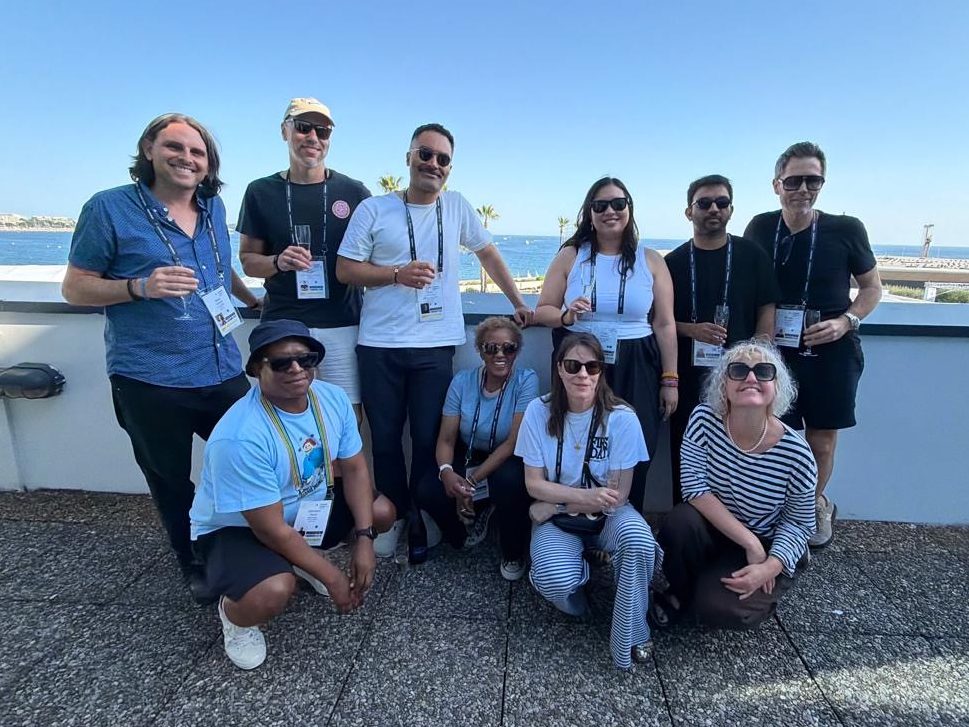
“It’s so rare to be in a space where you’re meeting and learning from different CCOs and creatives, and that exchange is always so valuable to me,” she muses.
Sounds like she got exactly what she was hoping for.
READ MORE:
Cannes Lions Jury Insights: In the Creative B2B category clever, buzz-worthy ideas are never enough