
Two works, before anything else.
In 1970 Kim Whanki painted “Where, in What Form, Shall We Meet Again?”, turning memory, distance and longing into dots. Thousands of blue dots, each one painted by hand.
From far away, it looks like a pattern. Up close, every dot is different.
I’m talking about the same years and the same city, New York, where Andy Warhol was screen-printing, turning art into a production line.
The second is by Ai Weiwei, “Sunflower Seeds”, 2010. He covered the floor of Tate Modern’s Turbine Hall with one hundred million porcelain seeds.
From the door, it looks like grey gravel. One mass, one texture, one thing. But up close, it’s easy to see that each seed is different. They were moulded and painted by hand, one at a time. It took more than 1,600 artisans in Jingdezhen over two years.
In both works the same thing happens: from far away, we see repetition. Up close, we see decisions. Variation within repetition. Neither of them chose the harder way by accident.
Here we are. 2026. We have never had so many ways to make things. So why does so much of what we make look the same?
I love technology. So this is not another warning about A.I., the end of the world, or the virtues of leaving the city to photograph nature before it disappears.
Back to Kim Whanki and Ai Weiwei. Why did they keep deciding? Why care about every dot, every seed, when nobody asked them to, and nobody would have noticed?
There is a behaviour here worth protecting: the willingness to decide when nobody is watching. And I know exactly what it looks like when it’s missing.
What I see in our industry is an absence of variation. Not only in output, which gets cheaper to vary every year, but in behaviour. That’s what worries me most.
As Marshall McLuhan put it in 1969: “We still cannot free ourselves of the delusion that it is how a medium is used that counts, rather than what it does to us and with us.”
The less variation, the closer we get to the average. And the average is a poison that spreads quietly, in multiple ways.
We call it Artificial Intelligence. I’ve started calling it the Average I. The average me. In my own work I found five threats pushing me there, and I had to name them one by one to make sure I didn’t become them.
Threat One: Familiarity
The first threat has to do with what you already know how to do.
In November 2009, I changed agencies, from DM9DDB to Lew’Lara\TBWA.
It started with a phone call. Jacques Lewkovicz, the Lew in Lew’Lara, the man whose name was on the door, called me while I was stuck in traffic. I thought it was a joke and asked him to call back.
He did.
He asked me to bring people in, and I chose the team myself. We worked for Banco do Brasil, one of the largest banks in Latin America, and for the Brazilian government. Eight years later, I was still there, in Brasília, working under that name.
Over the years, something started to happen: the same clients, similar problems, recurring briefs.
I knew the structure. I knew the workflow. I knew how things got done.
And that is the dangerous part. It’s not repetition. It’s knowing. From the inside, it doesn’t feel like a problem. It feels like competence.
Experience lets you find better ways to solve the same problems, but I got used to choosing familiar angles while so much around me was changing.
And while I was getting good at it, the industry I worked in was being redrawn. It took years to reach the headlines.
In November 2025, Omnicom acquired Interpublic and became the world’s largest advertising group. Within days, it announced that DDB and MullenLowe would be folded into TBWA, while FCB would be folded into BBDO, and that more than 4,000 jobs would be cut. Both agencies I had worked for in Brazil already belonged to Omnicom: one through DDB, the other through TBWA.
In January 2026, DM9 and Lew’Lara were brought together as a new agency, Lola\TBWA. Neither name survived. Both are on my CV. I worked inside both. And I did not notice any of it happening.
Most of what shapes your work happens outside your field of vision.
Years before those headlines, I got fired. I never fully understood why. Suddenly, I felt naked.
For eight years I never asked who I was without that job title.
I only saw it years later: it wasn’t the work that got old. I had become the work.
A.I. 1: The Average Incumbent
So I moved to Portugal with my wife and our son, Samuel, who was two at the time. The only plan was to start over.
Years later, in 2023, I did something completely different. This time I was looking further than my desk. There was no brief. No client. No one to approve it. I made @All_About_Francis at home, on the very same days, at the very same hours, that Pope Francis was visiting Portugal.
Threat Two: Being understood
The second threat has to do with being understood. Or not.
In Portugal, I became an immigrant: a Brazilian in the country that once colonised Brazil. On paper, we speak the same language, but I guarantee you that a shared language is not a shared culture.
More people are living across borders. Between 1990 and 2024, the number of international migrants in the world nearly doubled, to 304 million. At the end of 2025, about 1.6 million residents of Portugal, some 14% of the population, were foreign citizens, according to Statistics Portugal.
Sooner or later, you end up in the queue outside AIMA, the Agency for Integration, Migration and Asylum. I have stood in it more than once. Portuguese, Bengali, Hindi, Urdu, Nepali, Ukrainian, English, Arabic: half the world in one line. There, everyone is levelled into the same category, with the same purpose. Everyone standing there has a brief. An urgent problem. A short deadline.
That is a creative process.
Beyond the language, there is the urgency of being heard. As an old friend, Pedro Pires, once told me: “Nobody knows what’s inside your head, Paulo. Nobody cares.”
Thinking about that queue, I made a series of images about identity.
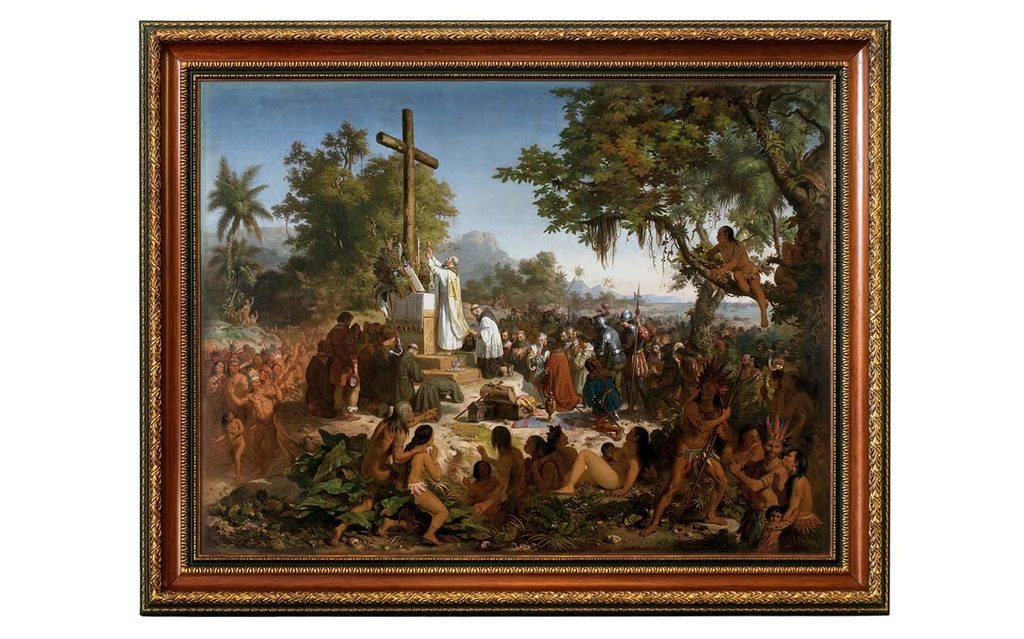
Victor Meirelles painted “The First Mass in Brazil” in Paris, three and a half centuries after the event. He worked from the letter in which Pero Vaz de Caminha described the landing to the King of Portugal, a letter that ends by asking the king for a personal favour: to bring Caminha’s son-in-law back from exile. After so many flourishes, perhaps that was its real purpose. Who knows? Meirelles never saw what he painted. Generations of Brazilian students were taught it as history.
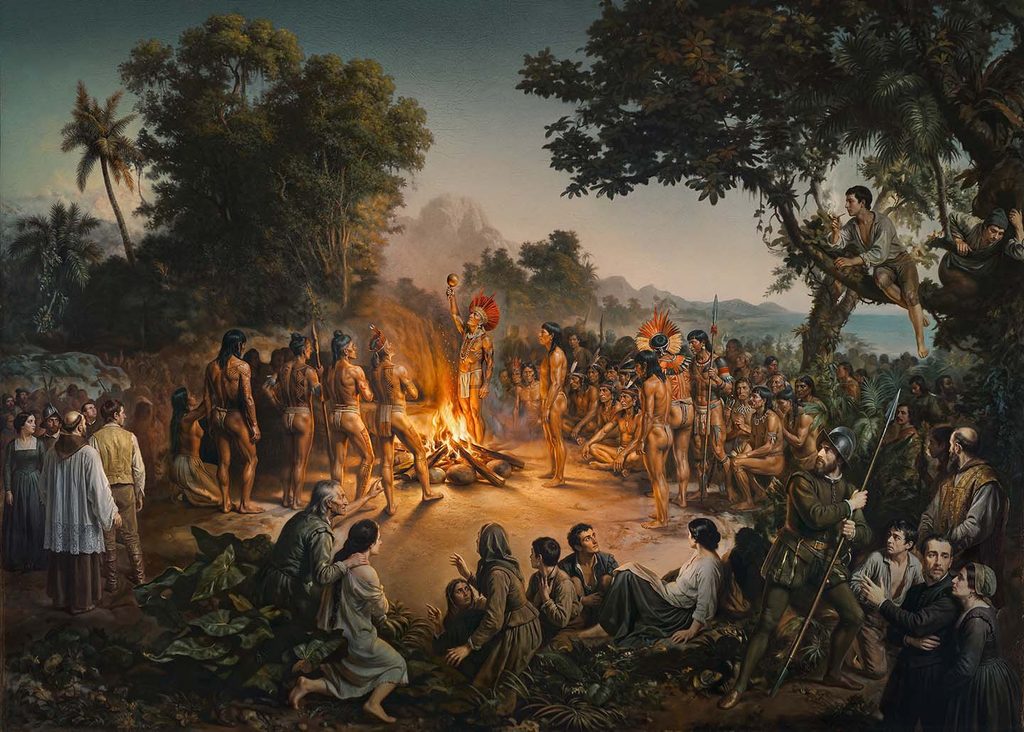
Mine is called “The First Loss in Brazil”. I kept his composition, but swapped who stands where. The Tupiniquim at the centre, in a ceremony of their own. The Europeans at the edge, where the original placed the colonised.
The other images are part of a series I call “Self-Portraits”. Because we are a mixture. We always were.
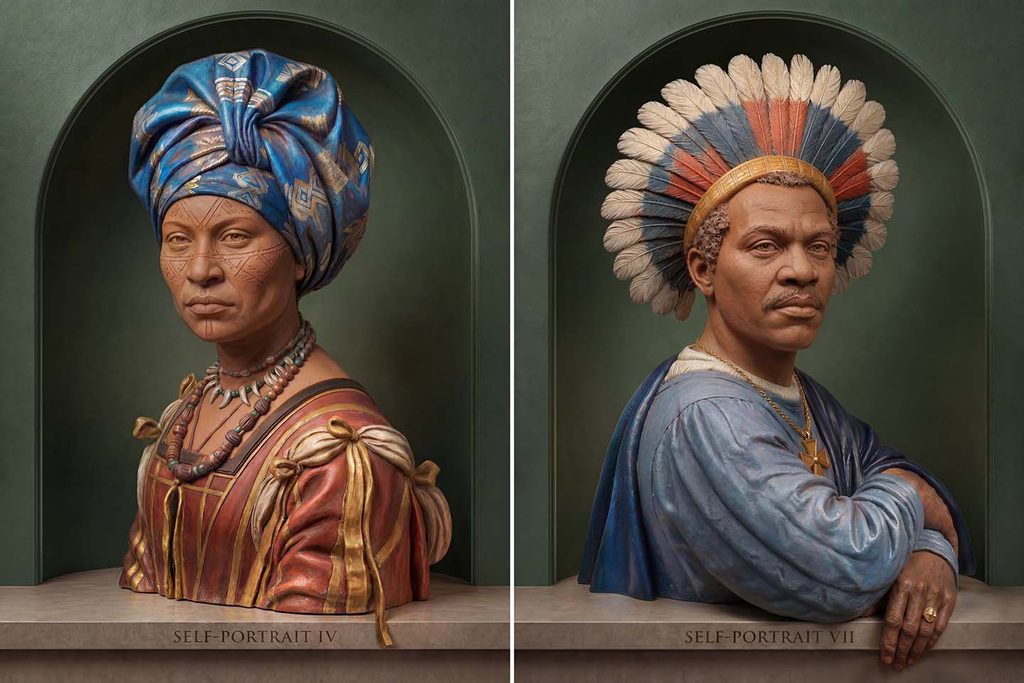
The second threat is getting used to having only one way to say things. I didn’t learn that at work. I learned it at AIMA.
A.I. 2: The Average Interpreter
Threat Three: Proof
Do you remember your first day at a new job? Nobody knows what you’re good at yet. No recognition. No proof. That’s what moving countries does to sixteen years of work.
I ended up at Solid Dogma, a design atelier. I was the only one there who came from advertising.
And that’s the strange part. I landed in the one place that asks for your individual signature, at the exact moment mine was unreadable to everyone around me.
Diogo Potes, a friend and an absurdly talented artist, reminded me more than once: “We are not an agency, we are an atelier!”
That studio had a method. Just not the one I knew. Every person there was an author, with their own process. The brief went through designers, motion designers and artists first. Advertising came last. Nothing was broken down into a regular campaign. Every answer was too specific for that. We worked for Netflix and EDP, the Portuguese energy company.
After losing my job and leaving my country, I found my ideas too safe next to those people.
Not wrong. Safe. Which in that room was worse.
When everyone produces ideas, standing out is harder. The average gets ignored.
They were all black sheep. One of them was Alexandre Farto, known as Vhils, the Portuguese artist who founded Solid Dogma with Pedro Pires. Vhils carves portraits into walls. He removes material to reveal a face.
In another project, already at O Escritório, an award-winning independent agency in Lisbon, I used almost no material to make a plane appear.
Vhils works on concrete. I worked on light. Different discipline, different reason.
And if I told you now that taking away is the answer, I’d be doing the exact thing I’m warning you about, turning one person’s angle into everybody’s default.
The point was that I didn’t have to think like anyone. Not even Vhils.
In a room where every person is a different instrument, there is no average. Production got cheaper. Authorship didn’t.
Without proof, you fall back on the one way you know. The third threat is settling into a single way to make things.
A.I. 3: The Average Ideator
Threat Four: Looking
Gonçalo M. Tavares, one of Portugal’s most celebrated writers, was my professor at NOVA University Lisbon. He describes a train, and a house you pass every day. Above a certain speed, he says, we don’t see less. We stop seeing.
What matters is not only the speed of what is seen. It’s the speed of who is seeing.
I think about it every week, on the same train, taking my son to school. The house never changes. And I still can’t draw it.
Years before, in Brazil, I noticed a problem that had been there all along: beginner tattoo artists often have nowhere to practise, so they use their friends as canvases, or even pig skin.
So, an idea: a notebook. A common object, but every page is a surface that behaves like skin. We called it the SkinBook.
Life gets smaller when all we notice is the average. Looking without seeing is one of the easiest habits to fall into. And the tools we use now are very good at looking for us. I’m still learning to see this one:
A.I. 4: The Average Inattentive
Threat Five: Time
Since the late 1990s, technology has systematically removed the pauses between wanting, deciding and doing. In 1997, Amazon’s 1-Click removed the step between deciding to buy and buying. In 2006 came infinite scroll, widely credited to Aza Raskin, which removed the bottom of the page; he has since said he regrets it. In 2015, YouTube made autoplay the default, so the next video starts before you choose it. Spotify does the same with music. In 2020, Instagram launched Reels, an endless feed of short videos that play on their own.
And most of it was designed, tested and sold by people in our industry. Creatives. People like you and me.
Samuel, my son, is older now. The thing I fight hardest for isn’t at work. It’s giving him choices: what’s worth watching, what he reads, what gets his attention. He’s a curious kid. But a lot of what’s around him is built to make those choices for him. Convenient. Fast. Automatic. Without him noticing.
That’s the point. It’s not loud.
In this quiet and automated environment, the biggest risk isn’t a wrong answer. It’s how easily we accept the first good one.
I’m not saying we should say “no” more often, but “why”. Because “no” closes and “why” opens.
We all need time to doubt, don’t we?
A.I. 5: The Average Immediate
Up Close
Average doesn’t look like mediocrity. It looks like competence. It looks like strategy. It looks like speed. It looks like a perfectly reasonable decision.
Until you look closer.
Average is the absence of variation. The incumbent who becomes the job. The interpreter with one way to say it. The ideator with one way to make it. The inattentive who looks without seeing. The immediate who takes the first answer.
None of these threats was created by a machine. These pressures existed long before A.I. They were already human behaviours. Technology scales them faster than we can notice.
Output is easy to vary. Decisions are what make it matter.
Kim Whanki could have painted a pattern. Ai Weiwei could have had his seeds made by machine. They kept deciding, dot by dot, seed by seed.
That is the I behind the A.I.
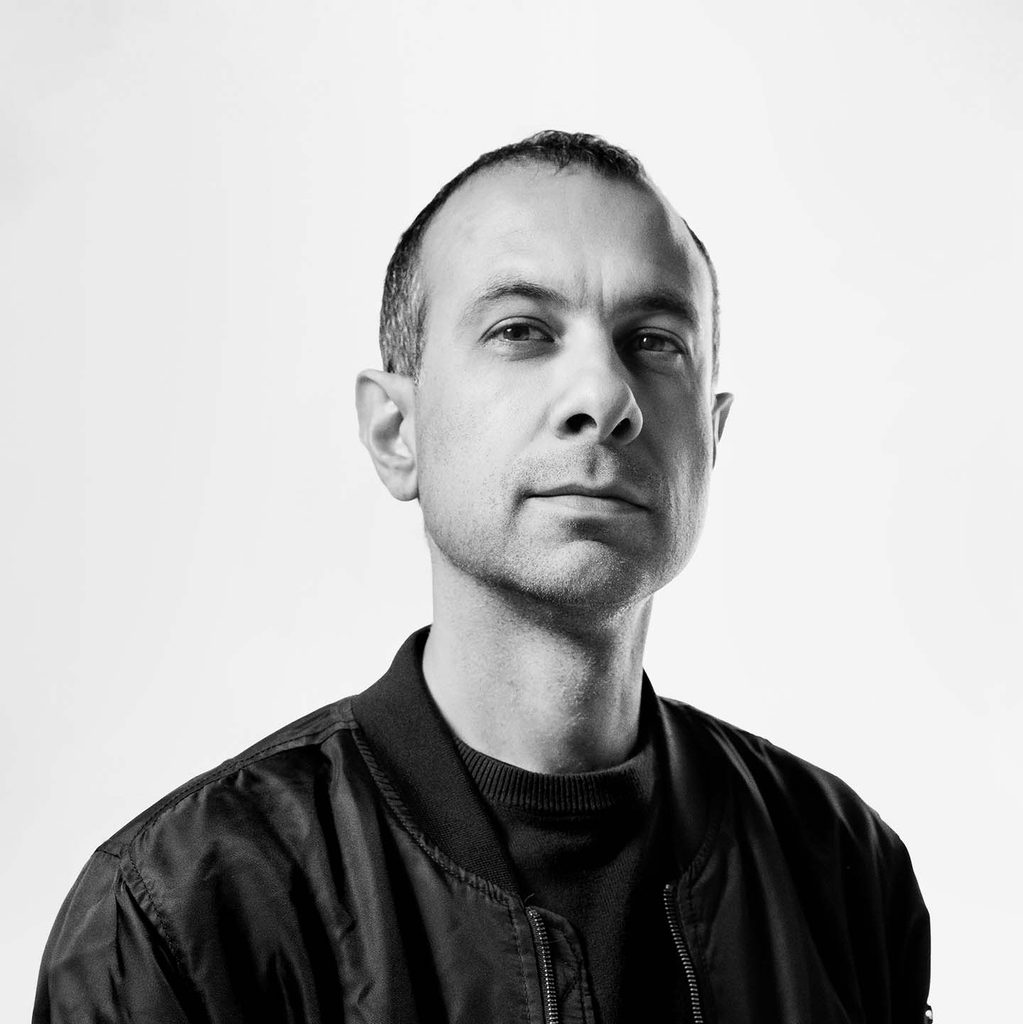
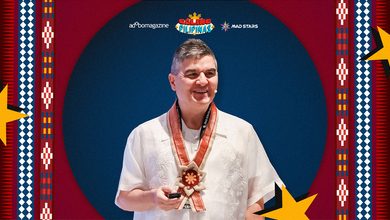
Paulo Mariano is a Senior Art Director and Creative Lead. He works at O Escritório in Lisbon. His images “The First Loss in Brazil” and “Self-Portraits” are in the forthcoming Lürzer’s Archive, 200 Best Digital Artists, Edition 8. This essay is adapted from his talk at MAD STARS 2026 in Busan. The three projects mentioned here are at paulomariano.com