

A city is often best understood by its details. The improvised structures of a Bangkok street market, the lettering on a shopfront or the way a landscape draws people together can tell us as much about design as an architectural landmark. Look closely enough and the ordinary begins to reveal something rather extraordinary.
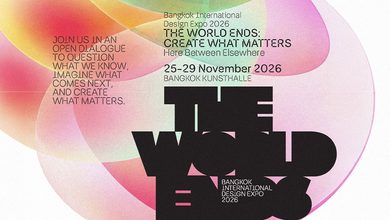
It is this curiosity about the world around us that sits at the heart of THE WORLD ENDS: Bangkok International Design Expo 2026. Taking place at Bangkok Kunsthalle from November 25 to 29, the event brings together architects, artists, designers and cultural thinkers to consider how creative practice might respond to a changing world.
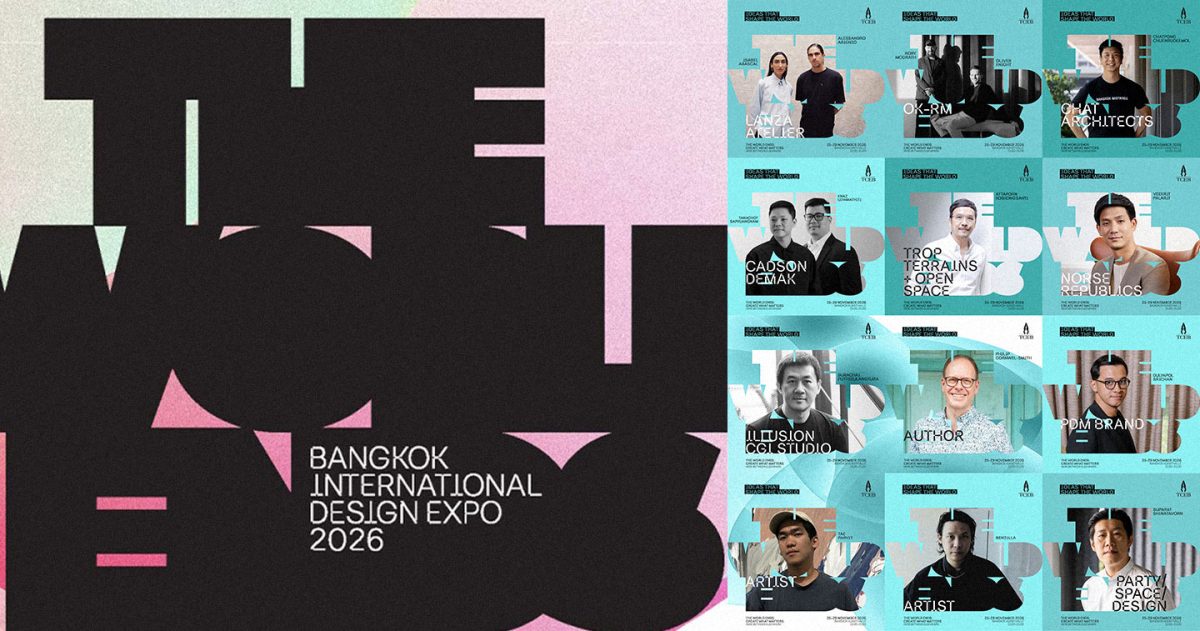
Organised by the Thailand Convention and Exhibition Bureau (TCEB), the exhibition takes CREATE WHAT MATTERS as its guiding proposition. Its speaker programme offers a broad range of perspectives, from experimental architecture and the visual language of cities to contemporary art, typography and the business of design.
Here are some of the voices worth listening to.
Architecture with a sense of place
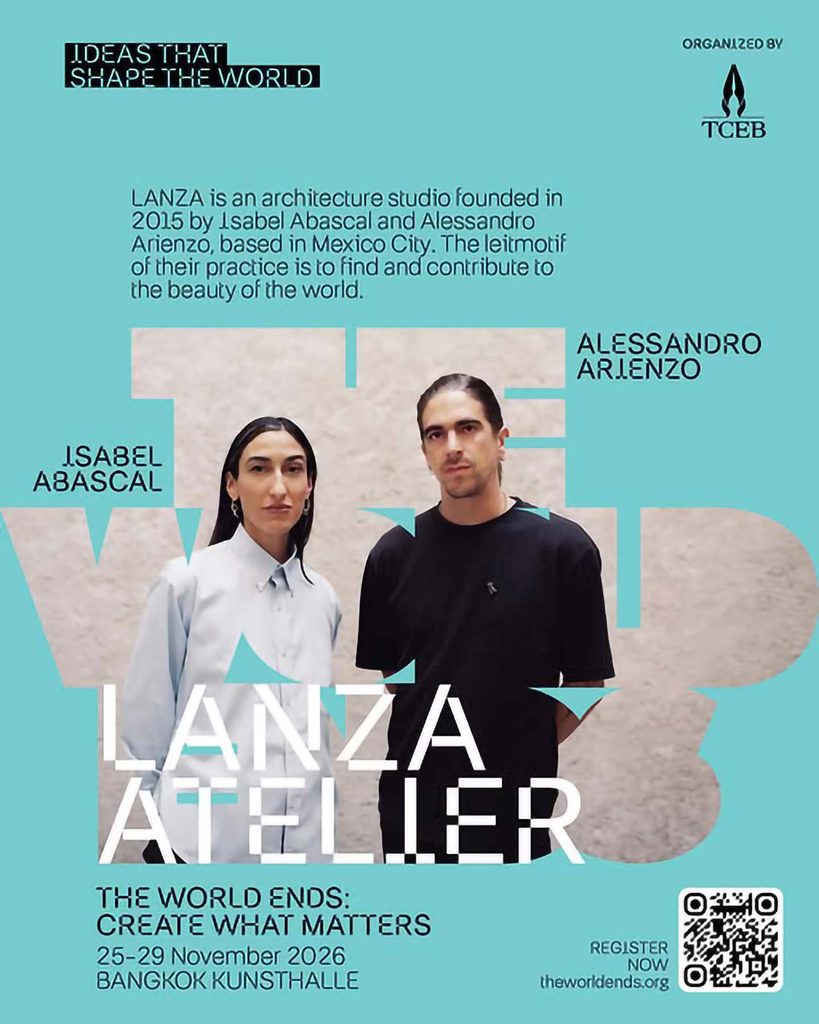
In Mexico City, Isabel Abascal and Alessandro Arienzo, founders of LANZA ATELIER, have developed an architectural practice attentive to the possibilities of ordinary materials. Working across buildings, furniture and exhibitions, the studio draws on craftsmanship and experimentation to reconsider how spaces are made and inhabited. Their work on the Serpentine Pavilion 2026 in London places them among the international practices contributing to contemporary architectural discourse.
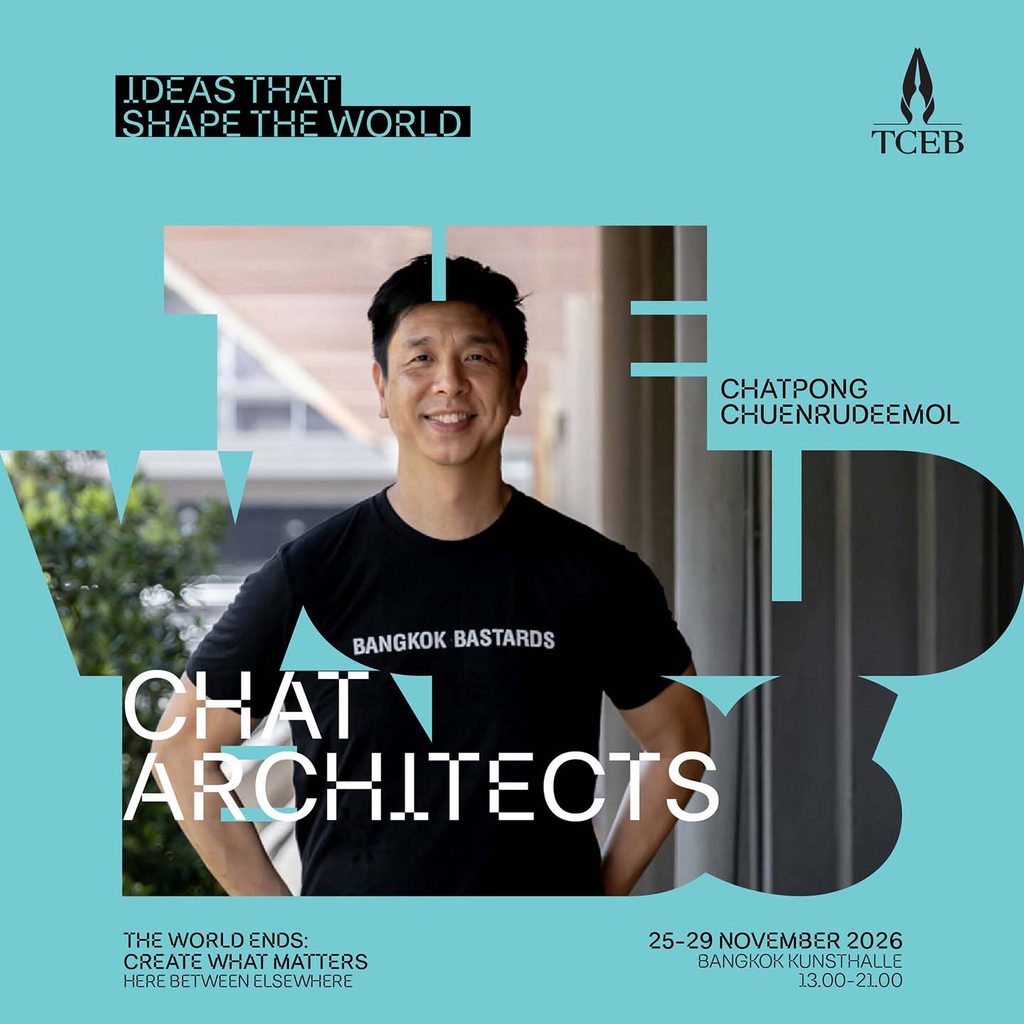
Bangkok offers a different kind of architectural education. Chatpong Chuenrudeemol, founder of CHAT Architects, has long been interested in the inventive structures that emerge from the city’s everyday necessities. His Bangkok Bastardsresearch examines informal architecture, from makeshift additions to practical adaptations of existing spaces. Rather than dismissing these structures as urban clutter, he considers what they reveal about local ingenuity and the relationship between people and place.
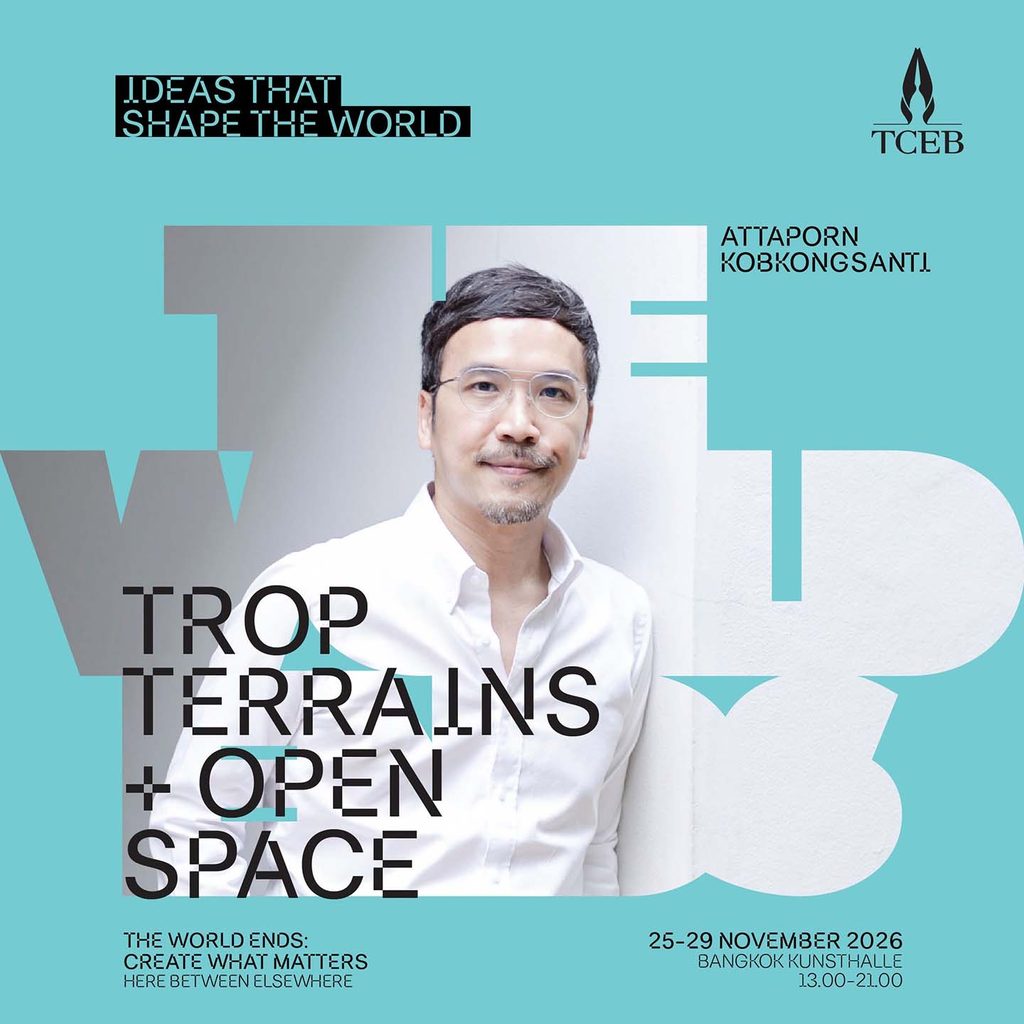
For landscape architect Attaporn Kobkongsanti, founder of TROP terrains + open space, the character of a site provides the starting point. His portfolio includes hospitality, residential and commercial landscapes such as Hilton Pattaya and Quattro by Sansiri, where the design of outdoor spaces is closely tied to the experience of those who use them.
Together, these practices offer three different approaches to a common concern: how architecture can engage more thoughtfully with its surroundings.
Reading the city
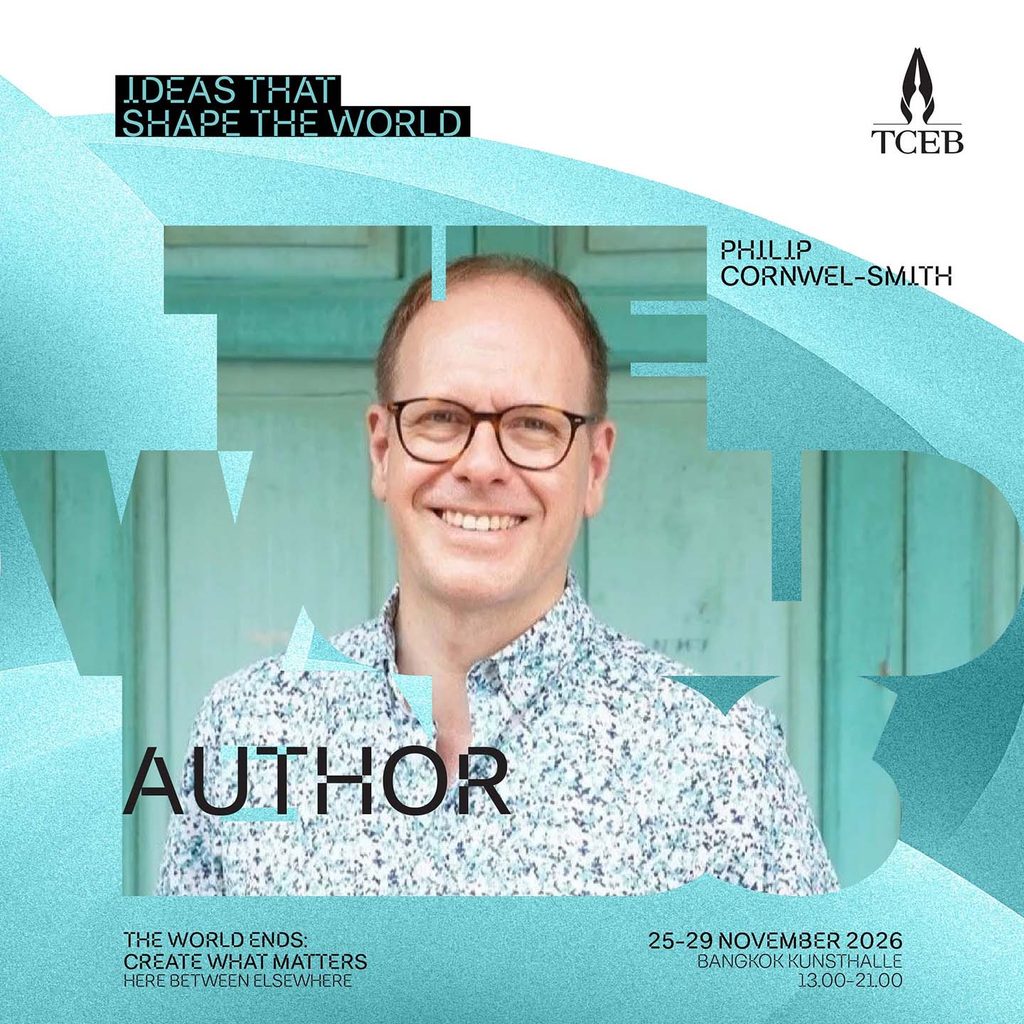
Few writers have examined Thailand’s everyday visual culture with the curiosity of Philip Cornwel-Smith. The British author and photographer behind Very Thai and Very Bangkok has spent years documenting the objects, signs, habits and visual peculiarities that help define contemporary Thai life. His work finds cultural significance in places where conventional design criticism might not think to look.
The conversation about Bangkok also extends to its administration. Chadchart Sittipunt, Governor of Bangkok, brings the perspective of a civil engineer, academic and public official to questions of urban development. Infrastructure, public space and the daily routines of city residents all form part of a wider discussion about how Bangkok might evolve.
The two perspectives offer an interesting contrast: one observes the city through its cultural details, while the other considers the systems and decisions that shape everyday urban life.
The language of design
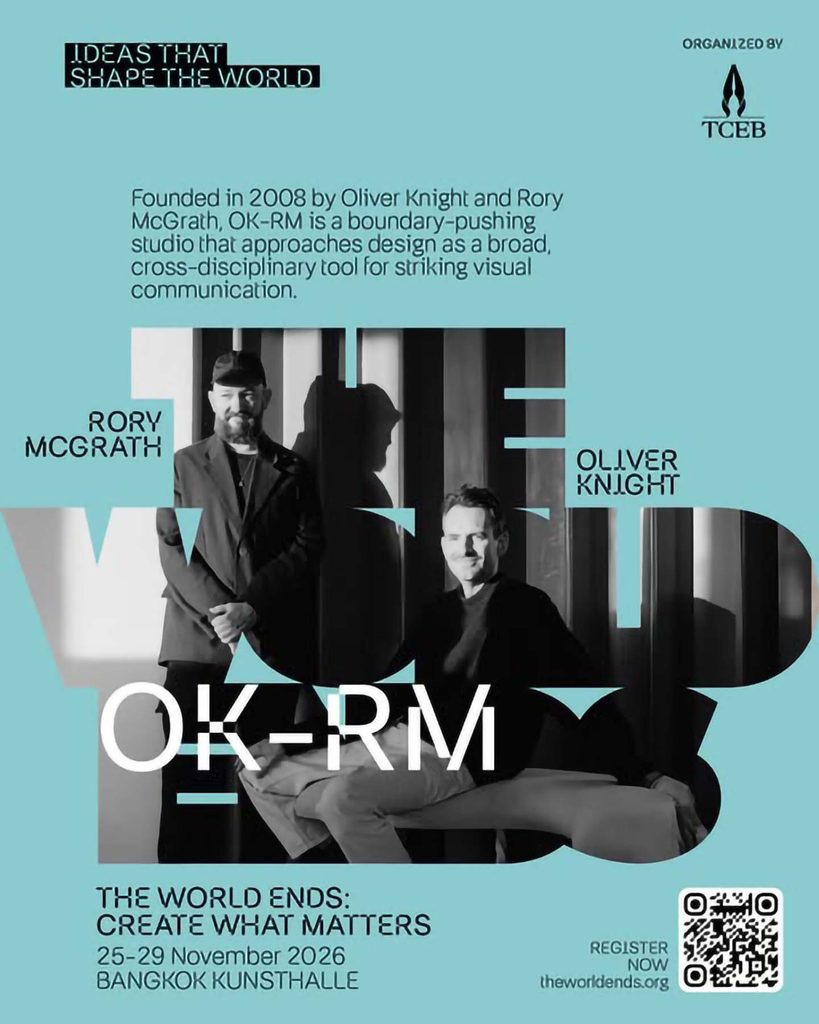
London-based OK-RM, founded by Oliver Knight and Rory McGrath, operates comfortably between art, culture and commerce. Research is central to the studio’s work, which spans visual identities, publications, films, exhibitions and installations. Its practice is concerned with how ideas acquire form and how design can communicate meaning across different media.
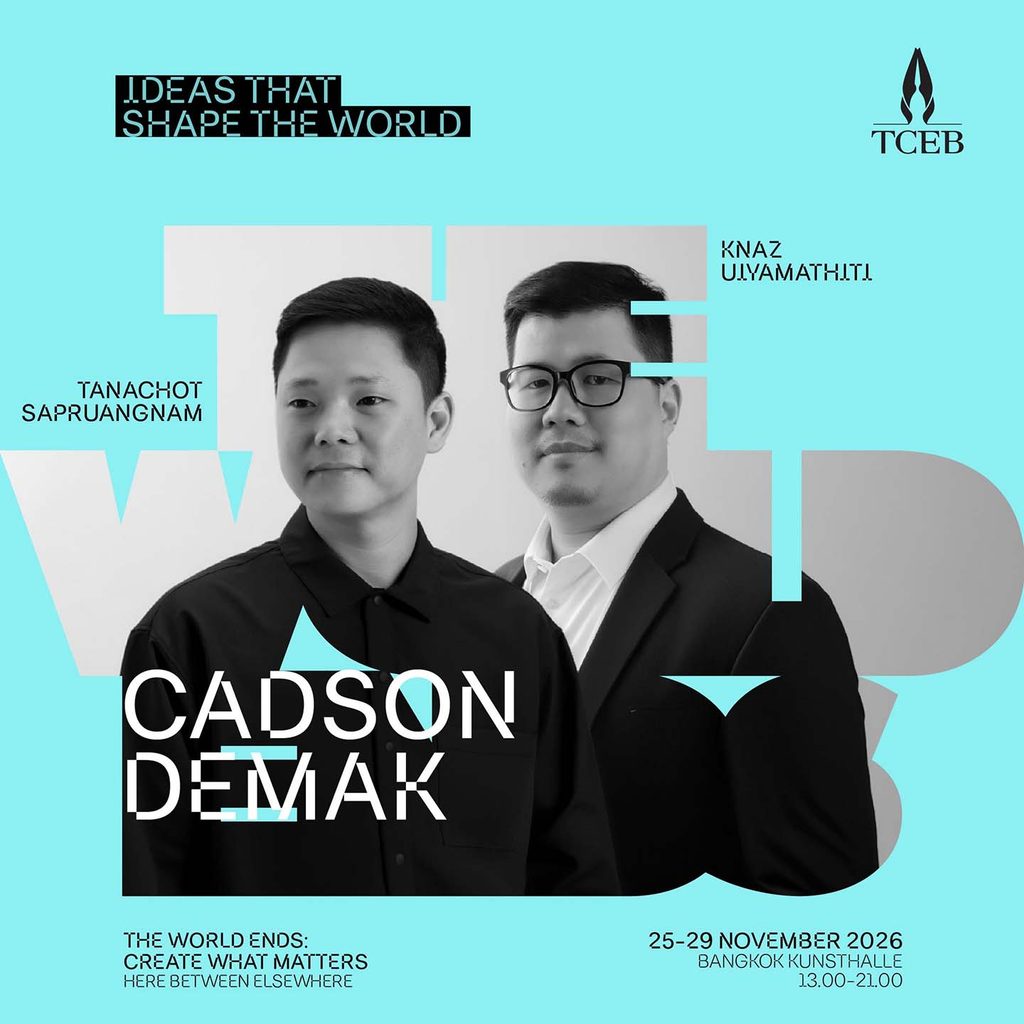
In Bangkok, Tanachot Sapruangnam and Knaz Uiyamathiti of Cadson Demak approach communication through graphic design and typography. Tanachot, design director of Samatapaph, has worked on visual identities for organisations including Krungthai Bank and SCBX. Knaz specialises in type design, with projects including custom typefaces for the Tourism Authority of Thailand and Graphik Thai Condensed for Commercial Type.
Their work demonstrates how something as familiar as a letterform can carry questions of language, identity and cultural expression.
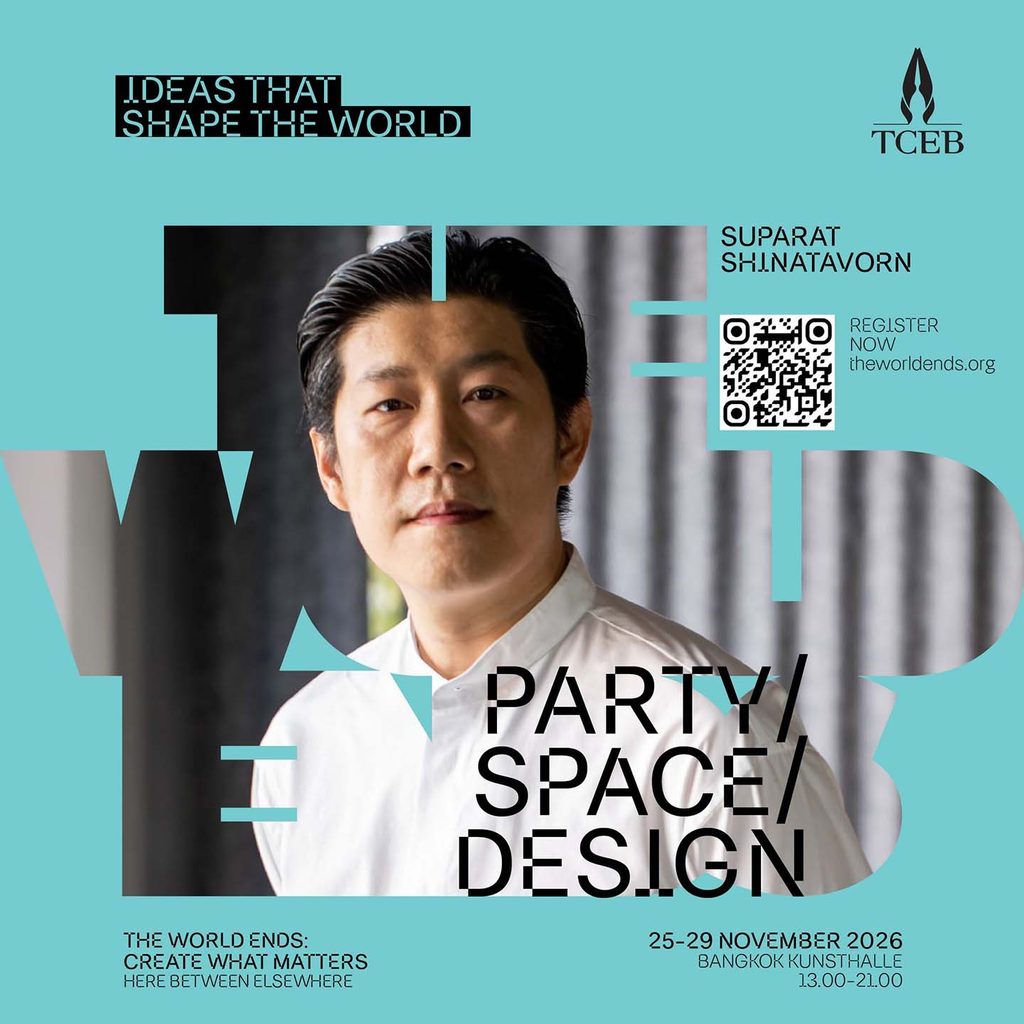
Elsewhere in Bangkok’s creative industry, Suparat Chinathaworn of Party/Space/Design brings design into the physical spaces of commerce. Founded in 2012, the consultancy works across interiors, exhibitions, products, graphics and branding, with a particular interest in restaurants and retail environments. Its practice considers how a brand’s identity can become something people experience rather than simply recognise.
Art beyond the familiar
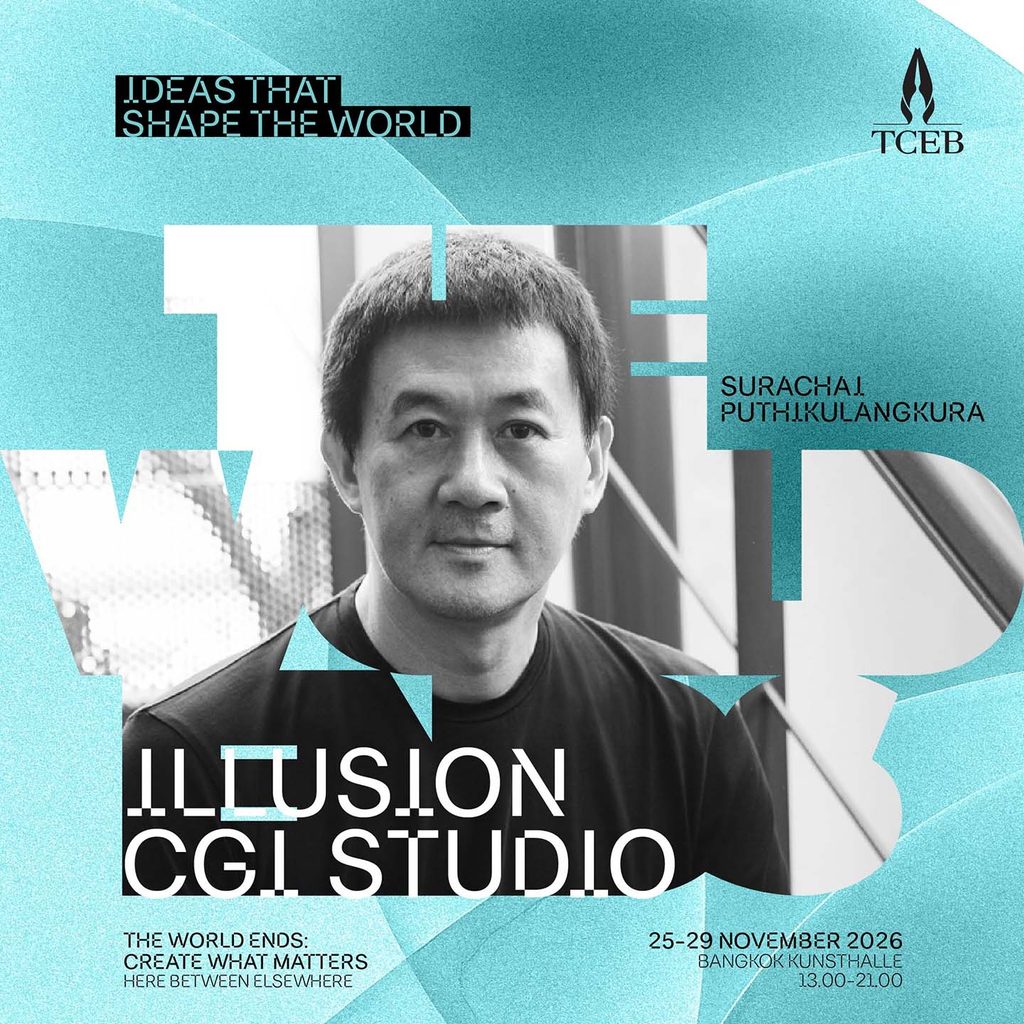
For Surachai Puthikulangkura, founder and CEO of Illusion CGI Studio, the boundary between imagination and technical possibility is a productive place to work. His internationally recognised studio creates advertising imagery through a combination of digital craftsmanship, visual invention and meticulous execution.
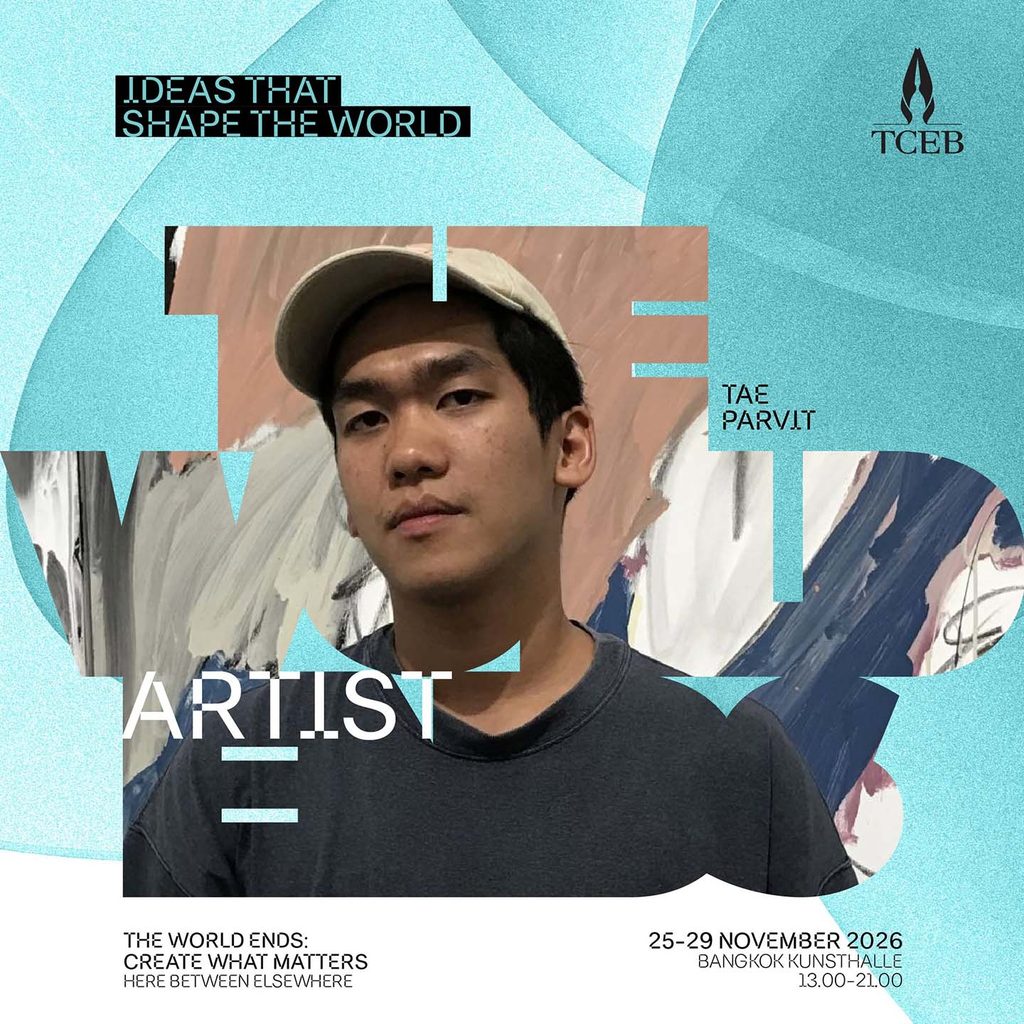
The expressive world of Tae Parvit moves in another direction. The Bangkok-based artist works primarily in painting but has also explored animation, digital drawing, screen-printing, publishing, music and performance. Colour, texture and movement run through a practice that transforms personal observations into abstract visual narratives.
Then there is Benzilla, whose three-eyed alien character, LOOOK, has become a familiar presence in Thai contemporary art. Working across painting, drawing and sculpture, he uses bold colours and imagined environments to examine the world from an outsider’s perspective.
Their methods differ considerably, yet each explores how images can alter our sense of what is real, familiar or possible.
The Business of Good Design
Design does not exist solely in studios, galleries or exhibitions. It also finds its way into homes, shops and the objects people choose to live with.
Veekrit Palarit, founder and managing director of NORSE Republics, has helped introduce international furniture and lifestyle brands such as HAY, Fritz Hansen, Vitra and Artek to Thailand.
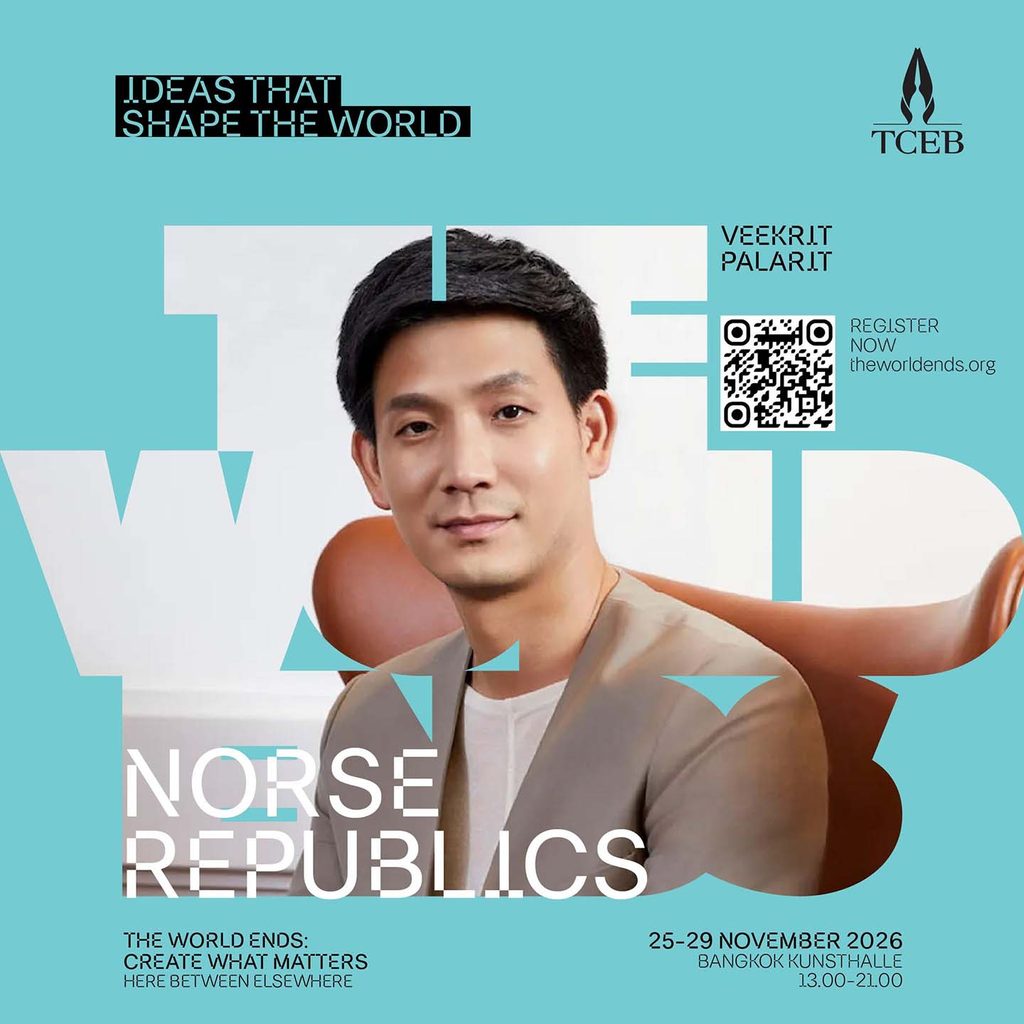
His work offers a commercial perspective on the design industry: how products developed in one cultural setting find relevance in another, and how the relationship between brands, retailers and consumers shapes the wider appreciation of design.
It is a reminder that the success of a design idea depends not only on its originality but also on how it reaches people.
A Conversation worth continuing
The range of voices at THE WORLD ENDS reflects the breadth of contemporary design practice. An architect studying informal structures, a writer documenting street culture and a typographer developing a new visual language may work in different disciplines, but all share an interest in questioning established ways of seeing and making.
This thinking runs through the event’s three-part framework: HERE, BETWEEN, ELSEWHERE. It begins with an understanding of the present, moves through the changes that challenge familiar conventions and looks towards possibilities that have yet to take shape.
For Bangkok, the gathering also offers an opportunity to bring local creative perspectives into a wider international conversation. Its significance lies not simply in who is speaking, but in the encounters and exchanges that may follow.
After all, some of the most interesting developments in design begin with a good conversation.
THE WORLD ENDS: Bangkok International Design Expo 2026 takes place from November 25-29, 2026, 13:00–21:00, at Bangkok Kunsthalle, organized by the Thailand Convention and Exhibition Bureau (TCEB). Discover the program and register at www.theworldends.org.