
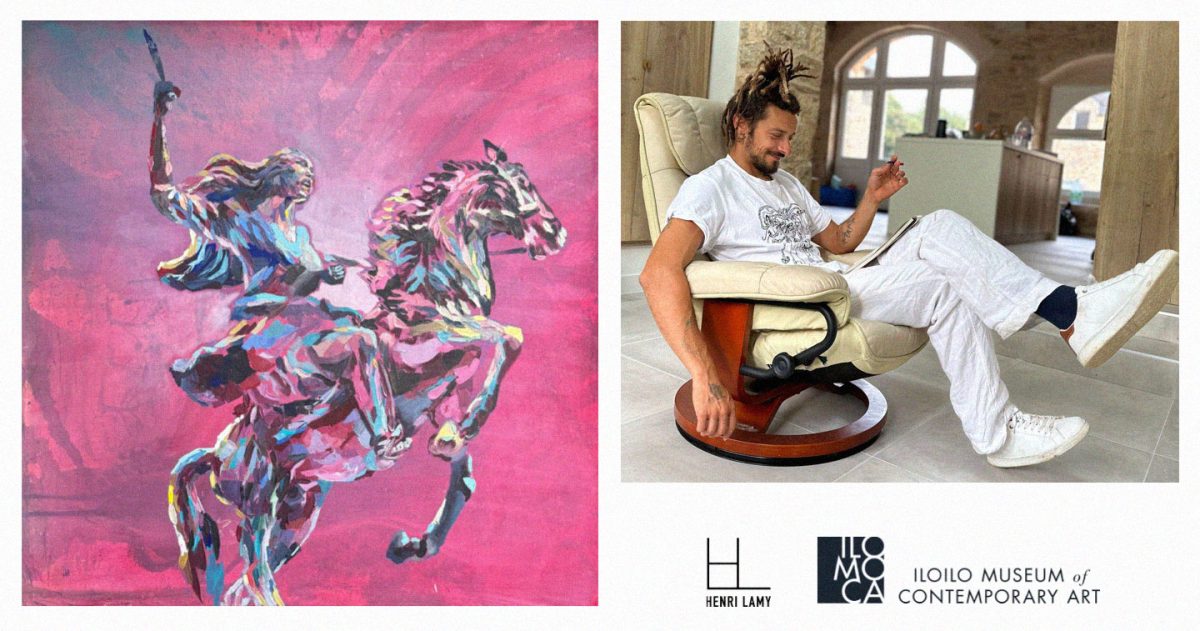
For audiences attuned to the power of branding and visual communication, Sovereign Faces lands with particular force. At its core is Henri Lamy’s “reimagined” currency series – most notably interventions on the 1,000 Philippine peso bill and the Thai baht—where the most literal symbols of value become canvases for cultural critique.
By replacing traditional male figureheads with female icons such as Gabriela Silang, Corazon Aquino, and indigenous Mangyan women, Lamy reframes money as more than legal tender. It becomes a site of memory, identity, and power. The gesture challenges the colonial gaze embedded in national iconography, while proposing how art can “rebrand” nationhood through the lens of sovereignty.


Lamy traces how the ethos of Taverne Gutenberg has expanded beyond the studio and into the public sphere. Together with Maïa d’Aboville, the practice has evolved toward “urban acupuncture” and environmental repurposing. These small, strategic creative interventions catalyze wider civic transformation.
Among these projects include:
- Le Chalet du Parc – A cultural and environmental transformation of a historic mansion in Lyon, situated within the iconic Parc de la Tête d’Or
- Les Murmures du Temps – An artistic intervention designed to reactivate deserted infrastructure across rural communities
Both initiatives reflect a practice that moves fluidly between grassroots experimentation and institutional scale where art acts as both social connector and spatial reactivator.
Movement remains central to Lamy’s process. The fusion of Capoeira and painting anchors his visual language.
On March 21, he will perform live at ILOMOCA, translating martial arts motion into the physical “flickerings” of paint that form the foundation of his portraits. The act blurs boundaries between studio, stage, and spectacle, revealing the body as both tool and medium.


Lamy’s return to Iloilo reads less like a homecoming and more like a launchpad. While deepening his roots in Mindoro and working closely with the d’Aboville Foundation on indigenous advocacy, he is also preparing for a major solo exhibition at Hong Beli Gallery in Paris in 2027.
From the grassroots energy of Ugnayan to the institutional scale of ILOMOCA, his trajectory reflects a practice shaped by his French and Filipino heritage that continually colliding and coalescing on canvas.
For Lamy, the pivot is not simply aesthetic. It is philosophical: a redefinition of value itself, and the role creativity plays in shaping how nations see and price their stories.