

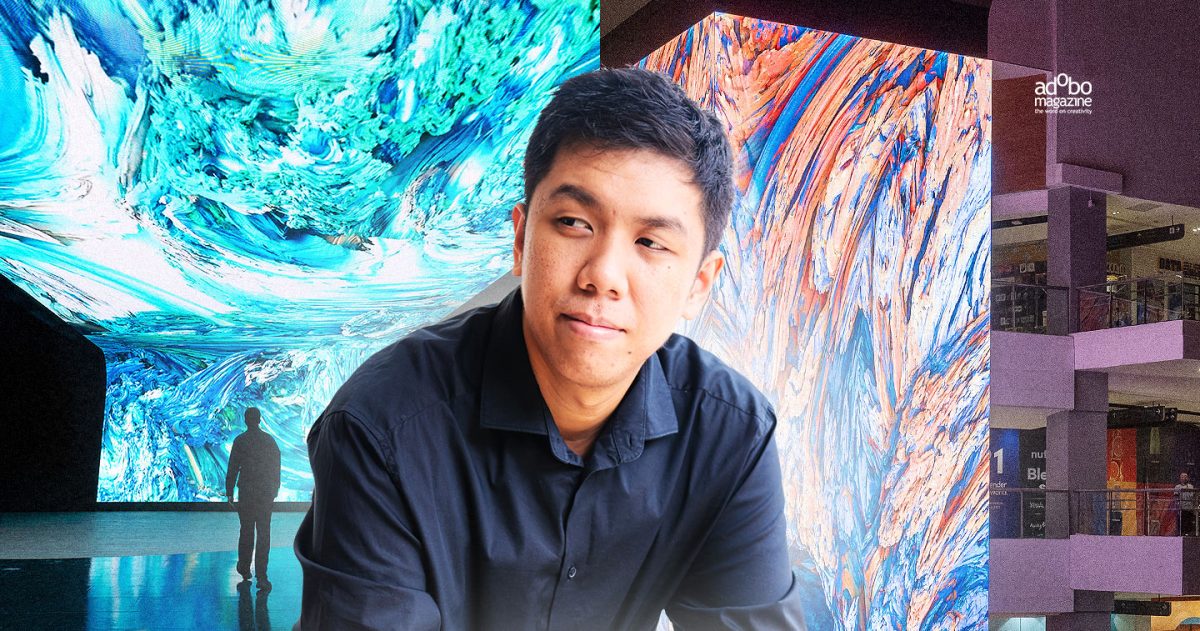
Math and Art may be two very different disciplines, but one artist is defying convention to bring them together.
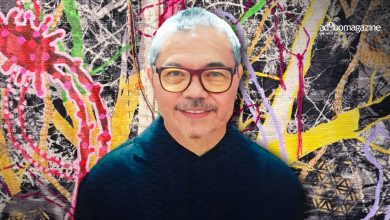
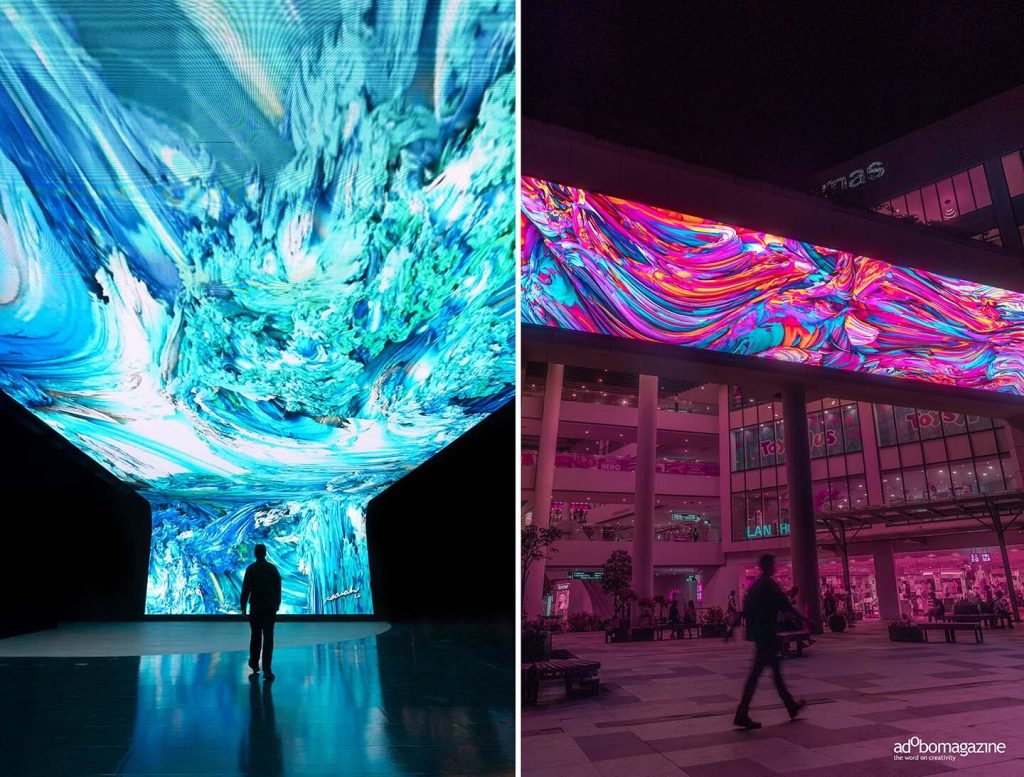
As one of the exhibitors of Art Fair Phillippines 2026, Isaiah Cacnio took over the walls of Ayala Circuit Makati and literally made waves with his art installations.
“I like mathematics. Math kasi is the universal language of the universe”. He said in an interview with adobo Magazine. “So I wanted to showcase science, math… combined with art”.
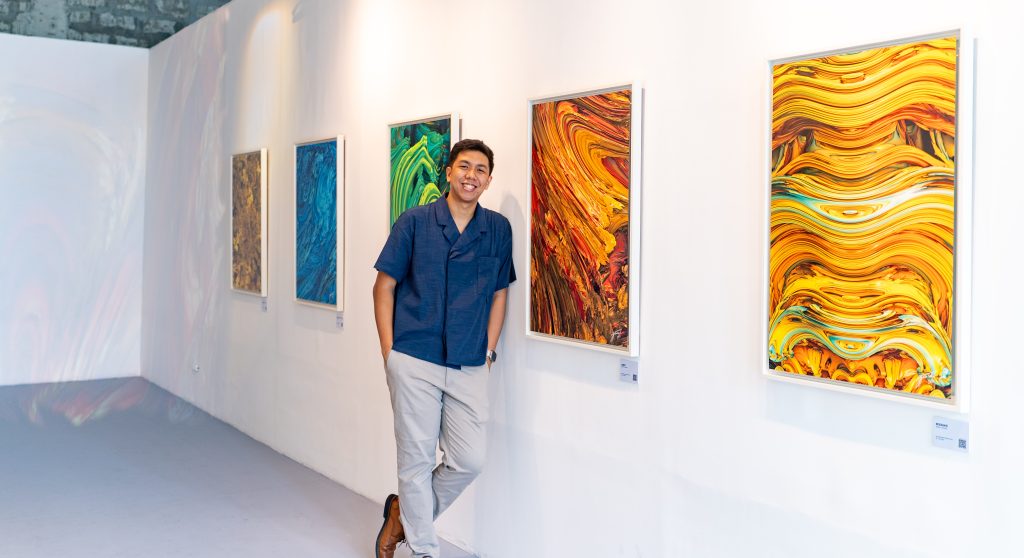
Isaiah’s Digital Art is inspired by the concepts he learned in the field. His love for mathematics is rooted in engineering, which he sees as fuel for his creativity. the engineering graduate soon found himself drawn to video editing, film, and photography, which eventually sparked his interest in digital art.
“It helps to be an engineer for doing art installations. Because I already know my medium in terms of the technicalities of things. Structure. It takes multiple disciplines to make an art installation” he said.
With those two intertwined – together with his knowledge of the technicalities of buildings – he created digital art.
“I’m trying to find myself… a piece of myself to make a story” he said.
When asked what specific concept of mathematics are intertwined in his art, Isaiah mentioned fractals – infinitely complex patterns found in nature.
Fractals are never-ending, as shown in Isaiah’s Art, but a key element that sets them apart from other concepts is that they are similar to each other. They are created by repeating a similar process over and over to create the same shape.
According to Isaiah, these infinite shapes serve as a universal language of the universe as they connect everything in it – from the smallest neurons in our nervous system to the vast cosmic clouds.
He describes his body of work as a representation of chaos, a concept that says “small changes result in unpredictable long-term outcomes.” He calls his work “calculated chaos.”
Chaos can be related to “The Butterfly Effect,” where a small insect like a butterfly can cause unpredictable but massive events. Fractals also are part of the visual identity of chaos because of the repeating patterns in it.
The Creative Process
Isaiah often spends months perfecting a piece until he feels satisfied with the result.
Beyond working through mathematical formulas, Cacnio also drafted sketches prior to the final piece. He freely experiments with his drafts through trial and error until he achieves the desired result. He also incorporates Julia coordinates, a complex fractal concept in mathematics.
“I usually just add exponents, improve on the formula, revise it, fine-tune it. So that’s it,” he said.
While rules are important in Math, sometimes the formulas he uses don’t complement his work – leaving him no choice but to leave Math out of the equation.
“Sometimes, the animation doesn’t work that well. I try to preserve (as much as possible) from formula 1 to formula 2 to interpolate that and have an animation. But sometimes the animation isn’t okay and not flowing by design in the formula. But in terms of visuals, it would flow naturally.”
His solution is to try different programs to fit the formulas in the animation.
Conceptualizing, for Cacnio, can take as little as the time it takes to have a sip of coffee. Execution, on the other hand, could take several months.
His main purpose for creating art is to encourage people to pause, reflect, and be curious.
“But for these ones that you see all over Makati, it’s about tapping the subconscious state…” he said. “Parang putting that subconscious state in its own dimension. I wanted to make different doors opening all throughout Makati.”
Through his work, Isaiah seeks to encourage people to explore the intersection of art and science.
adobo Magazine is an official media partner of Art Fair Philippines 2026.