

SINGAPORE – Singapore’s leading cultural institutions, the Asian Civilizations Museum (ACM) and National Gallery Singapore (NGS), are set to present 80 works from the National Collection at El Galeón Acapulco – Manila SOMOS PACÍFICO El Mundo que emergió del Trópico, opening 3 December 2025 in Mexico City. Marking 50 years of diplomatic relations between Singapore and Mexico, the exhibition showcases paintings, sculpture, silver coins, porcelain, and original curatorial research in dialogue with loans from major institutions and private collections across Mexico and beyond.
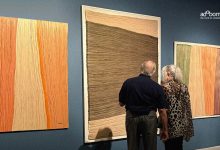
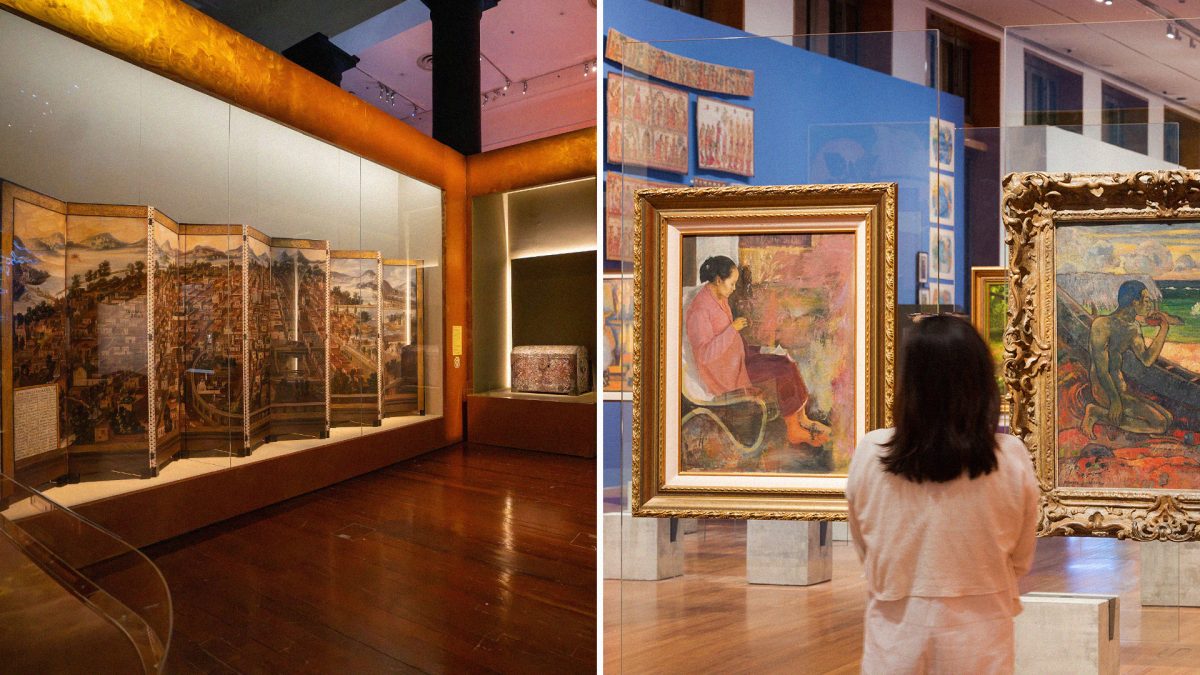
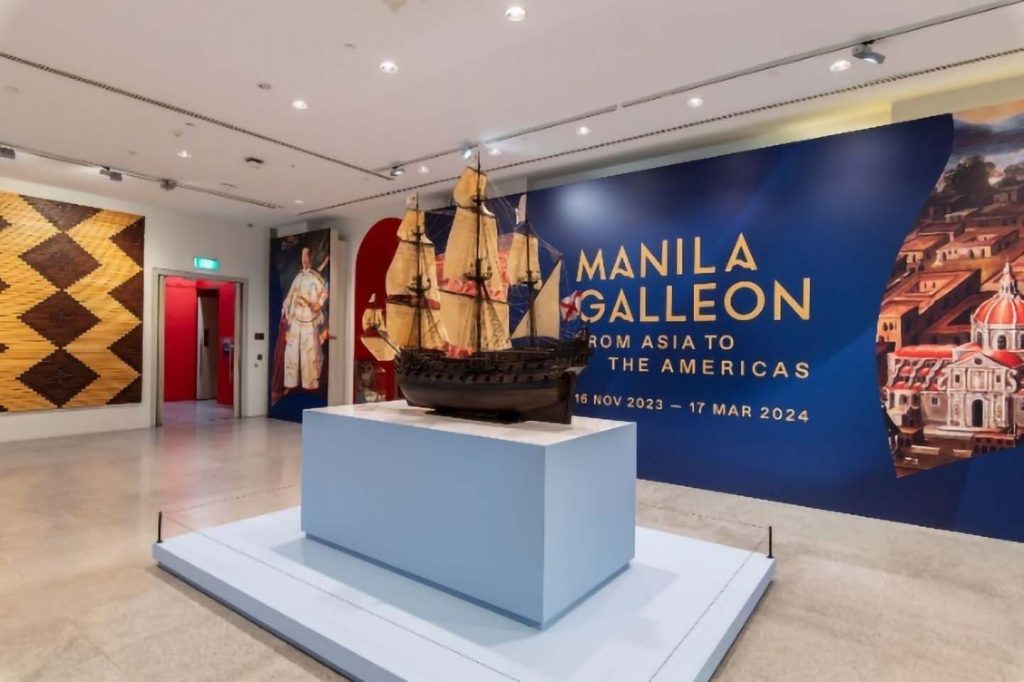
Drawing from ACM’s 2023 exhibition Manila Galleon: From Asia to the Americas and NGS’s Tropical: Stories from Southeast Asia and Latin America, the presentation reveals how centuries of movement across oceans, cultures, and ideas continue to shape global identities. It highlights the artistic, commercial, and historical exchanges forged between Asia and the Americas from the 16th century through the modern day.
Clement Onn, Director of ACM, notes, “Somos Pacífico furthers ACM’s exploration of a global Southeast Asia, placing Mexico and Manila at the heart of a centuries-old world trade network… This fusion of cultures, much like the galleon trade itself, serves as a powerful reminder of the interconnectedness that transcended geographical borders.”
Eugene Tan, CEO and Director of NGS, adds, “Our presentation in Somos Pacífico represents years of dedicated research into the artistic parallels between Southeast Asia and Latin America… By bringing these stories to Mexico City, we reaffirm the Gallery’s commitment to reframing Southeast Asian art history as part of a larger global art story – one of solidarity, creativity, and mutual recognition.”
The exhibition’s first four galleries uncover the movement of artists, traders, and consumers between Asia and the Americas from 1565 to 1815. It begins with the pre-colonial histories of Mesoamerica and the Philippines before charting the rise of crucial transpacific routes shaped by explorers such as Hernán Cortés, Vasco Núñez de Balboa, and Ferdinand Magellan. These pathways would establish Acapulco and Manila as central ports in what would become the world’s earliest global trade network.
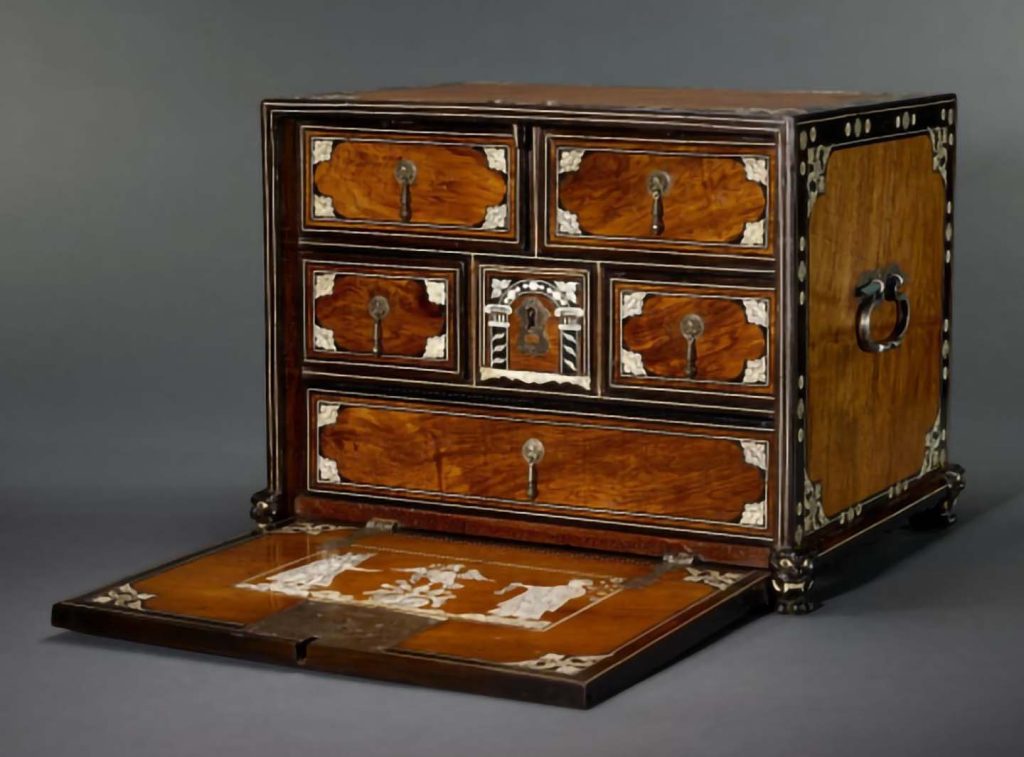
Writing cabinet with the arms of Mexico City. Manila, early 17th
century. Wood, bone, silver, 32.5 Å~ 42.2 Å~ 33.6 cm. Collection
of Asian Civilisations Museum.
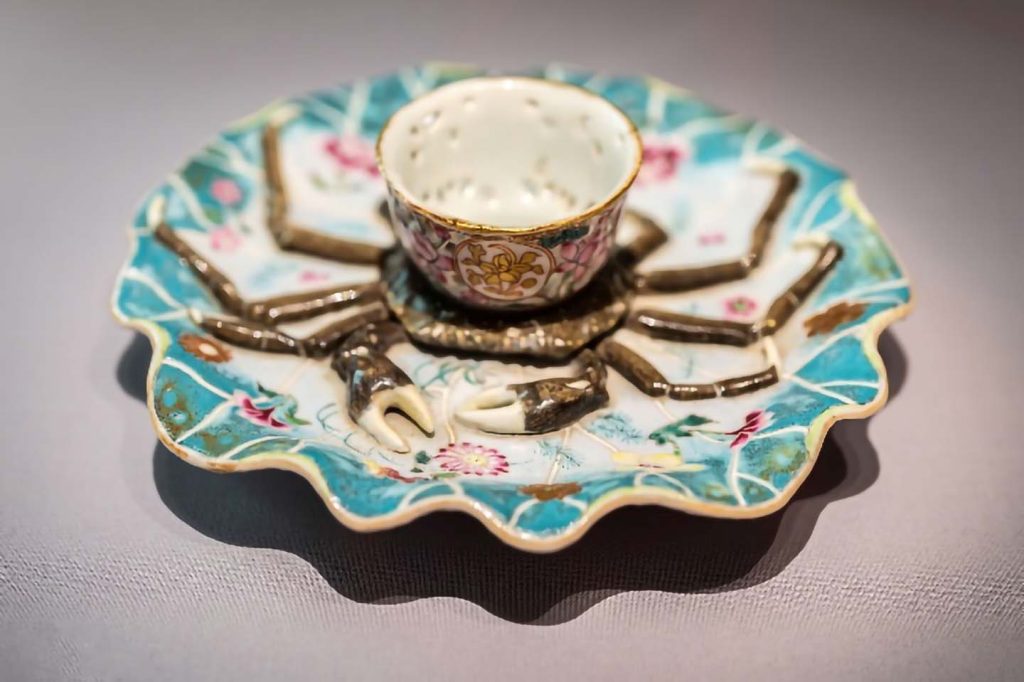
Chocolate stand (mancerina). China, 18th century. Porcelain,
diameter 21.6 cm. Collection of Asian Civilisations Museum.
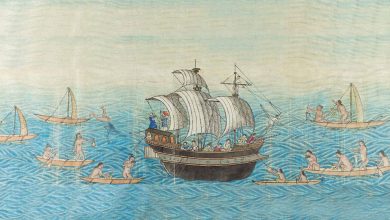
A highlight of this section is ACM’s 1:32 scale model of a Manila galleon—the only historically accurate reconstruction of its kind. The exhibition also explores the everyday commodities carried across the Pacific: Asian porcelain and silk sailing westward, while Mexican and Peruvian silver and cacao travelled east. Export art shaped by chocolate culture, religious sculpture carved by Chinese artisans in the Philippines, and Mexican lacquerwares and enconchados (mother-of-pearl inlay) illuminate the cosmopolitanism that flourished in galleon-era port cities. Media Release – Singapore’s Lea…
Diplomatic missions such as the Japanese Hasekura voyage to Mexico and Europe underscore how these networks extended far beyond commerce, linking communities, faiths, and artistic traditions across continents.
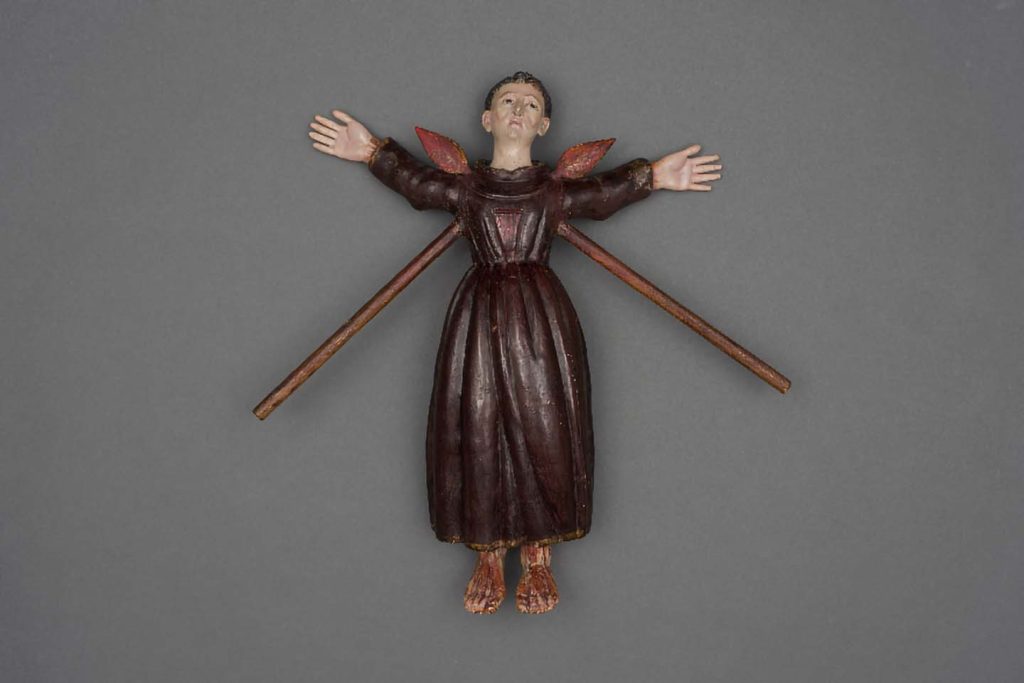
Saint Philip of Jesus, the first Mexican saint and patron saint of
Mexico City. Manila or Mexico, 18th century. Carved and painted
wood, height 50 cm. Collection of Asian Civilisations Museum.
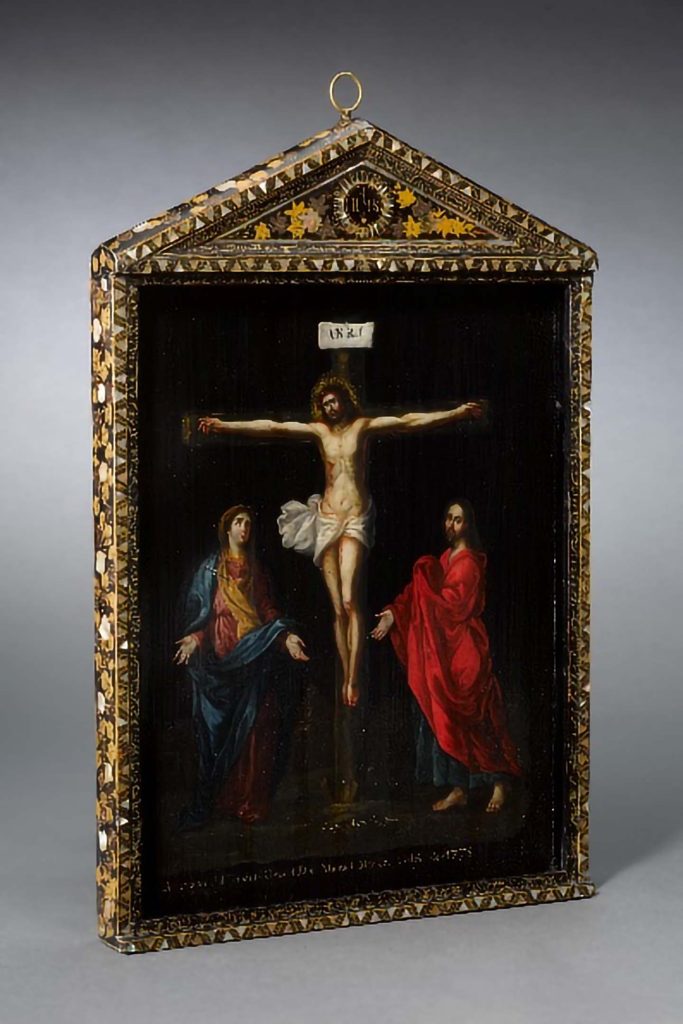
Portable shrine with the Crucifixion. Japan, around 1600,
painted in Mexico by Joseph Almorin, 1778. Lacquer, gold,
mother-of-pearl, oil on wood, 49 Å~ 33 cm. Collection of Asian
Civilisations Museum.
The exhibition’s final three galleries, presented as Tropical: Historias de Asia del Sureste, investigate how modern and contemporary artists from Southeast Asia and Latin America have long engaged in parallel artistic struggles—rejecting colonial narratives, forging new visual languages, and asserting cultural identity.
Featuring 33 works (29 from NGS’s collection), this section traces affinities between influential muralists like Carlos “Botong” Francisco and Galo B. Ocampo, and Southeast Asian modernists such as S. Sudjojono and Hendra Gunawan. Their works converge on themes of nationhood, independence, and reimagining the colonial past—echoed further through the inclusion of a section from Diego Rivera’s Río Juchitán (Cuatro tableros).
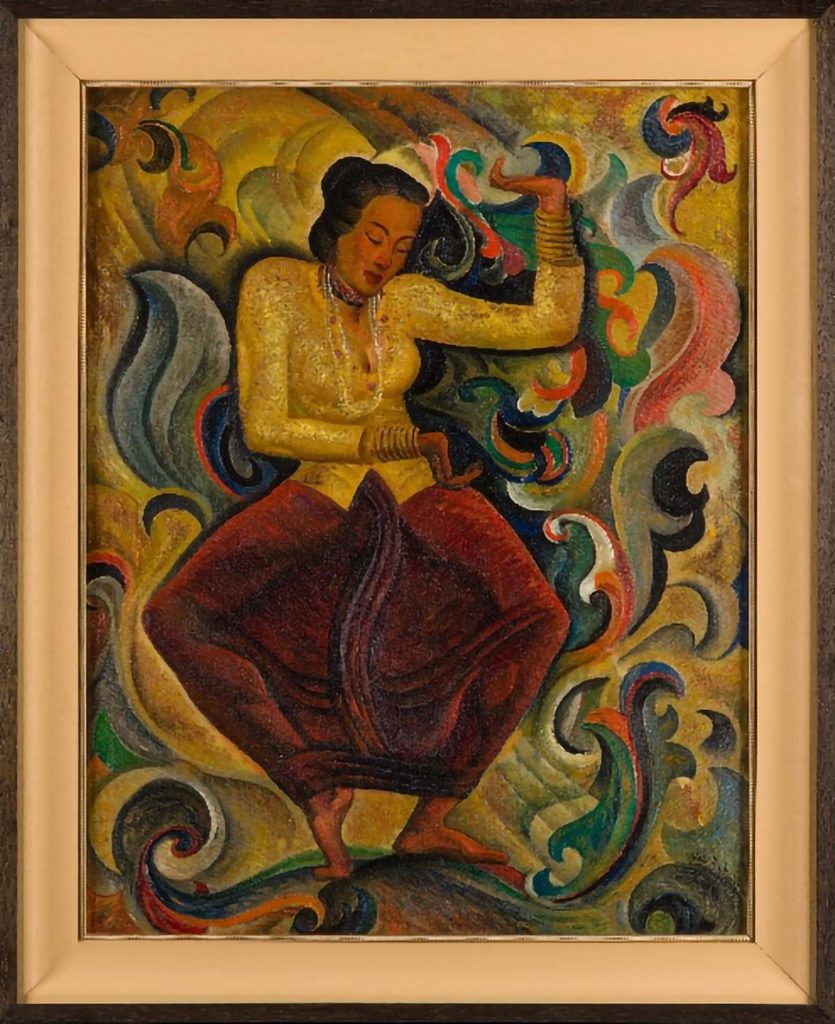
Galo B. Ocampo, Moro Dance, 1946. Oil on canvas.
94.4 x 74 cm. Collection of National Gallery Singapore.
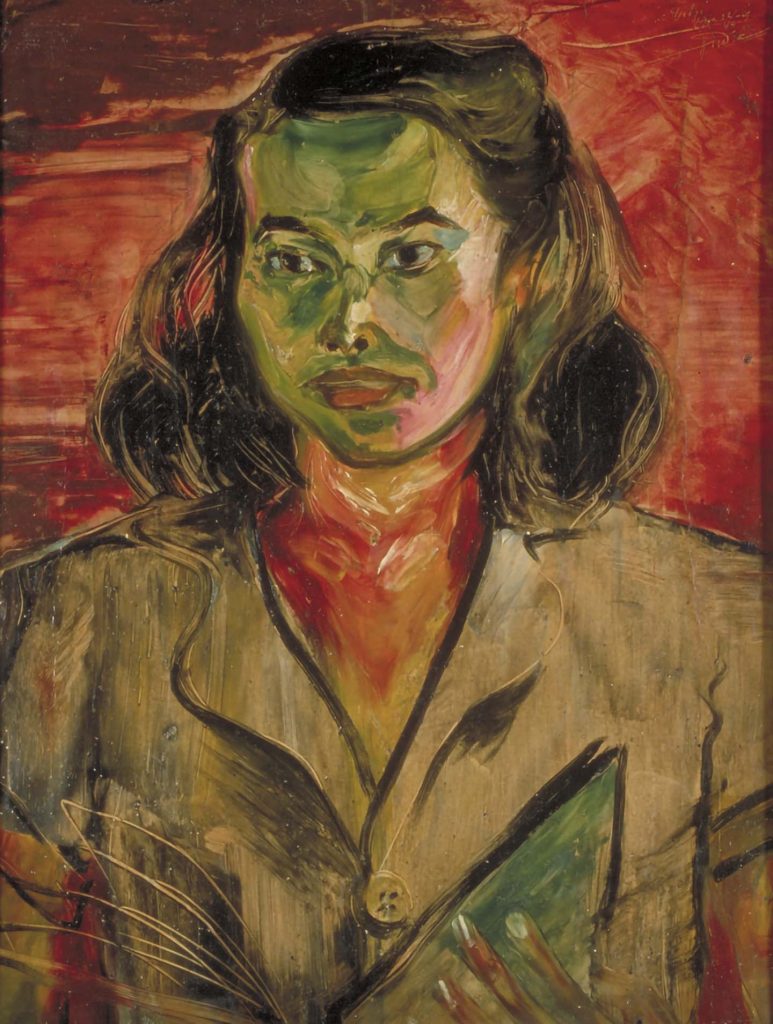
Hendra Gunawan (b. 1918, Dutch East Indies; d. 1983, Indonesia),
Tjitji, 1949. Oil on paper laid on masonite. 64 x 49 cm.
Collection of National Gallery Singapore.
Image courtesy of National Heritage Board, Singapore.
The Library of the Tropics expands this conversation through the lens of Bali, positioned as a site of artistic production shaped by colonialism, mass tourism, and shifting perceptions of the “tropical.” Mexican artist Miguel Covarrubias’s travels between Bali and southern Mexico illustrate striking cultural parallels that continue to resonate today.
Later generations—including Patrick Ng Kah Onn, Latiff Mohidin, and Apichatpong Weerasethakul—further redefine the “tropical” not as a passive backdrop but as an active force of renewal, resistance, and self-determinism. Their works reclaim the tropics from exoticisation, giving it agency and voice.
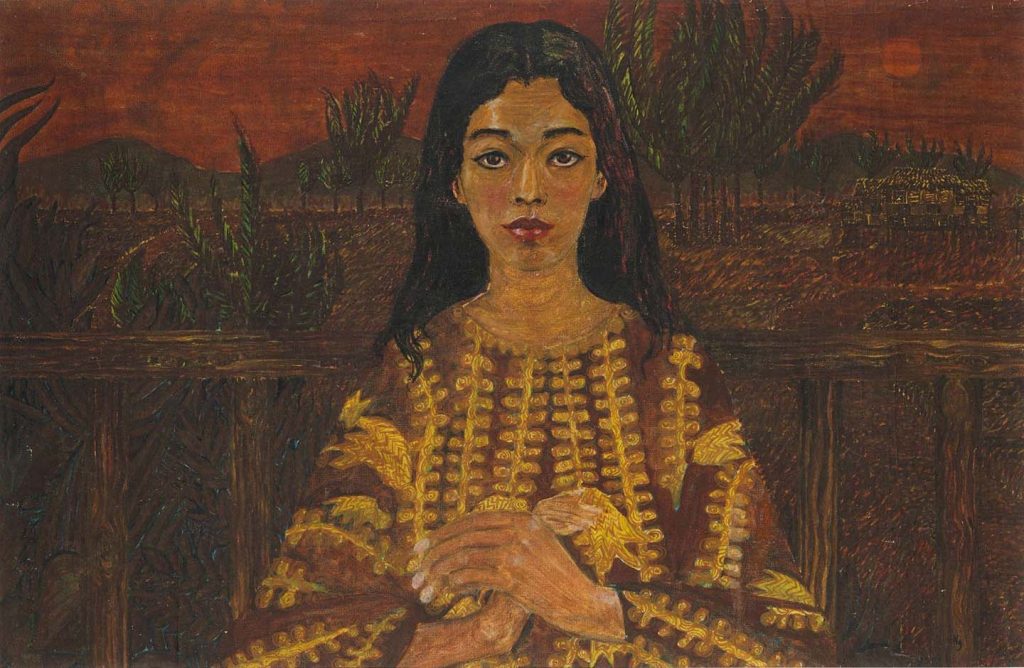
Patrick Ng Kah Onn (b. 1932, British Malaya; d. 1989, United
Kingdom), Self-Portrait, 1958. Oil on paper. 49.3 x 75.3 cm.
This acquisition was made possible with donations to the Art
Adoption & Acquisition Programme. ˝ Family of Patrick Ng.
Image courtesy of National Heritage Board, Singapore
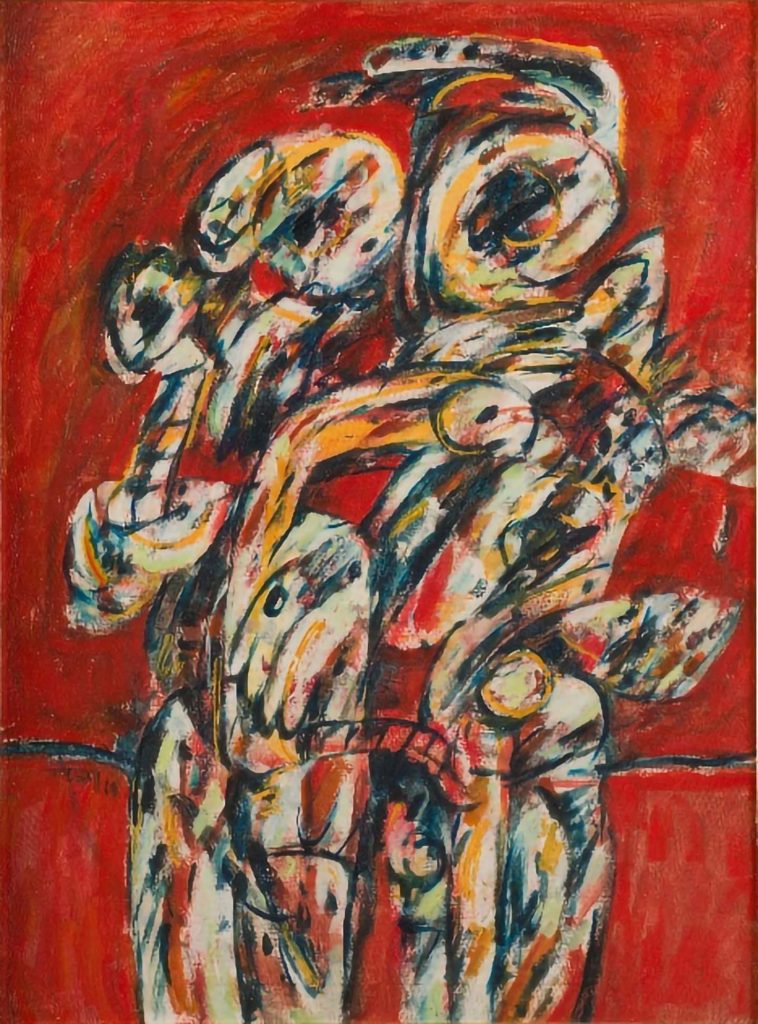
Latiff Mohidin (b. 1941, British Malaya), Two Standing Figures,
1968. Oil on canvas. 88.8 x 67 cm. Collection of National
Gallery Singapore
Somos Pacífico represents a landmark collaboration between ACM, NGS, the Ayala Museum and Intramuros Museums (Philippines), Mexico’s Ministry of Foreign Affairs, and the Ministry of Culture through INAH and INBAL. It also involves the Banco de México Museum, the Puebla Museums, the Franz Mayer Museum, and Casa Barragán, with research and coordination led by the National Autonomous University of Mexico (UNAM).
The exhibition runs from 3 December 2025 to 31 May 2026 at Colegio de San Ildefonso, Mexico City, with a curatorial conference scheduled for 4 December 2025.