

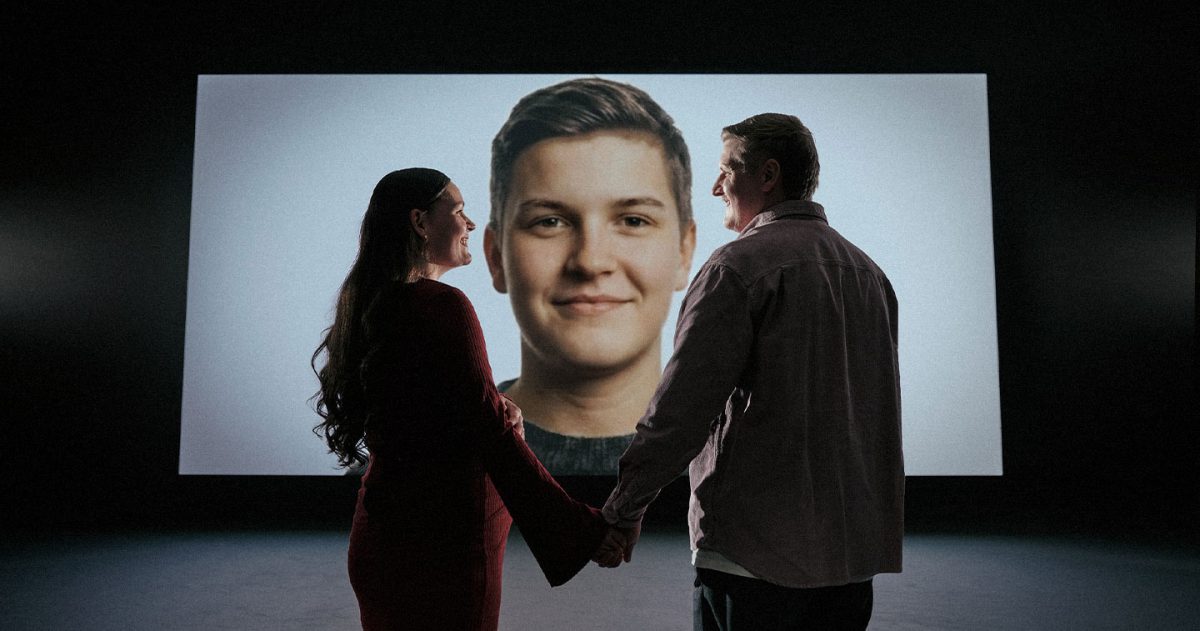
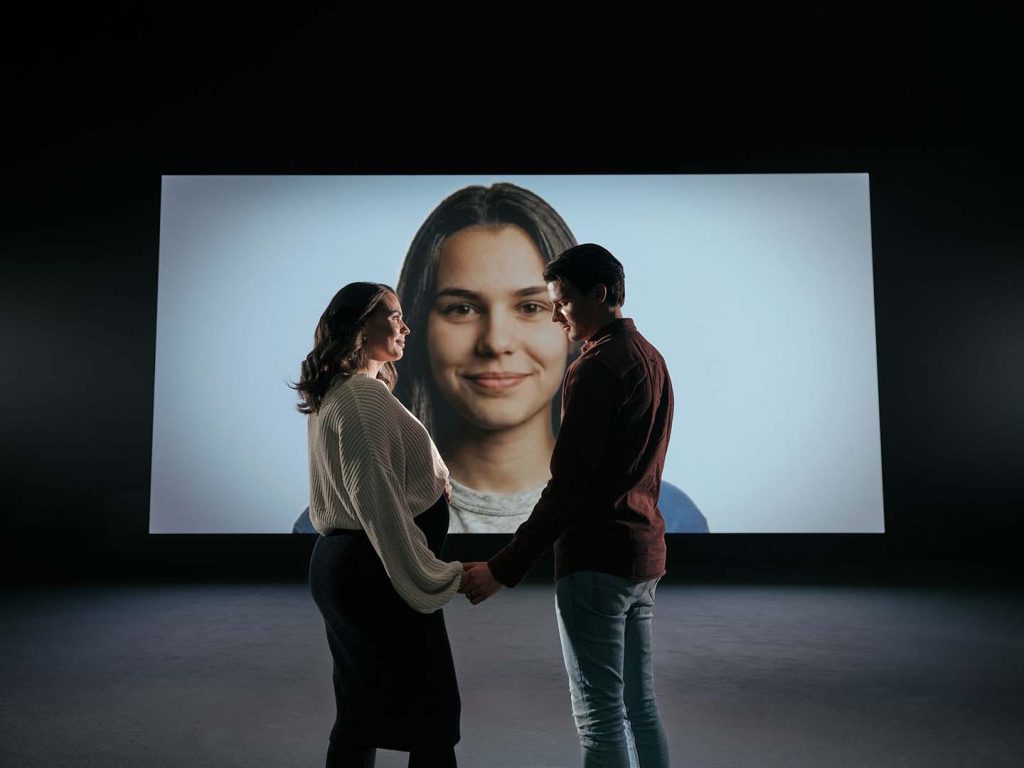
HELSINKI, FINLAND – Finland recruits an entire generation for its 100-year welfare study, Future Finland, by doing something unprecedented: letting expecting couples meet their future children. For this purpose, a first-in-the-world, biologically grounded AI system was built. One that is able to produce a vision of each expecting couple’s future child – who looks like them, sounds like them, knows them at heart, and is ready to have a values-based, real-time conversation.
How the biologically grounded AI system works
To make a future child feel real, the team rooted the AI system in solid ground: the science of inheritance. The custom-built generative AI system was developed on a carefully curated body of genetic and biological research, covering dominant and recessive trait patterns, polygenic blending rules, and family resemblance principles.
These are the same mechanisms that govern how physical features, voice characteristics, and personality traits are inherited and combined between two people.
“The most challenging part was to build a genuinely believable biological synthesis,” says Umberto Onza, Head of AI at TBWA\Helsinki. “A child that looks like them, sounds like them, and whose personality carries something of who they are.”
To achieve that, the multimodal AI system processed each expecting couple individually. It blended facial structures at a genetic level using the parents’ own photographs, synthesized a voice from both parents’ real speech samples, and constructed a personality profile drawn directly from their in-depth interviews. The result was an interactive AI avatar that the parents could have a meaningful conversation with in real time.
“What surprised us most was the emotional response,” Umberto reflected. “When parents heard their future child speak for the first time, that was the moment we realized we had built something far greater than an AI agent.”
Security was taken seriously at every level. All uploaded photos, videos, and personal stories were processed solely to generate the avatar, protected with encrypted cloud storage, and never used to train AI models. Every piece of data is permanently deleted the moment a user chooses to remove their avatar.
The context: Finland launched a 100-year welfare study
In March 2026, Finland launched Future Finland – one of the most ambitious generational research projects ever undertaken.
Led by the Finnish Institute for Health and Welfare (THL), the study will follow children born between 2026 and 2029 and their families for the next hundred years, examining how health, upbringing, living conditions and social change shape well-being across generations.
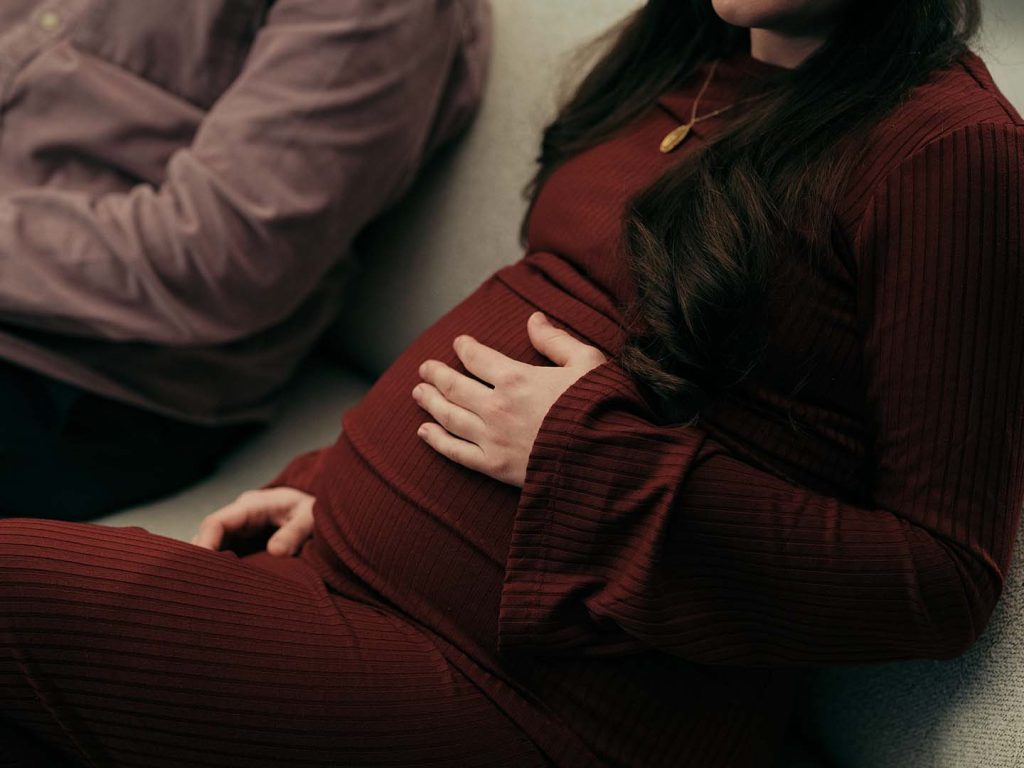
To succeed, the project needs an entire generation, around 200,000 families, to participate. “Long-term research like this is part of the responsibility of a forward-looking society,” Anna-Mari Aalto, Project Director of the Future Finland study said. “The knowledge created through this research could help societies around the world better understand how well-being develops across generations.”
How the AI system was put to work
Instead of explaining the study through traditional communications, the team behind the launch started with a more human question: What if expecting couples could meet their future child right here, right now?
In a documentary film, four real expecting couples took part in in-depth interviews, speaking openly about themselves, their history, hopes, fears and values. Their responses were carefully captured.
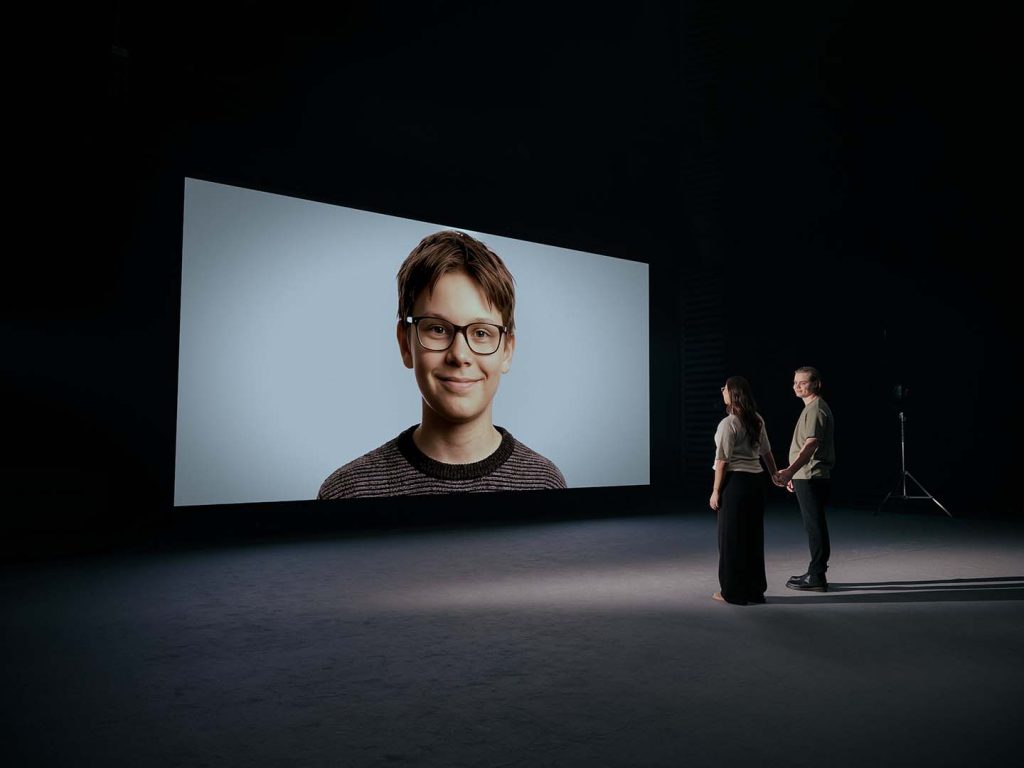
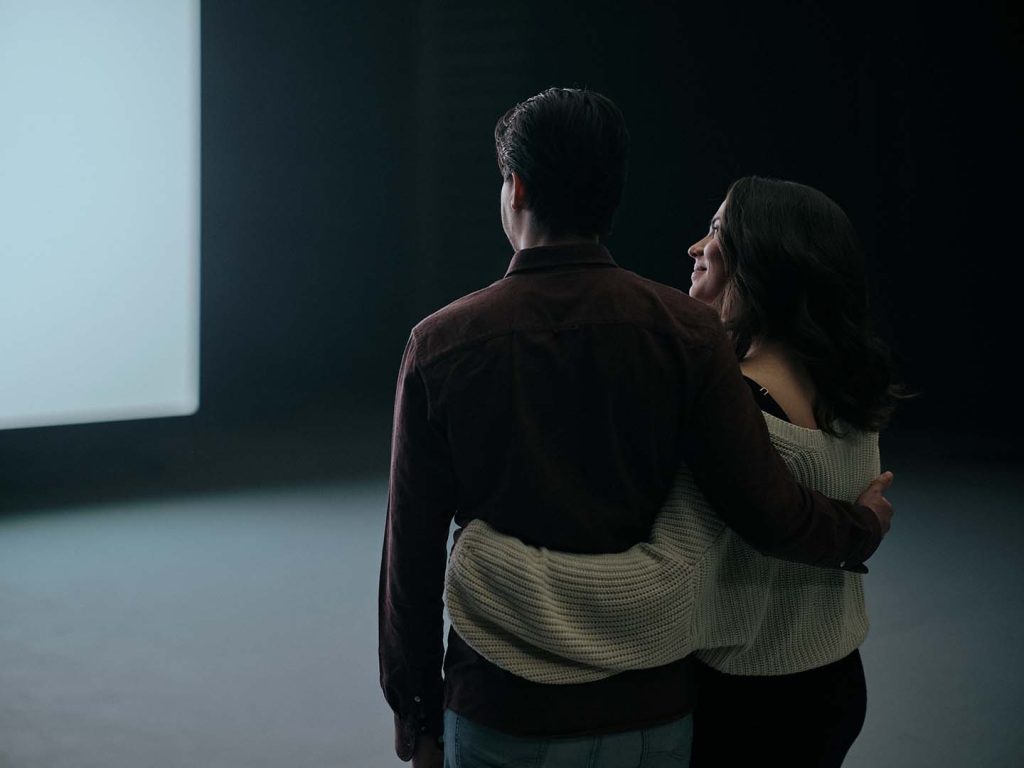
As the documentary’s final reveal, each couple was introduced to their future child and given the chance to have a real, interactive conversation.
Some children reassured their parents. Others thanked them. And some asked them to make a decision that could shape their future. At the end of the conversation, the children invited the parents to join the study.
For many couples, the moment was unexpectedly emotional. “It felt like meeting the future we are hoping for,” said one participant. “It made the decision to join the study feel incredibly real.”
Creative work that builds ‘really real’ experiences
In the current climate of AI and human creativity, the campaign serves as a perfect example of tangible and high-integrity utilization of technology at the very core of evoking emotional impact.
“Many things we see out there are still done for the sake of the hype, unfortunately. We always seek new ways to create experiences that are ‘really real’, and stay true to the mission our client partners are on and to the job they trust us with,” said Mikko Pietilä, Chief Creative Experience Officer of TBWA\Helsinki.
The campaign was about making a vast scientific initiative deeply personal. “When the future feels uncertain, parents still choose hope,” said Emma Kanninen, Senior Creative from TBWA\Helsinki. “So we gave that hope a voice.”