

The first day of Graphika Manila set the stage for learning and inspiration, gathering students, professional designers, illustrators, motion designers, and other creatives, all eager to learn from some of the industry’s best — not just from the Philippines, but from around the world.
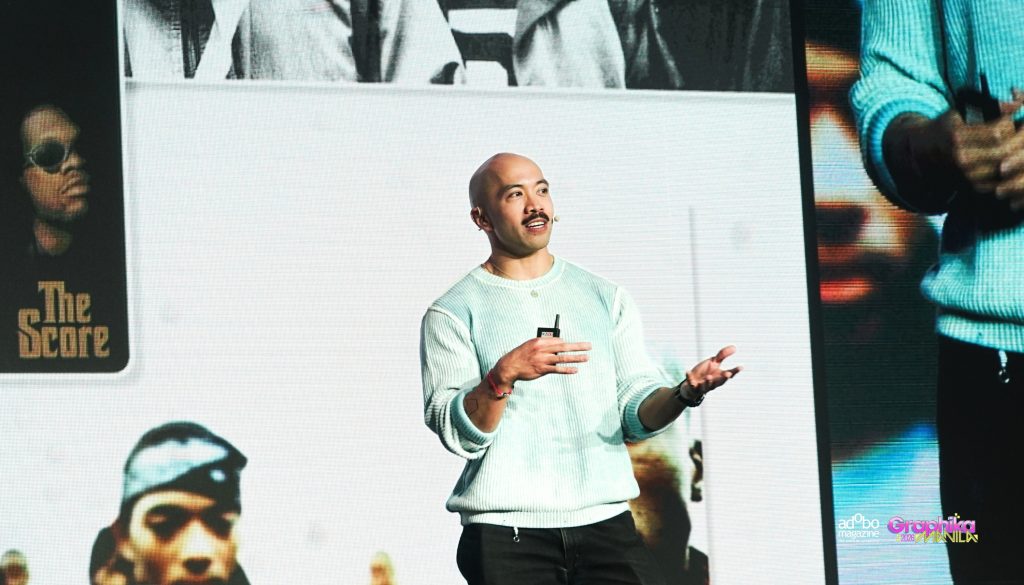
The event took on a global perspective with the day’s second speaker, Rich Tu. A multidisciplinary creative and Executive Creative Director and Partner at Sunday Afternoon, Rich has a portfolio of international clients such as Nike, FIFA, MTV, Paramount, and Skechers, to name a few.
Rich brought Filipino excellence to the global stage as a first-generation Filipino-American with numerous accolades, including being an ADC Young Guns recipient and a Paul Manship Medallion honoree. His solo exhibit, Human Response, was also nominated for a Webby Award.
Even as Rich leads the creative charge at his agency, his work with some of the world’s biggest brands shows that his lessons are of value to any marketer seeking to build brands with lasting cultural impact.
Staying true to his roots
In marketing, there’s a common assumption that making something too personal or too niche will alienate a global audience. Rich proved the opposite.
Rich has drawn from his Filipino heritage throughout his career, incorporating the colors of the Philippine flag and symbols like the national flower, the Sampaguita, into campaigns for brands like Mini Cooper.
“I really love to bring Filipino culture into my work,” Rich told the audience at Graphika Manila. “Using the colors of the Filipino flag and also using this graphic of the hand and the eye as a symbol of self-actualization.”
Perfectionism is fear in disguise
Marketers often stall projects, hoping for the perfect launch. Rich shared a key turning point from his time working on the FIFA World Cup host city poster. Faced with a week-and-a-half deadline and a “mini panic attack,” he realized that perfectionism is simply a barrier to progress.
“Sometimes the thought of being perfect prevents us from moving forward,” he explained. His solution? Embrace the “Notes App” philosophy — starting with simple equations and “bad ideas” to get the momentum moving. For marketers, the lesson is clear: “Done is better than perfect.”
Do your homework
Rich advocates the “uncomfortable” labor of deep-dive research. Working as a creative director for the documentary Breakin’ on the One, he didn’t solely rely on his personal knowledge of hip-hop or his experience as a breakdancer in his early years.
He spent weeks digging through archives, browsing through posters, and ensuring every font and set design element matched the 1980s aesthetic.
“Just because you know something, doesn’t mean that you know everything,” Rich said. “Homework will always come in handy, and it’ll really change the dynamic of a project.”
The courage to be emotionally honest
In 2023, while preparing for the “pitch of his life” for Paramount, Rich received a call from his mother. His father had taken a fall and was seriously hurt. Rich’s father eventually passed away.
“My dad died on the Sunday after that call. I was in shambles,” he recalled. Instead of retreating, Rich confronted his grief head-on and used it to fuel his most personal and most vulnerable project yet: Human Response.
The exhibit was an exploration of how people interact with memory and artificial intelligence. Rich used ChatGPT not just as a tool for efficiency, but as a space for reflection and therapy. He conversed with AI to process the legacy of his father in an attempt to “reconnect with the concept of a person after a physical form has passed.”
Human Response transcended the traditional gallery format; it was an immersive, multi-sensory experience.
Vulnerability can be a catalyst for creativity
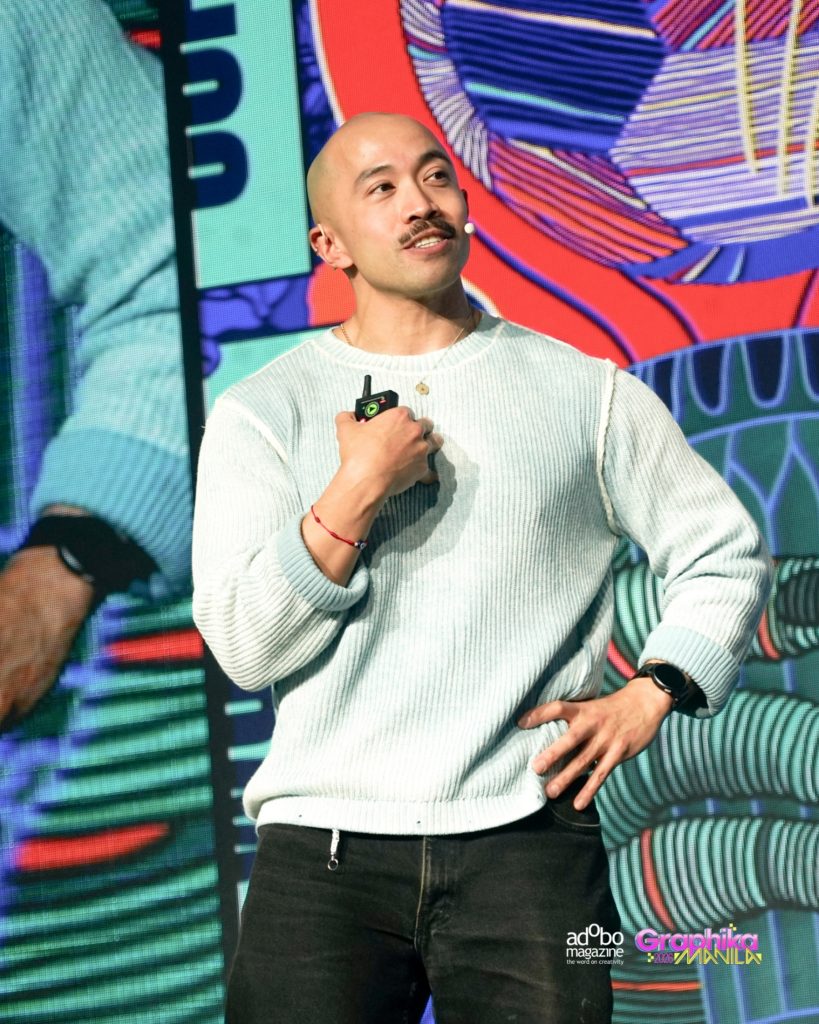
Rich later admitted that sharing this work was terrifying. As an Executive Creative Director, he is trained to be in control, but this personal project forced him to expose his vulnerabilities.
“I know that this is within me, I’m uncomfortable being this emotional,” he said.
Rich’s discomfort confirmed the project’s necessity. He challenged the notion that AI is cold or robotic, and showed that when guided by a grieving human heart, technology can facilitate a level of emotional honesty that traditional mediums might miss.
His exhibit serves as a reminder that the most resonant stories are the ones unafraid to be human. Rich’s ability to win the Paramount pitch while navigating arguably the most heartbreaking period of his life — and letting that pain steer the direction of his exhibit — proves that resilience isn’t about suppressing emotion, but about channeling it into your work.
Discomfort can lead to lasting impact
At its core, Rich Tu’s talk is a call against stagnation. Whether guided by research, cultural pride, or emotional honesty, impactful marketing happens when we leave the safety of the familiar behind.
By choosing the uncomfortable path of vulnerability and persistence, marketers can move beyond transactions and begin shaping culture itself. As Rich proved on the Graphika stage, growth doesn’t happen when we are comfortable; it happens when we have the courage to show up, stay human, and keep creating.
adobo Magazine is an official media partner of Graphika Manila 2026.