
In 2018, Sony Pictures Animation’s Spider-Man: Into the Spider-Verse premiered in theatres worldwide. The movie was a box office hit, grossing over $384 million globally. The main reason? A newly crafted storytelling approach — 2.5D animation, which seamlessly blends 3D computer-generated models with 2D hand-drawn techniques.
Sony has long been making waves in the animation industry. Its films — from the Spider-Man: Spider-Verse franchise to KPop Demon Hunters — have topped box office charts. No surprise there. These animated full-length features stand out for their distinct visual style, dynamic movement, compelling storytelling, and emotional depth.
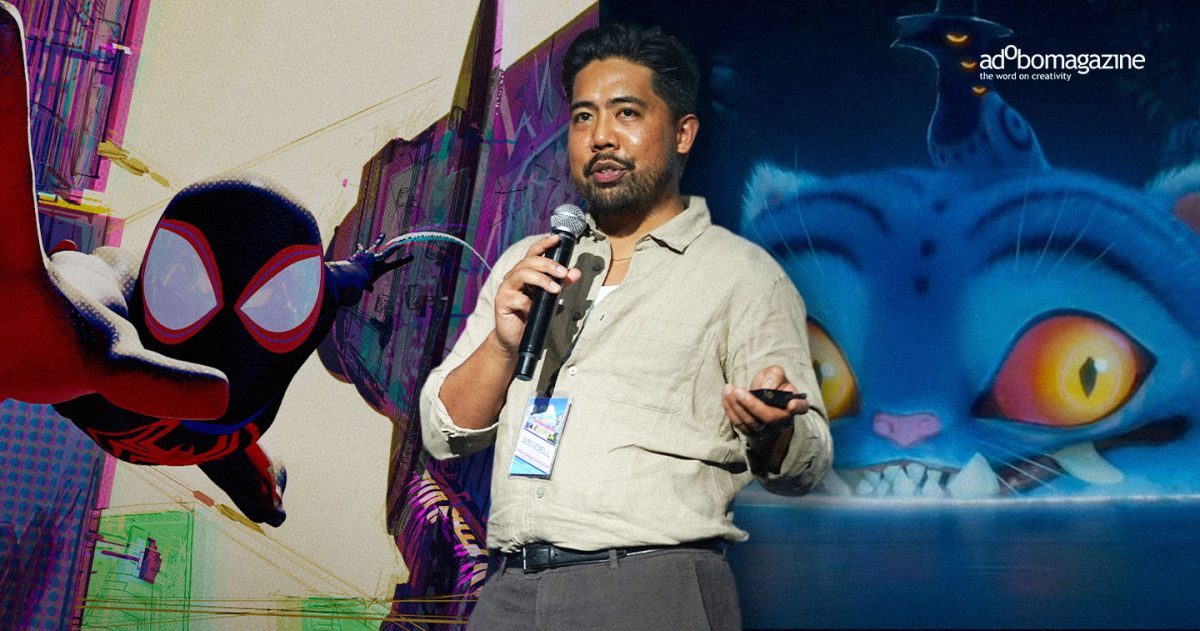
Behind these are top-tier creatives who work tirelessly to satisfy viewers. Among them, Art Director Wendell Dalit stands out as a prime example.

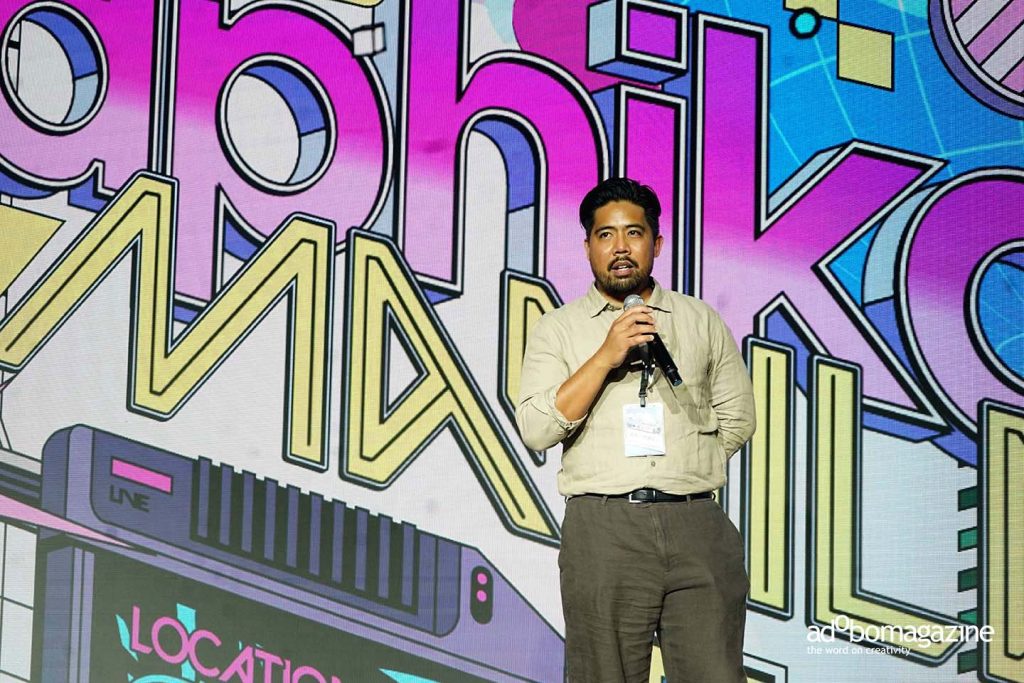
At this year’s Graphika Manila conference, he spoke about his experience working for Sony Pictures Animation and how exceptional visual storytelling has boosted his career.
More about telling a story than drawing a background
In crafting design elements, Wendell pays attention to these questions:
How can we make this thing cool?
How do we capture the audience’s attention within the first 5 to 10 minutes?
How far can we go with our ideas?
But it’s “more about telling a story, than drawing a background,” he emphasized, as Spider-Man: Spider-Verse took around 1,800 shots requiring over 500 artists to finish.
According to Wendell, “all details in environmental set design elevate the space.”
For him, visual development is about using design elements to evoke a reaction from the audience. This includes specificity — the lighting, that panaderia, that random country flag in the background, and even something as simple as how a bread bun looks.
“Most everyday locations can be turned into something special by leaning into the specifics, with light and color helping sell the root and feeling. Specificity will make the most pushed and stylized drawings feel real: the signage on the door, the specificity of the case on display,” he said.
“Even the observed details of the reflections of the windows.”
Wendell explained that these small but meaningful details help sell the idea that the main character is, for instance, about to walk into a Brooklyn panaderia. There is a scene in Spider-Man: Into the Spider-Verse that shows a bakery in Brooklyn, where Miles buys a cake for his dad’s promotion party. Such details also connect the setting to the audience emotionally, as they help viewers remember the feeling of “being” in the panaderia.
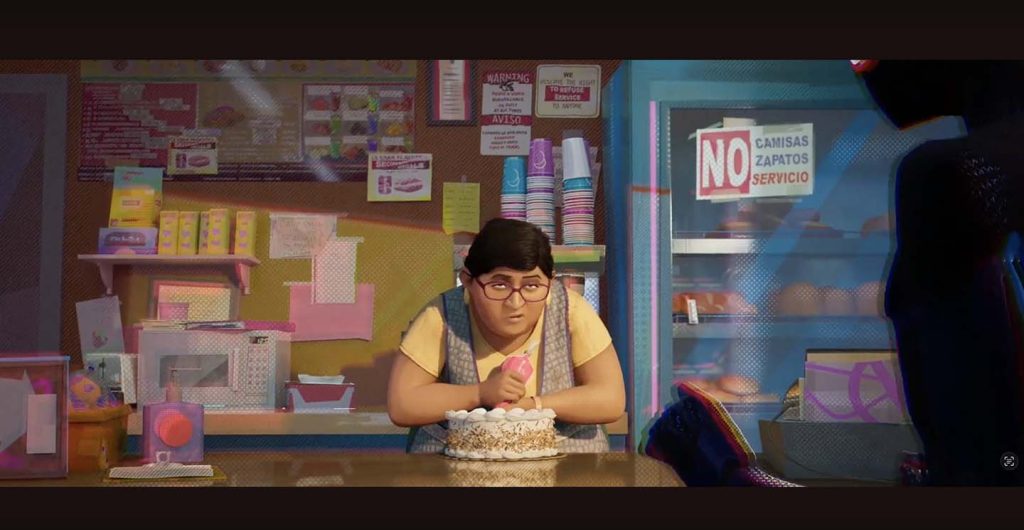
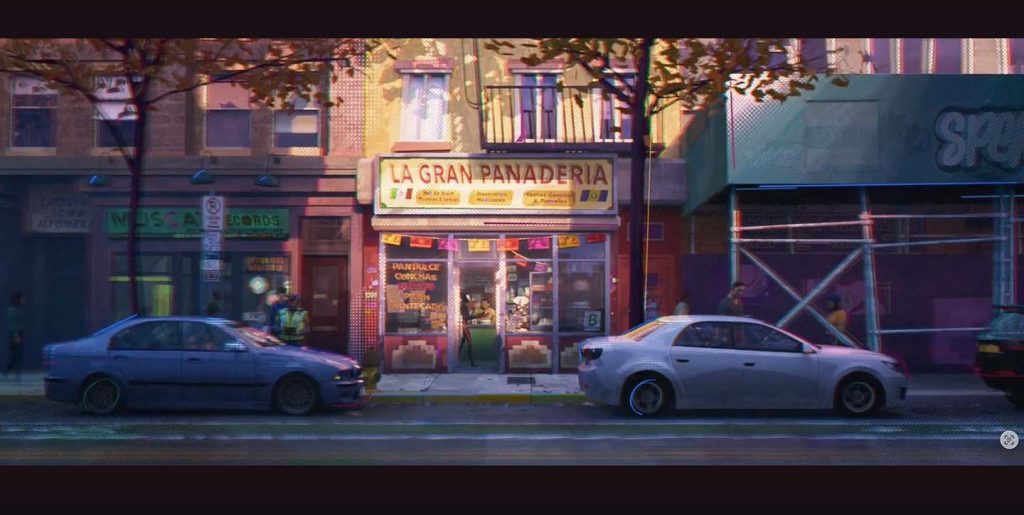
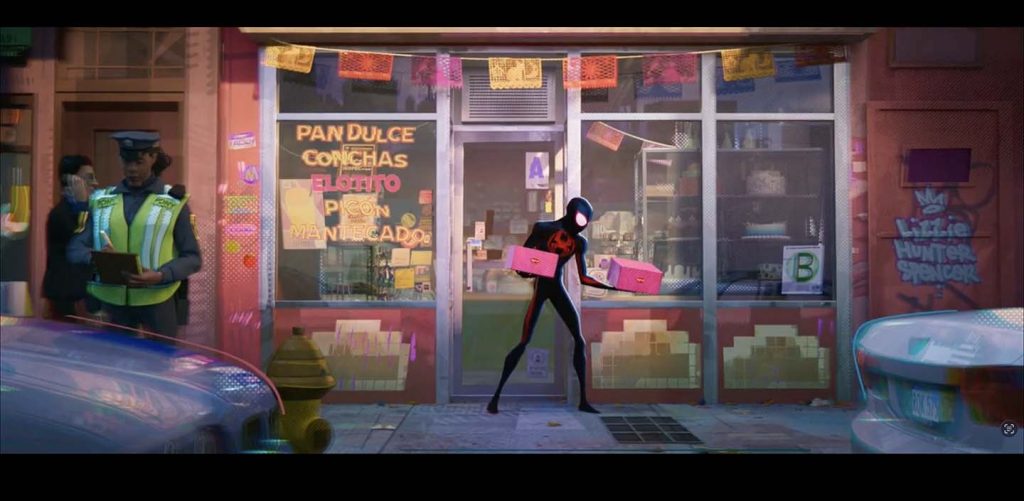
“The small details really do a lot of paddle lifting in terms of making the space feel real and limited.“
Wendell also double-clicked the value of using available technology, citing Google as a way to get references for animation. But don’t limit yourself to online photos, he says — sometimes the best references are right in front of you.
“Yeah, when you’re designing a set, it’s always nice to maybe try to visit one in person because you get a lot more authentic and specific references that way,” he said.
The importance of having references
Wendell advises thinking outside the box and starting from there.
“It’s always easier to push things far, then break it down again,” he said. “One of the unique challenges in helping to make the Spider-Verse films was the variety of styles that we had to come up with.”
K-dramas and anime like Cowboy Bepop and Sailor Moon influenced Wendell’s creative experiments. Many of the film’s references drew from Lobo, the DC comic book character. Another key influence was Indrajal Comics, whose distinct Indian comic book artistry was woven into the animation. He added that the team also explored “chibi” forms in select moments, particularly to heighten comedic or stylized beats.
For Miles’ universe — the film’s main character — the team developed what they called the “1610” Spider style. Its lines, abstracted patterns, color accents, and half-tones all emerged from a deliberate blend of different visual influences.
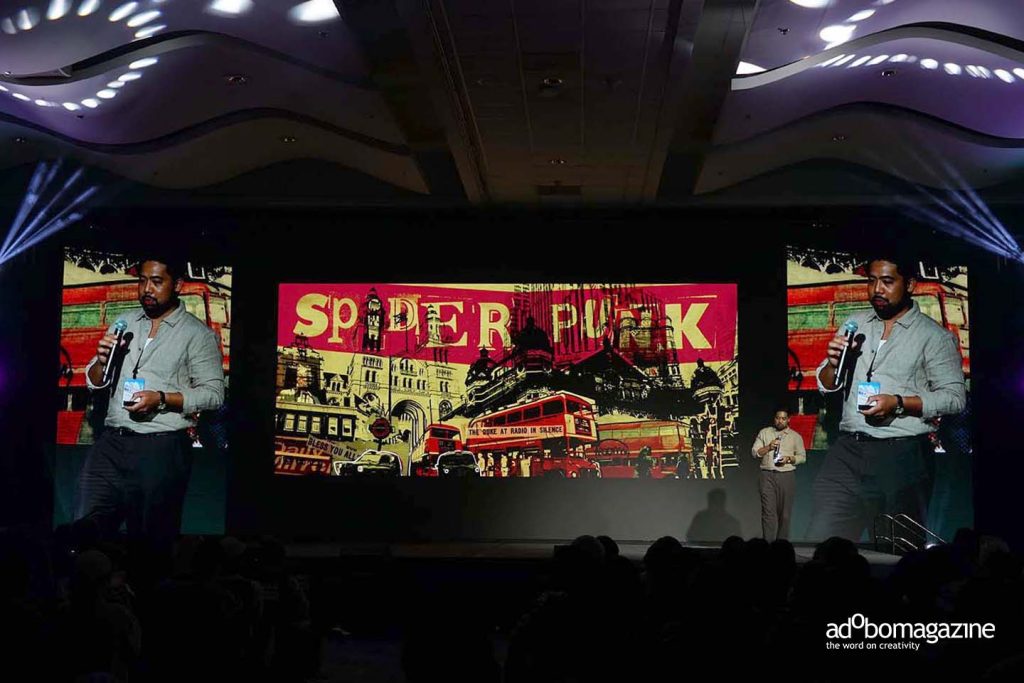
Another fan favorite, Spider-Punk — the cool, political, rebellious, eccentric rock star — was brought to life through a mix of collage and 2D animation, with the punk rock movement as a core influence. Even the sound design drew heavily from punk rock.
Wendell explained, “The punk rock movement was all about anti-establishment, rebellions, social, political critique, and challenging mainstream commercialism. It’s really fitting for a character whose role in the movie was to help Miles.”
“Getting Spider-Punk in frame also helps tie these together, that with some loose ink drawing over the top, kind of helps unify a little bit otherwise being a really chaotic-looking piece,” he added.
Teamwork makes the dream work
During the talk, Wendell underscored the importance of teamwork. With over 1,800 shots and 500 artists involved, it’s the only way to bring a vision like this to life.
“You gotta remember you’re all working on something together,” he said. “You’re in support of the director.”
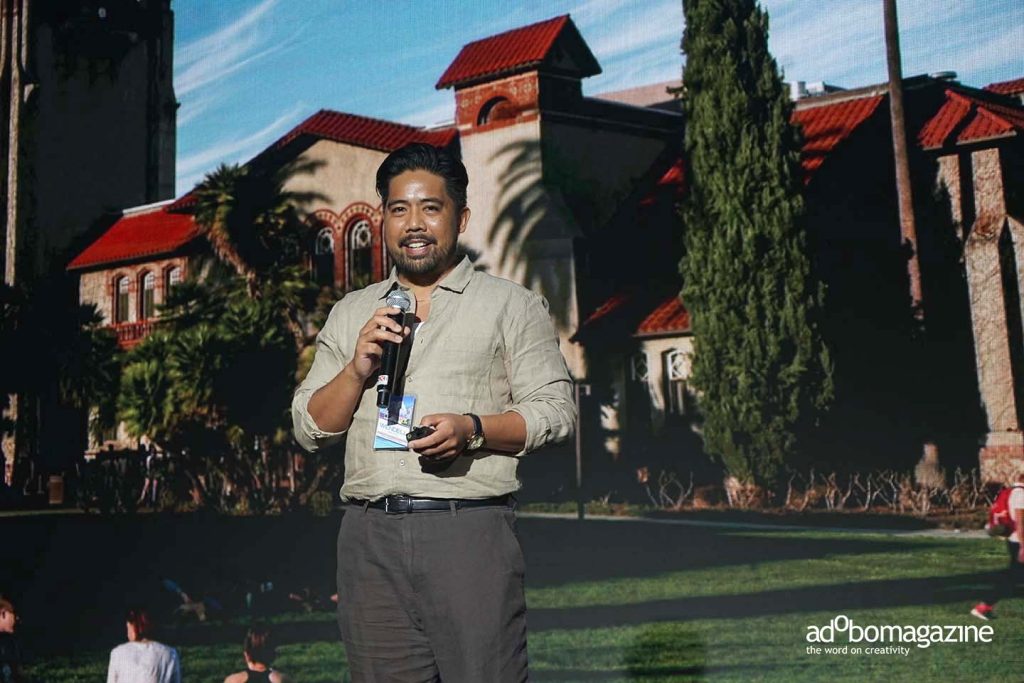
There is so much going on: the camera team setting up 3D shots, the director of photography guiding the crew, the animators geeking out over their work. It’s rarely ever just one thing at a time.
But despite all the overstimulation, one thing should not change. “You must have clear communication,” stresses Wendell. The team must know what the director is trying to say; otherwise, the team will be all over the place.
READ MORE:
Freddie Öst of renowned Swedish branding and design agency Snask still believes authenticity beats algorithms
Puppeteer Studios’ Aurthur Mercader doubled down when the world said no
A queer superhero swallows a stone — and Filipino animation changes forever: How ‘Zsazsa Zaturnnah’ challenges beauty, norms, and expectations