
Brands have been trying to crack gaming for years. Some stumble in loudly. Most leave quietly. Few ever truly belong.
The intersection of brand marketing and gaming culture is one of the most scrutinized — and most misunderstood — spaces in the industry today. It’s a space where the rules of traditional advertising get rewritten, where audiences are more discerning than any other demographic, and where authenticity isn’t just a buzzword — it’s the price of entry.
The adobo Game On team has been tracking this space closely: documenting the campaigns, dissecting the strategies, and calling out the patterns — both the promising ones and the painfully familiar ones. What follows is their latest dispatch.
Oh Joy! It’s GameJoy! A well-loved, globally recognized Filipino brand doing a Creative Gaming campaign that actually respects its gamer audience.
But we are getting ahead of ourselves. Let’s study this.
Background: For years, ever since Game On started and has been documenting and championing the growth of gaming work by brands, we have been seeing patterns emerge (for what is gaming, and navigating gameplay, if not pattern recognition?”)
We have seen many big brands entering gaming follow the same predictable playbook: hack communities (which was cute for a while), pick a game title, sponsor a tournament, slap a logo somewhere inside the experience, and hope gamers welcome them with open arms. Of course, most of the time, they don’t. Gamers are fiercely loyal to the worlds they inhabit, and anything that feels like an intrusion – especially from a brand that clearly doesn’t understand the culture – is quickly called out.
As Jia Zheng, now Sr. Director, Publishing at Riot Games, said during our interview: “The last thing brands should do is tell players to do something else.”
If a brand tells gamers to do something else – do a quirky dance, install a separate piece of software, participate in a silly and impractical challenge – anything that takes them out of their usual gameplay, then that spells automatic alienation for the brand.
When your advertising idea is stronger than your gaming idea, then your brand is in danger of alienating a community that is already averse to advertising to begin with.
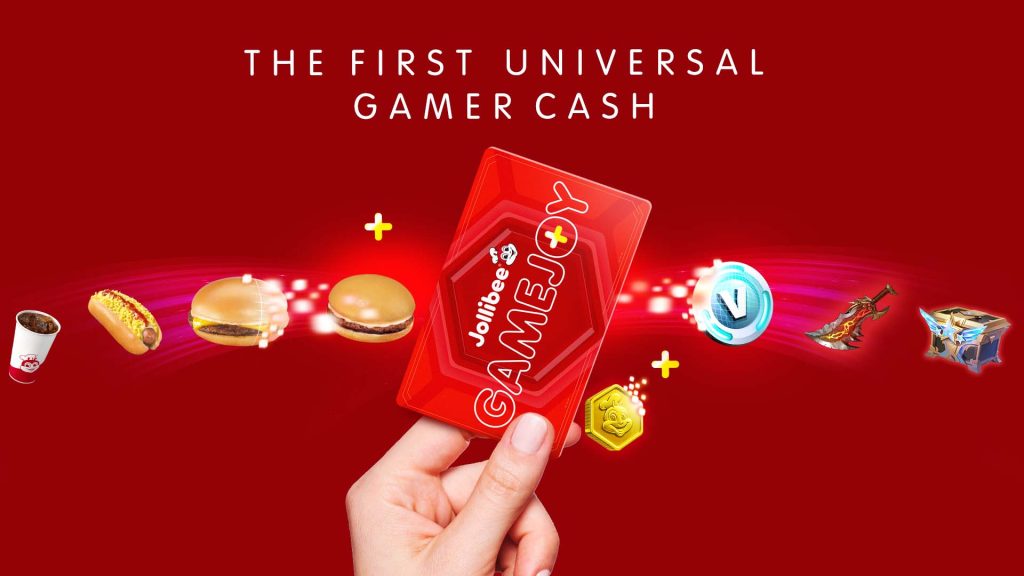
Which is why Jollibee’s GameJoy campaign is quite fascinating – because it simply celebrates what gamers are already heavily invested in: eating and playing games. No complicated gimmicks. Just pure gamer logic.
Instead of trying to “hack” their way into gaming communities with some silly hardware or stunt, Jollibee respected the fundamental truth about gamers: they are not one tribe. They are fragmented across titles, genres, and platforms. So rather than choosing sides, the brand chose something far more interesting – becoming useful to all of them.
GameJoy, powered by UniPin, essentially turned Jollibee meals into a universal gamer currency – a sort of universal video game money that is usable across thousands of PC, console, and mobile games. Not just one ecosystem. The entire gaming universe!
That small strategic shift makes all the difference. The brand isn’t pretending to be a gaming company. It isn’t talking down to gamers. It simply understands its role in their lives. Jollibee transcended being an advertiser and did what it does best: food, scale, accessibility – and connected that to something gamers genuinely value: in-game currency. With more than a thousand stores nationwide acting as distribution points for GameJoy, the physical world suddenly becomes a gateway to digital play.
The results speak loudly. Beyond massive engagement numbers and sales in actual combo meals (imagine that, getting gamers to actually eat), the bigger win is cultural credibility. By rewarding all gamers instead of picking favorites, Jollibee literally – and virtually– connected gaming communities.
In a landscape where brands often struggle to authentically enter gaming, GameJoy shows something important: sometimes the smartest move isn’t trying to become part of the game. It’s helping players keep playing. What Joy!
Game On, indeed!