

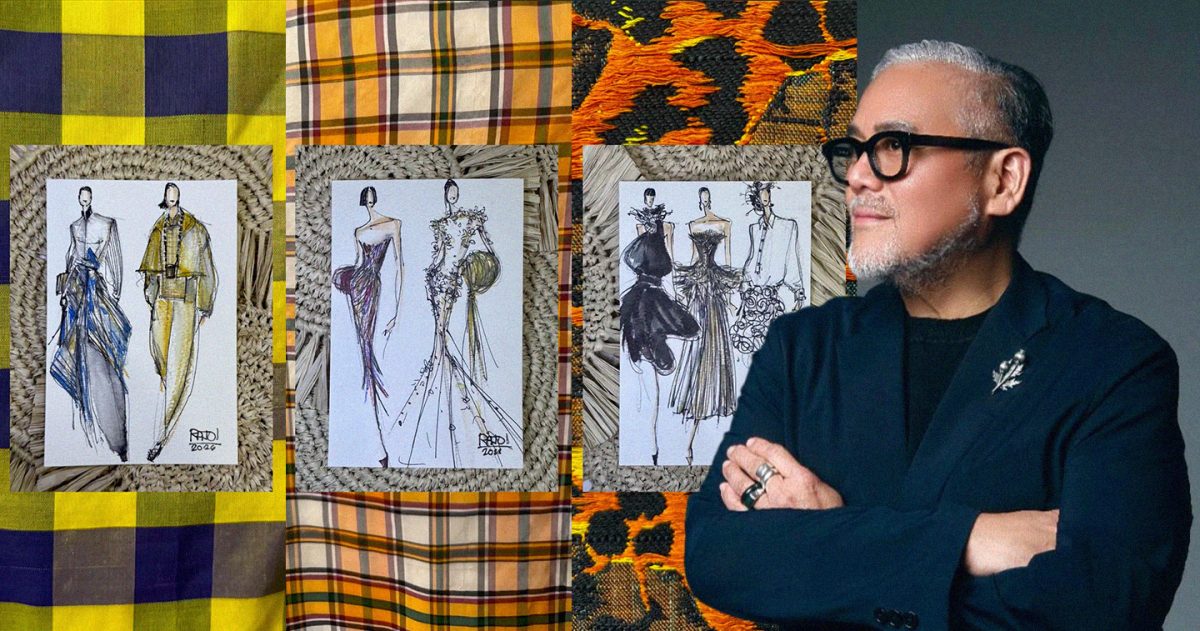
MANILA, PHILIPPINES – In its continuing mission to promote Philippine creativity, cultural diplomacy, and the cultivation of our country’s creative economy, the Department of Trade and Industry (DTI), through the Philippine Creative Industries Development Council (PCIDC), announces the artistic presentation “Malikhaing Pinoy: Lahi.” This event is a celebration of Philippine heritage through a 30-piece couture collection by renowned Filipino designer Rajo Laurel. The collection is slated to reveal an inspired visual journey, exploring the realms of Philippine identity, history, community, and geography, and finding harmony amongst these design narrative touchpoints.


Set to be staged on January 30, 2026, in Bangkok, Thailand, this grand Philippine fashion showcase is part of the landmark partnership PCIDC established with Thailand’s Creative Economy Agency (CEA), a milestone alliance that not only serves to enhance cross-border collaboration but also provides a platform for strategic trade.
A look into Rajo Laurel’s creative journey for Malikhaing Pinoy
“’Who is the Filipino?’ This is the question I explore in this collection, Lahi,” reflects Rajo Laurel. “Fashion has been my medium to understand heritage, identity, and culture—not only through materials, but through how our people interact, the values that guide us, and how these stories can remain relevant for today and for future generations.” He adds, “Being Filipino can mean many things. There is no single definition of our culture. With Lahi, my perspective bridges who we are and who we can become. Understanding our roots empowers the future.”
Laurel’s evocative design voice is emboldened by handcrafted works and accessories exclusively developed for the collection by some of the country’s most celebrated creatives such as Arnel Papa, Celestina Maristela Ocampo, Cholo Ayuyao, Monchét Diokno Olives, and MX Studios by Maxine Santos Tuaño. Together, they complete the design narrative with head-to-toe looks that crystallize the vision.


The result is a collection that blends elements of history, identity, geography, and community through the designer’s contemporary artistic lens. Laurel emphasizes, “Lahi is a storyboard of Philippine fashion developed through collaboration. Bayanihan is a core Filipino value. There is strength in creating a point of view together with other Filipino creatives. This dialogue opens up, deepens the conversation, and allows us to experiment, direct, and define new ideas and voices. The process was truly exciting and enriching.”
Malikhaing Pinoy: Design exploration and collaborations
The “Mestiza” reinterprets the traditional palma and camisa/blusa ensemble using woven and dyed jusi from Iloilo, paired with a skirt in raw silk and abaca from Abra. The ensemble is accentuated by black silk royal blooms with coq feathers crafted in Pampanga by Cholo Ayuyao, demonstrating meticulous Filipino artistry.
The “Kadayawan,” inspired by Mindanao’s festive celebrations, features a bodice made of hand-woven straw from Sorsogon and cropped culottes using a “jut”-inspired technique made from rayon and silk woven in Ilocos, highlighting regional weaving traditions.
“Datu” draws from the heritage of the T’boli tribe, combining paper silk with ramie linen trousers and the traditional malong, accented with a tampipi from Benguet and a giant bead tassel from Dumaguete, exemplifying the cultural depth of indigenous materials.


“Manileña” and “Bagong Barong” offer modern interpretations of the barong tagalog, crafted in jusi and styled with farmer-inspired silhouettes and jute bibs. The ensembles are completed with handmade stampitas by Cholo Ayuyao and lanyard abaniko by Monchét Diokno Olives of Casa de la Mercedes, emphasizing the collaborative spirit and regional craftsmanship of Filipino artisans.
Inspired by world-renowned Baguio weaver Nada Capunan, another ensemble brings together Mountain Province’s earthy hues and storytelling through weaving techniques. It is paired with a crocodile bag by Masbate-born Celestina Maristela Ocampo, creating a multidimensional visual showcase of texture, color, and Filipino creativity.
“Paradiso,” developed in collaboration with Arnel Papa, pays homage to the natural beauty of Palawan. The gown incorporates Palawan’s world-class pearls with capiz shells from Bacolod, paired with an oversized raffia straw clutch to create a striking, ethereal effect. This ensemble exemplifies the innovative use of Philippine materials and imaginative design thinking.