
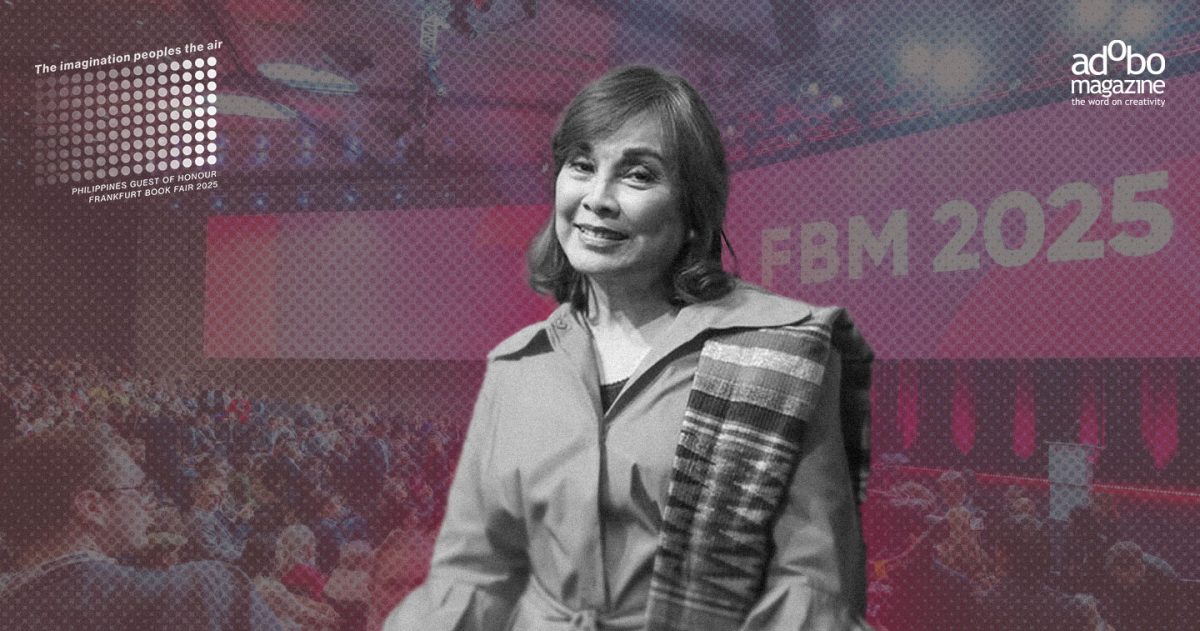
MANILA, PHILIPPINES – At the Frankfurt Book Fair 2025, the Philippines stood not merely as a guest of honor, but as a nation of ideas. For Senator Loren Legarda, who spearheaded the country’s historic participation, this global stage was not the culmination of cultural aspiration – but proof that sustained policy, imagination, and institution-building can transform culture into national infrastructure.
“My purpose was to position the Philippines as a nation of knowledge, research, and creative production,” Loren began, reflecting on the years of groundwork that made the Frankfurt Book Fair milestone possible. “Through legislation, institutional coordination, and investment in human capital, we have linked education, publishing, and cultural exchange into a single framework.”
Building the cultural infrastructure of a nation
The senator, long recognized as one of the country’s most committed champions of culture, heritage, and the arts, sees Frankfurt not as an isolated triumph but as part of a ten-year continuum of work — one that threads together education, diplomacy, and creative industry development.
From the Sentro Rizal network to the Philippine Studies Program and the nation’s return to the Venice Biennale after 51 years, each initiative, Loren explained, was “designed to generate tangible results for Filipinos across sectors.” These programs did more than showcase art or literature; they built professional ecosystems for translators, cultural managers, and designers.
“The Frankfurt participation builds on this infrastructure by opening new trade, academic, and tourism channels that benefit writers, educators, artisans, and entrepreneurs,” she said. “Its impact extends from classrooms and museums to MSMEs, where culture supports livelihoods and sustains the global visibility of Filipino talent.”
Culture as economic strategy
Loren’s conviction that “culture is not an accessory to development” finds its legislative embodiment in the Philippine Creative Industries Development Act, a law she authored to strengthen copyright, stimulate creative trade, and professionalize the cultural workforce.
By treating the Philippines’ guest of honour status as a strategic investment in the creative economy, she emphasized how literary and cultural partnerships translate into real jobs and opportunities. “It expands opportunities for Filipino writers, artists, and publishers to engage in global trade, translation, and education partnerships that generate employment across multiple industries,” she said.
Here, cultural diplomacy becomes economic strategy — a bridge that connects imagination with enterprise.
‘The Imagination Peoples the Air’
The theme of the Philippine Pavilion, “The Imagination Peoples the Air,” captured the spirit of this vision. Rooted in the legacy of Dr. José Rizal, it celebrated imagination as the most vital form of national power – one that fuels both thought and transformation.
“Through the writings of Dr. Jose Rizal, he transformed language into a tool for emancipation and proved that thought itself can change the course of a people’s history,” Loren said. “In a time when societies are tested by conflict and division, imagination enables the capacity to reason, to engage, and to converse across difference.”
For Loren, imagination is not escape but resistance – a civic muscle that sustains integrity, creativity, and collective understanding. It’s a message that resonates beyond Frankfurt, in classrooms and communities where imagination remains the first act of nation-building.
Soft power through storytelling
When asked about the role of Philippine literature in global soft power, Loren’s response was both poetic and pragmatic.
“Philippine literature is the nation’s most persuasive form of influence because it speaks to both intellect and empathy,” she said. “Every Filipino story carries the knowledge, humor, resilience, and ingenuity that define our people.”
Through books, translation, and storytelling, the Philippines asserts itself not just as a source of creativity but as “a partner in thought.” Each work of literature, she noted, becomes a site of dialogue — a way the world can “encounter a people who think deeply, create generously, and are inspired by their indigenous roots.”
A future written in culture
In the vast halls of Frankfurt, surrounded by stories from every corner of the world, the Philippines stood tall – not as a newcomer, but as a nation that had long been writing its place in the global imagination.
What Loren and her collaborators have built is a model for how cultural leadership can shape not only perception but prosperity. “When the world reads us, it encounters a people who think deeply, create generously, and are inspired by their indigenous roots.”
As the stories of Filipino writers travel further into the world, they carry with them the spirit of a people whose imagination continues to build bridges between past, future, the Philippines and the world.
adobo magazine is with the National Book Development Board of the Philippines at the 2025 Frankfurt Book Fair.