

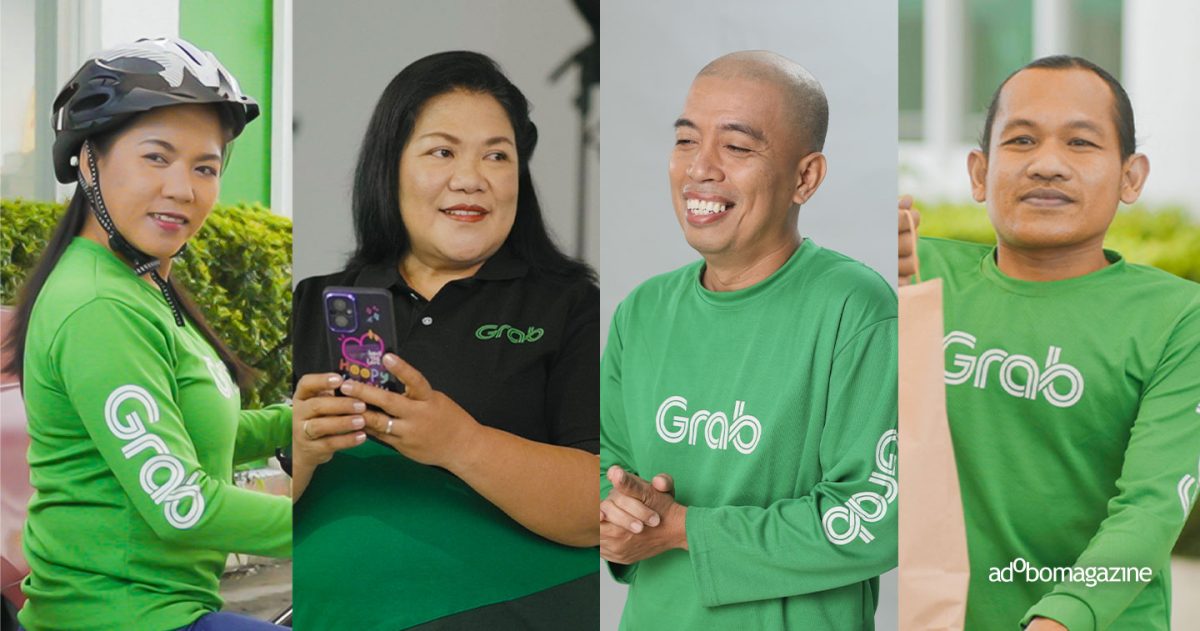
MANILA, PHILIPPINES – There is a particular intimacy to our everyday experiences with Grab. It lives in the warm greeting at the door, the choice of radio station as traffic stalls, the careful pause before a sudden merge, the quiet relief of arriving home long after dark. These interactions last minutes, but together they form the social fabric of a city — micro-moments of trust that commuters rarely name, yet always feel.
For Grab Philippines, those human connections are not incidental. They are the platform.
Which is why, in an era when marketing has become increasingly creator-led — and increasingly synthetic — Grab is betting on a different kind of influence: one that starts not from the studio, but from the driver’s seat.
From KOLs to kinship: reimagining who gets to represent the brand
The marketing industry has long relied on professional storytellers, creators, and KOLs to translate a brand into culture. Grab has used that playbook too. But in the Philippines — where trust is personal, community is currency, and word-of-mouth still travels faster than media buys — Grab recognised a deeper storytelling reserve inside its own ecosystem: driver-partners with lived experiences that feel more credible than any script.

The result is the Grab Driver AI Ambassador Program, a creator-style initiative that equips selected driver-partners to produce and publish content at a scale traditional production workflows cannot reasonably sustain — while keeping the storytelling fundamentally human-led.
Grab Philippines’ Head of Integrated Marketing Services, Jewel Oliveros, describes it as a strategic pivot in what influence can mean.
“The Driver AI Ambassador Program is designed to reimagine influence — shifting it from traditional content creators to the people who live the brand every day: our drivers. AI is the enabler, but the stories, the voice, and the truth come from them,” shares Jewel.
One of the program’s pioneer participants, Patrick Pidlawan Duque, a PWD GrabFood delivery-partner, said being featured provides an opportunity to share his story and widen visibility for delivery-partners. “Yun po kasi kahit paano po makakatulong rin po sa akin. Yung ma-kapagkwento ka sa mga social media,” Duque said. “Yung magagawa ng pag-onboard po namin dito sa pagiging AI models ng Grab po, kailangan din po namin ma-expose para makilala ng iba. At para makatulong din po sa aming pamilya.” This AI-enabled creator model offers a competitive compensation package, treating driver-partners as ambassadors with industry-standard remuneration. This effectively creates an additional income stream for driver-partners who opt into the program.
At its best, the idea is disarmingly simple: a storytelling model where drivers are at the center of the story — not just the journey.
The production bottleneck: authenticity doesn’t scale easily
Of course, “authentic storytelling” is not a strategy unless it can be executed consistently. Grab operates at a scale where powerful stories exist everywhere — across dialects, provinces, backgrounds, and lived realities. Capturing those stories through traditional production cycles is costly, slow, and often selective by necessity.
As Jewel puts it, the constraint isn’t the lack of stories — it’s the mechanics of making them. “A lot of marketers can relate to this: the number one challenge is producing materials. Reaching out to drivers, recording their stories, and turning them into content — those cycles can take weeks, even months.”
In other words: the story supply is abundant; the production bandwidth is not. That is the operational friction the program is designed to solve.
AI as an exponent, not a replacement
What makes Grab’s approach notable is not that it uses generative AI — many brands now do — but how it positions AI in the workflow: as an amplifier of human storytelling, not a substitute for it.


Drivers provide the core material: their photos, their recorded voice, their anecdotes about passengers, family, safety, community, livelihood — the lived details that make a narrative believable. AI then helps transform that raw input into multiple formats: short-form video, captions, art cards, and other modular assets designed for social distribution.
The logic is pragmatic: if the human truth is the scarce asset, then production should not be the limiting factor.
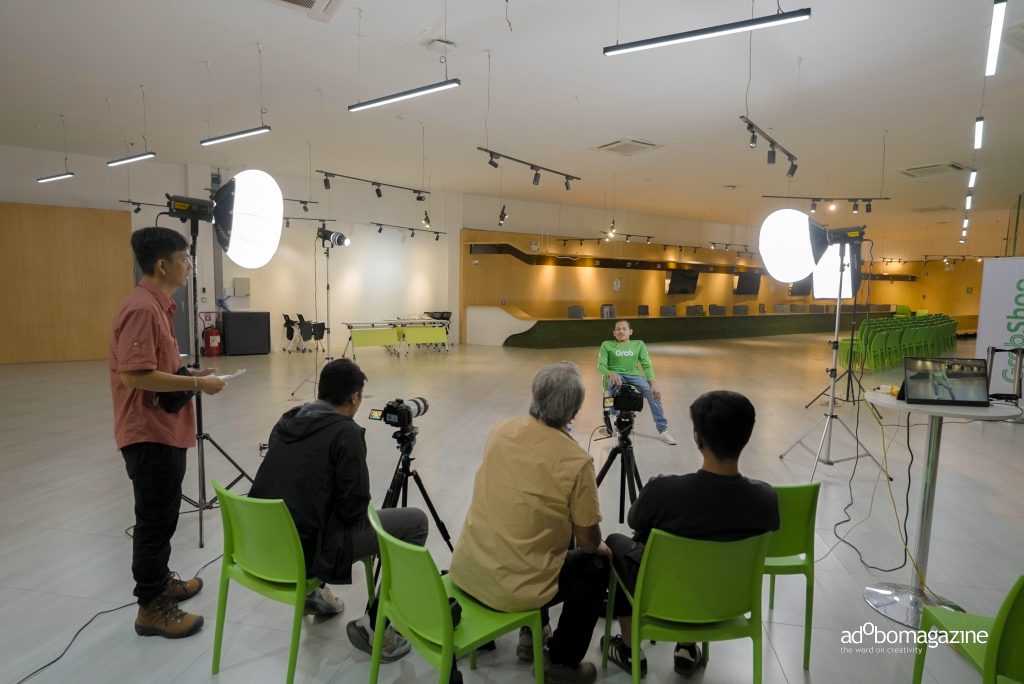
“We look for drivers with real stories that people can relate to,” Jewel says. “Then we turn those into content using AI — but always grounded in what’s real and provided by the drivers,” Jewel adds.
This is a subtle but meaningful reframing for marketers watching the category: AI is doing the heavy lifting of execution, so humans can remain the source of meaning.
Ethics as product design: consent, transparency, governance
Any program that blends personal identity with generative media must answer a hard question: where does empowerment end and exploitation begin?


Grab’s pitch is that ethics is not a disclaimer — it is part of the product design. The program is structured around three non-negotiables: consent, transparency, and human governance.
- Consent is explicit and informed. Drivers are screened for willingness, comfort, and clarity about how their stories and likeness will be used.
- A “human-in-the-loop” process is enforced. The marketing team conducts interviews and fact-checking to capture nuance and avoid AI-generated misrepresentation.
- Disclosure is consistent. Content is labelled as AI-assisted/AI-generated both in the caption and within the asset itself, ensuring audiences are not misled about the production method.
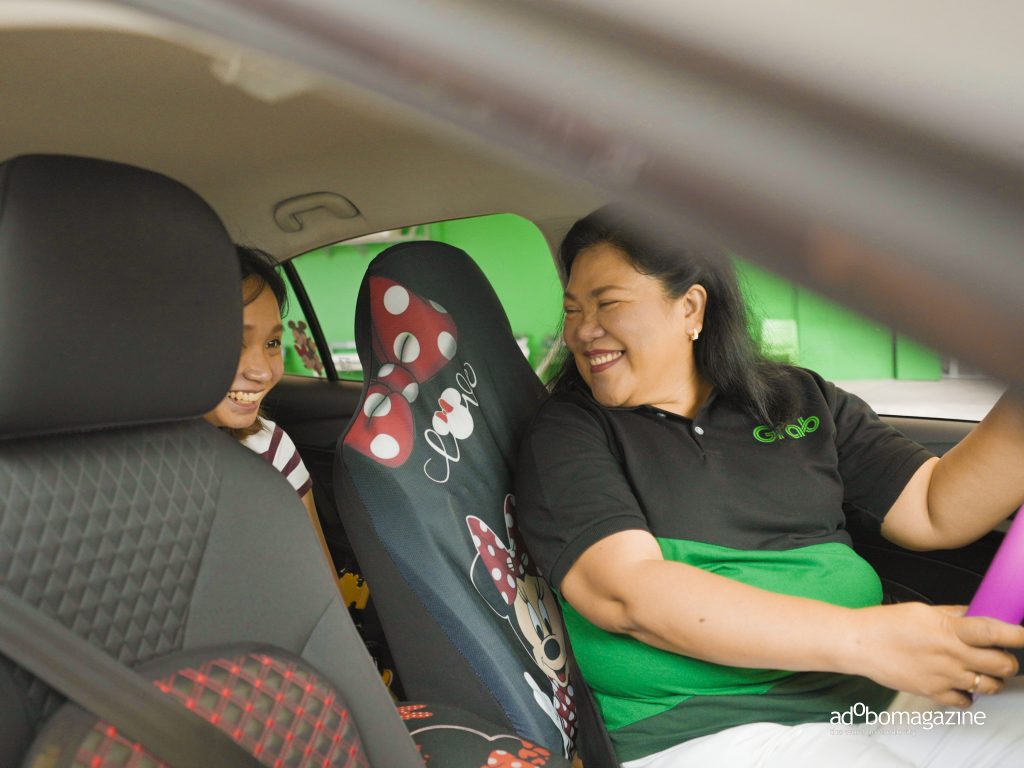
This level of disclosure matters. As brands race to incorporate generative AI, many are discovering that the true reputational risk is not the use of AI — it’s the perception of deception.
Jewel frames the program’s approach in a way marketers would do well to remember, and adds “Trust is the currency of the future. Our commitment is to use AI for good.”
In a market shaped by disinformation anxiety and low institutional trust, that stance is not moralising. It is competitive.
A creator economy model — with fair value exchange
The other progressive element is economic: Grab treats participating drivers not as unpaid “brand faces,” but as creators whose time and identity have value.


The program is structured like a creator initiative, with clear remuneration aligned to ambassador standards — creating a legitimate new income stream for driver-partners simply by sharing their lived experiences, with safeguards in place.
It’s a critical distinction. Too many “community storytelling” campaigns ask people to contribute authenticity while the brand keeps all the upside. Grab’s model argues for a more equitable exchange: if a brand benefits from someone’s story, that person should benefit too.
Why it works: marketing that feels like the Philippines
For audiences, the content lands because it carries the texture of everyday Filipino life: humour, grit, resilience, and the unglamorous realities of livelihood. For the brand, it opens something equally valuable: range.
Instead of capital-centric narratives, Grab can highlight drivers from provinces and emerging cities — making the brand feel national, not just metropolitan.
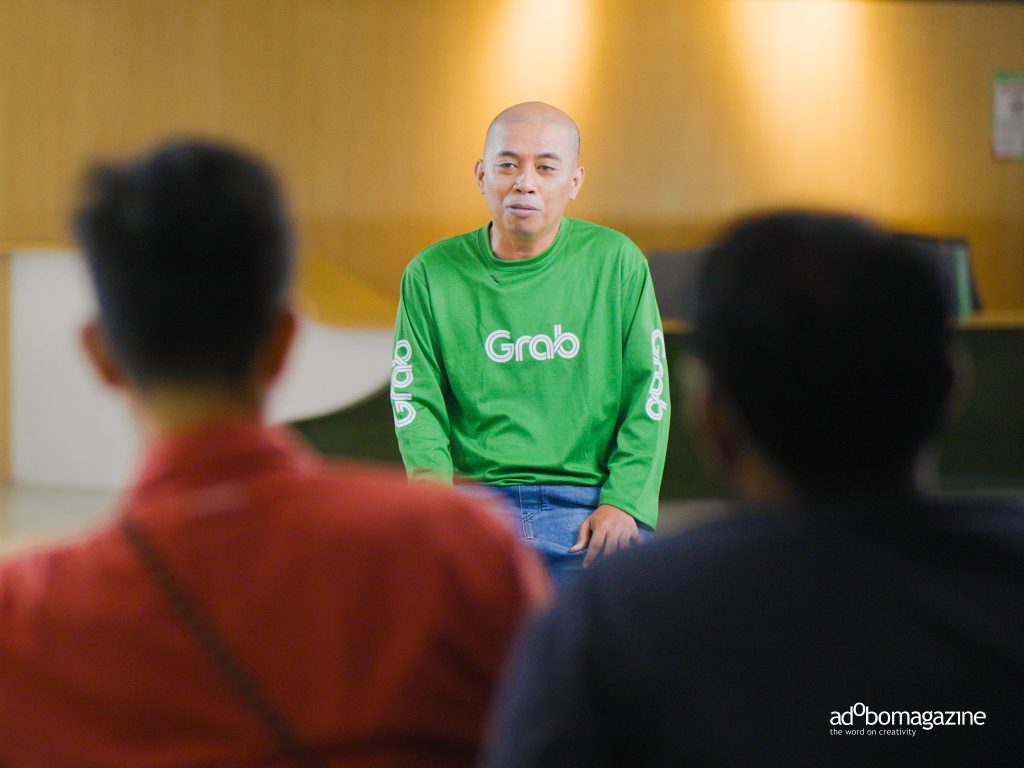
“Our vision is that the stories aren’t just Metro Manila-based,” Jewel says. “We want to represent different profiles of drivers and different communities.”
And strategically, the program delivers something many brands struggle to systematise: a scalable authenticity engine. One that is culturally grounded, operationally viable, and defensible under ethical scrutiny.
The next model of influence
In the long arc of brand-building, this program is not merely “AI content.” It’s a statement about who a platform chooses to elevate — and what kind of future it wants to build.
For years, the gig economy workforce has been viewed as functional infrastructure. Grab’s Driver AI Ambassador Program suggests a more forward-looking model: technology that increases human visibility and value, rather than erasing it.
AI may power the format. But the message — what makes the story travel — is still the human truth.
Because in the end, it is not AI that makes a city move. It is the people behind the wheel.