

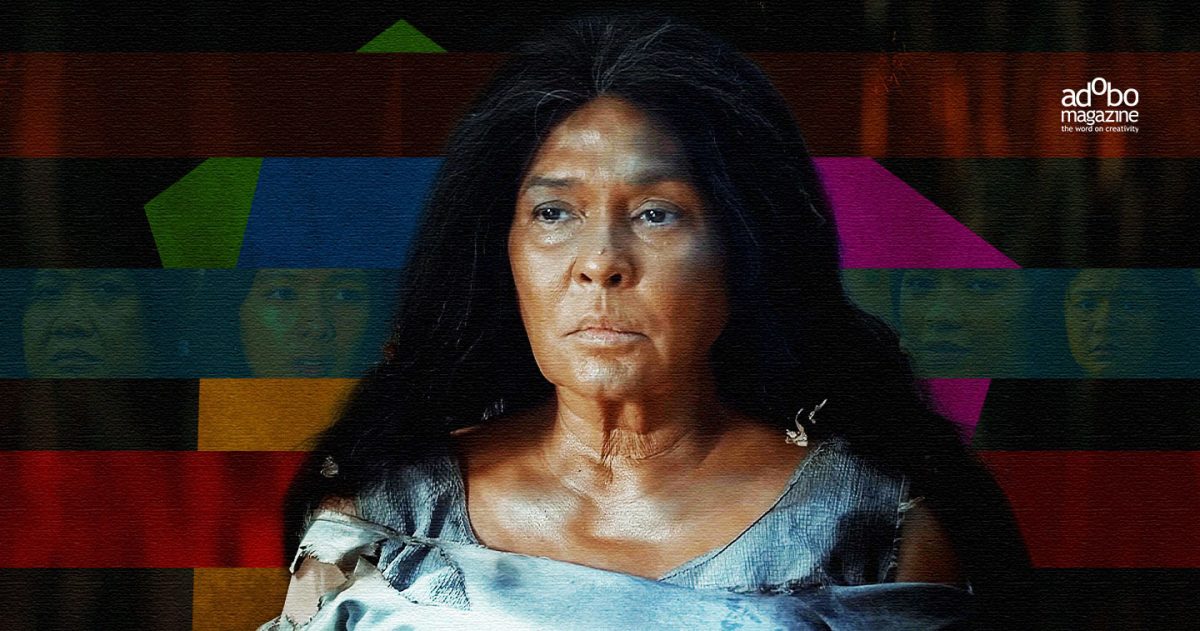
When I first sat with the trailer for Jun Robles Lana’s Sisa, I braced myself for the usual. I expected a dutiful, handsomely mounted “prestige” drama about our colonial suffering. To a Filipino, Sisa is practically a piece of furniture in the national consciousness, a convenient shorthand for trauma that we have long since stopped actually looking at.
My mistake was assuming Lana wanted to be polite. Instead, he treats this national icon with a bracing lack of reverence, exhuming her at the exact moment our public discourse has turned women into punchlines for powerful men. The relief of being wrong is the most cinematic thing I have felt in quite some time. Lana has essentially staged a tactical intervention, arriving just as our national conversation has devolved into a gutter of “imagination.”
As we observe National Women’s Month, we are subjected to the “honorable” musings of Representative Bong Suntay — initials conveniently abbreviated as B.S. — who recently used a House hearing to describe his sexualized “imagination” regarding actress Anne Curtis. Against this backdrop of casual, high-office objectification, Lana’s Sisa emerges as a visceral correction. If the “congressional imagination” reduces a woman to a thermal reaction, Lana’s film reestablishes her as a strategic, terrifying force of nature.
The film drops us into 1902, a year that smells of wet earth and the stagnant rot of an “American liberation” that looks suspiciously like occupation. A nameless woman played by Hilda Koronel wanders out of the treeline. She walks toward a guard tower with the terrifying confidence of the dead. She does not speak. She does not even seem to have a past until the village women intervene.
They plead with the American soldiers not to pull the trigger, and she is eventually christened Sisa. It is a name borrowed from the only tragic archetype they know, chosen because this silent, traumatized woman fits the mold of the “madwoman” that has haunted the Filipino psyche for over a century. It is a brutal and casual baptism. They are labeling her with the only tragedy they have the vocabulary for — much like modern society labels a woman an “object” before they ever see her as a person.
What follows is a claustrophobic study of a concentration camp, captured with oppressive and tactile beauty by cinematographer Carlo C. Mendoza. His camera stalks the village, lingering on the grit of a civilizing mission where a condescending American teacher and an openly racist commander preside over a microcosm of desperation.
The film’s entire gravity depends on Koronel. After 13 years away, she returns to the screen to show an entire generation that a single stare can out-act a five-page monologue. She manages to make the act of watching feel like a subversive political movement. While the village around her disintegrates into moral compromise, Koronel remains a stationary force. She proves that a woman’s silence isn’t a void for male imagination to fill. It is a calculated, intellectual fortress.
Surrounding this silent center is a cast that seems to be operating in entirely different zip codes of intensity. Every time I see Eugene Domingo on a marquee, I find myself on the lookout for what new trick she can pull out of her sleeve. She is one of our most celebrated icons for a reason. Here, she delivers exactly what is expected. However, there is a palpable sense of restraint in her performance. It is as if she is holding back to avoid upstaging Koronel. It is a noble gesture but entirely unnecessary. With a screen presence of Koronel’s caliber, no amount of acting could ever truly eclipse her.
Then there is Jennica Garcia, who is undeniably talented but suffers from a chronic case of theatricality. The way she delivers her lines feels calibrated for the back row of a theater rather than the intimate, grime-streaked lens of a film. It is a performance that works, but it constantly reminds you that you are watching a scripted event.
However, the real tragedy of the production lies with the actors portraying the Americans. They are, quite frankly, the worst part of the film. Watching them is like watching a group of expats recruited from the nearest dive bar to woodenly recite racist dialogue. They lack the menace required for an occupying force. They appear more like confused tourists than the engineers of a systematic slaughter. Their presence turns what should be a chilling occupation into a series of awkward encounters.
But Lana doesn’t let the film collapse under the weakness of its cardboard antagonists. He turns the camera back to the women, and suddenly the film finds its pulse.
Sisa refuses to canonize them as saints. They are jagged, petty, and exhausted, clawing at each other’s throats — weaponizing “whore” like a blunt instrument, stewing in the filth of confinement. Yet when one of them falters, the others rally. Their unity is a desperate chemical reaction to being discarded.
This is where the film finds its truth. These women aren’t the sanitized victims of history books or the “honorable” fantasies of a congressman. They are witnesses to children lost, husbands executed, and futures stolen. They scavenge agency from shared resentment, sharpening it into a blade. The supporting cast, uneven as it may be, provides the ugly texture that makes Koronel’s silence feel more like a tactical retreat. In their contradictions, they embody the messy resilience of survival, proving that women are not passive objects of imagination but active participants in history’s cruelties and solidarities.
Lana takes a massive gamble by leaning into a perspective that functions as a political middle finger. This version of Sisa does not care about your comfort or the distasteful rhetoric of politicians. It unfolds like a slow-burning revenge plan, less interested in the spectacle of war than in the psychological rot festering inside the camp.
The film avoids being preachy until the final act. However, looking back, that shift into the didactic feels necessary. In a historical moment where Filipinos were busy betraying each other — and a modern moment where women’s empowerment is still being undermined by the very men tasked with legislating it — being preachy is not a flaw. It is the price of telling the truth.
Sisa is a vital and unpleasant miracle that exhumes a national ghost and reminds us that history, like mud, never truly washes off.
Ralph Revelar Sarza is an internationally published film critic and culture journalist.