
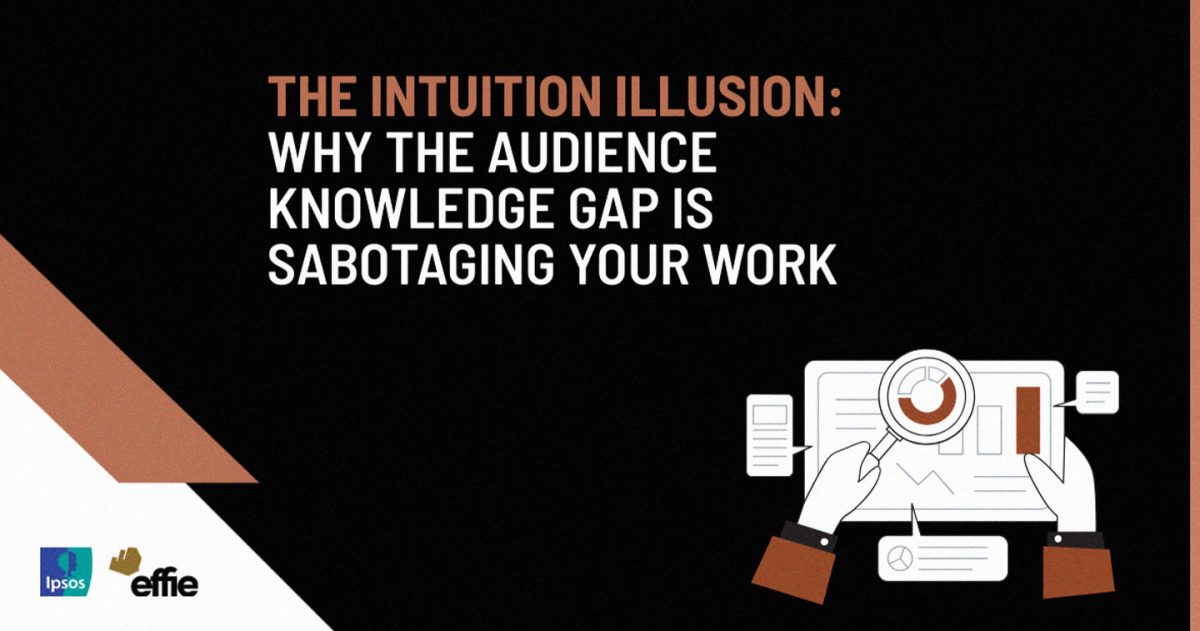
In today’s fractured marketing landscape, intuition alone is no longer enough. A new report from Effie and Ipsos Creative Excellence warns that the widening knowledge gap between brands and audiences risks undermining effectiveness unless marketers anchor their work in real insights.
Released on September 9, 2025, The Intuition Illusion: Why The Audience Knowledge Gap is Sabotaging Your Work is the third installment in Effie and Ipsos’ “Dynamic Effectiveness” series. The study combines Effie’s global benchmark in effectiveness with Ipsos’ expertise in consumer behavior, offering a dual lens into both the “what” and “why” behind successful campaigns.
The report highlights a central issue in modern marketing: the lack of empathy stemming from insufficient audience understanding. “In the ever-evolving world of marketing, recognizing the true power of insights – those deep discoveries about customers – is crucial,” said Executive Vice President and Head of Ipsos Creative Excellence Pedr Howard. “These insights bridge the empathy gap and enhance creative effectiveness by revealing what truly matters to our audience. Our latest report underscores that a balanced approach of intuition and rigorous insight exploration is not just beneficial, but essential for sustained marketing success.”
Ipsos’ Creative|Spark database shows that ads which combine creativity and empathy deliver 20% greater effectiveness than creative work lacking empathy. Yet alarmingly, only 10% of nearly 5,000 ads tested in the U.S. achieved this balance.
The report identifies three major forces fueling the audience knowledge gap in the U.S.:
- Algorithm-driven personalization, which narrows exposure to diverse perspectives.
- A polarized social climate, making authentic understanding more difficult.
- Undervalued cultural intelligence, limiting brands’ ability to see beyond their own worldview.
Compounding these challenges is marketers’ heavy reliance on personal intuition. An Ipsos survey in May 2025 revealed nearly half of brand marketers, insights professionals, and agency executives frequently depend on intuition when preparing creative briefs. While intuition remains valuable, the report cautions against its inherent risk of bias when untempered by evidence.
The report calls for a more rigorous understanding of what constitutes an insight. Effie defines it as more than an observation – it is a discovery about customer needs or motivations that creates new value, often found at the intersection of product, category, competitor, and consumer truths.
“The most effective marketing starts with an insight that does more than inform.” said Juliet Haygarth, Chief Brand and Marketing Officer of Effie. “A powerful insight sees a truth about your audience, category, competitor or product and reveals the ‘why’ behind that truth. It uncovers a tension, is fresh to the challenge at hand and plays a central role in any great creative brief. When brands anchor their marketing in this kind of understanding, they build the connections that drive growth and sustained business results.”
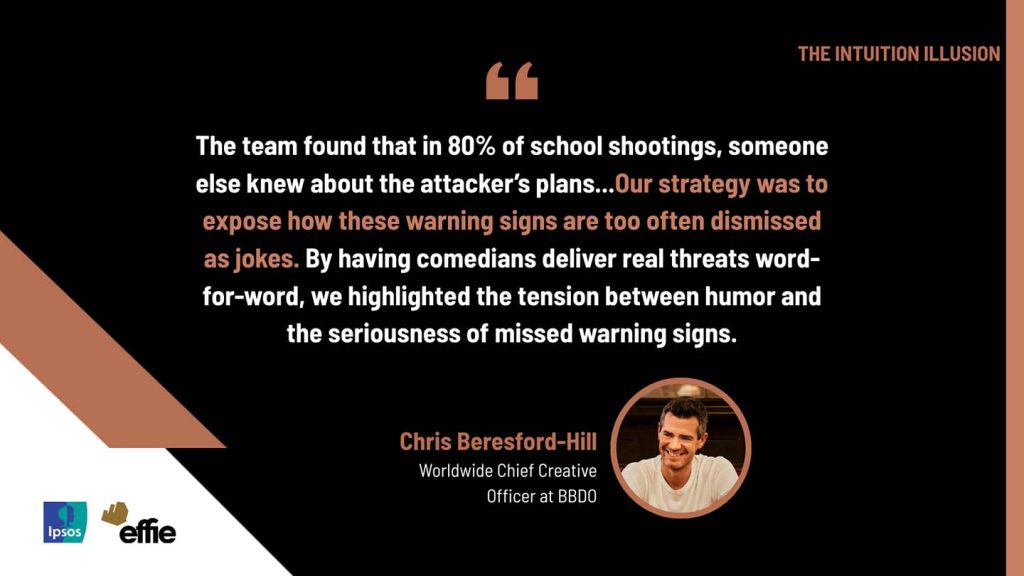
Through case studies of three 2025 Effie US award-winning campaigns: Sweethearts’ “Situationship,” Sandy Hook Promise’s “Just Joking,” and PNC Bank’s “The Brilliance of Boring”, the report illustrates how sharp insights not only inspire creativity but also deliver measurable business impact.
Among the key takeaways:
- Audience data is only the starting point; insight is the catalyst for effectiveness.
- Insight-driven campaigns elevate creativity and foster stronger connections.
- Intuition has value, but unchecked, it risks reinforcing predictable biases.
For marketers navigating today’s increasingly complex environment, the message is clear: effectiveness depends on bridging the empathy gap. That requires marrying creative instinct with the discipline of deep insight, ensuring brands are not just speaking to themselves but connecting meaningfully with the people they seek to serve.
The full report is available here: The Intuition Illusion.