

There are moments in pop culture that feel too strange, too chaotic, too improbable to ever fade away. And yet some slip quietly into the footnotes of history as misremembered, oversimplified, or told from only one side. The story of the Beatles’ 1966 Manila tour is one of those moments.
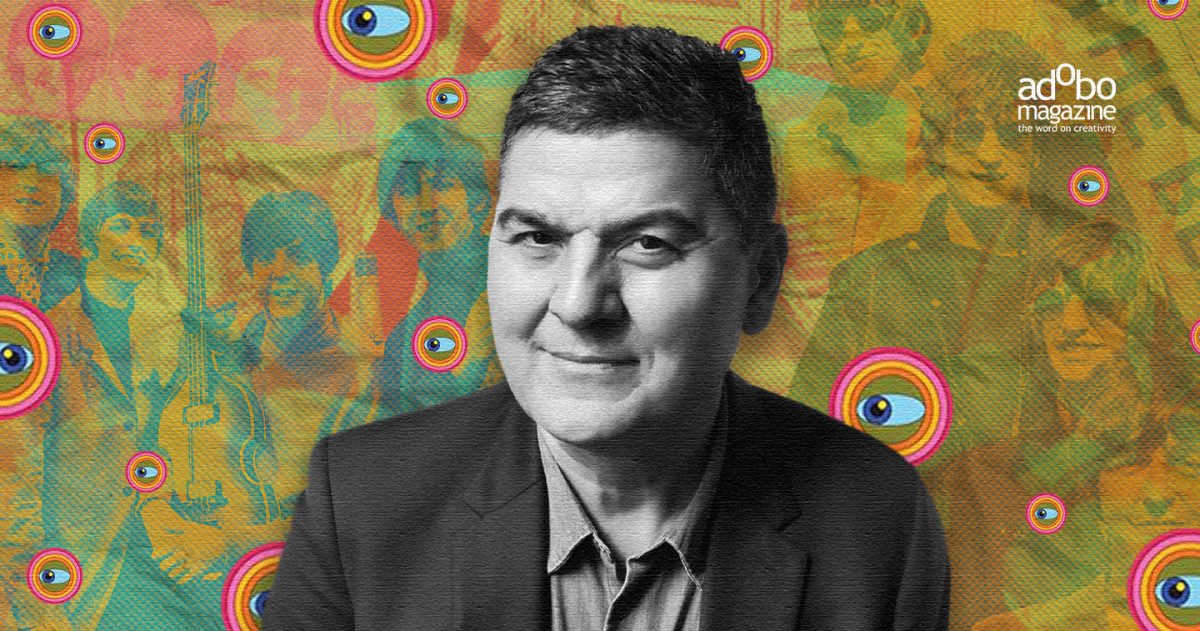
At the launch of You Won’t See Me: When the Beatles Ghosted Imelda, author and adman David Guerrero offered a new lens on the episode that sent John Lennon, Paul McCartney, George Harrison, and Ringo Starr fleeing Manila in one of the band’s most infamous tour stories.
Beatlemania lives on
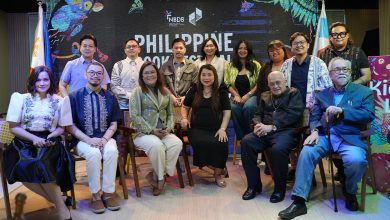
The afternoon unfolded less like a formal literary launch and more like a lively cultural excavation, guided by pop culture enthusiasts Lourd de Veyra and Erwin Romulo, who clearly relished the opportunity to revisit the moment when music, politics, and national identity collided.
Judging by the standing-room-only crowd gathered in a cozy nook of Fully Booked Bonifacio High Street, Beatlemania is still alive in the Philippines. The room was filled with people eager to hear the stories or relive their own memories of the day the Fab Four came to town. Among them were sisters Chato Ponce, Betty Ponce, and Carmen Ernsting, who as teenagers in 1966 managed to meet The Beatles in person after staking out their rooms at the storied Manila Hotel.
Their story, which is equal parts teenage courage and Beatlemania devotion, reminded the audience that the Manila concerts were not just a diplomatic incident or a rock-and-roll footnote. For thousands of Filipino fans, they were a once-in-a-lifetime moment.
A writer between two worlds
Guerrero is uniquely positioned to tell this story.
A Manila-based writer who openly professes his love for both the Philippines and the Beatles, he was a young boy growing up in England when the 1966 controversy first made headlines. “I remember hearing about it,” he said during the launch. “But of course the version we heard then was very much from the band’s perspective.”
Years later, the story resurfaced unexpectedly while Guerrero who, as founder and creative director of award-winning agency BBDO Guerrero, was researching material for the Philippine Department of Tourism campaign that would become the now-iconic slogan It’s More Fun in the Philippines. Exploring possible cultural touchpoints, he revisited the Beatles’ Manila concert and began digging deeper into what had actually happened.
That curiosity led to the BBC World Service documentary When the Beatles Didn’t Meet Imelda, which Guerrero wrote and presented. His research eventually expanded to You Won’t See Me, further developed as part of his master’s degree at the Harvard University Extension School.
Curiosity and connections
Guerrero describes the creative process as something that grew organically. “People start to know that you’re interested in something,” he explained. “They help you out, they connect you with other people.”
The project expanded through conversations and introductions. “It’s really just people being kind enough to connect me with other people that they know. It just kind of snowballs from there.”
Like many historical investigations built on memory, the process also required patience. “You have to go back and talk to them several times,” he added. “Sometimes just letting people know you’re interested helps them connect you with people who were around.”
The shindig that never happened
Part of the tension surrounding the Manila visit came from expectations quietly building behind the doors of Malacañang Palace.
First Lady Imelda Marcos, barely six months into her new role, was ready to stage what promised to be one of her first major society events on July 4, 1966. Officially, newspapers described the event as a simple “courtesy call.” But guests who included VIPs, society figures, journalists, photographers, a live television crew, and two hundred children and teenagers were all expecting something much grander. It was a carefully staged cultural moment, with catering and a full orchestra waiting to perform classical renditions of Beatles hits.
Except the band never arrived. Imelda was, effectively, ghosted.
Hard days and nights
It was a management misstep that led to a big hullabaloo. When the Beatles, reportedly exhausted after a yacht party that lasted until 4:00 am, failed to appear, the fallout was swift.
Local headlines framed the absence as a snub to the First Lady. Overseas reports, meanwhile, portrayed the band as bewildered visitors caught in a political storm they barely understood.
Some fans, reportedly including a young Bongbong Marcos, tore up their concert tickets in frustration. There were also accounts of an angry crowd gathering at the airport as the band attempted to leave the country.
The story quickly took on a life of its own internationally. “I feel this book is something that’s quite important to the Philippines in terms of its international reception. And I think it’s really important that we tell a story that is more complete than the one that is generally told and understood. Generally, it’s been told from the point of view of the band,” Guerrero said.
His book attempts to widen that frame. “It was really about zooming out and asking, ‘What else was going on here?’”
Despite the global drama that followed, Guerrero keeps the book tightly focused. “This is really about the 48 hours that they were here,” he said. Within those two days were sold-out concerts, escalating tensions, and the chaotic airport departure that would later become part of rock-and-roll mythology.
The Manila episode is widely believed to have helped cement the band’s decision to stop touring altogether. Later that same year, after their final concert in San Francisco, The Beatles retired from live touring permanently.
Despite the dramatic headlines, Guerrero’s research suggests Filipino fans never truly abandoned the band. “The radio stations carried on playing, fans carried on listening. Some politicians and members of the establishment called for bans, but those efforts fizzled out. For most people, they were very supportive of the Beatles despite what happened,” he said.
Stories need to be told
If that incident happened now, Guerrero believes it would be handled very differently.
“The difference now is that concert tours and rock bands are much more professional in how they tackle touring. There’s a huge crew, there’s a lot of guidance, there’s a lot of understanding of different cultures and markets. It’d be very unusual for this kind of thing to happen now. So perhaps politicians and governments have been more wary about how they deal with famous people as well. Perhaps politicians then didn’t understand how powerful celebrity was. The power of celebrity was very real when they didn’t appreciate it.”
One theme surfaced repeatedly during the launch: how little contemporary Philippine history has been explored in widely accessible books. The Beatles’ Manila visit is a perfect example. It is a global pop culture flashpoint that remained largely untold from the Philippine perspective.
“They say those who don’t learn from history are doomed to repeat it,” Guerrero reflected. “But I’m not sure we’ve given ourselves the chance to learn from it. For us to learn, we need to first understand. This is just one of the many historical instances we should seek to understand, but I feel like the more we understand the past, the better we are able to at least give ourselves a chance to learn.”
With his book, published by Penguin Random House SEA, Guerrero offers a starting point, an invitation to revisit a familiar story and finally see it from both sides. Because sometimes history isn’t waiting to be corrected—it’s simply waiting to be seen.
– Maan d’Asis Pamaran