
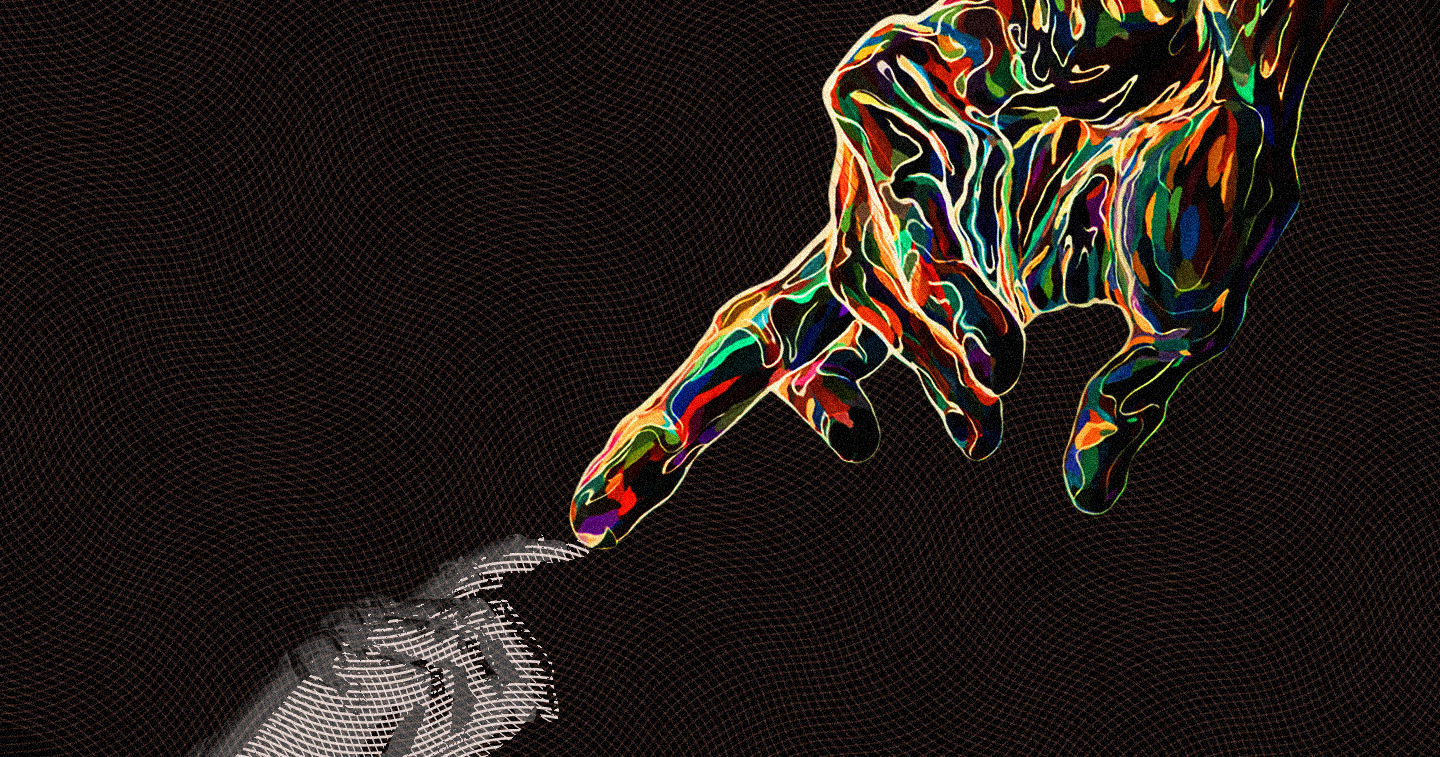

For those at the cutting edge of the creatives industry, artificial intelligence is becoming an increasingly popular asset. As with any innovative technology, people are drawn to AI’s promise of getting things done faster, more reliably, and at greater quantities.
We’ve covered the reasons why AI isn’t all doom and gloom for artists, writers, and other creators. Now, we shed some more light on the likely future that Filipino creative professionals have in store for them.
To be clear, groundbreaking advancements in AI aren’t on the way; they’re here. Firms around the world are putting them to work, and local developers are steadily introducing the technology to our homegrown businesses.
If you’re wondering what tomorrow could bring to our ad agencies, film studios, marketing firms, and social media managers, read on.
Isn’t it Ironic?
The state of business in the Digital Age can be summed up in a single theme: more.
Today’s consumers are raised to expect more options, and roughly 76% of consumers expect businesses to understand their personal needs and expectations. Today’s businesses are driven to chase more innovation, with 69% of companies around the world introducing new products to their local main markets.
And today’s creative professionals? Well, they’ve probably been experiencing more headache than ever before.
In terms of supply and demand, the creative world has been scrambling to deal with the sheer volume of new content that must be put out across the world’s myriad channels. Optimizing for print is a whole different ball game from optimizing for the web, and optimizing for the web means understanding the nuances of Facebook, Instagram, Twitter, YouTube, and the like.
One of the greatest ironies of the 21st century is that the hype behind content leaves so many people discontented.
Here we see a clear picture of the problem: how can an industry adapt to perform distinctly human tasks at a faster pace or larger scale, without ramping up costs?
Luckily for overworked ad agencies around the planet, AI is, by definition, a clear solution. It aims to teach machines to perform human tasks, recognize patterns and objects, and learn from massive amounts of data –like uploading an employee’s brain to a server and watching it run.
Where AI Has Taken Us
To understand the future of creative work vis-a-vis AI, it pays to understand where it’s taken us today. Whether it’s object detection or predictive analytics, the current goal for AI developers is to make work easier and more manageable.
A good example of AI’s applications for the creative field is to remove manual tasks such as digging through mountains of media material to find That One Perfect File, or working an obsessive tagging protocol into your workflow. Adobe is in the process of perfecting this through a function that automatically tags photos that pass through their products –just type a description of what you’re after, and watch as the software sifts through your library for you.
Another example is data-driven marketing. You could spend a few days putting your campaign materials together, analyzing trends in their performance, conceptualizing a new set of plans, drafting projections based on industry data, and putting it all into a report for your higher-ups. Or you could let IBM’s Watson Assistant for Marketing do it for you.
There’s also lots of cool stuff happening locally.
Our team at CirroLytix (apologies in advance for the shameless plug) has been working with AI to help brands identify items on store shelves, down to the SKU level. Rather than sending an army of merchandisers to audit your shelf displays, you can enter a store, take a picture of a shelf, and have an algorithm tell you which items are on display and where, and how much shelf real estate your products occupy. We also use this technology to help ad buyers and billboard operators monitor traffic (e.g. whether the vehicles passing by are jeepneys or minivans, or if people are traveling by car or foot).
Where AI Could Take Us
What this means for the future of our creatives industry is simple: the world wants more? We’ll give it more.
We foresee a lot of catching up to our more developed neighbors in terms of productivity. The leap will begin with larger companies and agencies, and trickle down as word of AI’s significant ROI spreads across our industries.
At a macro scale, this means you can expect firms to take on more projects, become more ambitious in their plans to court consumers, and produce more content than ever before.
At the level of the professional, this means greater expectations for personal productivity, but an easier time performing tasks that would normally eat up time and brainpower. Whether that’s an upside or a downside isn’t for us to decide, but we can say for sure that we’re in for some interesting times ahead.
Ride the Digital Wave
We close this article on a point of action. Predictions aside, there’s no point in forecasting the future of a technology that, up to now, is relatively unfamiliar to our business ecology.
The best advice you’ll hear about AI and the creatives industry is simply this: buckle down and meet the change head-on. The biggest winners in any technological upheaval are the early adopters, those who get ahead of the curve and master new tools before their competitors.
Business is a roil of changing circumstances and emerging opportunities. Take the initiative and get friendly with the future–you’ll be all the happier for it.