
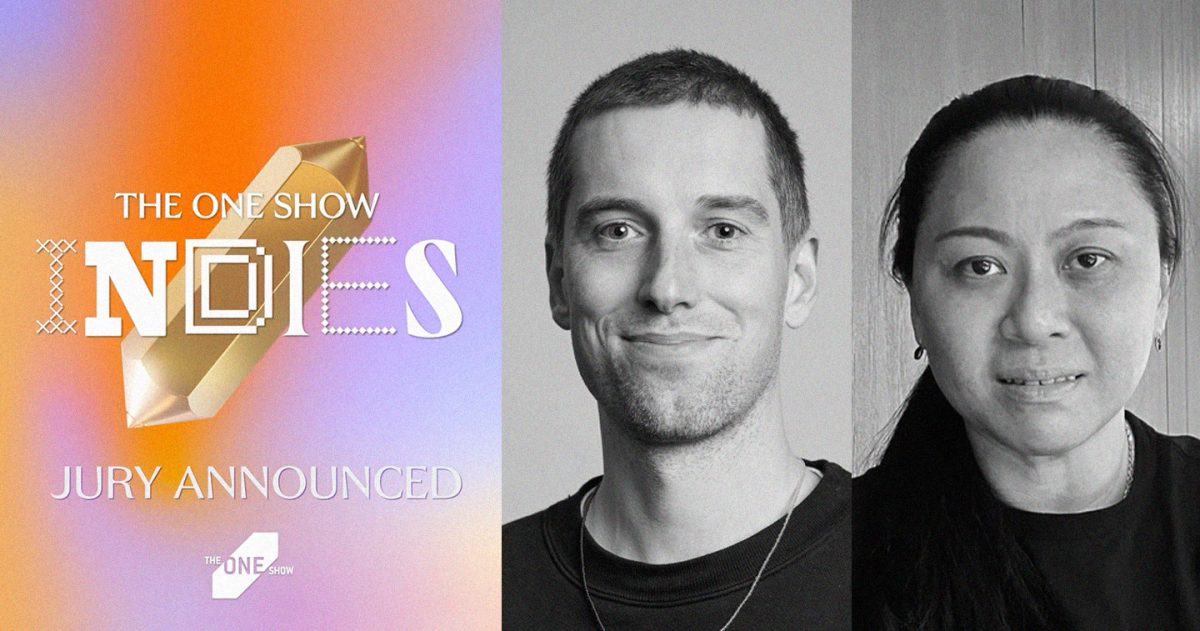
NEW YORK, USA — The One Club for Creativity has announced the jury for the inaugural The One Show Indies, the new global competition dedicated to celebrating the work of independent agencies, design firms, freelancers, creators, and other creative companies around the world.
Debuting this year within The One Show 2026, The One Show Indies is open exclusively to agencies with truly independent ownership: a minimum 51% owned by founders or staff, and no more than four physical offices. To encourage participation, the cost of entry is 20% lower compared to other One Show fees.
Representing APAC on the global jury, made up exclusively of top creatives from leading independent agencies, are Hwee Peng Koh, Creative Partner at Blak Labs in Singapore, and Sam Stuchbury, ECD at Motion Sickness in Auckland.
Greg Hahn, Co-founder and CCO at Mischief, Brooklyn, will serve as Jury President, leading the jury and having a vote on the work.
Other confirmed 2026 One Show Indies jury members include:
- Ajaz Ahmed, Co-Founder, Studio One, London
- Rolando Cordova, CCO, Co-Founder, L&C, New York
- Noel Cottrell, Founder, CCO, Murder Hornet, Atlanta
- Jolene Delisle, Founder, The Working Assembly, New York
- Ulrika Karlberg, CCO, YARD NYC, New York
- Suzanne Powers, Founder, Co-CEO, All&, New York
- Brian Murray, CCO, Zulu Alpha Kilo, Toronto
- Mohammed Sehly, CEO, BigTime Creative Shop, Riyadh
- Ariel Serkin, Partner, ISLA, Buenos Aires
- Safaraaz Sindhi, Founder, CCO, Bananas, Johannesburg
- Flavio Waiteman, CCO, Tech&Soul, São Paulo
The new competition levels the playing field to recognize the extraordinary role and work of independent agencies, and makes the global spotlight of a prestigious One Show Pencil win even more accessible to a larger field of indie creative companies.
“It’s true that indies are having a moment right now,” said Hahn, who also serves on The One Club National Board of Directors. “But it’s also true that indies have long been the lifeblood of breakthrough and brilliant work in the corpus of advertising. I’m thrilled to be presiding over the inaugural jury of The One Show Indies. And that I got to use the word ‘corpus’ in a sentence.”
Indie Agency News partnership
To extend its support of this important and growing creative sector, The One Club has partnered with Indie Agency News, a membership-driven media and visibility coaching platform dedicated exclusively to serving independent agencies.
All qualified agencies entering The One Show Indies will receive a 40% off the first year of a new Indie Agency News membership, connecting them to 300+ indie agency members, consultants, and industry practitioners around the world, plus video-first editorial coverage, visibility coaching, and two awards programs celebrating indie excellence and the people behind it.
Regular IAN membership costs $695–$1,995, depending on agency size. The special One Show Indies–IAN discounted membership rate is good for one year, then locks in at current rates in perpetuity.