

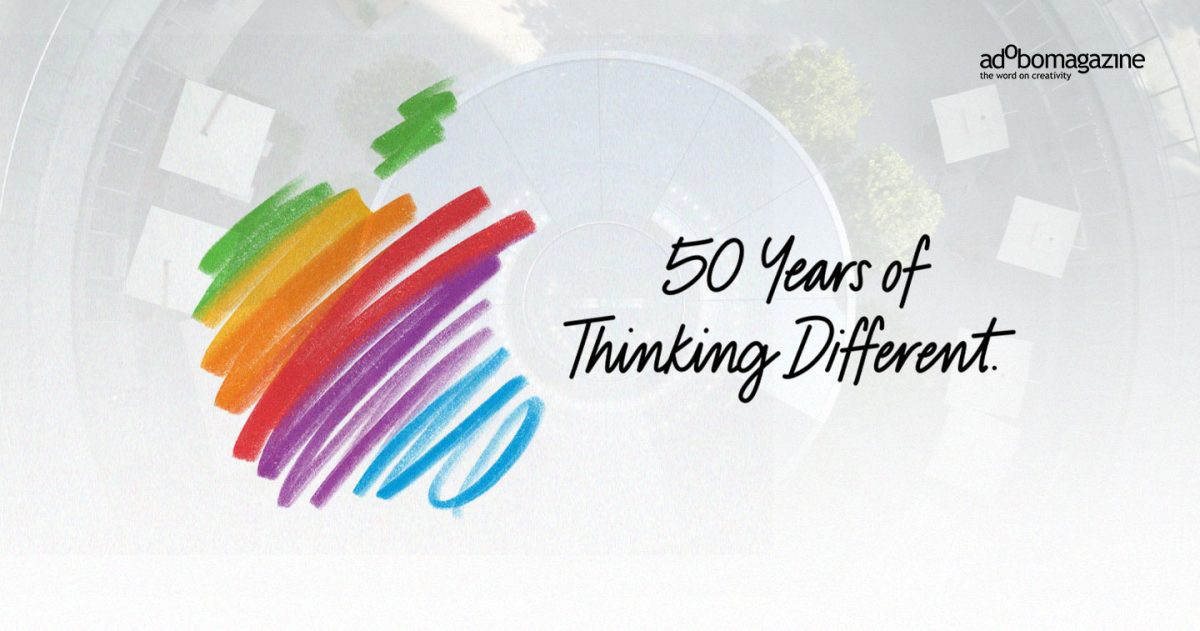
When it comes to consistency, Apple always nails it. From delivering shows that become your favorites and helping you discover new music to keeping you connected with loved ones, Apple has helped shape a more seamless, innovative world.
And this consistency has spanned over 50 years.
To celebrate this, Apple CEO Tim Cook shared a heartfelt letter on the company’s website to thank the people behind Apple and the people they serve.
Apple marked the opening of its 50th anniversary celebrations on March 13 with an unforgettable evening at Apple Grand Central in New York City, featuring a special performance by 17-time Grammy Award-winning artist and producer Alicia Keys. From the venue’s iconic steps, Keys moved through a captivating set of her most beloved songs — with every moment captured and brought to life through the iPhone 17 Pro.
Humble beginnings
When Apple started, it wasn’t in a corporate office like most tech businesses today. The tech giant started on a sidewalk in Cupertino, California, a city in Silicon Valley.
At the time, most people had little idea what a computer could do. Most computer owners were from large corporations and the privileged few.
“We’ve spent five decades rethinking what’s possible and putting powerful tools into people’s hands,” Tim said in his letter. This is an understatement. Apple hasn’t just put innovation in our hands — it has made it accessible in the first place.
Three visionary founders — Steve Wozniak, Ronald Wayne, and the world-renowned Steve Jobs — set out to democratize computing, reimagining it as something compact, accessible, and intuitive enough to serve not just a technical few, but the vast majority — the “97% of the world.”
The first computer the trio made was the Apple-1. Instead of being a finished consumer product, the Apple-1 was essentially a bare motherboard. Unlike other computers at the time, which came as kits, it was one of the first to come fully assembled. Users, however, still had to add their own keyboard, monitor, and power supply.
The spring of 1977 saw the rise of a computer that – slowly but surely – revolutionized every convention of the modern personal computer. With an all-in-one design, the Apple II featured a keyboard, a case, and an open expansion architecture philosophy – a thought that made computers available to the rest of the world.
The Apple II made Apple a serious contender in tech, it invigorated Apple’s revenues and generated the funding of future inventions that changed the world – the first Macintosh and Lisa. These inventions were the first computers to feature a Graphical User Interface (GUI), which allowed its users to interact with computers using icons, rather than text commands.
A branding phenomenon
More than a pioneer in technology, Apple has built itself into one of the most recognizable and admired brands in the world.
From its logo — a clean, minimalist apple with a single bite taken from the right side — to its carefully chosen typography, its witty and emotionally resonant campaigns, and even its restrained color palette, every element of the Apple brand feels considered, deliberate, and unmistakably its own. Apple has not only proved that it is capable of world-class branding — it has become one of the defining standards against which modern brands are measured.
So what makes Apple’s branding so enduring?
Simplicity: Everything Apple does strips away the unnecessary. Its logo, packaging, product design, and advertising all share the same commitment to reduction — leaving only what matters. This kind of restraint is harder to achieve than it looks, and when done well, it signals a quiet confidence. Apple’s approach essentially says: we don’t need to explain ourselves. In a cluttered marketplace, that silence speaks volumes.
Consistency: Apple has maintained the same visual language, tone, and design philosophy for decades. Every product, every retail store, and every advertisement feels unmistakably Apple — whether it was made in 1997 or 2024. That consistency is not accidental. It is the result of strict brand discipline, and it pays dividends in the form of trust and instant recognition. Consumers always know what they are getting, and that familiarity breeds loyalty.
Emotion Over Specs: Most technology companies lead with features — processing speeds, storage capacity, camera megapixels. Apple leads with feeling. Its marketing rarely dwells on technical specifications; instead, it focuses on what its products make possible: creativity, connection, self-expression, and freedom. The legendary Think Different campaign of 1997 is perhaps the clearest example — it featured no products at all, only a celebration of rebels and visionaries. It was not selling a computer. It was selling an identity. Customers who buy Apple products do not just own a device; they feel something about it.
The Product Is the Brand: Apple’s hardware is designed with such care and precision that the product itself becomes a form of marketing. The weight of a MacBook, the satisfying click of a Magic Mouse, the seamless unboxing of a new iPhone — these are not accidents. They are engineered experiences. When someone opens a MacBook in a coffee shop, it makes a statement without a single word. Apple understood long before most that the product and the brand are not separate things — they are one and the same.
Storytelling: From Former CEO Steve Jobs‘ legendary keynote presentations to its television and print campaigns, Apple has always known how to tell a story. Rather than framing technology in terms of how it works, Apple frames it in terms of what it means — for your creativity, your relationships, your life. This human-centered storytelling gives the brand an emotional dimension that few technology companies have ever matched.
A Loyalty Ecosystem: Apple’s ecosystem of products — iPhone, Mac, iPad, Apple Watch, AirPods, and beyond — is designed to work together seamlessly. The more devices a customer owns, the more deeply embedded they become in the Apple experience. This integration transforms customers into long-term brand advocates, for whom switching to a competitor feels less like a practical decision and more like a genuine loss. The ecosystem does not just retain customers; it deepens their attachment over time.
Each of these elements is backed by relentless research, continuous innovation, and an obsessive attention to detail that permeates every level of the organization. Apple does not treat branding as a department or a campaign. It treats it as a discipline, embedded in everything the company makes and does.
That obsession with consistency and detail is ultimately what elevates Apple from a successful brand to a gold standard — a benchmark that marketers, designers, and businesses around the world continue to study, reference, and aspire to be.
In an era of fleeting trends and constant disruption, Apple’s brand has done something rare: it has only grown stronger with time.
READ MORE:
Apple’s ‘Glad I Met You’ takes top honor at first ONE Asia Chinese New Year Awards
Apple named Cannes Lions Creative Marketer of the Year
Apple Original Films sets global theatrical release for Martin Scorsese’s Killers Of The Flower Moon