

When a brand or an agency brainstorms on briefs, most of the time, they normally think outside the box and come up with the most creative ideas before eventually translating them into materials for public consumption.
This is what makes Bea Bravo, Country Marketing Head at Grab Philippines, different — she’s not afraid to get straight to the point and be “boringly clear” when she writes briefs.
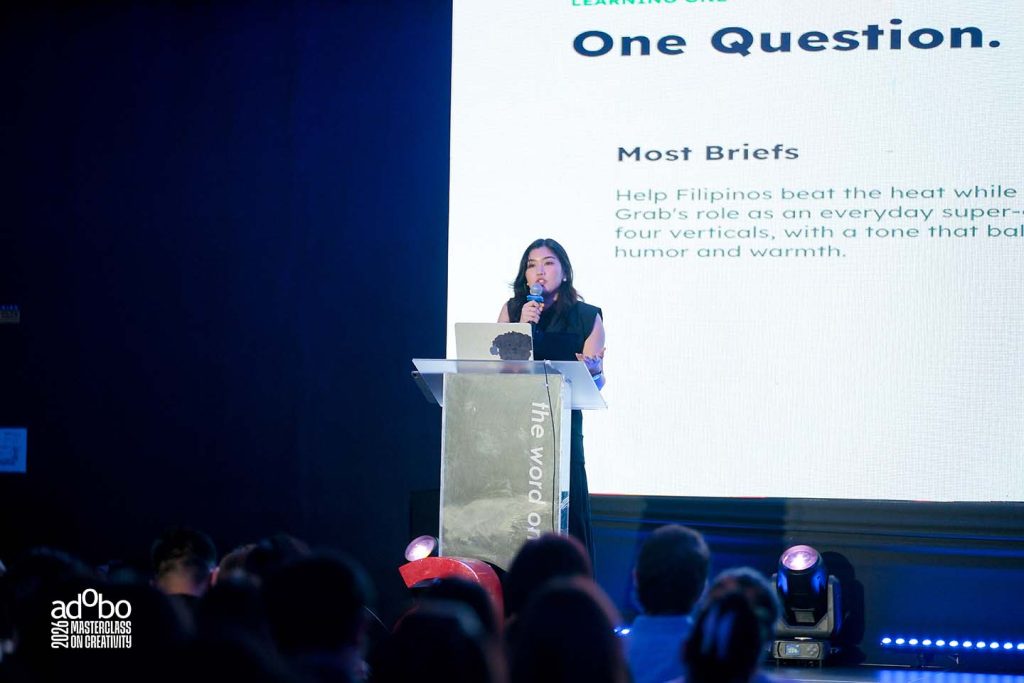
The campaigns she presented at the 2026 adobo Masterclass on Creativity stand as proof, but the bigger argument is revolves around what what happens before the creative ever begins.
Bea opened her talk with a deliberate contradiction — she was standing in a creative masterclass, creating an argument for being boring.
“Boring isn’t something you’d expect when somebody talks about award-winning work, but it is exactly what’s needed for consistent creativity,” she said.
Ambitious creative work doesn’t come from an ambitious brief. It comes from one that is boringly clear.
One question, one Lion
The brief that won Grab Philippines its first Silver Cannes Lion had exactly one question — not ten mandates or a layered set of objectives. Just one: “How can Grab help Filipinos cool down — figuratively and literally — this hottest summer on record?”
One key message followed: “Say goodbye to tag-init (Summer) and have the coolest summer with Grab.” That was it.
Before that question landed, the business had been struggling. In 2023, figures for GrabFood daily orders were flat, and GrabCar rides were in decline. This, in summer — the brand’s biggest season. Competitors were spending heavily on promotions, but Grab did the exact opposite.
With less budget and despite seeing more room for competiton, Grab narrowed everything down to one question — and the award-winning campaign titled No Sweat Summer, developed with GIGIL, was born.
The results: GrabFood daily orders grew three times against target, GrabCar hit all-time highs at nearly 35% year-on-year, search interest in Grab Summer increased 20 times over, and the campaign video was viewed 55 million times on the brand’s platform alone — before going on to win Silver at the Cannes Lions International Festival of Creativity in 2024, and taking home additional recognition at MAD STARS, The One Show, and the YouTube Works Awards.
“Give an agency ten mandates and all you do is negotiate which mandate becomes the priority. Give them one question and there’s nothing left to negotiate. All the creativity focuses into one,” Bea said.
A clear brief is an invitation
What happened after the brief landed with GIGIL is where the story gets interesting. The agency came back with more than one direction — all of them reasonable, but the moment it presented No Sweat Summer, Bea and her team immediately knew that was it. Not after a debate, not after a deck of pros and cons — in the gut, before GIGIL had even finished explaining it.
The character at the center of the campaign — a man with a sweating disorder, cheerful despite having to see everything around him flooded with his sweat — wasn’t in the brief; that was GIGIL’s invention, entirely.
Award-winning Thai director Wuthisak “Un” Anarnkaporn then gave that character a dimension no one else had written, insisting on practical effects over digital or CGI, and shaping a film that traveled far beyond the Philippines. People who have never experienced the hottest of summers still recognized the insight.
“A clear brief isn’t a cage, it’s an invitation. But an invitation is only as good as the partners you bring in to accept it,” Bea said.
Clarity notes vs. preference notes
The fish scene in No Sweat Summer — which became a hit for getting the most laughs from the audience — almost didn’t make it, not because it confused anyone, but because one person in the review room didn’t personally find it funny.
That, Bea said, is exactly how creativity dies a slow death: “Maybe we can make it a little clearer, maybe we can make it a bit shorter” — until the best parts of the work have been quietly removed by a room full of preferences disguised as feedback.
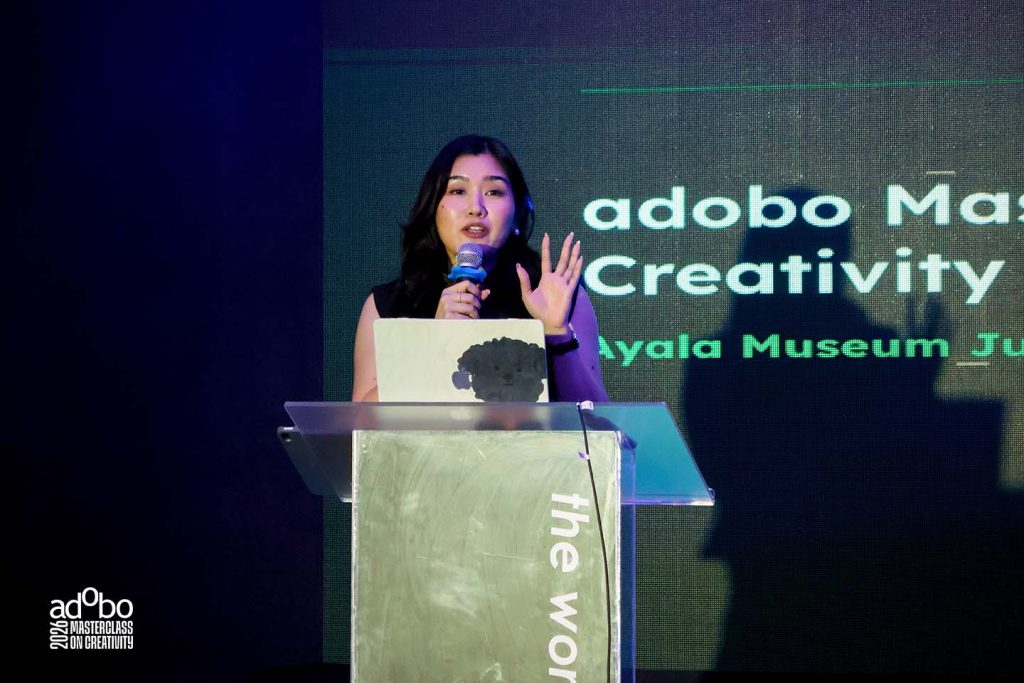
Her framework for navigating the review room comes down to one question: Did the message land clearly? If the answer is no, take note — it’s real feedback. If the answer is yes, protect it. Confusion is a reason to cut; personal preference, however, is not.
“That scene stayed because we fought for it. The message landed when we tested it, and that is also the reason the film worked,” Bea said.
Bea ended her session with a dose of honesty that doesn’t always make it into conversations like this one. No formula guarantees Lion-winning work. What the “boringly clear” discipline gives you isn’t a guarantee — it’s a real shot, on purpose, at trying again and again instead of one lucky accident you can’t repeat. And for all the weight placed on the brief throughout her talk, she was clear about where it sits in the larger picture.
The brief isn’t the most impressive part. The character nobody asked for, the dimension the director added, the scene they refused to cut — these form the actual craft. The brief just has to stay boringly clear to let all of it happen.
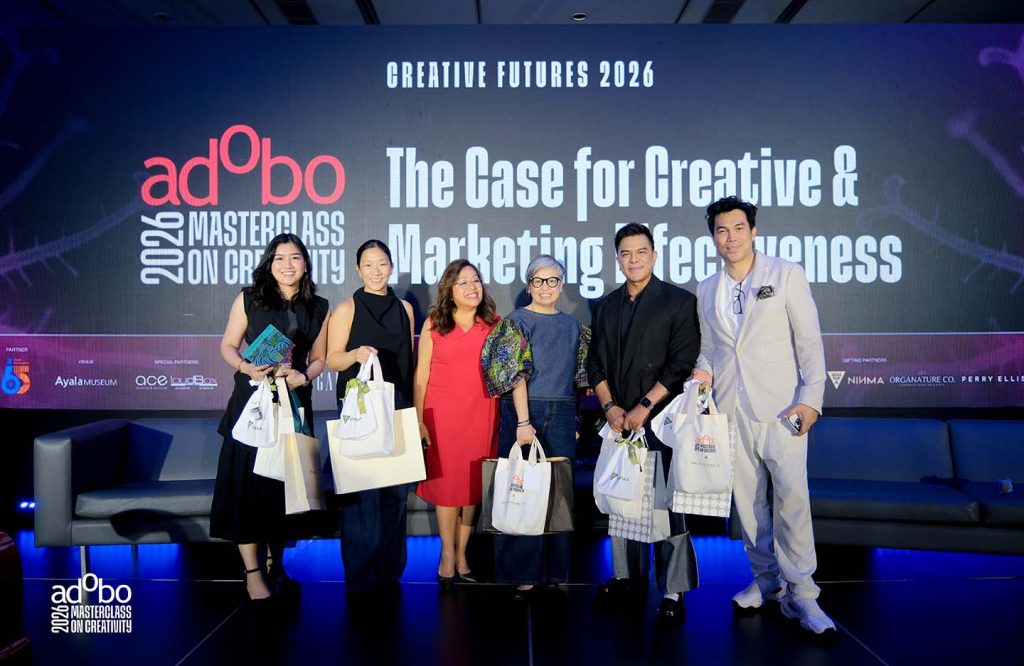
Before leaving the stage, Bea offered one practical challenge for everyone in the room: take your next brief and count how many separate asks are actually buried inside it. If it’s more than one honest question, you don’t have a brief yet — you have a wishlist.
READ MORE
GrabMart offers weekend grocery savings with Robinsons Supermarket and Puregold
Grab Philippines, HOPE break ground on new classroom in Bicol through digital bayanihan