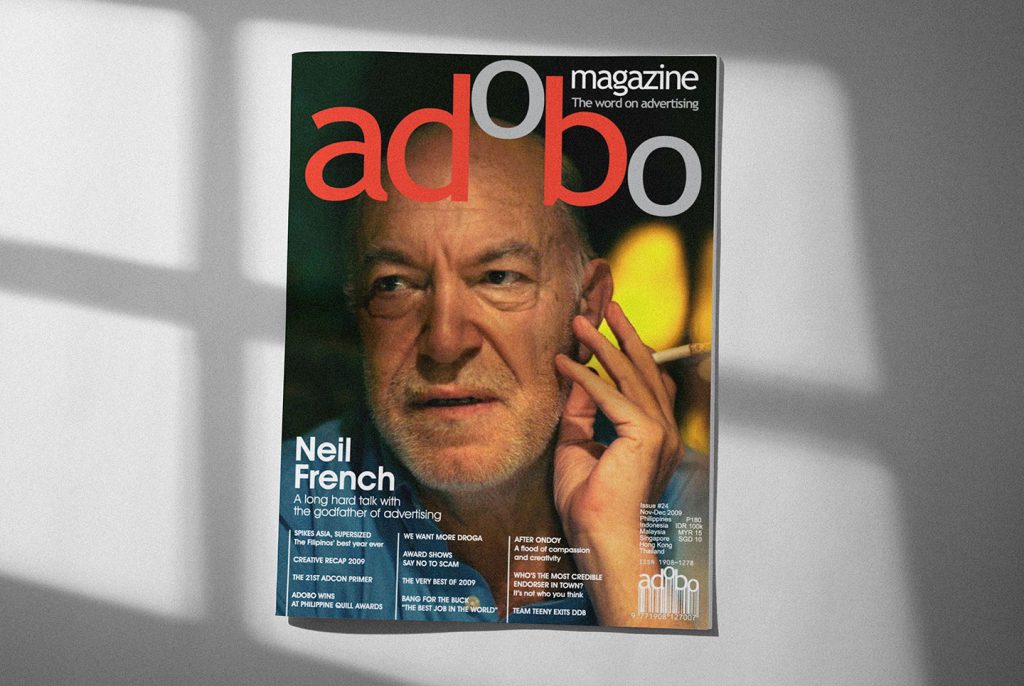


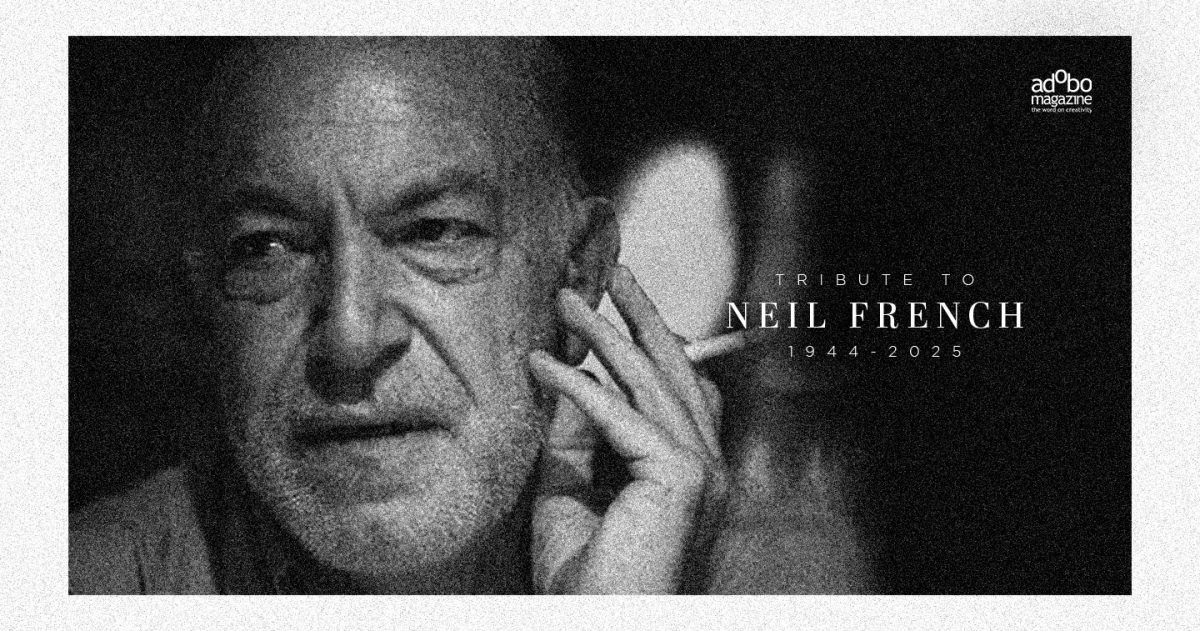
MANILA, PHILIPPINES – Neil French never followed a straight line — he drew his own, often with a flourish, sometimes with a snarl, but always with unmistakable brilliance. Born in 1944 and expelled from a minor public school at 16, he took the scenic route to advertising greatness. Rent-collector, bouncer, waiter, singer, matador, promoter, debt collector, manager for Judas Priest — before he ever wrote a headline, Neil had lived more than most of us ever will.
Perhaps that was the secret. The life gave him the stories; the stories gave him the work; the work made him a legend. He was one of the select few featured in the D&AD’s “Copy Book” was elevated to both the Clio and AWARD Hall of Fame and named a Lotus Legend by AdFest.
By 1980 he was at Holmes Knight Ritchie in London, French than continued his advertising career in Singapore in 1986, with a brief stint at Batey Ads, and then for five years at The Ball Partnership as vice chairman and Asia creative director — part of a region that would become his kingdom, his canvas, and ultimately his legacy. The industry was never quite done with him, nor he with it. He also found love in Singapore and married Linda Locke, then leading female creative and managing force at Saatchi & Saatchi and eventually in Leo Burnett Singapore.
What followed was a period of directing, consulting, wandering, and — inevitably — returning to the fray. Ogilvy brought him in as Asia Regional Creative Director, then Worldwide Creative Director, a role that morphed into WPP Worldwide Creative Director. It was, by his own account, a “basically undoable job,” but it allowed him to roam across Y&R, Grey, JWT, and more, sprinkling brilliance (and the occasional chaos) across continents. In his words “it all came to an end in 2005” following controversial remarks at an industry event in Toronto. This has complicated his legacy and while many speculated he was simply courting controversy, his position quickly became untenable and he resigned from WPP.
The work that became folklore
Neil didn’t just make ads; he made legends. He created the now-mythic Kaminomoto Hair Tonic ad. He gave Chivas Regal an attitude with the line: “If you don’t recognize it, you’re probably not ready for it.”
And then, of course, there was XO Beer. Commissioned to prove print advertising still worked, he invented a fictional beer so convincingly that people tried to order it in bars.
A micro-brewery even made the beer real. The ad swept multiple awards, including Best of the Best at the 1993 Asian Advertising Awards.
This was French at his finest — irreverent, audacious, and annoyingly effective.
By the time he reached the summit of WPP in 2003, appointed by Martin Sorrell, he had already changed the face of Asian advertising. His trophy shelf — over 500 awards — was a physical impossibility for most offices, much less individuals.
A complicated, unapologetic legend
Neil’s career was not without controversy. His support for “scam ads” — created primarily to win awards — remains debated to this day. In 2005, after a speech criticized as sexist, he resigned from WPP and stepped away from the global stage.
“Neil had set ideas about marriage and soon informed me that “it was no free ride.” I said but I was raised with the Cantonese idea of “What is yours is mine and what is mine is mine.” Hilarious! We settled on sharing all costs except when we travelled then he would pay for everything except the airfare. I am grateful for that approach as it made me forced me to be independent and spurred me on to pursue my career with vigour and passion,” Linda candidly shared exclusively to adobo Magazine.

But retirement was never really in his vocabulary. He created The World Press Awards in 2006, celebrating print long after others had declared it dead. He released his memoir, “Sorry for the Lobsters,” in 2011. ADFEST named him a Lotus Legend in 2015.
The impact no one can deny
Neil has been called many things — guru, godfather, troublemaker, legend.
But above all, he was a force.
He transformed the advertising landscape in Asia, redefining what creative work from the region could look like, sound like, and feel like. He inspired generations of creatives who still quote him, imitate him, or argue with him — sometimes all in the same afternoon.
He believed in the power of great writing. He believed in big ideas. He believed that ads should be interesting above all else. And he lived those beliefs with a stubborn, swaggering conviction that made him unforgettable.


Neil passed away at 81 — but the work, the stories, and the unapologetic spirit he injected into the industry will outlive all of us.
In an industry obsessed with reinvention, Neil never reinvented himself. He didn’t need to. He was, from the beginning, unmistakably original.


Rest in brilliance, Neil. The industry is louder, sharper, and infinitely more interesting because you were here.
Tributes to Neil French
adobo magazine gathered Tributes to Neil French from those who he greatly influenced.
Linda Locke
Ex Wife. Godmother to his Godfather in the industry, so she was told.
“I would not have achieved as much without Neil or lived the amazingly enriching life I did when we were married. Thank you for always having my back.”
Neil had originally been an account service man in Birmingham until he learnt how much money he could make as a creative. His company once paid an up-and-coming creative freelance team, one of whom was Charles Saatchi himself, the princely sum of £8000 for one ad (a fortune in those days), and not a very creative ad at that.
He decided to start Blacker Hyde (Hyde was his middle name), filled it with beautiful blonde women, lived the high life and blazed a trail until his finance director and partner ended up in a mental institution and Neil found out they were bankrupt. Maurice Saatchi bought over the company and Neil ended up freelancing and couch surfing in London.
Neil and I met in Singapore in 1982 at the CCA show. He was on a freelance gig with Ogilvy & Mather during Rod Pullen’s tenure as CEO and brought in by Michael Ball, who I nicknamed “the white shark” when Neil asked me what I thought of him.
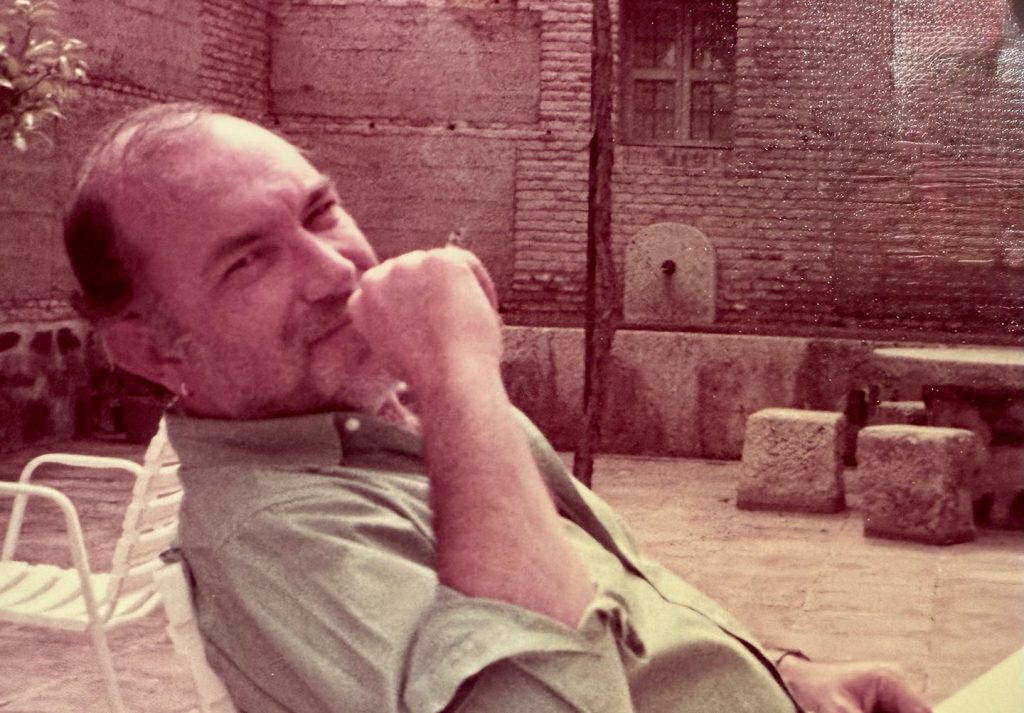
It had been a stellar year at Leo Burnett and I was spending a fair amount of time walking back and forth collecting my awards. I am still not sure to this day if that was the real attraction. Emma Hayward introduced us at his request and we spent every day together before he left.
We were both smitten and not long after he returned to join me and a group of friends on a sailing trip to the west coast of Malaysia in a beautiful 120-foot-long 1920’s ketch yacht complete with hip bath. Our idyllic trip ended with the yacht teetering on the edge of a circular reef, heeled over on its side just as I was making chicken and rice in the galley. Neil entertained us with ghost stories as we drank cups of tea and ate ham sandwiches waiting for the tide to turn. The next day after dinner he proposed to me. We had spent about 10 days in each others’ company.
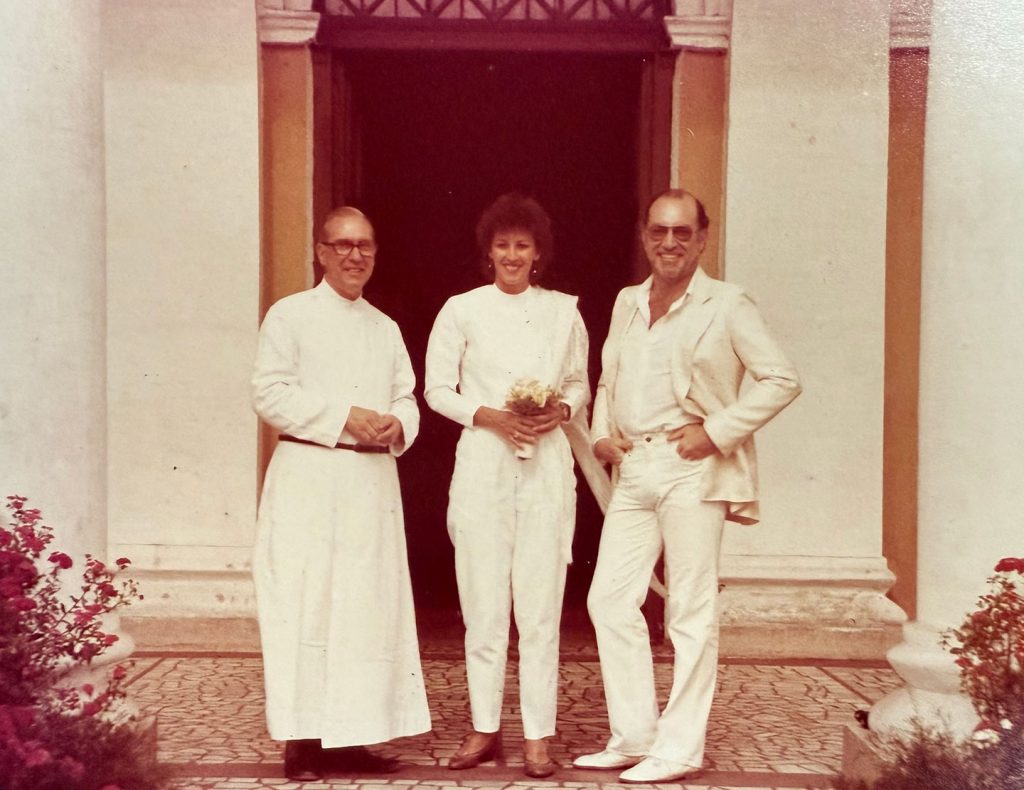
A few months later we married in the Church of St James in Kashmiri Gate, Old Delhi, and honeymooned in Kashmir. It was built by James Skinner, a biracial mercenary. Neil loved that fact as he saw himself as a maverick mercenary.
By 1983, Neil was in O&M as ECD and worried about how he would succeed as it was very different from being a freelancer. I was appointed ECD and CEO of Saatchi & Saatchi in the same year and terrified. My advice to him was to find the clients with the smallest budget and persuade them to do bold advertising. I think his first campaign was for IDS: Singapore’s most boringly efficient warehouse organization. His response to me when I told him about the job was, “Go for it, I have your back.”
Neil had set ideas about marriage and soon informed me that “it was no free ride.” I said I was raised with the Cantonese idea of “What is yours is mine and what is mine is mine.” Hilarious! We settled on sharing all costs except when we travelled, then he would pay for everything except the airfare. I am grateful for that approach as it forced me to be independent and spurred me on to pursue my career with vigour and passion.
We travelled a lot, especially to Spain, which was his final home. He spoke Spanish well, learnt in the past in Spain when he had various careers: as a lounge singer (yes he had a beautiful voice and, like Frank Sinatra, could pace and sell the song) and a bullfighter, until he decided he liked living more.
Not many people know Neil was a real foodie and we ate well when we travelled and at home, as he was also a good cook. He could throw anything together and it would come out amazing. A master at the BBQ, much to the annoyance of our neighbours. There are so many stories of what we experienced together they would fill a book. Overall, there was much laughter, good food, generosity and kindness.
I think going bankrupt made him all the more determined to succeed in Singapore. He was a single child with a strong, very intelligent mother and an overbearing father. He was raised to be independent and tough, but he was also a big softy who would weep over a great book. At heart he was a storyteller and that is what pervaded his ads. Peppered with his natural wit, intelligence and frankness the ads disarmed and charmed. He was also an excellent salesman, negotiator and quick study who could get to the heart of client issues and talk to them with knowledge and logic, convincing them to take risks. His attitude to life may have been influenced by a fortune teller telling him that he would not live beyond 18, so he chose to live his life fearlessly and to the full. It is ironic that he died at 81, same numbers, the other way round.


I would not have achieved as much without Neil or lived the amazingly enriching life I did when we were married. Thank you for always having my back.
Tham Khai Meng
Tham Khai Meng served as Worldwide Chief Creative Officer and Co-Chairman of Ogilvy. His partnership with Neil in Ogilvy Asia produced a sustained run where the region topped both awards and growth, prompting Miles Young — then APAC CEO — to bring Khai with him to New York when Martin Sorrell appointed Miles as Worldwide CEO and Co-Chairman.
In 2012, Khai led Ogilvy to its first-ever Network of the Year win at Cannes. The agency repeated the feat in 2013, 2014, and 2015, marking four consecutive victories. After a one-year gap, Ogilvy reclaimed the title, bringing the total to five wins under his creative leadership.
“Frenchie was the real deal. I owe him everything.”
Neil was a great friend and I’ll miss him terribly. He was from a singular mould, a very remarkable talent and a lovely person. He was not only a creative’s creative, but a colorful raconteur, keen typographer, gifted singer and storyteller.
Neil was probably combative and irascible as soon as he got out of his mother’s womb. But he always enjoyed a good laugh and saw a funny line in the most ordinary of situations. Therein lies his true genius.
When he arrived from London to Singapore, he quickly found fame as a rapier-sharp adman. He did many mould-breaking ads, and one of these was a newsprint campaign done together, as it so happened, with my brother Khai Wor who was the marketing director and vice president of Singapore Press Holdings, the holding company of Straits Times. Together, they created the seminal XO newspaper ads for SPH disguised as a beer campaign. You could run the ads today, and it’s still as powerful and palpable.
By the time I asked for a transfer from Leo Burnett London to their Singapore office, Neil had already begun revolutionizing the ad industry across Asia. One day as I was sitting at my desk writing ads upon ads, the phone rang. I picked it up and there was this unmistakable voice on the blower, “Hello, is this Khai? It’s Neil here. (pause) You can call me Frenchie…” He had wanted me to work with him at Batey Ads on Singapore Airlines. He did a short stint there. In the 1980’s, Singapore Airlines was already quite famous for their world class service and the sarong kebaya clad Singapore Girl. As soon as he set foot at Bateys, he wanted to change the Singapore Airlines strapline from, “It’s a great way to fly” to, you guessed it, “Not just a pretty face”. He proposed the idea to the founder and de facto creative director, Ian Batey. I believe Batey said, “Over my dead body”.
As they say, the rest is history. Batey was a hot shop then. I’d fun working there with Ian as the chief. Everyone was there, Tim Evill, John Finn, Norman Kerr, Jenny Koch, Adrian Gerson, Jim Aitchison, Eugene Cheong, the talented Tony Redman and the now much-sought-after cult novelist Malcolm Pryce. We had a ball.
When Neil got the big gig as the worldwide creative chief of Ogilvy partnering CEO Shelley Lazarus, he called me at Bateys. This time, he was looking for someone to fill the role he was vacating—the Asia regional creative post. He invited me for lunch to meet the equally savvy and brilliant Miles Young, Chair and CEO of Ogilvy Asia Pacific. We met at an Italian restaurant in Ann Siang Road, Singapore. It was on a Friday, it was a very, very long lunch and the three of us did not return back to the office. You could get away with it in those days but not anymore which is a shame. I was hired as the regional creative director. We had a lot of fun. Neil was a giant—and I had the great privilege and honor to stand on his shoulders.
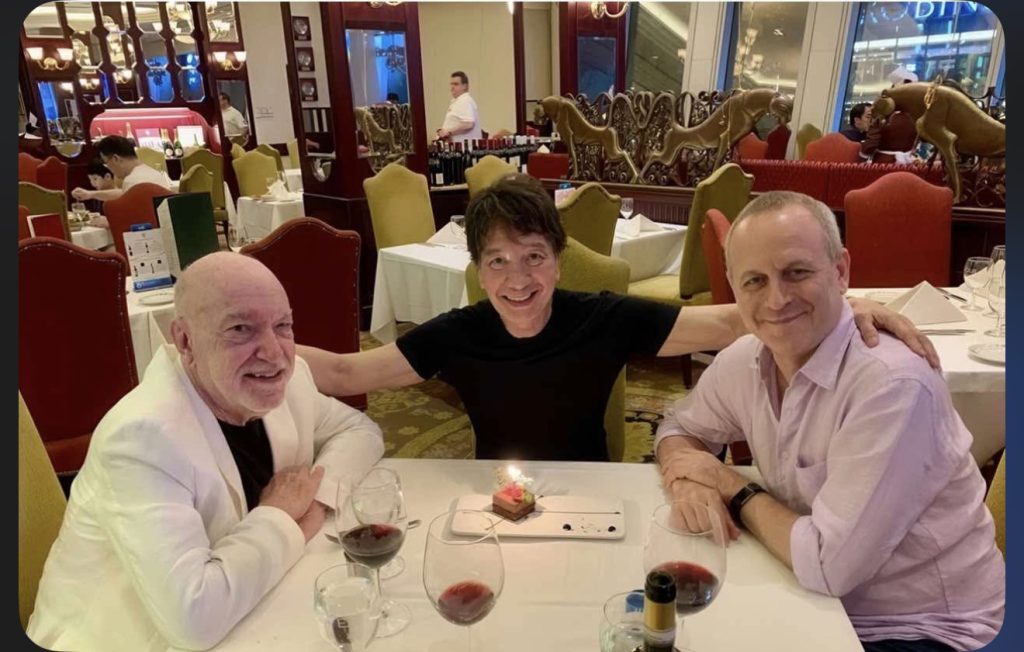
We cobbled everyone together and did a lot of work with all the multi- talented teams around us across Asia. All we wanted to do was to write great ads, tell great stories to move hearts and minds. We knew that when you spend more time up front honing a sharp strategy, you can create great memorable ads that stick, and sales will follow.
Above all, perhaps Frenchie’s greatest achievement was being the most doting and committed father to his lovely son Dan. I spoke to Dan yesterday and he said, “He was truly the best father anyone could ever ask for.”
Eugene Cheong: All Frenchie Ever Tossed Me Was A Bent Ten-Cent Coin
Eugene Cheong, former Chief Creative Officer of Ogilvy Asia Pacific for 2009 to 2019, a creative pioneer who, in the late 1980, set in motion what is known in the industry as the “Asian Creative Revolution,” which began in the iconic Ogilvy Singapore agency.
“Without Neil French, there’d be no Eugene Cheong. I owe Frenchie everything.’

Neil wasn’t much of a teacher; he was constitutionally incapable of taking your febrile attempt at art or copy and patiently nudging it into something approaching passable. He’d much rather relieve you of the job and return a day or two later with the ad fully handwritten to perfection on a piece of A2 tracing paper.
I remember showing Neil the copy for BMW 5 Series, expecting him to go through it line by line. The only tip I got from him was to not write ‘less than a ten-cent coin’ but rather ‘less than a bent ten-cent coin.’ It was a wee bit of a let-down as I was expecting a lesson on copywriting.
Neil was a man in a hurry. By the time he was washed ashore in Singapore, the former pornstar, escaping the taxman, was already 39 and desperately trying to reclaim lost time. Neil let me peek at his book, and it wasn’t particularly impressive. Most of his headlines were bombastic but beside the point. They were like the title of a story, not the compression of an idea. But he was extremely proud of the body copy and lovingly read several of them to me like a father reading a bedtime story to his son in his baritone voice.
By the time Neil became my creative director at Ogilvy Singapore, I was already three years in the business, and I had memorised all the ads in the One Show, Art Director’s Club and D&AD annuals. I knew which ad appeared on which page of which annual. I could recite the headlines and last lines of BMW, Volvo, Avis, Chivas Regal, Sainsbury, Parker Pens, Volkswagen, Albany Life and Imperial War Museum campaigns, and I knew who wrote them, who shot them and who designed them.
Somehow, I couldn’t translate the encyclopedic knowledge in my noggin into practice. My ads were oh-so-terribly-ad-y to say the least. I could NOT crack the code.
Then, came Frenchie.
He sat two glass offices away, and his first campaign was a B2B campaign, no less, for a warehousing company called IDS.


I watched him sprawl out like a 4-year-old on the red carpet of his office with a Pantone Cool Gray 1C marker writing with precision over the aforementioned A2 tracing paper.
What he wrote was outrageous. While we’re all trained to flatter the client in public, Neil did the opposite. His copy for IDS was client-mockery. Most of us would no doubt have heard of the adage: a small admission gains a large reception. Frenchie was going full-on self-flagellation with a cat o’nine tail. I couldn’t believe what I was reading. He was saying the client is boring. He was using difficult words like ‘stultifying.’ He was being ironic. He was being sarcastic. He was heeding Ogilvy’s dictum that the consumer isn’t a moron.


I thought to myself: nice try, Neil, but it’s going straight into the bin. Instead, the campaign went straight into the Strait Times the very next week, which, in 1983, was a newspaper read by all 2.5 million Singaporeans. It was the moment the veil lifted for me.
I had unconsciously convinced myself that only the demigods and sorcerers who lived on the pages of D&AD and the One Show annuals could produce blue electric current at will from their fingertips. It took a human being who lived two glass offices away to make a young copywriter realise that he, too, could be a wizard if he so chose.
Barbara Levy
“Neil French was a man whose life, even before advertising, was more interesting than even the ads he wrote.”
It all started with Neil’s first words to me, “Darling, thanks for throwing this party. I was trying to decide how and where to tell the Singapore Creative community that I am leaving the industry. As they are all here and you are paying for it, I have now solved the issue,” were Neil’s first words to me. That was circa 1990. That’s how I met Neil French, on the terrace of Raffles Hotel in Singapore where he was holding court at a presentation that LIA was hosting, no less. He was leaning on a wall surrounded by scores of ad people. He made the announcement to everyone and then left the industry for what amounted to a nano-second.
Many creative people say that Neil French put Singapore advertising on the world map. He was not a man you could ignore. Or forget. He embodied how advertising was perceived at that time – ponytail, a purposeful strut in tight fitting jeans and cigar perched between his lips. Love him or hate, you could never ignore him. You could try, but he just wouldn’t let you. His wit was rapier sharp, just like his writing. For all his flamboyance, Neil French was as just at home talking to the doorman at Raffles Hotel, as he was talking to the movers and shakers of the world.
I know many people called Frenchie the Godfather. An advertising figure larger than life, But to me, he was all that. And more. He was supportive. He let me into his life outside of advertising. He was a friend.
The advertising world has lost one of its favorite sons. Neil French was a man whose life, even before advertising, was more interesting than even the ads he wrote. He told time and time again that what made him such a great adman was all his experiences outside of the advertising world. He went on and on about how life experiences was his best education.
With Neil’s passing the world has become a lot less colorful.
Sonal Dabral
God must be working on an advertising campaign up there. That’s the only explanation I can think of for losing two giants of our industry within a single month. First Piyush… and now Neil French.
My first meeting with Neil happened when he had just taken over as Ogilvy’s Regional Creative Director for Asia and was visiting India for the first time in that role. We had all grown up on the stories — how tough he was, how he could slice through a campaign with a single line, how entire departments trembled when he walked in. So when he arrived in a sailor jacket, jeans, and bright red boots, I was more fascinated than intimidated. As someone who enjoys a bit of flamboyance myself, I instantly liked the man.
Everyone presented their work to him that week. I was heading Ogilvy Mumbai then. He approved some campaigns, dismissed others without hesitation, and lived up to every legend we’d heard. When I showed him a print campaign for Perk Chocolates that I had been personally working on, he broke into a smile and said he liked it a lot. Both Piyush – India CCO and Ranjan Kapoor – our then Chairman – were in the room, beaming.
A little later, Piyush walked into my cabin looking a bit puzzled.
“Sonal… Neil has cancelled lunch with Ranjan and me. He wants to take you instead.”
I was stunned. And nervous. And curious. At lunch, after a few stories, Neil got to the point. He looked at me and said, with that signature Neil French directness:
“Sonal, if you can create work like that, there isn’t a thing in the world you can’t do.”
Those words hit me like a lightning bolt. Coming from him, they were transformative — the kind of encouragement you carry for the rest of your life.
Classic Neil — dramatic, disarming, and unbelievably generous.

A few months later, he told Piyush and Ranjan that he wanted me to move to Ogilvy Malaysia to help build the office there. At that time, Ogilvy India — particularly Mumbai — was thriving. When I travelled to Kuala Lumpur on a recce, the office felt small, the task felt big and tough, and I wasn’t sure whether uprooting myself was the right thing to do.
Soon after, at a regional conference, Neil asked about my decision over a drink. I told him honestly that I was torn — comfortable in Mumbai, uncertain about the Malaysia role. He looked at me, smiled, and said:
“Sunny boy, you’re not going to Ogilvy Malaysia because you need it. You’re going because Ogilvy Malaysia need you.”
That one line resolved everything. I accepted the offer. And looking back today — at the work we created, the reputation we built, how much I began to love the people and the place, and how much I grew — it remains one of the best decisions of my life. All sparked by Neil’s belief.
After that, my time in the region gave me many opportunities to interact closely with him and learn from him — whether in reviews, conversations, or even the karaoke evenings we had at my home in Kuala Lumpur with Neil and the Ogilvy KL team. Yeah, Neil was a mean singer too.
Neil was a remarkable teacher. He often told a favourite story — always delivered in a full Indian accent — about a master elephant sculptor from South India. When the sculptor became world famous, he was asked the secret behind his perfect elephants.
He replied: “I take a piece of wood… and remove everything that doesn’t look like an elephant.”
Neil would pause for effect and say:
“That is how you craft an ad. Cut away everything unnecessary. Refine and refine until removing even one word makes the whole thing collapse.”
That was his philosophy — simplicity, clarity, and relentless craft.
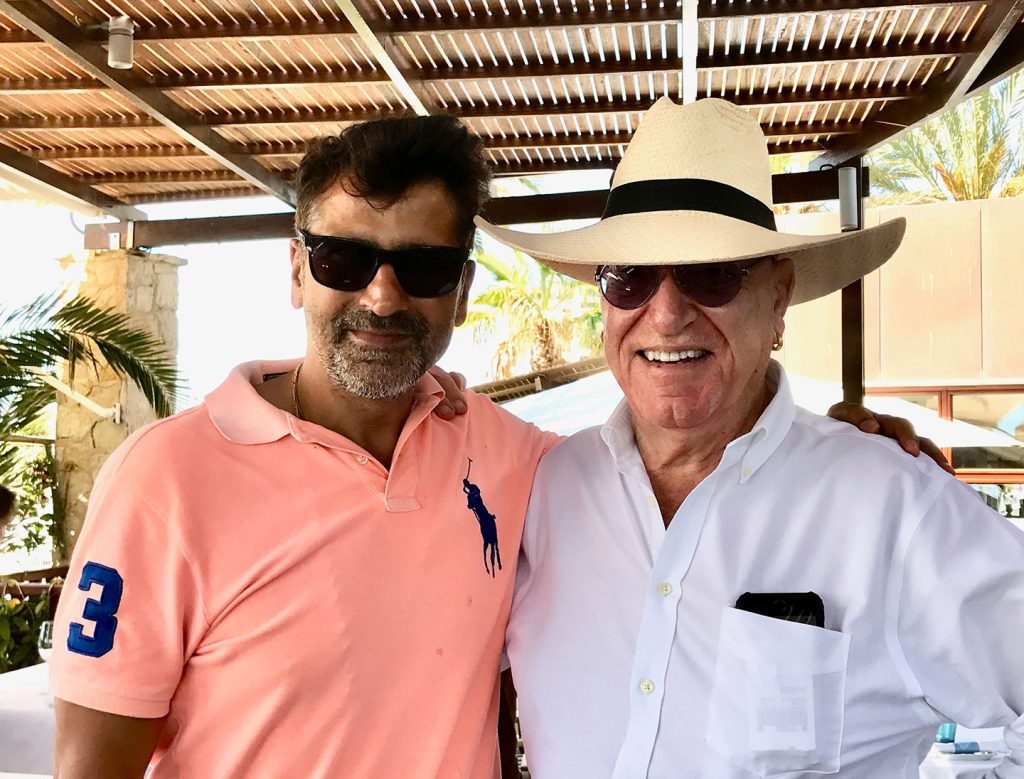
Thank you, Neil.
For the faith.
For all the lessons.
For the humour, the drama, the affection beneath it all.
You were a friend, a mentor, a guide.
A magnificent original
We will miss you.
I will miss you.
Always.
Suthisak Sucharittanonta
“Without him—had I not met him that day—there is no way I could have become the successful creative I am today.”
It was my immense good fortune to have known and met Neil French, one of the bosses during my time at Ogilvy Thailand. Neil was the Regional Creative Director then.
I vividly recall that every year, Ogilvy Asia Creative Directors had to take their work to Pattaya for Neil’s review. It seemed that most Thai Creative Directors back then weren’t keen to go, but I was excited and eager to meet him.
The first time I met him, he was like a kind of Godfather, sitting surrounded by his key lieutenants! Neil was very gracious; he called me over and introduced me to everyone. After that, he taught me everything he believed was excellent. I absorbed everything he passed on.
Without him—had I not met him that day—there is no way I could have become the successful creative I am today.
With deep gratitude and appreciation, I will always remember you, Neil. RIP.

David Guerrero
“I was far more fearful of letting down Neil than worrying about the noise around town.”
Needless to say, I disagreed with Neil on many things – and certainly on the remarks that led to his downfall. However, he was the man who brought me to Manila in 1995. After applying for the job of Ogilvy ECD I had to pass an interview with him – and through an extraordinary set of circumstances found myself on a shortlist of one! I quickly found myself on the receiving end of a lot of his fax and phone-based demands.
For good work – and lots of it. My business partner was not spared the task. We both had to deliver… or else. Predictably this take-no-prisoners approach to creativity ruffled some feathers in Manila with more than a few complaints about “the Brits at O&M.” Luckily I was far more fearful of letting down Neil than worrying about the noise around town. At our height, in 1997, we became one of the most awarded agencies at Spikes and indeed were so successful that I got an offer to start an agency. But that’s another story. He brought together some of the best talent in the region. Notably in regional conferences at Pattaya’s Sugar Huts Hotel, where, sitting around the pool I worked with Piyush Pandey (also sadly now missed) on an ad that went on to win a Grand Prix at LIA.
In any case, Neil started to become a regular visitor to Manila, on one occasion speaking to the assembled industry and again not winning us any friends by making fun of the leading agency at the time. But also working closely with our team – terrifying some – but eventually helping them to create some of the best work of their careers so far. Two ads that he liked were these ones for the Noli and Fili translations.
And of course elsewhere he was coming up with campaigns for Singapore Press Holdings featuring an invented beer brand that created so much demand someone started making it for real. He was an advisor, a friend, and despite his protestations about the irritation and expense, was always at Cannes for the festival.
He was able to point Angel and me to a more affordable hotel outside of town so we could attend as delegates – and could proudly see the Philippine flag flying on the Croissette. The three years I spent working with him represented a huge turning point in my career and I will always be grateful for the lessons learned. He always had a healthy sense of perspective – one of our lines for the launch of Fort Bonifacio was ‘No one’s last words were “I wish I’d spent more time at the office.”’ And indeed they are very unlikely to have been his.


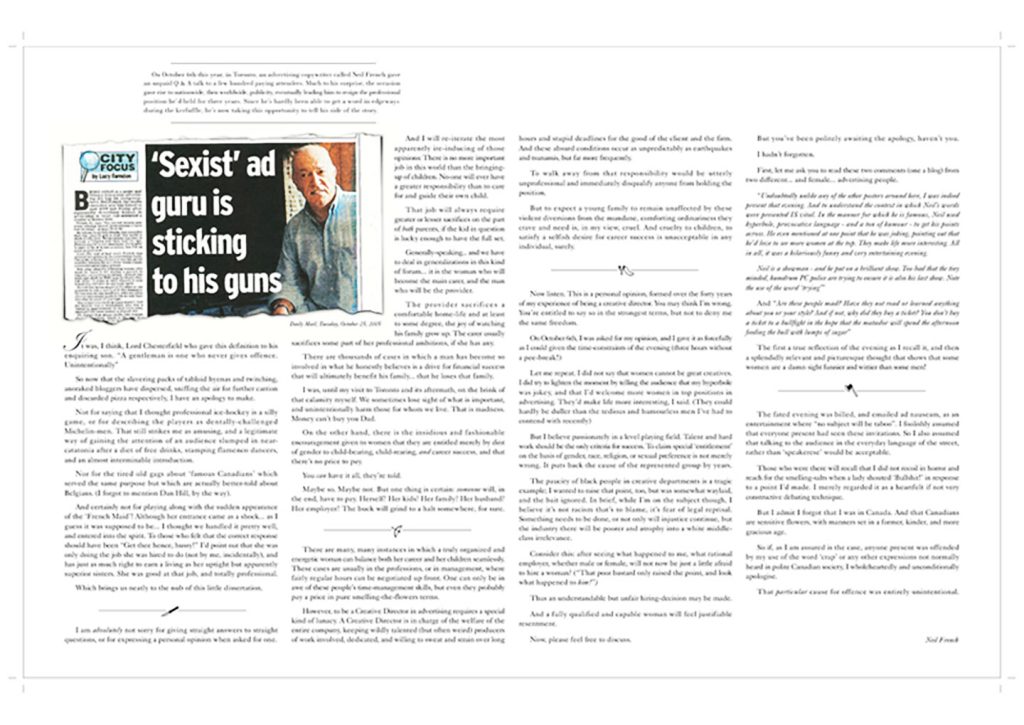
The turning point in Neil French’s career after a speech have gave on 6 October 2005, where French spoke at the “A Night with Neil French” event in Toronto. [He gave in Toronto. CBS News reported “One of the world’s most flamboyant advertising gurus has left his job after reportedly telling an audience that women made poor executives because motherhood made them “wimp out.” While the Guardian reported that he had “caused outrage when he reportedly said women in advertising were “crap”” he then resigned from his position as Worldwide Creative Director at WPP Group PLC in 2005. Here is Neil French’s side of the story. He writes as derived from his website:
One morning last year, I awoke to find myself famous. In an orgy of stupidity rivalling its own Olympian standards in the event, the world’s media had leapt on a half-arsed and unchecked wire-service report of a poorly-attended soiree in Toronto (of all places!), and placed me, nicely demonised, on their front pages.
If you’d written this as a plot for a movie, it’d have been turned down as
a) impossible, b) silly, and c) pointless. But there I was, front and centre, in colour, looking like Abanaazer in a cheap pantomime. Obviously, that day, there had been no wars, no terrorists, no corporate scams, no football, and every editor had left his job to the astrology columnist.
I spent a happy day fielding emails, all expressing more or less the same amused bewilderment. I just carried on regardless.
Until it became clear that the American feminist nazis and their grovelling male minions in America had decided that, being powerless and unrepentant, I was easy meat. This wouldn’t have bothered me in the slightest, had not the heat fallen on the blameless shoulders of WPP. This could have meant problems for all my mates in the agencies, and that was not acceptable to me, so I resigned my position, to allow the company to distance itself from both the event and myself.
Since then, I’ve given many interviews, most of them reported fairly, and I’ve had not a single message, letter, or email that wasn’t supportive and sympathetic. Many of them from highly successful and canny women, who tended not only to agree with the point I’d fleetingly made, but gave examples of their own experiences of the phenomenon.
Still, I hadn’t yet been able to put my own side of the story, untrammeled by the ‘investigative’ ambitions of second-rate journalists,
And, as this is my only skill, I decided to write an ad, to be published in the Trade Press.
Here it is.