
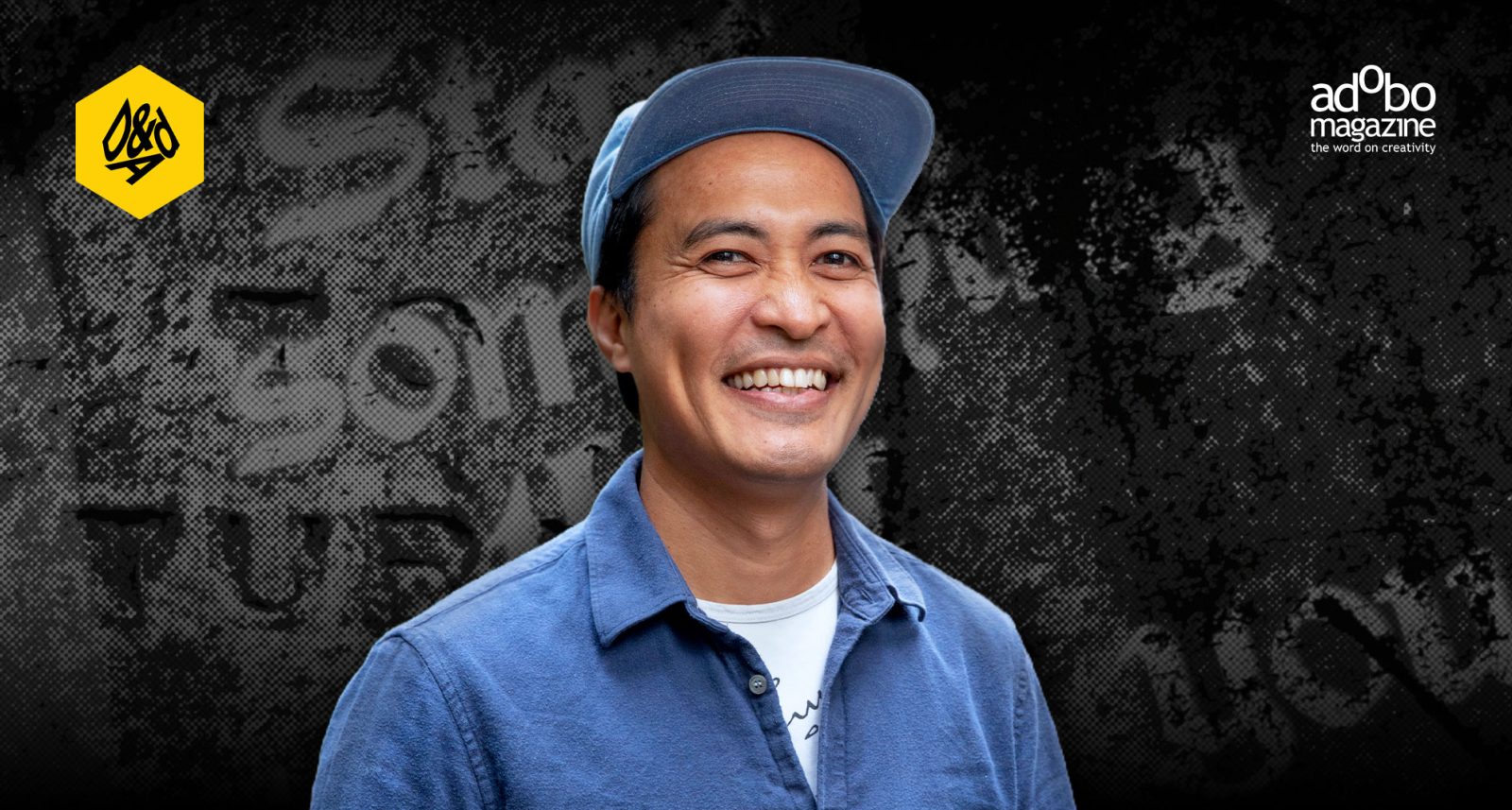
Having built his career across some of advertising’s most influential creative hubs — from Ace Saatchi & Saatchi and DM9JaymeSyfu in the Philippines to agency stints in Bangkok, Amsterdam, and London — EJ Galang now brings that global perspective to Pablo London, Campaign’s 2025 UK and Global Independent Agency of the Year, as one of its Creative Directors.
As a judge for the Writing for Advertising category at the 2026 D&AD Awards, he sat at the forefront of conversations about the craft of language in an era increasingly defined by algorithms, automation, and shrinking attention spans.
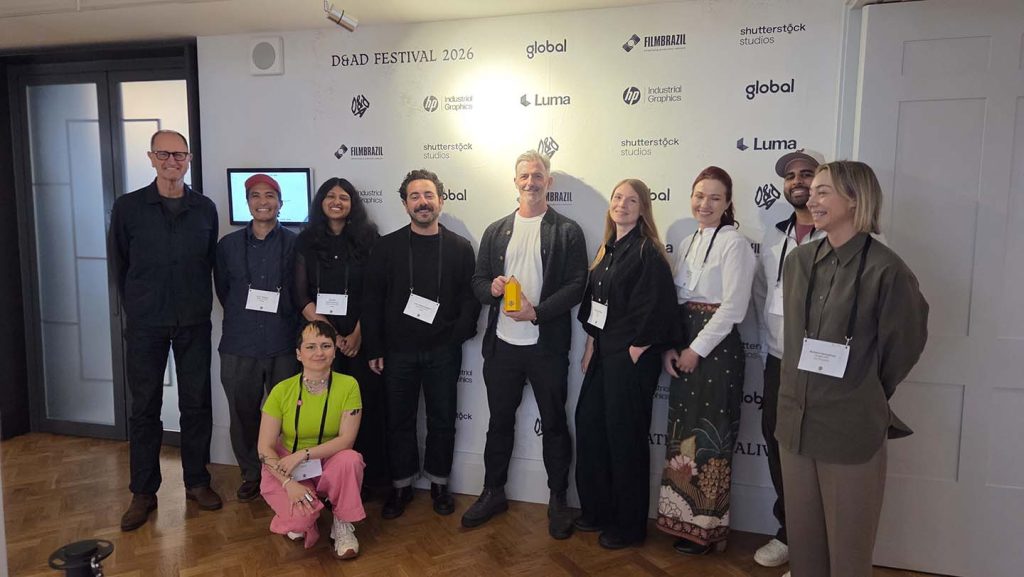
In this exclusive interview with adobo Magazine Founder, President, and Editor-in-Chief Angel Guerrero, EJ reflects on the value of writing today, the work that stood out in the jury room, and why creativity — despite recurring predictions of its demise — remains very much alive.
adobo Magazine: In an industry increasingly driven by speed, algorithms, and performance metrics, do you think advertising still gives writing the time and value it needs to shape culture, emotion, and memory in a meaningful way?
EJ: With budgets tightening, timelines shrinking, audiences fragmenting across media channels, and AI optimizations reshaping the industry, it’s easy to believe that advertising doesn’t value great writing anymore. But that’s only true if you define value exclusively in economic terms.
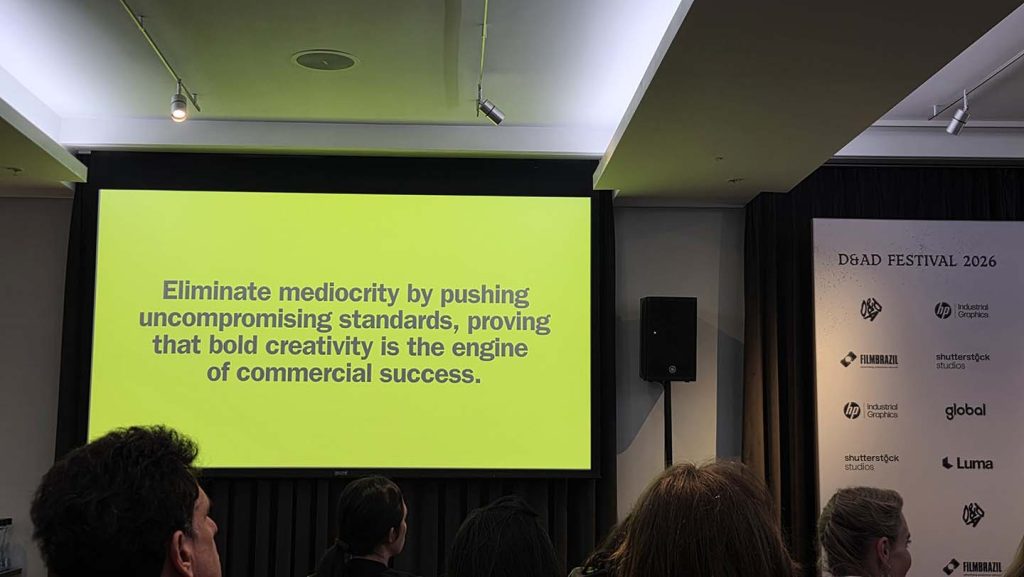
If you think of value in cultural terms, in the sense of the type of writing people remember, or that moves people into action, or has the strongest impact in changing the fate of a brand, then the answer is a simple and resounding yes.
Most brands that have seared themselves into our memories, endured recessions, or risen from challenger to market leader have depended on well-crafted words.
Perhaps the bigger question is whether agencies give it its appropriate commercial value when historically, we’ve been giving ideas for free in exchange for media commission or charging based on the time it takes to create a piece of work instead of impact and outcomes.
adobo: Great advertising has always relied on the synergy between art and copy. In the strongest work you judged at D&AD, how did words and visuals complement each other to create ideas that felt complete, layered, and emotionally resonant?
EJ: In our category, we were naturally exposed to work that put a spotlight on the writing and we judged it through that lens. Even so, the strongest entries reminded us that great writing rarely works in isolation and still depends on other craft disciplines for support.
There were pieces where the writing clearly took center stage, like our lone Yellow Pencil winner, Bourneville’s “Made to Be Enjoyed, Not Endured.”
The setup was simple: hotel foyer booth, three characters, corporate attire. It was all delicious copywriting craft from there. One character enjoys the product as the other two engage in a dark chocolate snob-off. From the opening line to the relentless one-upmanship, we were laughing at every retort that took the concept of “dark” to increasing levels of absurdity, and our discussion swung mostly between admiration and envy. Of course, the set design, casting, and direction had to be spot on too, but just perfectly restrained to make sure the dialogue was the hero.
In some cases, we also admired clever narrative constructs like in Ikea’s “Made for Life” where storytelling became the thread that wove together seemingly unrelated products with client-mandated price tags.
What was evident in the winning pieces was how the visuals created the conditions for the words to land and the result felt complete because all the elements served the idea, which in our case, was driven mainly by the words.
adobo: What defines great copywriting today? Is it wit, humor, emotional honesty, sharp long copy, a perfectly crafted social post — or something else entirely? And do you think the industry’s definition of “good writing” has changed for the better or worse?
EJ: I don’t think there is one style that can define great copywriting. Wit, humor, emotional honesty, sharp long copy, or well-crafted social posts can all be great, as long as they deliver freshness and surprise. There were pieces with strong writing that felt as though they could have been in a D&AD annual a decade ago but didn’t make the cut precisely because they seemed like they were for an audience a decade ago. Equally, familiar devices like cataloging, musicals, and even puns survived rigorous deliberation because they still gave us something new to laugh at and think about.
Forms don’t define great copywriting. What mattered in the room was whether the text could surprise a group of professionals who have seen and studied great copywriting for generations. I think it’s this hunger for inventiveness that helps expand our definition of good writing. In that sense, I believe the industry’s definition is getting better as it rewards originality and relevance over adherence to a particular style or trend.
adobo: Were there particular entries that reminded you of what exceptional writing in advertising can still achieve today?
EJ: Claude’s “A Time and Place” was one piece in particular that invited a lot of discussion not only about craft but also about the subject matter itself and how opposing types of AI were represented. There’s also the irony in how it parodies advertising to promote technology that is believed to be killing advertising, while employing old-fashioned advertising craft in a traditional advertising medium. Each time it came up, the discussion ranged from the role of the opening titles to the tone chosen for the AI bots. It reminded me of how well-written and executed work can divide a room, prompt passionate conversation, and challenge perceptions.
On the lighter side, Telstra’s “App O’Clock” demonstrated a brand’s confidence to lean heavily on charm for what was, at its core, an everyday promo brief. Instead of screaming about prizes, the brand opted for humor, building an endearing character one mini-episode at a time and using that character to drive awareness. Personally, having worked on telco for a long time, constantly writing about deals and discounts, it was refreshing to see a brand use wit over volume, and trust that subtlety could be more memorable.
adobo: This year’s D&AD theme asks whether “Creativity is Dead or Alive.” From the perspective of language and storytelling, where do you personally see creativity most under threat today — and where do you still find reasons for optimism?
EJ: Honestly, I’ve never really seen creativity itself as being under threat. I understand the theme is meant to provoke, and it’s good that it has, but creativity and storytelling have always been much bigger than our industry. It will always be in our nature to be creative whether it’s for survival or self-expression, and I don’t think that will ever change.
If the concern is the decreasing monetary value of what we do, I believe those of us who charge for creative services are just as responsible for that as the way the industry has chosen to price creative work. If there is a threat from AI’s capability to churn satisfactory copy, I sit firmly in the camp that it only increases the value of human taste and curation to rise above average output. In fact, I believe we should embrace this “existential” threat for its clarifying purpose. Those who believe AI can replace us should be encouraged to do so and release end-to-end AI work into the world so we can differentiate them from those who still rely on human ingenuity, instinct, and editorial judgment.
adobo Magazine is an official media partner of the 2026 D&AD Awards.
READ MORE:
How ‘intra-tainment’ is changing the way audiences engage with entertainment
In the age of AI and algorithms, the human POV is the real advantage