


SEOUL, SOUTH KOREA – Music is a prevailing force that transcends language and blurs cultural boundaries — a universal connector that shapes emotions, memories, and shared human experiences. Even in today’s rapidly evolving creative landscape, where trends shift and technology redefines how we create and consume, music remains an anchor of authenticity and a catalyst for inspiration.
This is the belief that fuels Black Cat, White Cat Music, a creative sound and music agency based in Tokyo, Japan that stands proudly at the intersection of artistry, innovation, and community. More than just producing sound, the agency crafts immersive auditory experiences that tell stories, elevate brands, and build meaningful connections.
During an exclusive interview with adobo Magazine, Black Cat, White Music Chief Executive Officer, Co-founder and Music Supervisor Seiya Matsumiya and Chief Creative Officer and Founding Partner Erik Reiff offered a candid look at their approach to storytelling, global collaboration, and the emerging role of technology in creative industries.

For them, it is important to be part of the community that celebrates creative vision especially when it helps elevate Asian creative work that will influence global standards.
“It’s important for us to be part of a community that lets us do what we do. And we wanted to celebrate and host a place where creative vision was celebrated,” Seiya said.
“I think it’s also celebrating seeing all these great Asian heads together, also kind of mixed with juries from around the world, like within Asia is like, how can we actually elevate the work that we’ve been doing within Asia, and also that our work also then influences what is going on around the world as well. I think, and especially what the OneClub is doing for so many events, bringing up young creatives, things that they did At OneAsia for the Philippines and DigiCon, and also, like the masterclasses, watching them work, and seeing how they’ve kind of put everything together, was something that was also very inspiring for us,” Erik added.
The soundtrack of storytelling


In the world of filmmaking and advertising, music isn’t just an accessory — it’s a language that deepens emotion and guides the audience through every scene. That’s why Seiya and Erik, two creatives who live and breathe sound, the art lies in knowing when and how to let music speak.

“When you see the film, something tells us that music needs to be in the front, or music needs to be in the background. Oftentimes, it’s the acting … the music can supplement it. But sometimes, the feeling needs to be elevated so much more than what the picture is telling us. So then, that’s where the music takes over and it really gets into your heart and communicates that feeling,” Seiya explained.
For Erik, it’s about space and intentionality as he believes that the magic of sound design goes beyond melody — it’s about creating space and being intentional with every note and every silence.
“It’s not just only like music, but like, how does sound support the story, especially because in our industry, a lot of it is visual and audio. So it’s not just an audio experience … ‘Where does the sound fit within that storytelling? Is it something that we should push forward, or is it something suggested in briefs that we should have something with no music,’ because it focuses on what you want to see, and then there’s more of an emotional context.”
Moreover, in an increasingly interconnected creative landscape, the challenge for music producers and sound designers isn’t just about creating something beautiful — it’s about crafting something that resonates across cultures.
But for Seiya and Erik, two artists with distinct cultural and creative roots, the key lies not in trying to please everyone. It’s also about trusting their instincts and the authenticity of their craft.
“When I’m producing music, I’m thinking of the entire world. It’s more like I’m relying on my background as a musician,” Seiya noted.
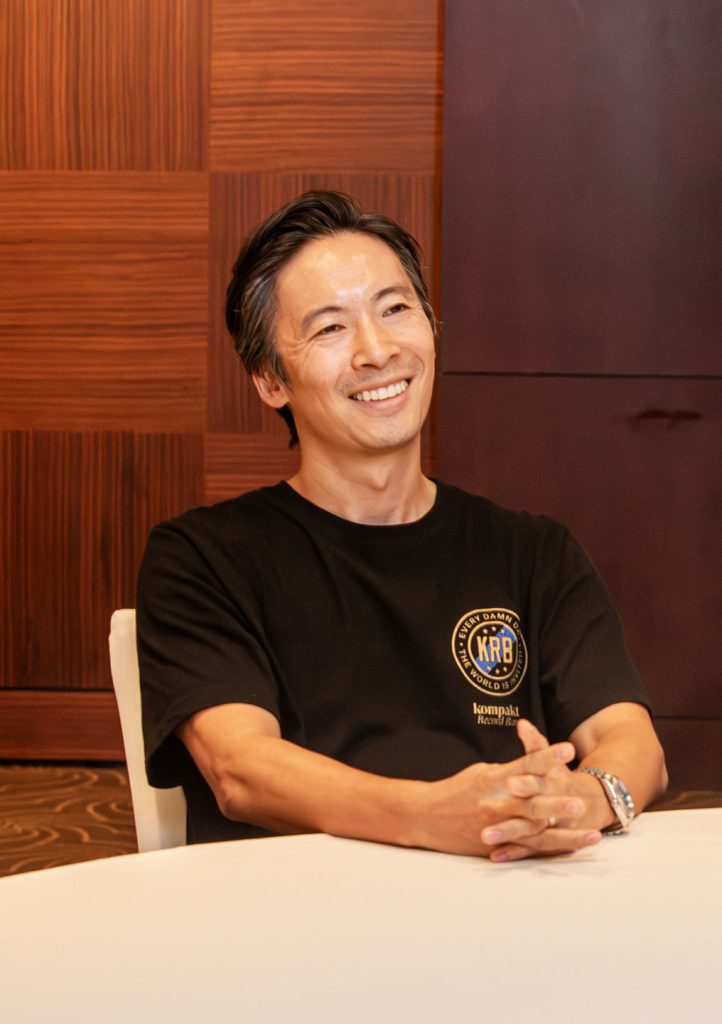
“How I look at it is my background and interest in music for all these years. I mean, I’ve studied them and analyzed them, and then when I produce music, I don’t think about it. They just sort of like, hopefully they will come out,” Seiya added while emphasizing the essential of believing the goodness of their craft.
“You have to rely on what you believe is good. Someone said to me a long time ago that if you make something that is accepted by like 10, just 10% of the population, the 10% of the population that understands what that is, and then it’ll probably just trickle down to the rest. So you can’t really generalize, but you have to actually be specific. And that, I think that specific direction, whether it’s a global audience or APAC audience or a Japanese audience, it’s like within the context of this creative we believe this is good, and you just go with it,” Seiya underscored.
Meanwhile, Erik focuses on the story, not the scale when it comes to producing music amidst cultural differences.
“You can’t be thinking on that kind of scale when you don’t know everyone’s perspective. The main thing is like, what do you think works best for this story? And how do you feel it’s a story to make the best that you can with a global audience in mind,” he explained.
On creativity in the age of AI, and the future of audio

Just like any creative entity, the conversation on the use of artificial intelligence in human creativity, especially in music and sound, has also become more pressing than ever.
While technology grows capable of composing and mixing music and audio, Seiya and Erik believe that redefining the role of the creator distinctively uplifts the creative process rather than resisting the use of the AI.
“It’s how AI can challenge your creativity, rather than just using it as a one stop. This is an easy answer to everything. Once you start doing that, then everything becomes complacent, the standard will be lower. So it is really up to us within the creative world. It’s the creative industries to also push that and use AI to challenge ourselves,” Erik explained.
Seiya added, “AI should be used in ways that challenge you. If it’s making your job easier as a creative then you’re probably not doing it right.”
As conversations about digital innovation continue, both creators are looking ahead — to a future where sound doesn’t just accompany visuals, but immerses audiences in multisensory worlds.
“We’re moving away from traditional media like TV and even standard online formats,” Seiya said, “Everything is becoming experiential. Sound now plays a role in guiding people through physical spaces.”
For instance, Seiya recalled an immersive art exhibition in Tokyo inspired by the iconic Japanese artist Hokusai.


“What we did was we created sounds that when you’re walking through the quarter, into the main room, then you have a certain amount of sounds, like when you’re walking past the sensors, then have they picked them up, and then you can hear a certain sounds you go into. So it’s about using sound and music in a different storytelling way, because you’re still, you’re building up that tension and then letting that release once you go into that room,” he noted.
Ultimately, Seiya and Erik idealized that sound is a simple yet powerful storytelling tool, and people often underestimate it. For them, storytelling isn’t just visual or audio alone, but a combination of both, and that there’s potential to push the boundaries by applying creative knowledge across different cultures to explore new ways of telling stories.
“People forget how simple sound is as a storytelling device. Like, even watching [Kim] over there, without his voice, that’s a story within itself, but the distance of that is telling its own little story. If he was playing something else or there it’s really a visual and audio kind of experience,” Seiya underscored.
He concluded, “So it’s like how we’re looking forward to pushing the boundaries on that, and then using our backgrounds, our knowledge and know-hows into then pushing it into different cultures, and seeing how different ways of storytelling there [are].”