


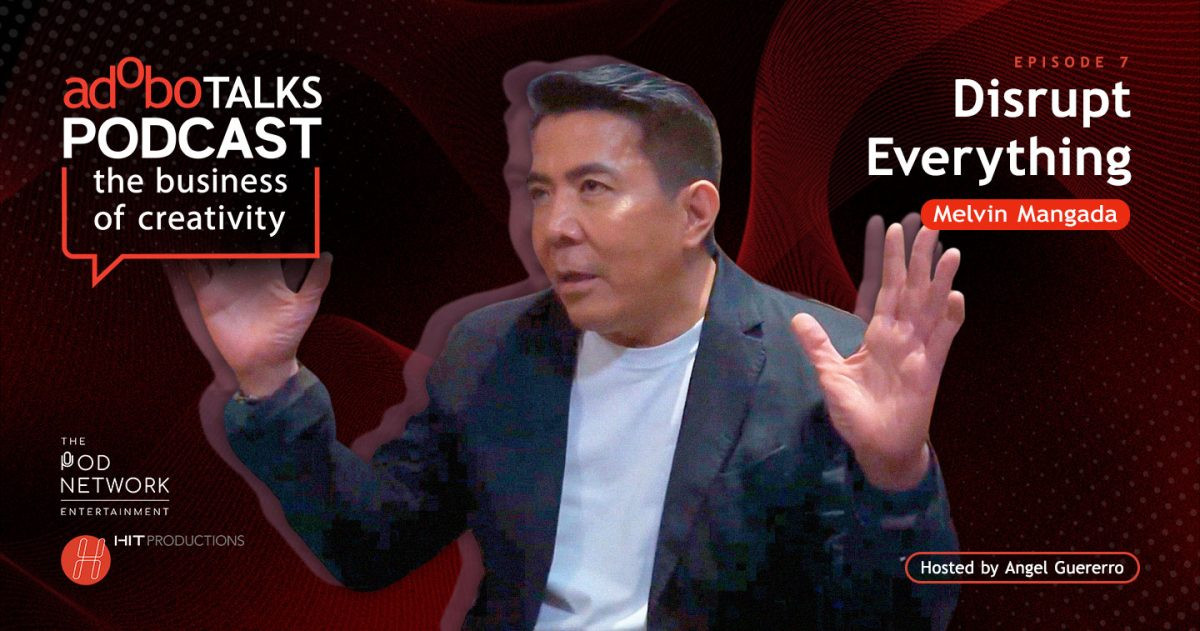
MANILA, PHILIPPINES – In the world of advertising, “disruption” is often tossed around as a buzzword — something to sprinkle into decks and manifestos.
In the seventh episode of the adoboTalks Podcast: The Business of Creativity, hosted by adobo Magazine Founder, President and Editor-in-Chief Angel Guerrero, TBWA Santiago Mangada Puno (TBWA\SMP) Chairperson and Chief Creative Officer Melvin Mangada discussed with Angel how disruption takes on a deeper, more human meaning. They specify how this matter unfolds a story of reinvention — of an agency, an industry, and a mindset that refuses to stand still.
“Disruption is all about defining the status quo, overturning conventions and shaking up the marketplace so our clients and brands get a larger share of the future back in the agency,” Melvin told adobo Magazine.
He also explained the line between disruption that matters and disruption that merely makes noise. Good disruption, for Melvin, creates positive change and propels a brand closer to its vision. Bad disruption is empty provocation — loud, but directionless.
“Good disruption is one that creates a positive change and achieves the vision of a brand. Bad disruption does not move the needle and, in fact, does not create any change in the marketplace,” he explained, while adding an example of bad disruption which are “campaigns or products that’s launched that don’t make a difference in the sales of the client.”
Moreover, Melvin narrowed down key concepts of disruption. For him, it does not start with a big idea out of nowhere. It starts by understanding the rules that already exist. These rules are called conventions. Every brand operates within them, often without questioning where they came from or whether they still make sense.
“There’s so many ways to look at how to attack disruption. We look at the conventions first, and there’s so many conventions,” he said.
One way to look at conventions is through the consumer. This means examining how people currently think, behave, or make choices within a category. Another area is communication. This covers how a brand speaks and presents itself. It includes the tone of voice, the platform it uses, its tagline, and its overall marketing style.
There are also brand and business conventions, such as positioning, packaging, and distribution. This looks at how a product is positioned in the market, how it is packaged, and where or how widely it is sold. Lastly, there are corporate conventions, which are deeper and more internal. These relate to a company’s vision, mission, and values. Disruption at this level is not just about marketing but about rethinking what the company stands for and how it operates.
AI: The Ultimate Disruptor — Friend or Foe?

For Melvin Mangada, the rise of artificial intelligence is not a distant possibility. It is already unfolding. He pointed out that experts have long predicted AI’s impact in fields like medicine, engineering, and the sciences. Its ability to teach itself continues to improve at a pace even its creators did not expect. The future of super machines, he says, is not coming. It is happening right now.
In the creative industry, this reality leaves little room for debate. According to Melvin, embracing AI is no longer a choice.
“We don’t have a choice. You can’t escape. And it’s been there, actually for quite a while. It’s just now AI generative, AI has exploded. It’s open source, and everyone has a hand on it in many ways,” he underscored.
Melvin believes that at its current stage, AI’s greatest contribution to creativity is speed. It produces results in seconds, guided by prompts written by humans. In an industry where time is one of the most valuable currencies, this matters deeply.
Creatives, he notes, have long struggled with tight and often unrealistic deadlines imposed by clients. AI, in this context, becomes a form of relief.
“Let AI sweat the small stuff, Let them do the rough comps,” Melvin said.
Moreover, Melvin clearly explained the role of AI through a striking metaphor. He said, if AI were a person today, it would be a reliable and eager personal assistant. It would be all knowing and efficient, but also highly unoriginal.
This is where human intelligence becomes even more important. Melvin stressed the need for analytical thinking, not just in solving communication problems, but in addressing broader social and cultural issues. He worries that the industry has become so focused on digital insights and data that it sometimes forgets how deeply human creativity really is.


“It has a wealth of data, but no original point of view, and that is why I think at this point it should not be relied upon as an Ideator. But I think this is when analytical thinking is most needed in solving not just communication problems, but world problems,” he noted.
Melvin continued, “We’re so engrossed in digital insights for our own business agenda, and we forget the power of humanity on how social, and collaborative we are as a species. The more we are in touch with our humanity and in the changing values and the culture, I believe that ideas will stand out from Artificial Intelligence.”
When asked whether AI will eventually learn these human qualities, Melvin does not dismiss the possibility. He acknowledged that AI is still in its early stages, and even experts are surprised by how fast it evolves. At this point, unplugging is no longer an option.
“AI is currently at a very primitive stage, and experts are saying that even the creators of AI are surprised at how far it can go and how fast it can self-teach. It’s too late to unplug. That’s why disciplines like philosophy, psychology, the humanities, and the arts are more relevant now and will be needed as we go deeper into a world of AI,” Melvin narrated.
He explained, “We need to arm ourselves with basic human truths that AI is not aware of, such as what is morally acceptable, what is morally corrupt, and the difference between good and evil — things AI cannot distinguish, but we can.”
Nonetheless, Melvin said that transparency and critical thinking are the most important when dealing with AI. Hence, people should know when something is created by AI. Humans must continue to question, verify, and judge what technology produces.
“The more we are in touch with our humanity, how we think as people and how we deal with each other, the more we can arm ourselves against technology, data and AI,” Melvin said.
The future of disruption in advertising
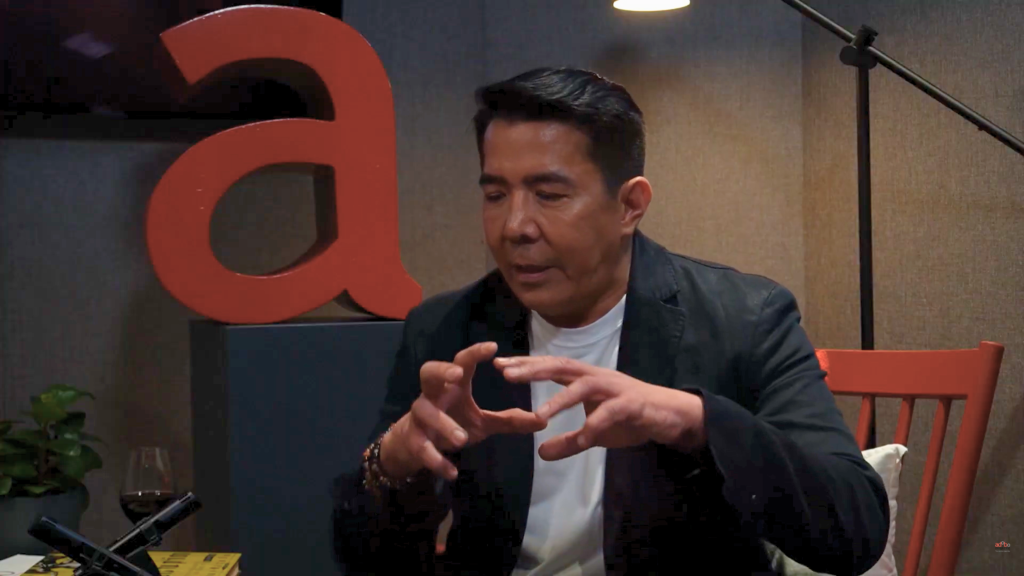
Disruption has always been at the heart of advertising. But today, it no longer arrives in waves or moments of transformation. It is constant, unfolding in real time.
For Melvin, the future of disruption is not something to speculate about. It is already here.
“The future of disruption in our industry is happening now as we speak,” he said while noting that technology, data, and artificial intelligence continue to evolve at a pace far faster than culture can absorb.
“They’re all certainly evolving faster than the speed of culture, and the industry has been in a state of flux for a decade, and we can’t simply sit back and wait for the next big shift,” Melvin affirmed.
Nonetheless, he called for proactivity. For him, agencies should start creating new products, systems, and services that address problems before they fully emerge. Some of these ideas will fail, and many of them will fail loudly. But failure, he insists, is not the enemy.
“We should try to be more proactive with these changes. Create things and services that we hope will solve emerging problems, and it’s okay to fail spectacularly several times, because we have and just keep on disrupting conventions and finding solutions to help creativity thrive,” he said.
This philosophy has shaped how TBWA\SMP operates, from its creative collectives to its production outsourcing models and support for other markets through talent sourcing. These shifts did not come from chasing trends, but from questioning old assumptions about how agencies should work. Yet for Melvin, the most urgent disruption ahead has little to do with technology — it is about people.
As a member of the Association of Accredited Advertising Agencies of the Philippines, Mangada hears the same concern echoed across the industry. There is a growing shortage of talent. Hiring the next generation of creative thinkers has become increasingly difficult, and the reasons are clear.
Creative people today have more options than ever before. From social media platforms to gaming communities, talent can now be seen, celebrated, and monetized outside traditional agencies. Brands are hiring creatives directly. Clients are building in-house teams. Creativity no longer needs advertising to survive.
This raises a difficult question for the industry: Why should young creatives choose advertising at all?
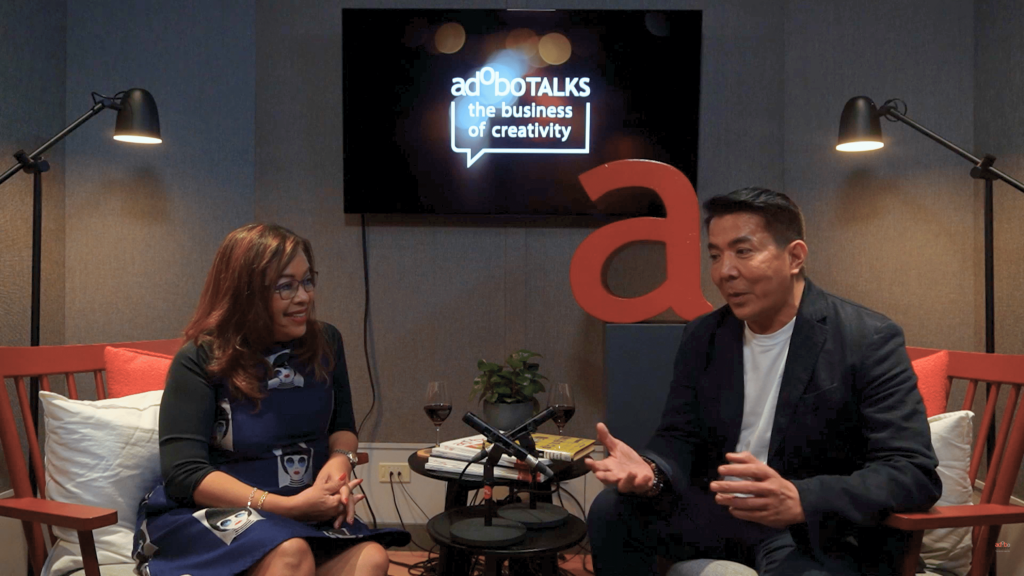
Melvin believes part of the answer lies in outdated corporate structures. The agency model, as it exists today, was built for another era. Loyalty no longer holds the same meaning it once did, and that is not necessarily a problem. Values have changed, and the industry must change with them.
Mental wellness is another issue that can no longer be ignored. Burnout has become widespread, and advertising is not exempt. Mangada challenges agencies to look inward and ask whether they are truly creating environments where people can grow without being consumed by the work.
Taken together, these challenges point to an industry ready for internal disruption.
Melvin is also clear that solutions cannot simply be imported. Western templates, particularly those rooted in American corporate culture, may not address local realities. The United States faces its own social and political struggles, and the corporate structures born from Wall Street thinking may no longer resonate with young Filipino creatives.
True innovation, he argues, must come from local minds and local context. It should not be limited to technology or shiny tools. Advertising, at its core, is powered by human talent.
“Our industry is run by human talent,” he said. “We should explore and investigate ways to nurture and attract such talent.”
The Philippines remains one of the most creative cultures in the world. Talent is not disappearing. But the advertising industry is at risk of losing its connection to that talent if it fails to evolve.
Ultimately, Melvin believes the future of disruption in advertising will depend on whether the industry is brave enough to rethink itself, not just in how it creates work, but in how it values the people behind it. Disruption, in the end, is not about technology alone. It is about choosing to change while there is still time, and doing so with creativity, courage, and humanity at the center.
“Our industry is run by human talent, and we should explore and investigate ways to nurture and attract such talent,” he concluded.
Catch the insightful conversation with Melvin Mangada on Episode 7 of the adoboTalk Podcast on Spotify, YouTube, and Soundcloud. The adoboTalks Podcast | the business of creativity, is presented by adobo Magazine, the word on creativity and produced in partnership with The Pod Network and Hit Productions.