

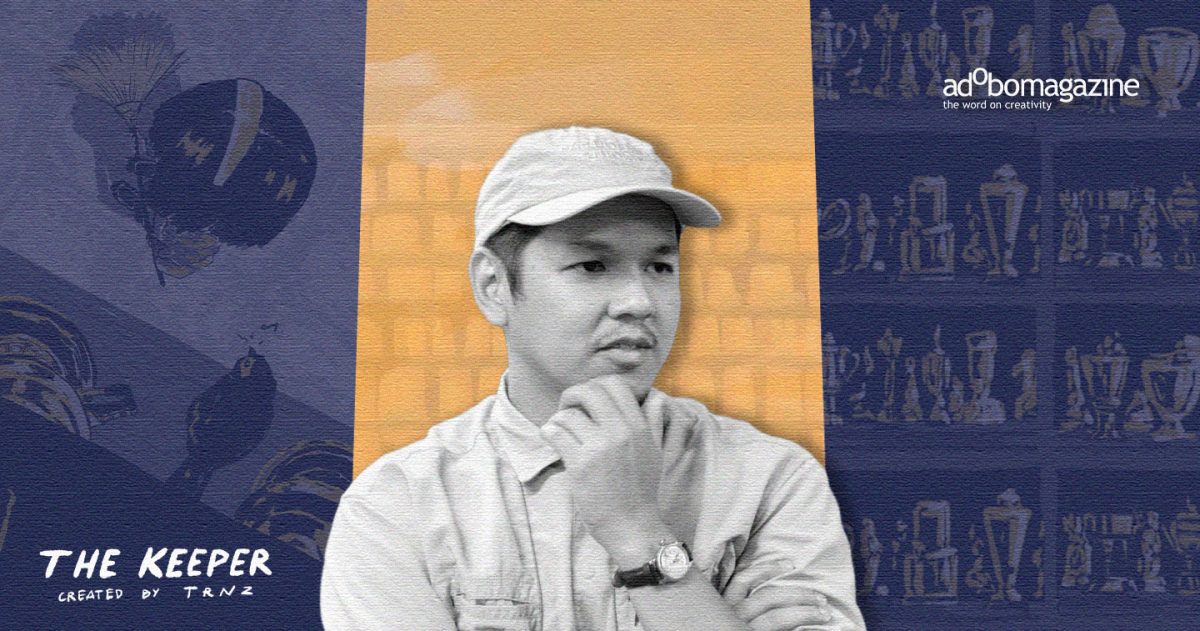
What happens when we focus so much on success, accolades, and perfection that we miss life unfolding right before our eyes? Terence Eduarte, also known as TRNZ’s short animated film “The Keeper,” created in collaboration with Fleet Studios, asks this question with quiet urgency.
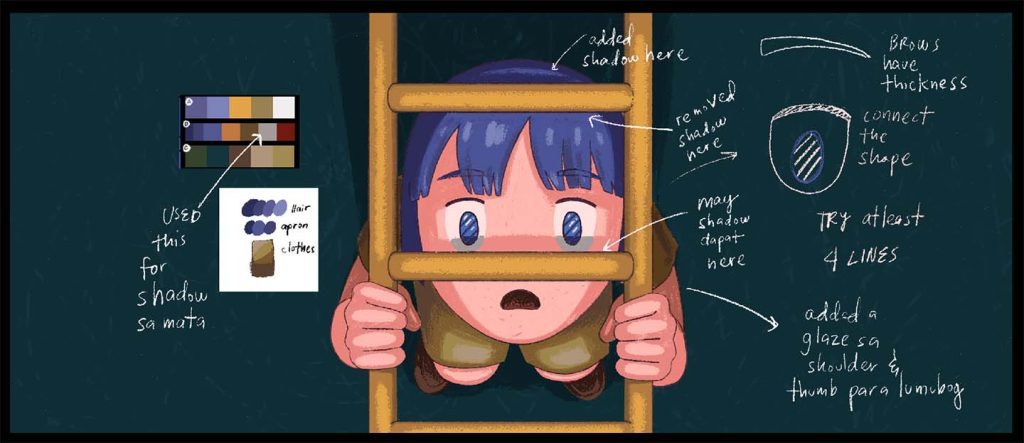
“The Keeper” follows a trophy-room keeper, the meticulous guardian of achievements, as she chases an unexpected visitor through her immaculately organized room. In her pursuit, she slowly realizes that life doesn’t wait for anyone — even in spaces that seem perfectly controlled.
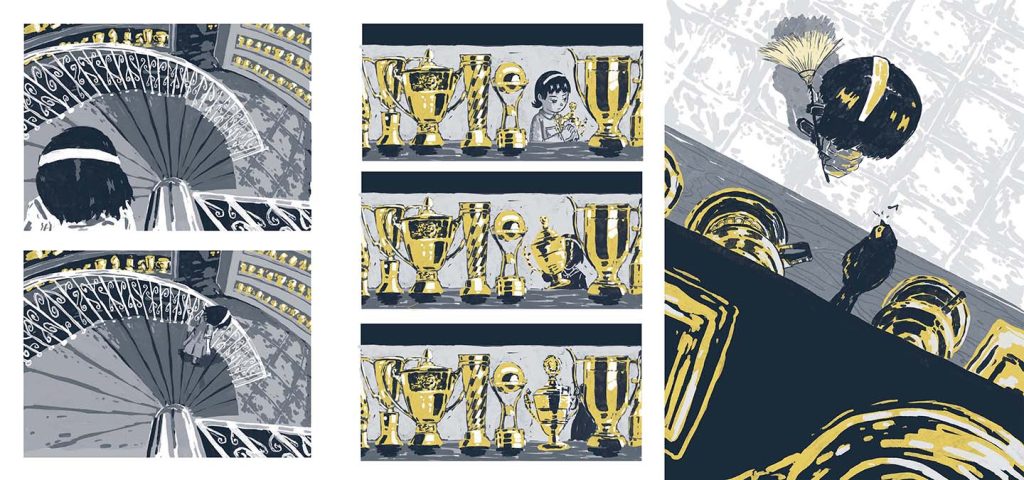
TRNZ translates this sensibility into the animation, creating a world that’s both orderly and alive, a gentle yet striking reminder that life is happening, whether we notice it or not. The animated film also serves as a visual meditation on pressure, obsession, and the simple moments we overlook in the race for external validation.
Nonetheless, for TRNZ, the film is less a declaration than a confession — an echo of his own years in a world built on recognition and awards.
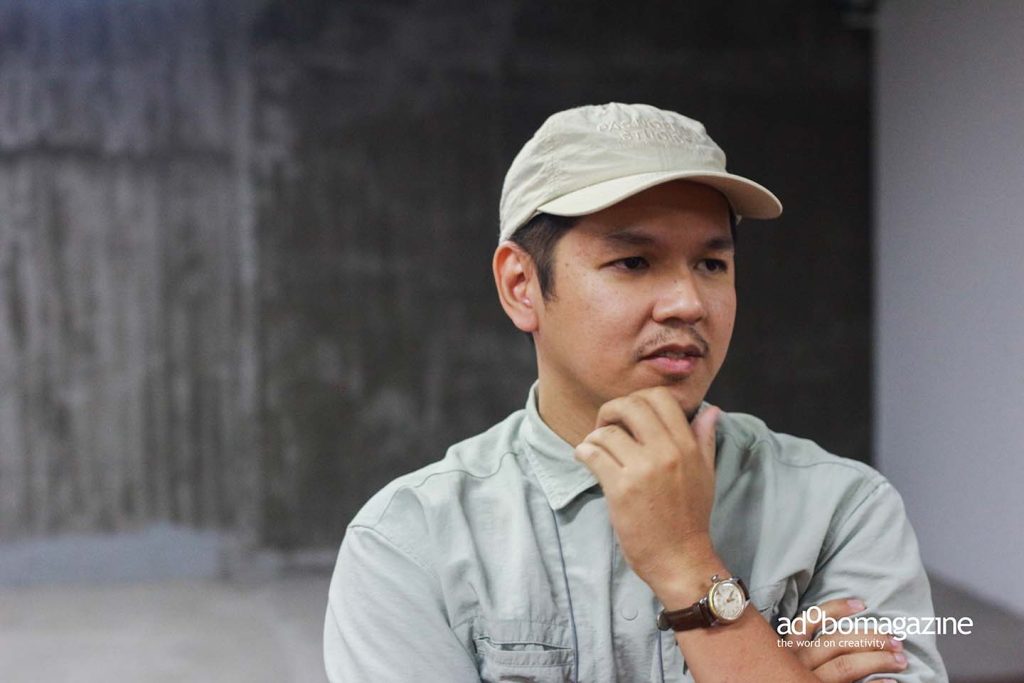
“I worked in advertising for five years. It was fun, but it was also very awards-driven. It’s not that I didn’t want it—I wasn’t forced into it. I chose it. But in hindsight, I realized there were a lot of things I missed in that pursuit that I can never get back,” he told adobo Magazine in an exclusive interview.
However, TRNZ didn’t feel any regrets, saying that the tension between ambition, awareness, and achievement fed directly into his evolution as a visual artist.
“It’s not a regret. I think if I turned back the time, I still would have done what I’ve done, pero I wish I paid attention to certain things more.”
He continued, “With that lens, na-apply ko na siya as a visual artist approach… I try to notice things outside the pursuit of whatever it is [I’m] trying to pursue.”
A moving painting
The spark for “The Keeper” began not with a grand concept, but with a passing observation when TRNZ went to other country.
“I saw, when I was in Thailand, a trophy store… and then I was like, what if there’s a library, but instead of books, it’s trophies—like an archive of trophies,” TRNZ shared.
What might have remained a fleeting curiosity became the foundation for a quietly provocative moving-image work. The image of a trophy store featuring rows upon rows of polished symbols of achievement was transformed in TRNZ’s imagination into something archival, almost institutional.
A “library” of trophies suggests preservation, memory, and obsession. It reframes objects of recognition into artifacts of accumulation. From that small shift in perspective, the animated film began to take shape.
TRNZ’s practice has long centered on reconfiguring the familiar. Rather than inventing surreal worlds from scratch, he works with scenes we already recognize, such as domestic spaces, routine gestures, and everyday objects, and subtly displaces them.
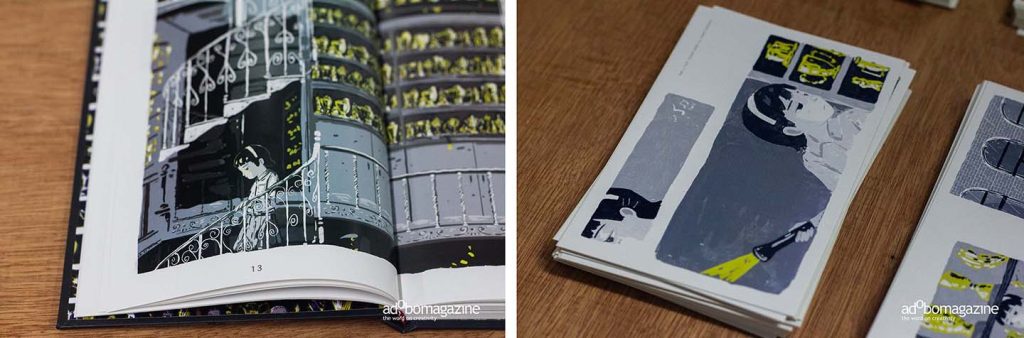
“It’s just everyday things, everyday scenes, or scenes that we’ve seen before. I just rearrange it, or either rearrange or exaggerate to make it new… that’s always been my motive as an artist,” he said, adding that this philosophy defines “The Keeper.”
The film’s power lies not in spectacle, but in adjustment, where a typical trophy room becomes an archive while the concept of achievement becomes an environment. By rearranging what is already known, TRNZ invites viewers to look again to see what excess, repetition, or quiet devotion might reveal beneath the surface.
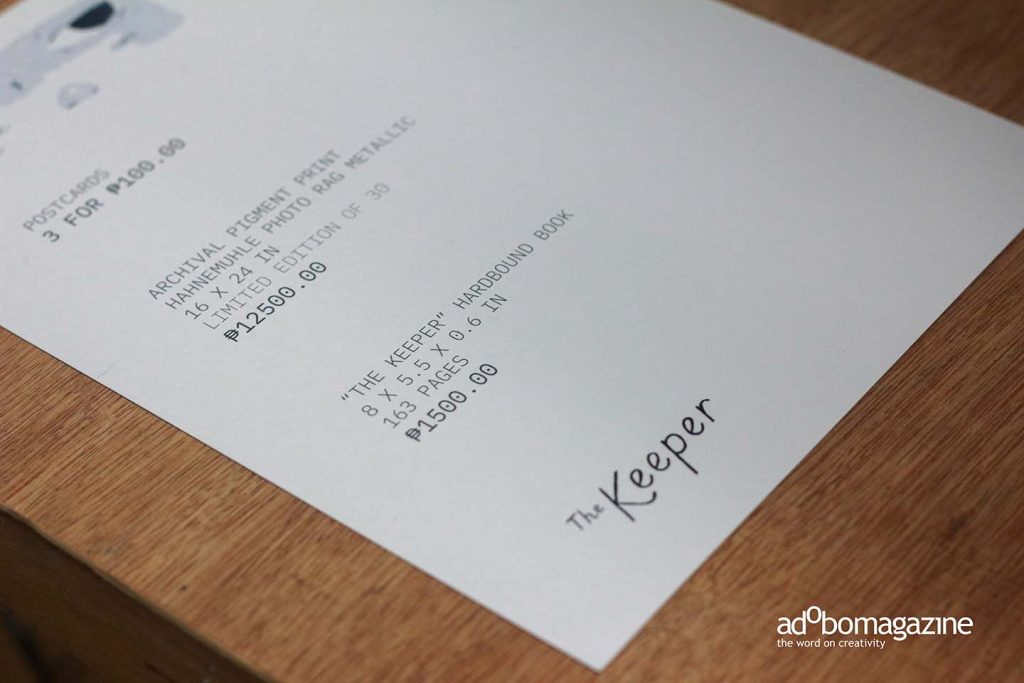
Moreover, the animated film resists conventional storytelling. There is no dialogue to guide interpretation, and no subtitles to clarify context. Per TRNZ, the silence is intentional as he wanted to male it function less like cinema and more like a painting in motion — composed, restrained, and contemplative.
TRNZ, similarly, wanted the absence of speech to force viewers to read gestures, spaces, and pacing. It slows the act of viewing, asking the audience to sit with ambiguity rather than resolve it. Nonetheless, he does not dictate what the work is “about” in definitive terms.
“Actually, it’s up to them. Honestly, I’m curious. I don’t have a specific intention in mind — there’s no clear line like, this is the story and this is how you should feel.”
“It’s more of a guiding story. They can feel what I felt — that in the pursuit of something, there are things we might miss. Or they might feel differently; they might even think it’s corny. It’s really up to them. I tried to give some leeway so people can digest it in their own way,” he added.
The courage to begin
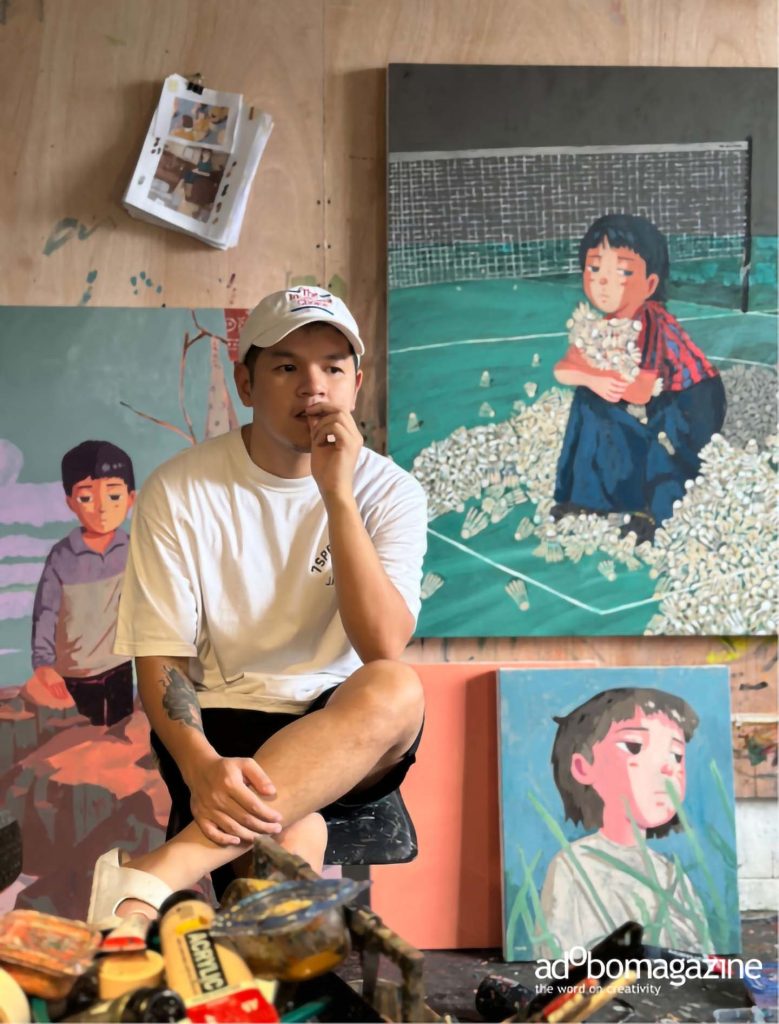
TRNZ’s art lingers in the space between the ordinary and the uncanny. At first glance, his paintings feel familiar. His works are constructed from what he describes as fragments, including personal memories, found photographs, and digital images gathered and reassembled. These visual remnants are not reproduced faithfully; they are rearranged.
TRNZ’s visual language, meanwhile, thrives on reconfiguration. Rather than inventing fantastical worlds, he manipulates what already exists. It is this careful recalibration that gives his art its distinct presence, inviting viewers to recognize something — and then question it. Also, his approach mirrors his broader philosophy as a creative: work with what you have, but don’t be afraid to reshape it.
However, TRNZ resists positioning himself as an industry spokesperson despite his growing visibility. He speaks less about trends and more about potential. When asked about the state of local talent, he said the challenge is not the absence of skill or creativity but rather harnessing it to push boundaries further than before.
“We have the talent here. I’ve worked with Fleet Studios — they’re incredibly talented. There’s so much talent around. The real question is how we can focus that talent on creating work like this — and making it even better.”
Ultimately, for young creatives navigating uncertainty, whether in painting, film, or any hybrid space, TRNZ speaks to a mindset rooted in courage over certainty, reflecting a willingness to move forward without waiting for mastery, validation, or perfect conditions.
“I haven’t done this before, and I just did it anyway,” he concluded, highlighting that the most radical act is not chasing validation, but beginning.
Read more:
Math as a universal language: Isaiah Cacnio bridges Math and Art with his digital masterpieces
Art as devotion: Imelda Cajipe Endaya’s creative practice as lifelong advocacy