

For decades, Filipino animators have helped bring some of the world’s most recognizable films and series to life. Yet despite this vast creative workforce, many of these artists remain invisible — working quietly behind international productions while original Filipino animated stories struggle to find space at home.
The upcoming animated feature Zsazsa Zaturnnah aims to change that narrative.
Based on the cult comic created by Carlo Vergara, the film is more than a superhero story. It represents years of independent animation work, a celebration of queer storytelling, and a conscious effort to craft an animated world that looks and feels unmistakably Filipino.
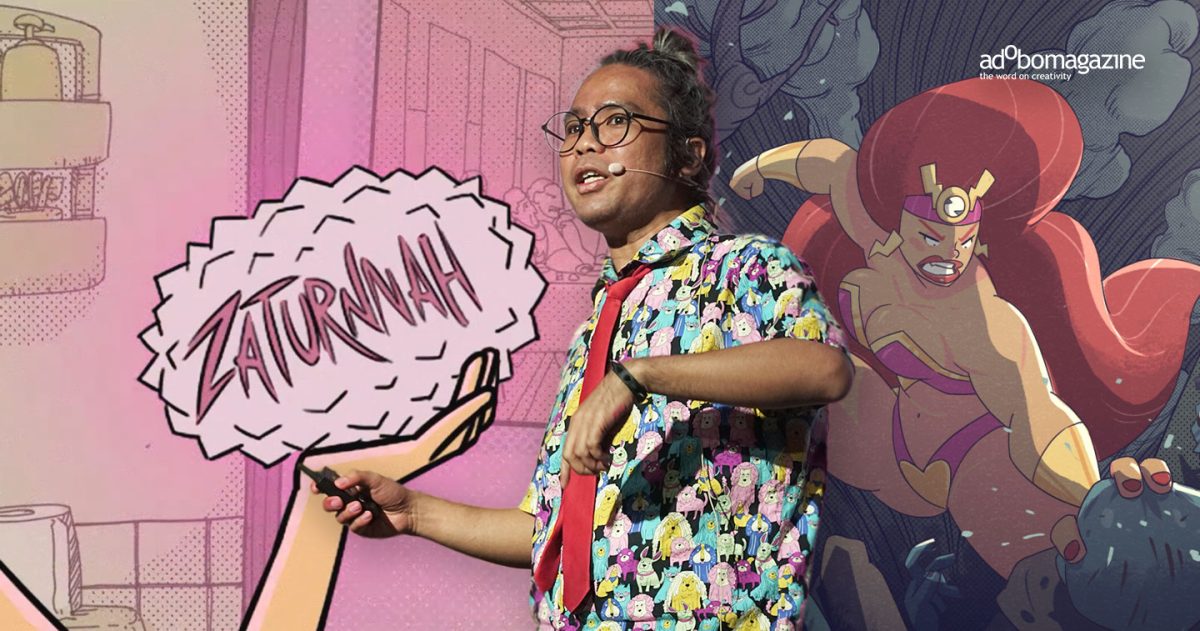
At this year’s Graphika Manila conference, Filipino filmmaker and animator Avid Liongoren took the stage to discuss the upcoming animated feature Zsazsa Zaturnnah. Known for his playful, genre-bending approach to storytelling, Avid, who also leads Rocketsheep Studio, is the director of the film, which he described as “campy, emotional, and deeply rooted in local culture.”
At its core, Zsazsa Zaturnnah sits at the intersection of three ambitions: expanding queer representation, shaping a distinctly Filipino animated identity, and navigating the realities of producing independent animation in an industry long dominated by live-action films.
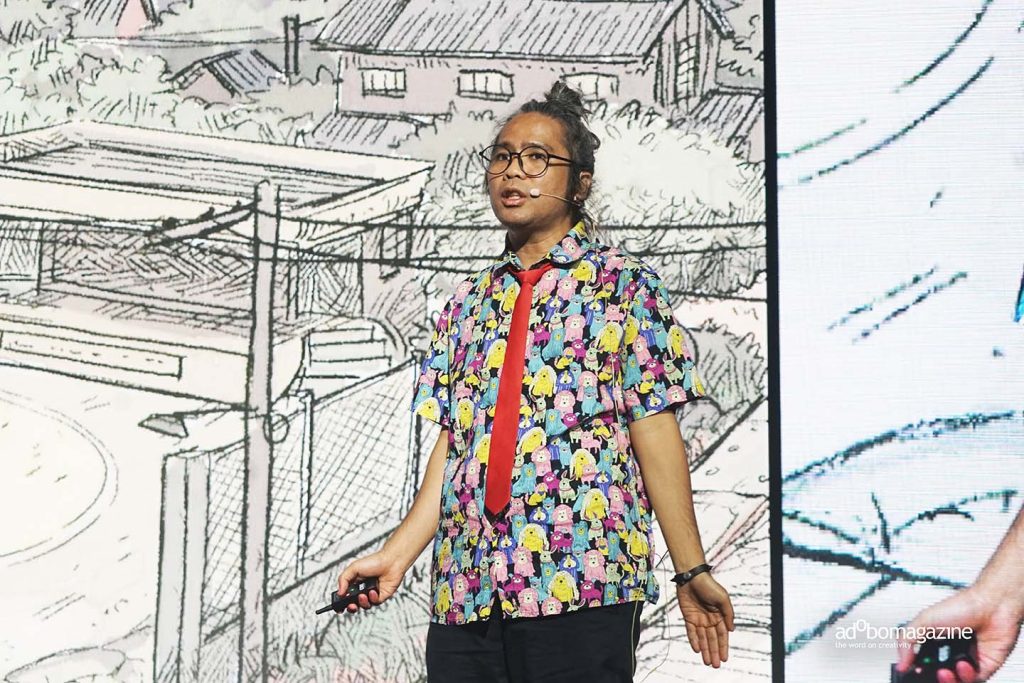
“This is a story that needs to be shared with the world, because even if superhero films are released endlessly, there’s still a lack of LGBTQ characters on screen,” Avid said.
He added, “I hope that you’ll enjoy this fun, campy, adventurous, and heartwarming story about a gay person who just wants to make their mark in the world and live a normal life.”
From comic book cult icon to animated heroine
The origins of Zsazsa Zaturnnah trace back to the early 2000s. After releasing his first comics project, One Night in Purgatory, Carlo began searching for a new idea. What came to mind was a strange and striking image, someone swallowing an enormous stone.
The concept drew on the Filipino tradition of anting-anting, mystical objects believed to grant supernatural powers. Carlo also found inspiration in the iconic Filipina superhero Darna, who famously swallows a small stone to transform into a powerful warrior.
Zsazsa Zaturnnah would take that idea and twist it with playful audacity.
Instead of a tiny pebble, the stone is comically large. And instead of an ordinary young woman transforming into a heroine, the protagonist is a gay man who morphs into a flamboyant female superhero.
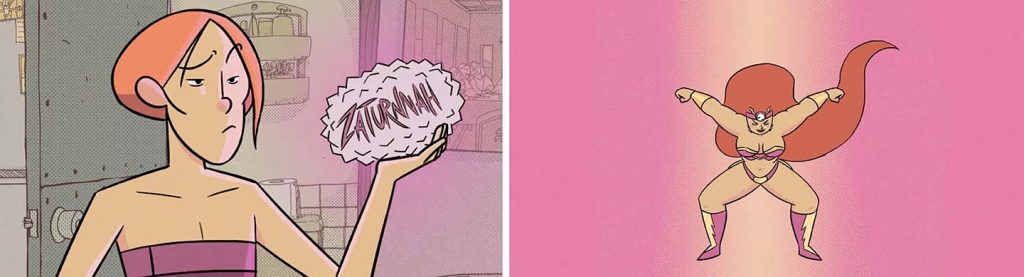
In a media landscape where gay characters have long been relegated to punchlines, tragic narratives, or supporting roles, Zsazsa Zaturnnah offered something radically different.
The graphic novel quickly built a loyal following and evolved into a cultural phenomenon. It was adapted into a 2006 live-action film, staged multiple times as a musical, and later released in an English-language colored edition that introduced the character to international audiences. Yet at its core, the story remains deeply personal — a tale about identity, love, and the quiet desire to live an ordinary life with dignity.
The animated film centers on Ada, a soft-spoken hairdresser in a provincial town who has grown weary of love after too much disappointment. His life revolves around running a small beauty salon and sharing a home with his loyal best friend, Mimi. Their days unfold in the familiar rhythms of small-town life, such as gossip, friendships, and the occasional sting of homophobic harassment.
Ada also carries a quiet secret: he’s in love with Dodong, the handsome man living next door.
Everything changes when a mysterious comet crashes into Ada’s home and leaves behind a strange stone that he accidentally swallows. In an instant, Ada transforms into the dazzling and powerful Zsazsa Zaturnnah. The transformation launches the town into chaos.
A parade of bizarre threats emerges, including a frog that mutates into a towering monster, a rampaging eggplant, and even zombies that send terrified townspeople hiding inside the local church. The spectacle escalates further with the arrival of the Amazonistas of Planet X, a militant squad of alien women led by the formidable Queen Feminina, determined to eliminate male forms across the galaxy. Amid the outrageous camp, a quieter emotional tension unfolds.
Ada loves Dodong. But Dodong seems drawn to Zsazsa instead.
“Ada can’t quite decide whether transforming into Zsazsa is a blessing or a curse. In the middle of all the chaos, he’s left wondering what he can really do — especially when the man he’s fighting for seems to prefer him in his female superhero form,” Avid shared.
Drawing a Filipino world
Bringing this eccentric universe to life is Rocketsheep Studio, an independent animation studio determined to create a visual aesthetic distinct from mainstream animation.
According to Avid, rather than mimicking the styles of Japanese anime or Western studios, the team established a clear creative principle toward the cult-favorite graphic novel, and that is to draw characters who look like Filipinos and place them in environments that feel authentically local.
The animated film featured characters with brown skin tones and Filipino facial features, intentionally pushing back against the Eurocentric beauty standards that have long dominated global media.
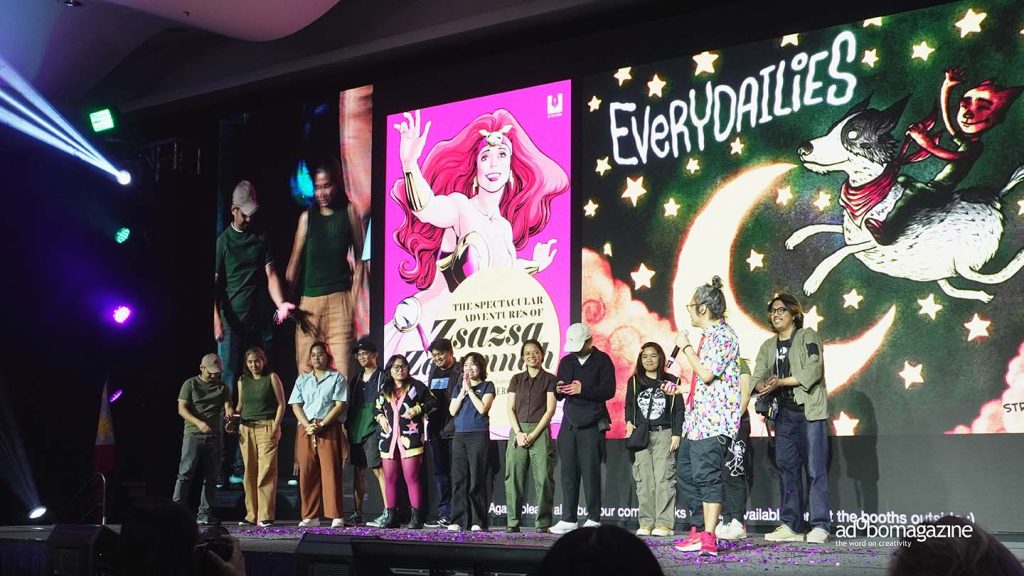
By centering brown-skinned characters in recognizably Filipino environments, Zsazsa Zaturnnah proposes a different visual identity — one where Filipino audiences can see themselves fully reflected on screen.
“Most of our famous actors have Eurocentric features, and while we do have this and I love this, they’re all in mass media. Skin whitening remains a major business. This is because of a thing called colonial mentality,” Avid said.
He added, “While I can’t change 300 years of colonization, you can make her a superhero brown.”
Likewise, the film’s environments are equally grounded in local culture. Ada’s beauty salon functions not just as a workplace but as a social hub, an unmistakable fixture of many Filipino neighborhoods. The town church reflects the central role religion plays in everyday community life.
Moreover, even character design communicates personality. Ada’s silhouette is slightly rigid and straight-lined, echoing his emotional restraint and cautious nature. Mimi, by contrast, is drawn with softer curves and a loose energy, mirroring her playful confidence. The Amazonistas embody exaggerated glamour and power, balancing satire with celebration.
A queer story in a contradictory landscape
The film also exists within the Philippines’ complex relationship with LGBTQ+ identity.
Carlo noticed a pattern in Filipino films and television where gay characters were portrayed in limited and often stereotypical ways. These observations pushed him to create a character that would challenge those portrayals and offer a different narrative.
“The decision to make an LGBTQIA character for a comic book really stemmed from my observations of how Philippine media would portray the gay personality, particularly in film and on television,” he underscored while criticizing the stereotypes commonly given to queer characters in mainstream media.
For him, gay characters were often reduced to comedic relief, tragic figures, victims, or marginalized individuals. Hence, Zsazsa Saturnnah is his desire for change. After years of seeing the same harmful or limiting depictions, Carlo felt that Philippine storytelling needed new representations of queer characters — ones that were more empowering and nuanced.
“I think it’s about time to try something different. I think it was a perfect opportunity for me to try and create a more positive spin on the gay personality and make them a superhero.”
A symbol of imagination and persistence
Beyond cultural politics lies another challenge: the economics of animation itself.
The Philippine film industry overwhelmingly favors live-action productions, which are faster and “easier” to finance. While a live-action film may take only a few months to complete, an animated feature can require years of painstaking work. Zsazsa Zaturnnah has already been in development for more than six years, with completion targeted for 2026.
Its budget — around $850,000 — is modest by international animation standards but still significant in a market where the same amount could easily fund a commercially safer live-action project.
Ironically, the Philippines already has a large and highly skilled animation workforce. Thousands of Filipino artists contribute to productions for major studios worldwide. Yet original Filipino animated intellectual property remains rare. In more than a century of Philippine cinema, only a handful of locally produced animated features have been made.
For independent studios like Rocketsheep, bringing a project like Zsazsa Zaturnnah to life means navigating long timelines, uncertain funding, and the challenge of convincing investors that a queer animated superhero story can succeed.
“This is because animation makes no sense to Filipino producers. The reason is very simple. An animated film takes at least five years to make. We are already in our sixth year. A live-action film can be done in just five months.”
And yet the film persists — driven by the passion of its creators and the enduring resonance of its story.
“So animation is expensive, and it takes so long. But we love making it. We love making it anyway.”
What began as a surreal image of someone swallowing a stone has grown into something far larger: a queer superhero narrative that challenges cultural norms while helping define what Filipino animation can look like.
In the process, Zsazsa Zaturnnah becomes more than a cult comic adaptation; it is a reclamation of queer narratives in Philippine media, a visual response to colonial beauty standards, and a testament to the determination of independent animators carving out space for original Filipino stories.
READ MORE:
Doodles, doubts, and determination: How Lei Melendres drew his way through imposter syndrome