

MANILA, PHILIPPINES – What happens when brands step outside social feeds — and start reaching the millions of Filipinos living and consuming content beyond the metro?
That was the central question behind “Unlocking Regional Growth with a Diversified Audience Strategy,” an event hosted by adobo Magazine and adobo Talks, in partnership with The Trade Desk, a global technology company helping brands reach and measure audiences more effectively across the open internet.
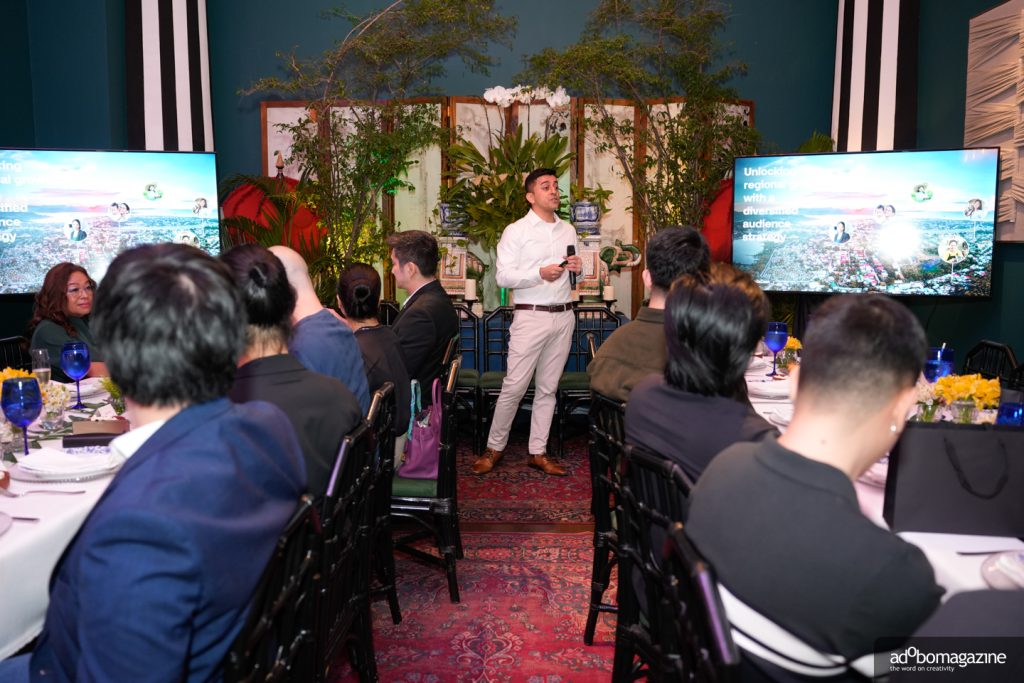
Held on August 15, 2025, at Manila House, Bonifacio Global City, the session gathered top leaders from the country’s most influential brands and agencies — including Unilab, Cebu Pacific Air, Ayala Land, Monde Nissin, L’Oréal Philippines, Globe Telecom, Nestlé, and more — for a conversation on how to connect with audiences beyond social media and beyond Metro Manila.
Advertising beyond the scroll
For years, digital advertising in the Philippines has centered around social media — where consumers scroll, swipe, and stream daily.
But as Abbas Abedi, Country Head of The Trade Desk Philippines, pointed out: “Almost 90 million Filipinos are spending their time outside social media — streaming content, watching TV, listening to podcasts, or shopping online for an average of six and a half hours a day.”


He challenged marketers to rethink why they advertise in the first place.
“No matter the goal — awareness, consideration, or conversion — the real reason is to tell a story that leads to action. But not every story can be told in one format or one impression.”
To illustrate, Abbas shared a personal story: “While watching a live basketball game, I noticed the same food brand appeared at appropriate times — before tipoff, at halftime, and just before the final buzzer. It stood out because the environment wasn’t crowded with competing ads — unlike on social media channels where dozens of brands fight for attention at once and you can have up to 10 placements in a 10 min video.” He contrasted this with crowded digital feeds, where dozens of ads compete for seconds of attention.
“In a space like Social Media your message is just one of many. But in the right context, it becomes part of the moment — and that’s what makes it stick,” he added.
The missed opportunity outside Metro Manila
Beyond platforms, geography plays an equally massive role. Nearly 90% of Filipinos live outside the National Capital Region, and over 60% of sales happen there. Yet many media strategies remain heavily Metro-centric.
“If we’re not building a diversified audience strategy, we’re missing the majority of our consumers,” Abbas said.
He explained how viewing habits differ across regions: “A viewer in NCR might be streaming Netflix, while someone in Davao could be tuned in to regional content. Bandwidth, income, and lifestyle all shape how and where people engage with brands.”

With more premium content than ever before, audiences are increasingly fragmented across devices and platforms.
“You could be everywhere — but that creates wastage. Or you could be too narrow — and miss key audiences,” he cautioned.
The solution, he added, lies in unifying data and storytelling.
“Everyone uses social media — and that’s great. I’m not saying stop. I’m saying complete your story there across all the other moments that matter.”
The Trade Desk’s platform enables advertisers to connect data and media across channels — from video and audio to connected TV and digital out-of-home — providing a single view of the audience and measurable outcomes with full transparency and control.
A success story through an omnichannel approach
The power of that approach was illustrated through PepsiCo’s omnichannel transformation — a case study showing how the brand evolved from a social-first strategy to one built on precision and reach.
Once heavily reliant on social media, PepsiCo reimagined its plan to connect more meaningfully with Gen Z consumers. With support from The Trade Desk, the brand expanded:
- Reach: Extending campaigns beyond social into premium display, video, and digital out-of-home.
- Control: Consolidating all media buying into a single platform for frequency management and unified measurement.
The impact was clear: 4.6 million new net consumers reached at a 39% lower cost per reach, and a 7% brand-lift among Gen Z audiences.
During a fireside chat, Giann Vega, E-Commerce Manager & Digital Data Transformation Lead at PepsiCo Philippines, and Cathy Fernandez-Nuqui, AOR Director at Zenith Media, shared how this strategy supported Pepsi’s global rebrand.


The Philippines was the first international market to roll out the new brand identity in 2023 — marked by a concert at the Mall of Asia Arena.
“It’s been 13 years since our last overhaul,” Vega said. “The new Pepsi had to resonate with a generation that didn’t grow up with the old brand.”
Regional nuance played a key role: Pepsi Zero Sugar Lime took the spotlight in Metro Manila, while classic full-sugar Pepsi remained the hero in rural areas. By partnering with The Trade Desk, PepsiCo ensured its story unfolded consistently across every channel — and could measure what worked, where, and why.
How audiences are evolving beyond Metro Manila
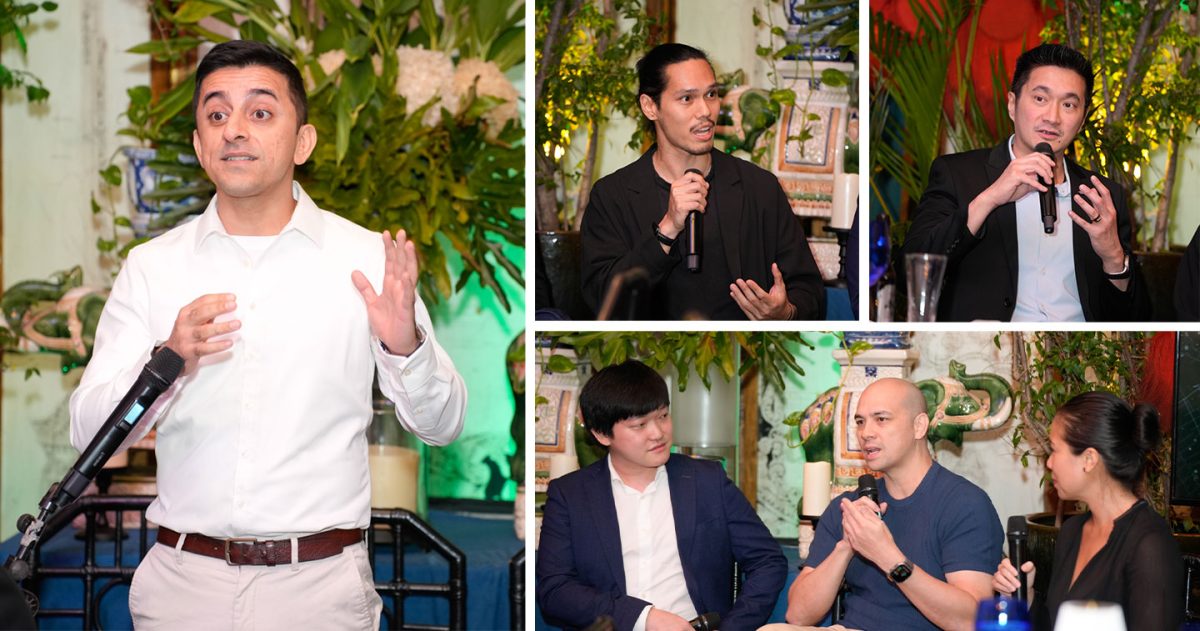
The conversation deepened with a panel moderated by Julia Vergara, Head of Programmatic at WPP Media, featuring:
- Howard Go, COO, Summit Media
- Nick Ng, Automation Lead, Spotify
- Hans Jefferson Lim, Chief Strategy & Operations Officer, Inquiro
- Jamie Lopez, Head of Digital, ABS-CBN


Each represented a unique corner of the media landscape — publishing, streaming, data, and television — and all agreed on one truth: audience growth lies beyond the metro.Howard observed that while Manila drives many trends, provincial markets are developing their own cultural identities. Nick Ng revealed that Filipinos now spend 3.5 hours daily on Spotify — higher than the Southeast Asian average — and are streaming more local music than ever before.
Hans shared that while NCR’s e-commerce growth has slowed to 1-2% annually, Mindanao is booming at 8-10% year-on-year, underscoring why regional data matters. Jamie discussed the rise of Connected TV, noting that half of all YouTube viewing in the Philippines now happens on CTVs. ABS-CBN is investing in localized storytelling — including Visayan-language content — deepening emotional connection through culture as much as technology.
The future: Unified data, omnichannel storytelling, and regional diversity
As the panel wrapped up, one line captured the sentiment of the day: “Social media can start the story — but it can’t finish it.”
From Cebu Pacific’s EDSA campaigns using local weaves and QR codes, to Spotify’s contextual playlists serving as intent signals, the message was consistent: attention is fragmented, but storytelling doesn’t have to be.
“Growth in today’s landscape won’t come from staying in familiar territory,” Abbas concluded. “It comes from understanding every Filipino — not just those in the metro or inside a social feed.”
With smarter data, unified measurement, and omnichannel storytelling leading the way, the next chapter of Philippine advertising won’t just reach more Filipinos — it will connect with them more deeply.
To book a session with The Trade Desk Philippines, contact [email protected]