



For decades, Filipino animators have helped bring some of the world’s biggest animated films and series to life, often working quietly behind the scenes for international studios. But today, a new wave of creators is stepping forward — not just as artists, but as storytellers.
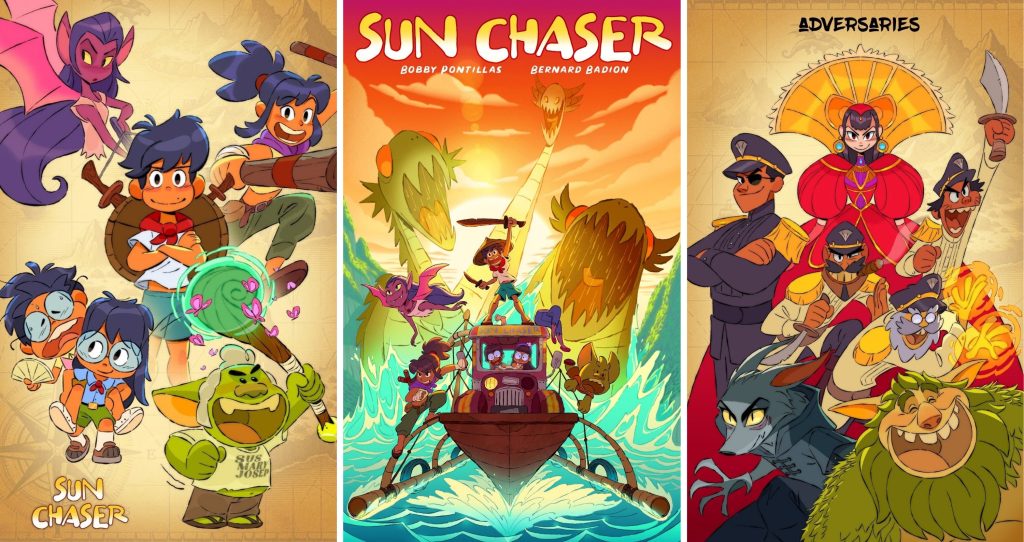
Among them is Filipino-American director and animator Bobby Pontillas, whose passion project, Sun Chaser, is helping place Filipino narratives on the global animation map. What began as a personal story inspired by childhood visits to the Philippines has evolved into an ambitious animated series rooted in Filipino culture, mythology, and family dynamics.
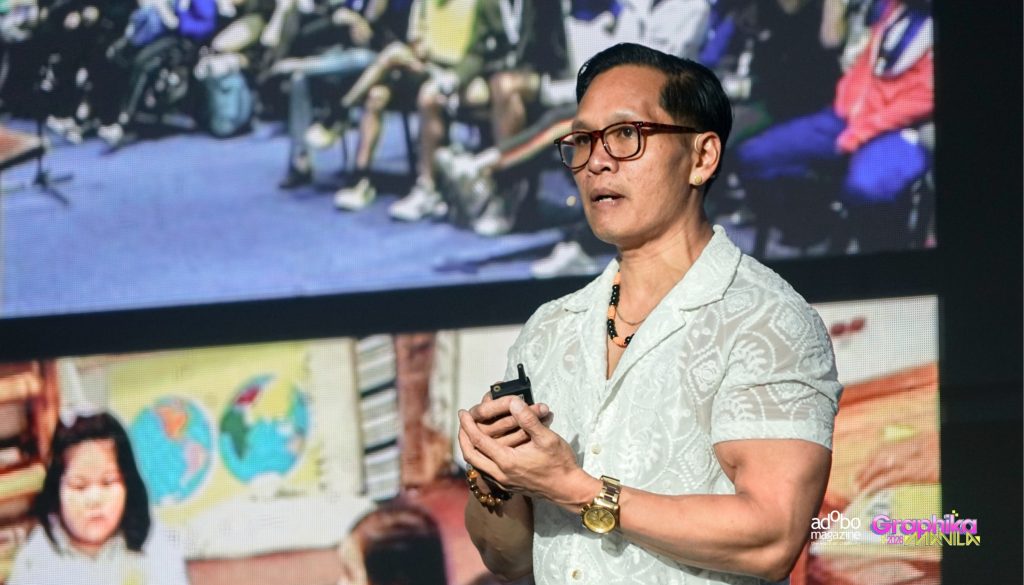
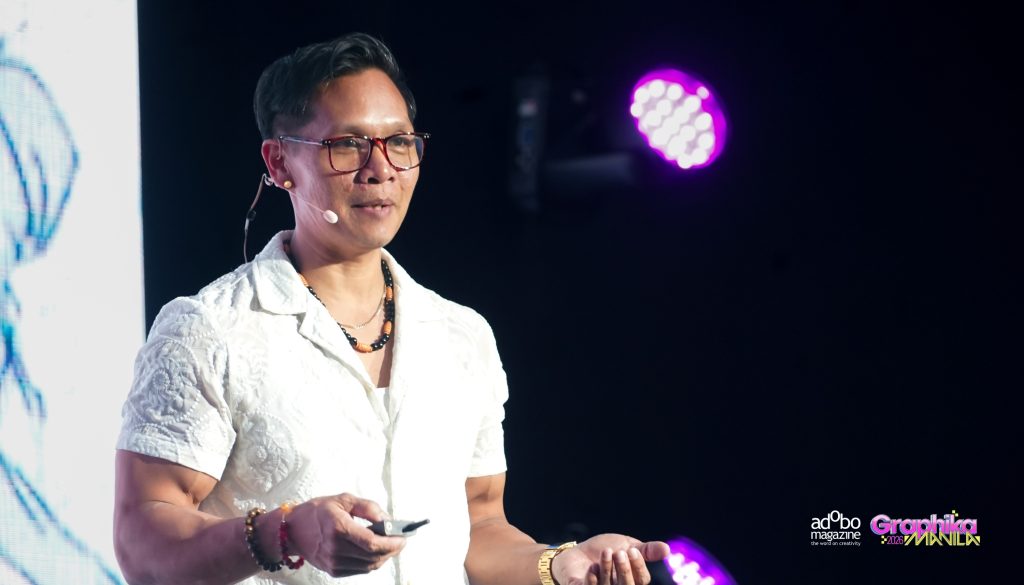
During Graphika Manila 2026 held at SMX Convention Center in Pasay City, Bobby, who is also a former Disney animator, having worked in films like Moana, Zootopia, Big Hero 6, and Wreck-It-Ralph, reflected on the long road that brought Sun Chaser from a simple idea to a project showcased on the international animation stage. His journey, filled with rejection, reinvention, and relentless perseverance, mirrors the very themes at the heart of the series.
“For decades, we’ve been helping other studios bring their stories to life, and now we’re beginning to tell our own stories,” Bobby said.
From a shy kid to animation director
Bobby’s journey into animation began in the United States, where he grew up with a supportive mother who encouraged his artistic ambitions. Like many aspiring animators, he entered art school hoping to follow the path of Disney legends.
“Like every animation student at the time, I dreamed of becoming this 2D Disney animator, like my hero, Glen Keane,” he said.
But the industry changed quickly. The 2D animation industry took a nosedive in the exact year he graduated. What followed were years of rejection letters and uncertainty.
“Cue the rejection letters — and lots of them,” Bobby said. “For the students out there, get used to rejection. Expect it. That’s fine. It’s okay — move on.”
Determined to remain in the field, he taught himself 3D animation and eventually landed a job in the video game industry before transitioning into film animation. Years later, he joined Blue Sky Studios and ultimately achieved his long-time goal of working at Disney.
“After all these years of sending demo reels to every studio in the world, I was eventually lucky to land a job at Blue Sky Studios. Two films later, I decided to shoot my shot again at my dream job, and surprisingly, they let me in. It only took me sort of ten short years to get there,” he narrated.
Bobby’s journey from shy boy dreaming of working as an animator to working in the animation industry reinforced an important lesson about perfect timing.
“Sometimes your path doesn’t happen immediately,” he said. “It might take five years. It might take ten years. Everyone’s path is different.”
Discovering the power of representation
Bobby’s perspective shifted significantly after directing the animated short film One Small Step, which earned an Academy Award nomination. Yet it was not the recognition itself that left the biggest impression.
“The Oscar wasn’t the big thing,” he explained. “The big thing that really changed me forever was seeing how much the Filipino community lit up when they saw themselves represented.”
That reaction led him to rethink his creative direction, saying that moment inspired him to pivot his career.
“Instead of helping tell other people’s stories my whole career, I wanted to start telling ours,” he said. “Growing up in America, it was my way of reconnecting with my roots, desperately clinging on to remember who I was.”
A story born from family and culture
The idea for Sun Chaser can be traced back to an earlier concept called Kuya (older brother), inspired by Bobby’s childhood visits to relatives in the Philippines.
“The memories were the times my mom would bring me to meet my family in the Philippines,” he said. “They were loud, chaotic, and a lot to handle, honestly — but they made me feel like I belonged. No judgment. They loved me for me.”
He continued, “For the first time, I felt like I was a big brother to someone, not just kind of a single child, out for myself. And so the show was called Kuya, which we developed initially with Disney.”
Working with writer Bernard Batian, the story evolved into a supernatural family comedy infused with Filipino mythology.
“Together we started adding mythology to the family story, and Kuya slowly became this supernatural comedy set in the Philippines,” Bobby said.
However, the project struggled to move forward during early development with major studios.
“We were pretty bummed when this version got shot down,” he admitted.
“Not gonna lie, there was a lot of crying. I cried a lot about this because we put so much work into it. For a while, it seemed like things were going smoothly, but like, you know, with a lot of things in development, the vast majority of projects never make it out. So I was heartbroken, more tears.”
Rather than abandon the concept, Bobby and his collaborators reworked it multiple times until it eventually evolved into Sun Chaser.
The series follows Jordan Santos, an aimless teenager whose summer trip to the Philippines becomes a supernatural adventure when a demon curses his grandmother and freezes their island. To save his family, he must embrace his role as the island’s next spirit guardian.
“We were now free from studio demands,” Bobby said. “So we made the kind of show we always wanted to see growing up — adventure, comedy, mythology, culture, family.”
Bobby eventually pitched the project internationally, including to the global media market in Cannes, where he met collaborators who shared his mission of promoting Filipino-created stories. Together, they set their sights on the Annecy International Animation Film Festival in France, the animation industry’s most prestigious event.
Fully committed to the project, Bobby made a bold move.
“I packed up my life in LA and moved to Manila. I wanted to be there with the team. I wanted to work alongside them and show them that I believe Filipino artists can do the thing.”
Working with a team of Filipino animators, Bobby’s team prepared a pitch package and trailer for Annecy. When Sun Chaser was selected, it marked a milestone not only for the project but for the Philippines’ growing presence in global animation.
“We made it to Annecy, and we represented the Philippines on the global stage. We were so proud to show the animation world what these Filipino artists could do. Seeing the Philippines right there, alongside the biggest animation countries in the world, is already an accomplishment.”
While he was in the Philippines, Bobby also felt a responsibility to pay forward.
“I had another big aspiration in the Philippines. I wanted to share the experiences and the training I was blessed to have with the talented young artists over [in LA]. So I started giving workshops, school presentations, and started connecting with the animation community over [here in the Philippines].”
A passion project that refused to fade
Sun Chaser continues to move forward in development, more than seven years after its earliest version was first conceived. But beneath the production schedules, festivals, and pitches, the long process carries an important message for aspiring artists.
“Remembering the passion projects that you have and the journey that it took for us — keep at it, please. You never know what it’s going to turn into as well,” Bobby said.
“If you guys have a passion project, don’t give up on it. It’s not going to be easy to develop it or make it. But it will always kind of feed your soul.”
He also urges creators to embrace what makes their voices unique.
“Create the thing that you’ve always wanted to see. No one can make what you can make. Yes, a lot of people are extremely talented — but they are not you.”
Ultimately, Sun Chaser is more than a supernatural adventure about cursed islands and spirit guardians. It’s a love letter to Filipino culture, diaspora identity, and families — chaotic, loud, and full of heart that make us feel like we belong. It’s also proof that Filipino stories deserve to be on the global animation stage, told by Filipino creators, animated by Filipino artists, and rooted in Filipino experiences.
From a shy kid in the U.S. clinging to his roots, to a director standing in Annecy with a fully Filipino-powered series, Bobby’s journey shows what can happen when passion refuses to let go, and it is fused by sheer hard work.
“We made the kind of show we always wanted to see growing up… adventure, comedy, mythology, culture, family. And now, that show is carrying Filipino light onto screens — and stages — around the world.”
READ MORE:
Marvel Animation’s ‘Eyes of Wakanda’ premieres exclusively on Disney+