



MANILA, PHILIPPINES – Design Week Philippines 2025 officially kicked off on October 11, 2025 at the Power Mac Center Spotlight Blackbox Theater in Makati City, launching the country’s national festival for design and creativity anchored on the theme, “Towards Ginhawa.”
The week-long festival, organized by the Design Center of the Philippines under the Department of Trade and Industry (DTI), runs from October 11–18, 2025. This year, it brings together 139 partner organizations, creative hubs, and MSMEs across 29 cities and 16 regions.The core of this year’s festival is the uniquely Filipino concept of ginhawa (comfort), which guides the design of a holistic “good life.” Rooted in the word hawa (“to breathe”), it evokes vitality, connection, and the shared conditions that sustain both individuals and society. Beyond comfort, ginhawa includes physical ease, emotional relief, social harmony, and spiritual balance.
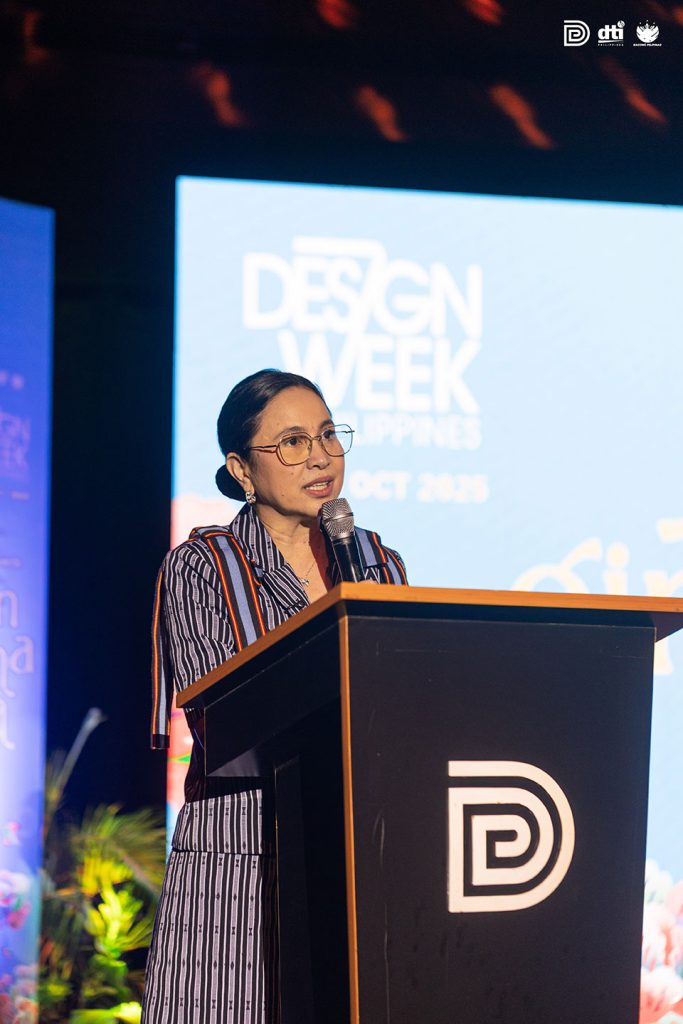
“Ginhawa is more than just comfort; it is also a state of well-being, dignity, and shared progress. It is our Filipino interpretation of what the world now calls the transformation economy, where value is measured not just in profit, but in purpose, where innovation leads directly to better lives for all,” said DTI Secretary Cristina Roque during her welcoming remarks.
“Design is not only about solving problems, it is also about creating conditions where people and planets can flourish together, and we must admit, it is also our source of income,” Cristina added.
The opening day set the tone with a full slate of talks and portfolio reviews. The flagship kickoff event was “The State of Philippine Design,” which explored how design can drive the transformation economy, where value is created through life-enhancing experiences and resilient ecosystems.
The panel, moderated by the MAGIS Founder and Clinical Director, Gina Alfonso, featured a diverse group of thought leaders, including Sikodiwa author and psychospiritual researcher Carl Cervantes; Ayala Land Project Development Manager Misha Quimpo; and DCP Deputy Executive Director Lucky Lopez.
The panel discussed design as a catalyst for collective well-being and progress, measuring success by quality of life with ginhawa as a shared condition to nurture.

Moreover, the opening day featured sessions that focused on securing the livelihood and intellectual property of creatives — critical for sustaining ginhawa in the industry:
- “Extra Price Please” tackled the often-stigmatized topic of pricing and fair compensation in creativity. Moderated by Dustin Carbonera of the Communication Design Association of the Philippines, speakers like Paolo Salgado (Agape Design Studio), Carol De Leon (Creative Director, Angkan World) and Leila Punzalan, CPA, emphasized that nurturing creativity requires securing livelihood through fair pay, transparency, and sustainability.
- “The Creatives’ IP Playbook” provided essential tools for protecting ideas and work. The panel, which was moderated by Design Center of the Philippines Chief Industrial Design Specialist Carla Mae Leonor, includes animation director Gary George “Dudz” Clotario; artist and illustrator Anjo “Bitto” Bolarda; and Intellectual Property Office of the Philippines Director Chamlette Garcia. They unpacked Intellectual Property (IP) essentials — from copyrights and trademarks to community knowledge — as a foundation for sustainability and dignity in the creative economy.
- “Redesigning the Workplace,” on the other hand, explored how intentional design can foster well-being in professional environments. Panelists like the Menarco Founder and CEO Carmen Ong; Haraya Coaching Founder and Managing Partner Jackie Caniza; and Dapat Studio Managing Director and Partner Liz Cabrera, shared how organizations are reimagining spaces and systems to help people thrive. The discussion was, meanwhile, moderated by Culture First Chapter Lead Jen Horn.


The afternoon also featured Folio Reviews, where emerging creatives received constructive feedback, mentorship, and insights from industry leaders under topics such as systems and experience design, placemaking, image making, and object making.
For systems and experience, mentors include UX product designer Aljon De Pano; architect and UX designer Athena Calayag; and Daniel Estropia, a strategist and designer of experiences, services, and products who designs evidence-based tools in health, education, and accessibility in The Decision Lab, a Canada-based behavioral science firm.
Meanwhile, place making mentors include architects such as Arvin Pangilinan, a trailblazer for the internationally acclaimed Book Stop Project; Associate Architect and Vice President for Operations of Barchan Architecture Ems Eliseo; and WTA Director Royce Nicdao,.


TBWA/SMP Chairman Melvin Mangada took the lead for Image Making, while Guava Sketches Co-founder Joan Cantemprate and Marvin Conanan, a visionary behind the multi-dimensional platform Purveyr, served as mentors for Object Making.
Lastly, participants in the Image Making folio reviews were mentored by Communication and Design Association of the Philippines President Dustin Carbonera; Filipino designer Kookie Santos; and Therese Valmonte, Senior UX Design Manager at Globe Telecom.
Ultimately, the festival promises a dynamic week ahead, with the program including workshops, exhibitions, tours, and creative experiences that reflect the diversity of Filipino design, from heritage crafts to urban futures.


Design Week Philippines 2025 will culminate on October 18 at the Ayala Triangle Gardens, transforming the landmark into a vibrant hub of creativity for the Design Sari-Sari — a showcase of craft, culture, and community.
To register for the closing event, visit DWP’s website here
adobo magazine is an official media partner of Design Week Philippines 2025.