

MANILA, PHILIPPINES – It’s a privilege to grow in your professional field for decades, and a riveting challenge to keep finding new ways to evolve and thrive in it. But for Karla Banua, two things remain all throughout: creativity and storytelling. Her career began in the media and advertising industry, with a focus on TV as a medium. Then, she moved on to on-the-ground activations and digital channels, amounting to an illustrious 15-year journey that has culminated in her present role as Sales Director for Advertising – APAC at Rakuten Viber.
Witness to the shifts in advertising, Karla shared, “[The industry] evolved a lot. Right now, it’s more fast-paced. It’s also mobile-first, […] so I guess, gone are the days wherein it’s just […] above-the-line, which [are] TV, radio, and print. Now, there are more channels, and mobile is one of the most dominant channels.”
Still with her finger on the pulse of advertising, she now works with brands and companies on how they can utilize Viber’s platform and ecosystem for their own marketing strategies. “What our team tries to do is to first listen, [and] check the goal of the campaign. What are the objectives? And from there, we see how […] our Viber for Business solutions can actually fit in that framework. […] We try to recommend how we are best able to help [achieve] these goals that they have, of course, [with] the Viber advertising solutions,” Karla shared.
Thoughts on the advertising industry
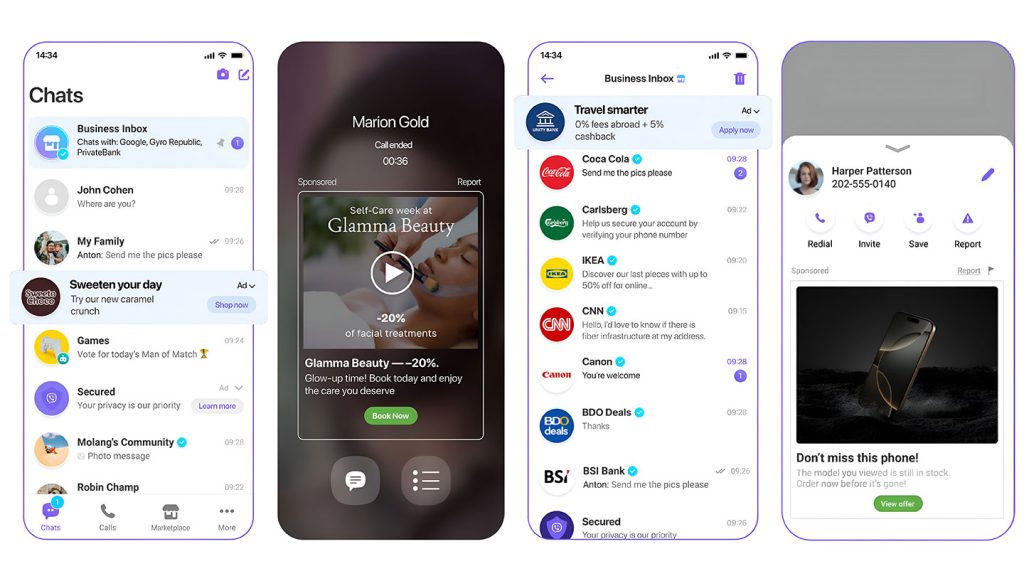
With her career beginning at the height of TV advertising, Karla gives credit to the medium’s power of reaching mass audiences, which she thinks still holds up today. But she also recognizes the undeniable prowess of mobile advertising. “Coming from data that we have seen, [we] Filipinos are spending at least five hours a day on [our] mobile phone. So definitely, it’s an opportunity for the brands to be relevant or to be able to target their audiences,” she explained.
Comparing how advertising was during the early days of her career to how it is now, Karla noted the need for brands to evolve and push the envelope when crafting their campaigns due to the high saturation of messages that people receive in all kinds of media these days. “There [is] a lot of information that can be thrown to the user. So, right now, there’s a need to actually get in touch with them. That’s why I think the trend of […] adopting mobile into strategies [has become] more and more relevant nowadays.”
But asked if traditional advertising media can co-exist with modern platforms, Karla responded without any hesitation, “Definitely, they can.” She further explained that one way to utilize these two harmoniously is by using TV to reach mass audiences and gain awareness, then use mobile to enhance the power of real time personalization. “It gives you results of awareness and measurable impact,” she concluded.
She went on to identify that another trend she has observed among markets and campaigns is the need for personalization, especially as brands try to reach their customers. This goes hand in hand with the adoption of technology — another trend she noted.
“On Viber, we do have a solution that we call Click-to-Message. From the ad placement, the user gets redirected to a pre-made chatbot template. From there, they can do their transactions [in] real time. And the keyword there is ‘real time.’”

As advertising is known for being ever-changing, Karla shared that brands can remain agile and flexible in the face of fluctuation by having a clear brand strategy on their goals and target audience. “It’s also best to have some room to test and learn certain strategies because during the testing and learning activities, we’re able to get more insights […] and improve the campaign,” she added.
Amid all these changes, Karla emphasized that what remains at the core is to still practice creativity and utilize storytelling in their campaigns. “I think […] whether we use technology, it’s still very important to be creative and innovate whenever we try to execute campaigns,” Karla vocalized.
Future-proof planning for APAC advertising
Karla stressed the use of mobile devices among APAC users as the biggest trend in the region. She shared that collectively, people in the region spend up to nine hours on their mobile phone. “That trend is really an opportunity for all the brands to maximize or have their campaigns be plugged [to] mobile strategies, given the time spent [by] our users,” she advised.
On the topic of the next big thing in APAC advertising, she goes back to the mobile-first trend, and how that could lead to a mobile-only type of strategy for campaigns. She explained: “Again, given the time spent [by] APAC audiences [on] their devices, we’re also seeing trends with more personalization — offering more value to our users. For example, for Viber, we had campaigns with Share Treats, [where we] offered our users the experience of gifting in real time. So I guess, those executions will definitely matter and will be of value to the users in the future.”
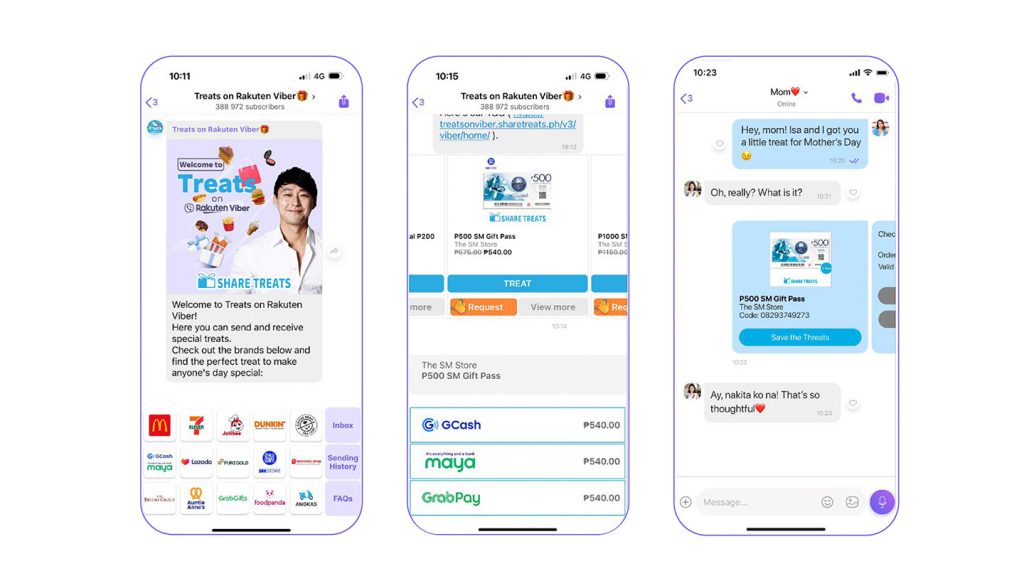
She added that for brands to be future-proof, they need to invest in digital platforms: “That is where our audience is right now […]. Time spent on these mobile platforms is constantly increasing. So, definitely, it makes sense to be there. Second is, again, to have that open mind — to be able to test campaigns — because from there, we’ll be able to execute better [campaigns] based on the insights that we’re getting. And third is to act fast. I guess, right now, it’s speed, speed, speed, as they say, so we have to be urgent. We have to be agile with our campaigns, with what we see in the market, and how we try to address it.”
Handling partnerships and collaborations
As the Sales Director for Advertising and with her years of experience in the industry, Karla has built her own process for collaborating with brands and forging partnerships with companies. This, she explained, begins with understanding the brand’s objectives and identifying who their target audience is. From there, she recommends the Viber for Business solutions that can be helpful in addressing these needs.
“Normally, [we] walk them through it — from building awareness, creating more engagement, conversion, [and] building loyalty,” she shared. “With all these, we guide our partners [on how] to achieve [business goals] with the use of Viber advertising solutions.”
Walking down memory lane, her fondest memories about working in the industry come to the surface. “Personally, the part that I really enjoy the most is [being] able to brainstorm. I love collaborating,” she mused. “Start with an idea, and have that come into reality through campaigns. That whole creative process is something that I really enjoy — [it’s] not just me doing it on my own, but collaborating with […] the creative agency, with the media agency, [and] the brand itself. It’s a team project that I find personally satisfying when we see it happen.”
But as much fun as she had, still, she has had her fair share of challenges, one of which are the deadlines themselves. “We all try to work [even] with a very strict deadline. That can be a challenge, but it’s also something that can be addressed as long as, of course, there’s proper collaboration with all the stakeholders, all the teams,” she emphasized.
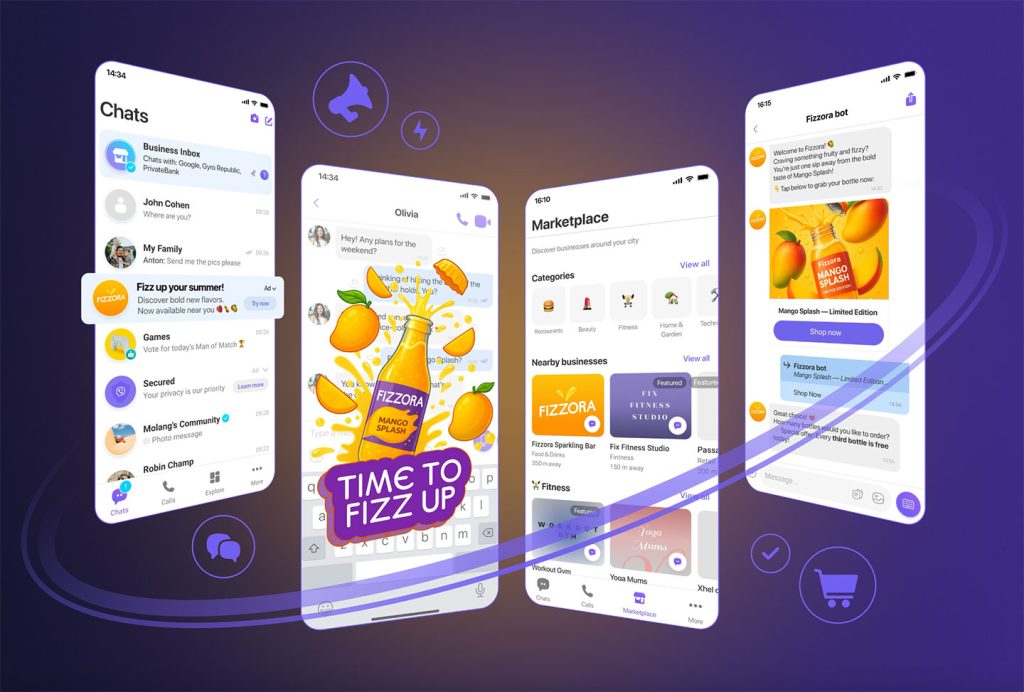
Truly, collaboration and teamwork are values that Karla practices in her partnerships with brands. It helps reach their goals better. This, in turn, is followed by recommendations of their Viber 360 solutions that help expand brand presence, which she and her team walk clients through.
And when asked what potential clients and partners can expect from working with Viber, Karla put the spotlight on their dedicated team: “We have a very focused team that [help clients] not just to implement their campaign, but [also] to walk them through the process. Not just tick the boxes, but also […] listen and sit with them. For us at Viber, we do believe that it’s not just what we are [or] what [we’re] able to deliver, but [also about] what we can achieve together.”