


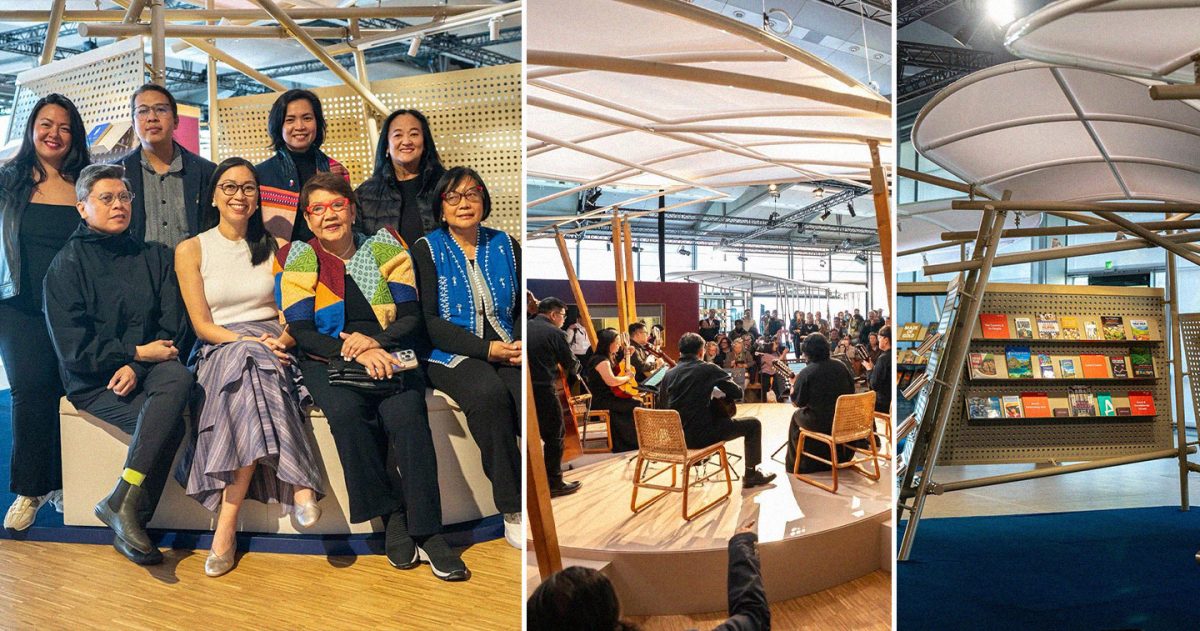
FRANKFURT, GERMANY – This October, the Philippines takes center stage as Guest of Honour at the Frankfurt Book Fair 2025, one of the world’s most influential literary gatherings. At the heart of this milestone is the Philippine Pavilion, a space designed by Stanley Ruiz that invites visitors into a world where literature, art, and imagination converge.
“The Pavilion is our way of showing that Philippine creativity is both rooted in heritage and constantly evolving,” said Stanley. “We wanted to create a space that feels like an archipelagic clearing — open, luminous, and alive with stories.”
A pavilion built from the islands
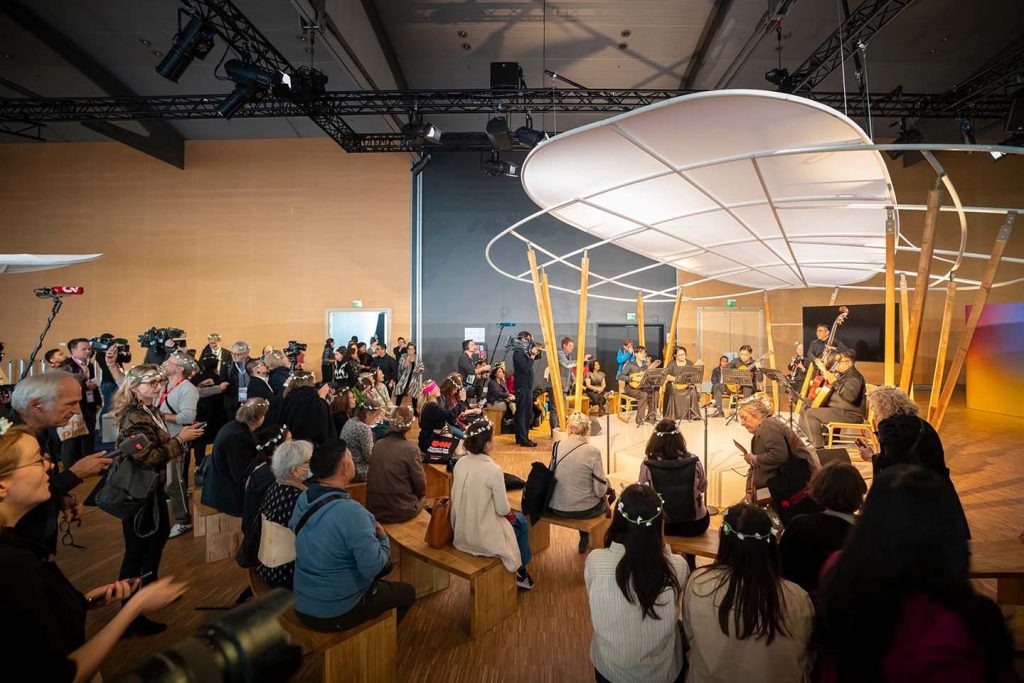
The Pavilion’s design celebrates the archipelagic essence of the Philippines. Using local materials like capiz shells, bamboo, and pineapple fabric, Stanley crafted a structure that feels simultaneously natural and architectural. Modular elements allow the space to adapt and flow, echoing the rhythms of the islands themselves. “Each material tells a story,” Stanley explained. “Capiz captures light and fragility, bamboo provides strength and flexibility, and pineapple fabric embodies both tradition and innovation.”
Four journeys through Philippine creativity
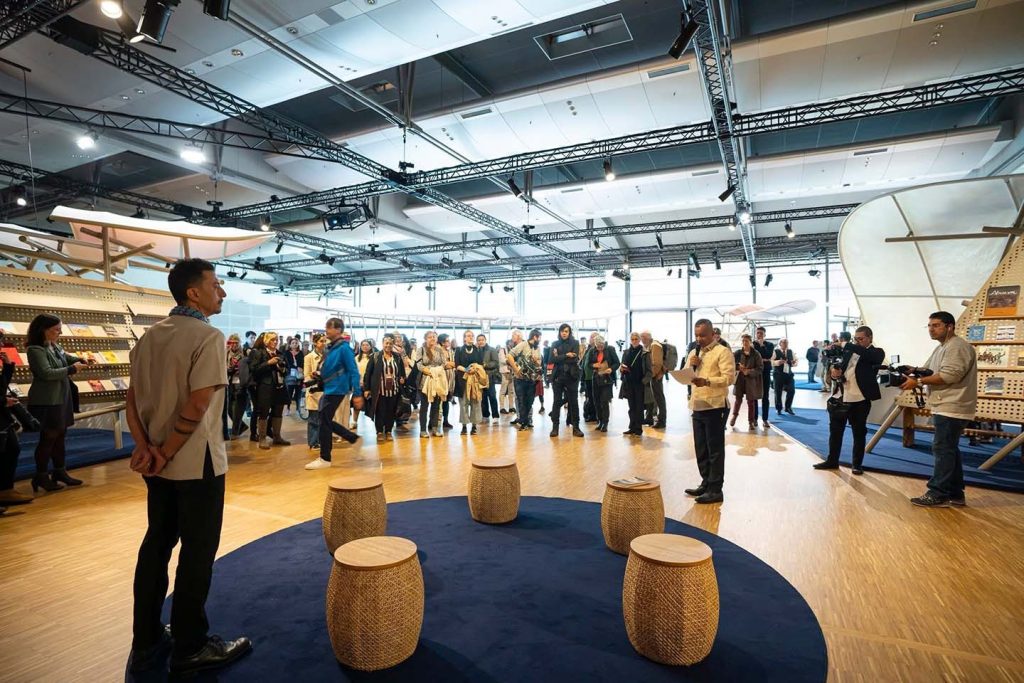
Visitors move through four thematic zones, each offering a distinct narrative. The journey begins with the timeless works of José Rizal, whose writing continues to resonate across generations. The second zone celebrates National Artists and Living Treasures, honoring contemporary creatives whose work shapes Filipino culture.
A third section chronicles the history of Philippine books, from early prints to modern literary works, reminding visitors of the nation’s enduring storytelling tradition. The final zone showcases recent publications on the Philippines abroad, highlighting how Filipino creativity and ideas are gaining international recognition.
Circular layouts encourage sharing and dialogue, while translucent surfaces illuminate the works of artists like Gary-Ross Pastrana and David Medalla, creating a sense of lightness, airiness, and generosity. Every element — materials, spatial design, and artistic curation — works in harmony to honor the gift of storytelling.

A cultural conversation
The Pavilion is more than a display; it is a living dialogue between past and present, local and global. According to Charissa Tugade, one of the key curators behind the exhibition, “This Pavilion is a platform for Filipino voices to be seen and heard worldwide. It’s a celebration of our literary and artistic heritage while also showing how our stories are evolving on a global stage.”
The National Book Development Board emphasizes that this exhibition is also a platform to introduce Filipino literature and artistry to the world. From literary works to contemporary art, moving images to tactile experiences, the Pavilion embodies the richness of Philippine culture in ways that go beyond books alone.
Experiencing the pavilion
Stepping into the Philippine Pavilion, one feels enveloped in light, texture, and story. It is a space designed for reflection, connection, and inspiration — a place where the Philippines’ cultural imagination can be experienced fully and freely. It is also a bold statement to the world: Philippine creativity is alive, dynamic, and ready to engage globally.
As the Frankfurt Book Fair 2025 unfolds, the Pavilion stands as a cultural ambassador, celebrating the artistry, resilience, and vision of a nation whose stories are both deeply local and unmistakably global.