


Omnicom Media China has released its latest gaming report, Unlocking China’s Gamers 2026. Drawing on authoritative data sources including Euromonitor and GlobalWebIndex (GWI), the report reframes gaming from a standalone entertainment category into one of the most important attention arenas shaping Chinese consumers’ everyday lives and purchase decisions.
The most striking finding is that the conventional image of a “gamer” no longer holds. Gaming in China has reached 684 million users in the first half of 2026 — roughly one in every two Chinese consumers — and generated RMB 188.5 billion in market revenue, up 12.17% year on year. At this scale, gaming operates as a national medium comparable to short video and social media in its power to aggregate attention, build communities and influence consumption decisions well beyond the screen.
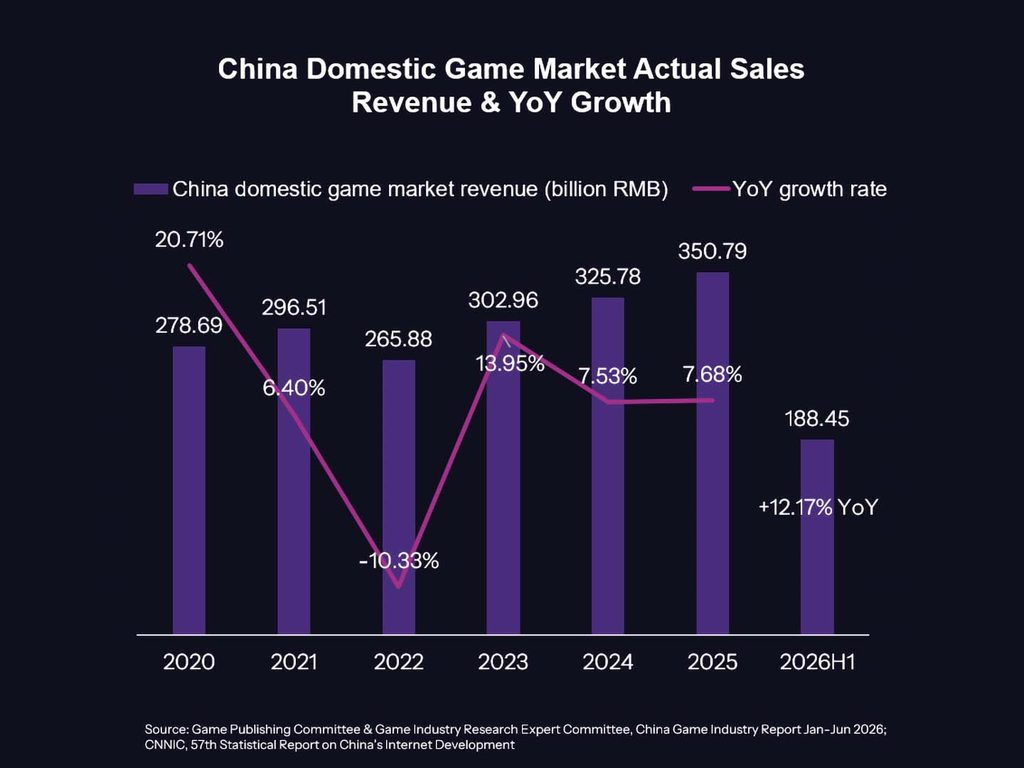
The report also shows that the industry’s growth logic is shifting. The market is moving past its reliance on adding new users. Future growth will come from deeper engagement, stronger willingness to pay, and richer ecosystems around games. Mini-programme games are accelerating light gaming, while AI-native games, game IP x the collectibles economy, and the globalisation of Chinese games are emerging as three high-certainty growth directions.
“What stands out from this year’s research is how quickly the conventional definition of a ‘gamer’ is becoming outdated. Gaming today cuts across age, gender and lifestyle, and the differences within the gaming population are increasingly as important as the similarities. The real value of insight lies in understanding the motivations, behaviours, and interests behind how different people engage with gaming and, more importantly, what those behaviours reveal about how they spend their time, attention and money in the wider consumer ecosystem,” Lucy Zhang, Chief Relationship Officer, Omnicom Media China said.
Key statistics that matter to brands
Unlocking China’s Gamers 2026 segments Chinese players into two groups based on frequency and session length, reflecting not just time spent, but also different motivations, formats, and spending logic:
- light-to-mid-core gamers, who account for 74% of the market
- heavy-core gamers, who account for 26%
Light-to-mid-core gamers seek effortless fun, easy-to-learn formats and social enjoyment. They tend to spend it pragmatically. Notably, consumers aged 45 and above account for 37% of this group, making older players one of the industry’s most important — and often overlooked — incremental opportunities.
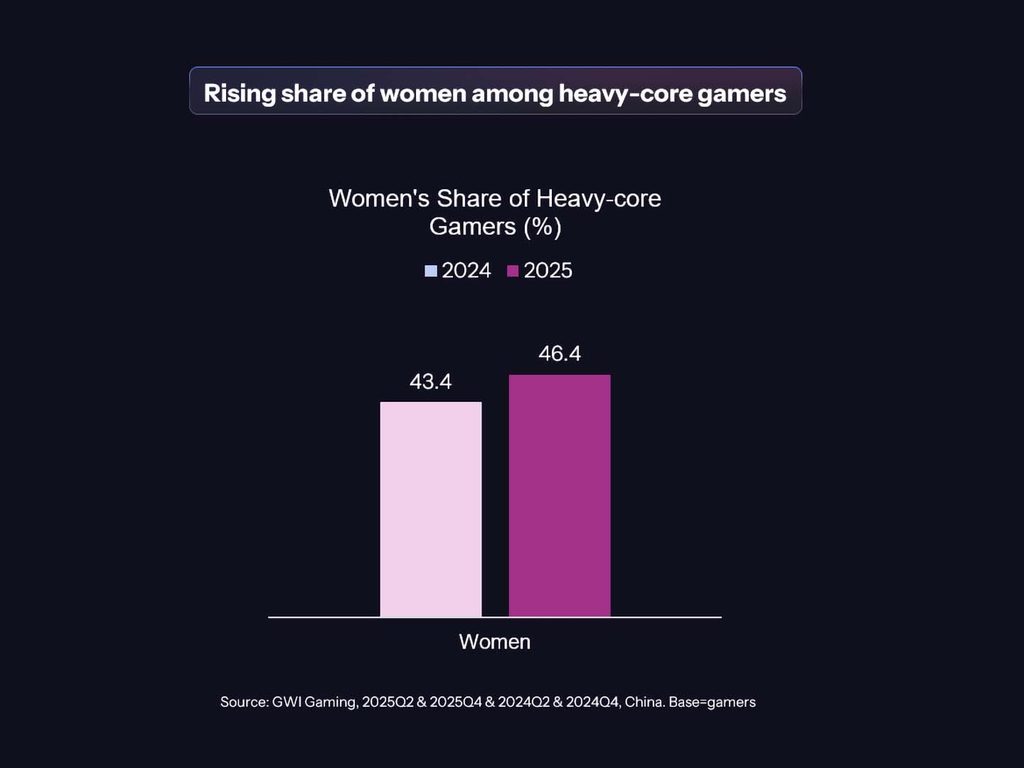
Heavy-core gamers are driven by competition, story, social connection and challenge. They engage with a wider range of genres and are more willing to invest in deep, long-tail gaming experiences. Women now represent 46% of heavy-core gamers, becoming a core force in shaping game culture rather than a peripheral audience. They also show strong relevance for 3C and technology brands, valuing professionalism, performance and device upgrades across gaming equipment and peripheral ecosystems.
The report also finds that gaming now extends far beyond the game itself. Chinese gamers are active across multiple passion circles, from esports viewing, game concerts and technology early adoption to game-location tourism, board games and model or figure collecting. Gaming is becoming a cultural gateway that connects otherwise fragmented interest communities.
What are the brand implications?
For marketers, these shifts carry three clear implications.
1. Gaming should not be seen as a flash-in-the-pan execution
Gaming should be treated as a medium within the broader communications mix, not as a one-off sponsorship or youth activation.
2. Plan from audience segmentation
Brands need to plan from audience segmentation because light-to-mid-core and heavy-core gamers respond to different motivations, formats and value propositions.
3. Create hubs for cross-interest penetration
Marketers should use gamers’ wider interest circles as hubs for cross-circle penetration and touchpoint reuse, building campaigns that move from attention to community relevance and ultimately to consumer action.