


Consumers scroll past thousands of messages every day, while brands continue competing for the same fleeting seconds of visibility. Yet according to McDonald’s Philippines Marketing Director Ashley Santillan-Delgado, the industry’s biggest misconception is that attention alone is enough.
Speaking at the 2026 adobo Masterclass on Creativity held on Monday, July 20 at the Ayala Museum, Ashley argued that modern marketing demands a different mindset; that it must move beyond impressions and stretch toward experiences people will choose to remember, test, and share.
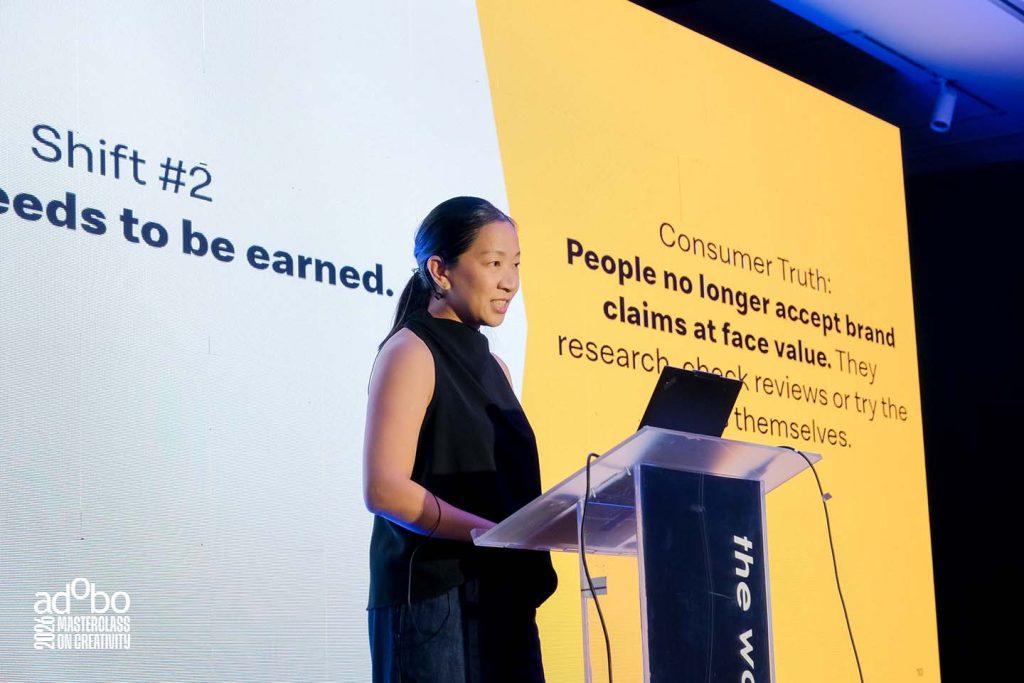
“Attention gets people to notice you. Experience gets people to believe you. Participation turns them into your advocates,” she said.
Ashley illustrated the imbalance between exposure and recall, asking the audience to think about the number of advertisements they had seen on the way to the venue — and then consider how many they could actually remember.
For her, the problem isn’t a lack of content. It’s that attention has become increasingly easy to buy but increasingly difficult to sustain. Humans, she explained, naturally remember experiences more vividly than passive encounters, making participation far more valuable than exposure.
“Humans are wired to remember the things we do far more than the things we simply see.”
That insight shaped McCafé’s “Sips and Sounds,” which transformed a coffee campaign into a platform for music, dance, and community. Instead of positioning coffee as the hero, McDonald’s used it as an invitation for Gen Z consumers to participate in experiences they likely valued.
“The coffee became the invitation. The experience became the memory,” Ashley shared, adding that distinction is becoming increasingly important in categories where functional product differences are minimal. She also emphasized that brands can no longer rely solely on product claims; they need to create moments worth remembering.
“Stop creating ads. Start creating memories.”
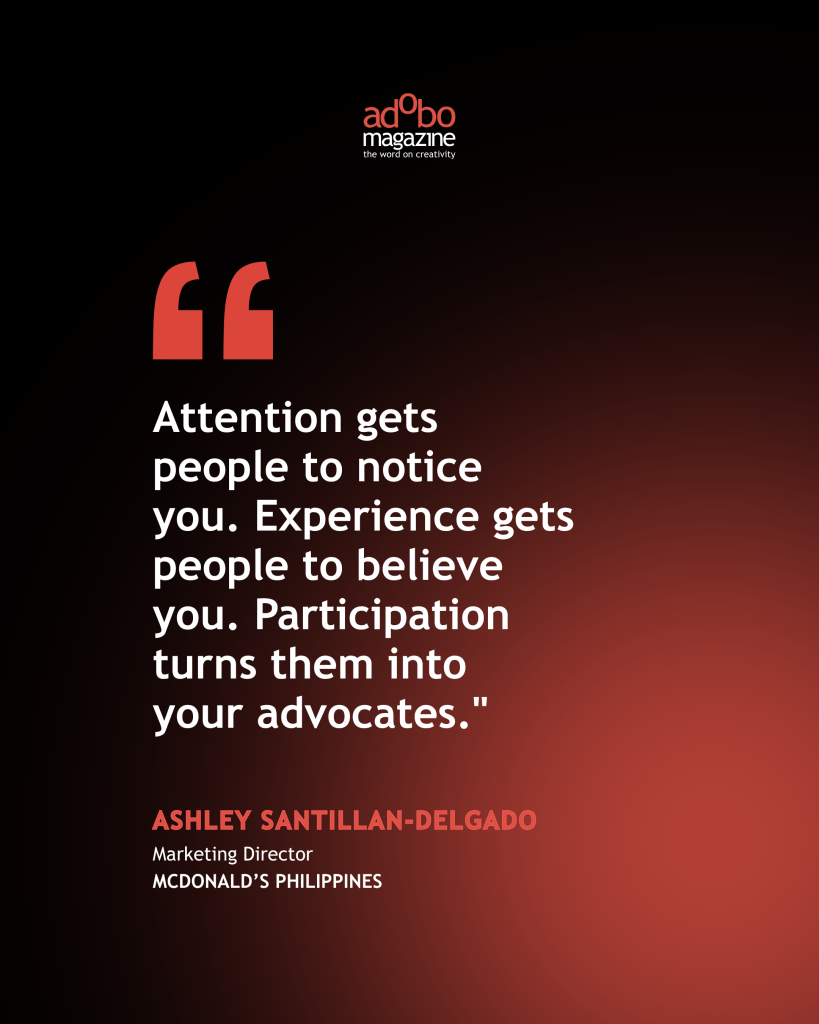
Creating memorable experiences, however, is only one part of the equation. Hence, Ashley believes that in today’s environment, trust can no longer be built through messaging alone, especially as consumers verify, compare, read reviews, and increasingly expect brands to prove their claims through experience.
That thinking inspired McDonald’s “Two-Minute Drive-Thru” Challenge. Rather than repeatedly advertising speed, the brand invited customers to test the promise themselves. If orders weren’t served within two minutes, customers received a free iced coffee voucher. The campaign shifted marketing from persuasion to participation. Instead of asking consumers to believe the claim, McDonald’s encouraged them to challenge it.
Customers documented their experiences online, turning the campaign into user-generated proof that carried greater credibility than traditional advertising could. The result was more than engagement. It helped reverse years of declining drive-thru performance while restoring confidence in the service.
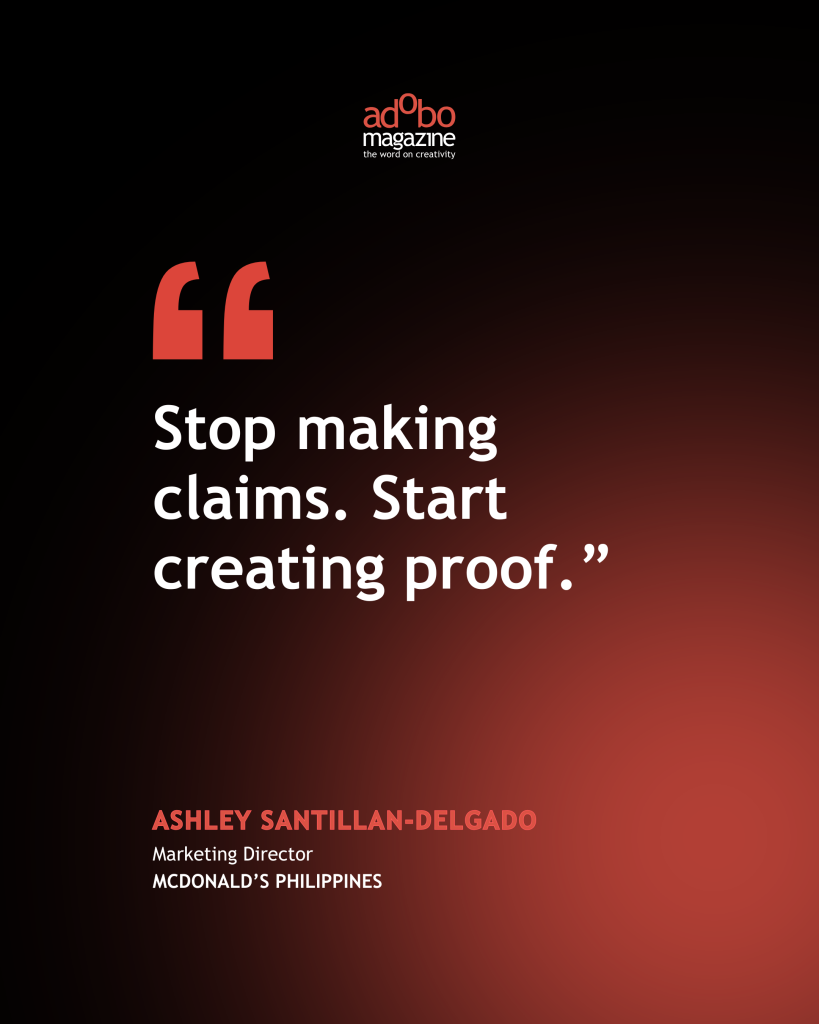
“Stop making claims. Start creating proof,” she advised.
Moreover, Ashley acknowledged a growing challenge inside organizations themselves. While internet culture evolves in real time, brands often operate within marketing calendars designed months in advance. She argued that brands should find meaningful ways to participate in cultural moments already unfolding rather than attempting to control every conversation.
To illustrate this, Ashley cited GamiFries, an unofficial 3D-printable Nintendo Switch accessory released anonymously amidst the frenzy surrounding the anticipated Switch 2 launch.
Instead of announcing itself immediately as a McDonald’s campaign, the idea allowed gaming communities to speculate, debate, and ultimately uncover the brand’s involvement on their own.
“I’ll tell you a secret. It was planned,” Ashley revealed, asserting that relevance sometimes requires letting go of complete control as the objective is not always to dominate the conversation, but to become part of it.
From customers to advocates
Perhaps Ashley’s strongest argument came toward the end of the session. She suggested that advocacy cannot simply be purchased through larger media budgets. People become advocates only after experiencing something they genuinely want to talk about.
That philosophy came to life through the “Lucky Charm” promo, which tapped the Filipinos’ enduring belief in luck by inviting customers to bring zodiac-inspired charms in exchange for a one-peso McCafé.
As participants were free to interpret the challenge however they wanted — from lucky figurines to live animals — the campaign encouraged creativity, humor, and social sharing while driving incremental sales.
With this, Ashley believes that advocacy emerges when brands create experiences that people willingly make their own.
“People don’t advocate for brands they’ve only seen. They advocate for brands they’ve experienced and genuinely enjoy.”
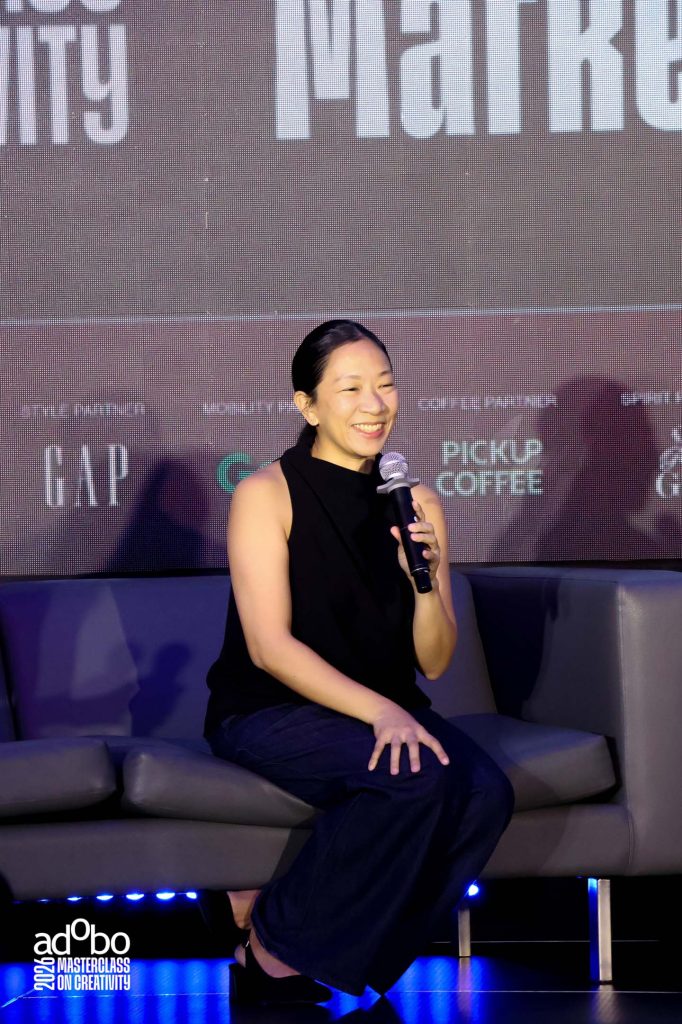
Ashley argued that as marketing continues to evolve, the industry’s role extends far beyond producing campaigns or chasing impressions.
The brands that will endure, she suggested, will not necessarily be the loudest or the most visible, but the ones that create experiences people actively choose to be part of. In an increasingly crowded media landscape, participation has become more valuable than passive attention, turning audiences into contributors rather than mere consumers.
“Our job isn’t to create better ads. Our job is to create better experiences,” she concluded.
READ MORE:
Redefining what it means to lead out loud at the 2026 adobo SheCreative Network pride session
What’s the future of marketing? These industry leaders say it’s more human than ever