

Creativity has long been advertising’s most celebrated currency. But as brands navigate fragmented media, evolving consumer expectations, and the rapid adoption of artificial intelligence, the question is no longer simply whether an idea can capture attention. It is whether that idea can create lasting value.
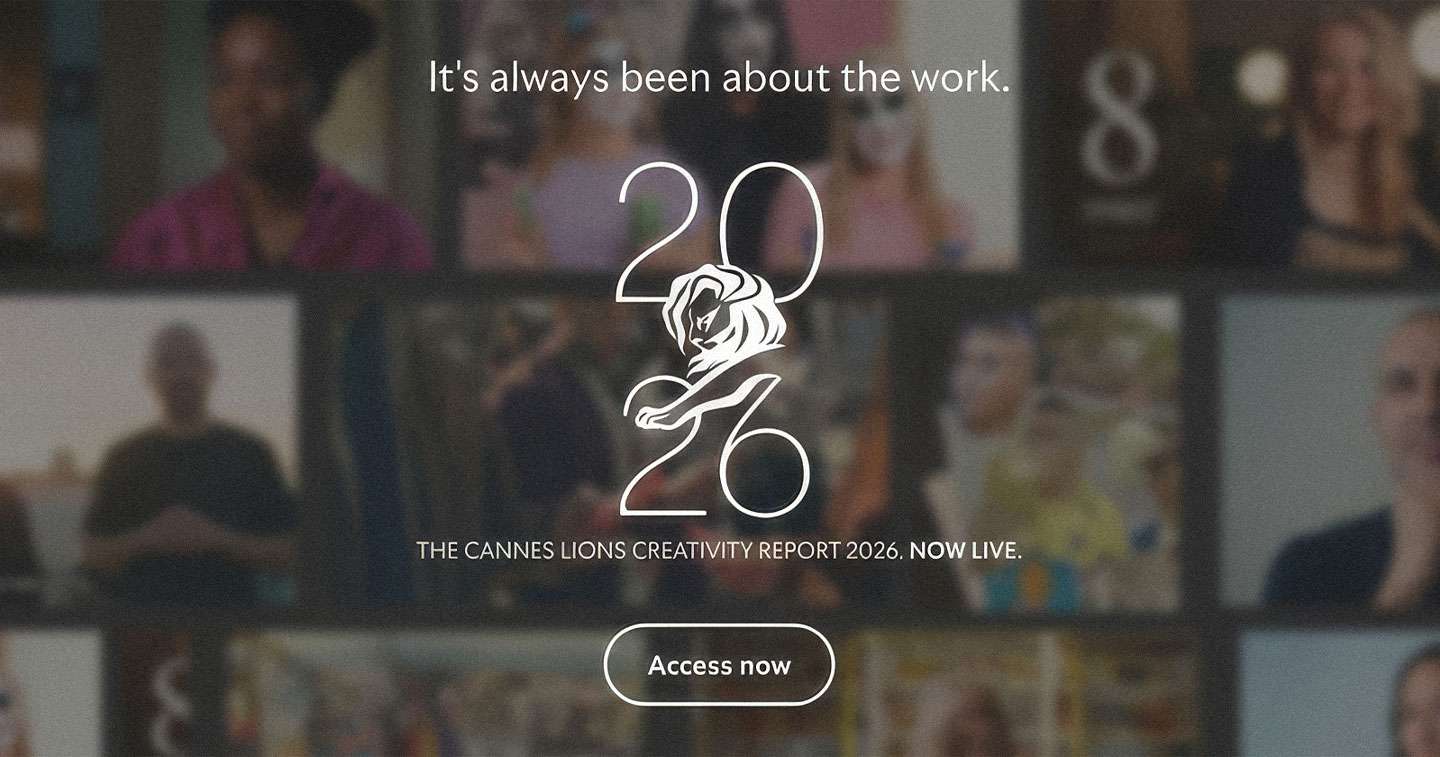
The Cannes Lions Creativity Report 2026 offers a compelling answer. Across this year’s winning work, creativity emerged not merely as a communications tool, but as a driver of meaningful change. The strongest ideas did more than interrupt audiences with a message, but rather instilled ideas.
The report identifies four defining creative trends: fair trade, sound reasoning, fan folklore, and tackling truth. Together, they point to an industry increasingly concerned with the relationship between what brands say, what they do, and what people actually receive in return.
The results also reinforce a broader argument: creativity is becoming a business capability, one that depends as much on organizational culture and sustained investment as it does on individual campaigns.
From capturing attention to creating value
The first major trend, fair trade, reflects a shift away from advertising that competes for attention toward ideas that give audiences something worthwhile in exchange for it.
The principle is straightforward: rather than asking consumers to make room for a brand, brands should find ways to make themselves useful within consumers’ existing experiences.
Clash Royale demonstrated this with “Copycats Welcome,” which addressed the proliferation of imitation versions of its mobile game by allowing players to transfer their progress into the original game. Instead of relying on conventional competitive messaging or lengthy intellectual property battles, the brand recognized the time and effort players had already invested elsewhere.
The campaign generated more than 2.3 million player conversions in three days without paid support, ultimately bringing 1.65 million new players to open accounts and re-engaging 5.4 million lapsed users.
The strategy reframed a competitive threat as an opportunity to reward player loyalty. More importantly, it recognized that consumers’ existing investments— whether time, money, effort, or emotional attachment are part of the value exchange brands must understand.
Similarly, Uber in Brazil found an unconventional way to support football club Uberlândia E.C. by securing naming rights that changed nothing about the club’s established identity. By highlighting the “Uber” already present in the team’s name, the brand supported the club financially without forcing a manufactured rebrand.
The initiative generated 1.2 billion impressions, increased brand mentions fourteenfold, and drove an 84% increase in attendance at the club’s games.
Both campaigns demonstrate that effective brand participation does not always require inventing a new behavior. Sometimes, it means recognizing an existing one and finding a way to make it more rewarding.
As consumers become more selective about where they spend their attention, campaigns that offer tangible utility, meaningful participation, or a fair exchange can establish stronger reasons for engagement than exposure alone.
The challenge is to ensure that the value is real. Consumers are unlikely to sustain their interest in experiences that promise utility but ultimately serve only the brand’s immediate commercial objectives.
Sound becomes a brand asset
The second trend, sound reasoning, highlights how brands are finding distinctive ways to embed themselves in the sounds and rhythms of culture.
In an increasingly fragmented media environment, sonic identity offers a potentially durable asset. Unlike visual branding, which often depends on screen space or logo visibility, sound can travel across formats and experiences, from social video and entertainment to physical environments and everyday routines.
Energy drink brand Sting illustrated this with “The Unofficial Sound of F1.” Although an official Formula One sponsor, the brand was contractually restricted from displaying its logo on F1 signage. Instead of treating that limitation as a barrier, it drew a connection between the roar of an F1 engine and the sound of its own name, enlisting DJ Armin van Buuren, creators, former drivers, and Formula One itself to reinforce the association.
The campaign accumulated 282 million video views, reached an earned audience of 1.12 billion, and generated more than 1,028 earned media stories. Global positive brand sentiment increased by 70%.
Hyundai’s “Coquí Alarmed,” meanwhile, demonstrated how sonic branding can extend beyond a conventional advertising asset. Following controversy sparked by a tourist’s complaint about Puerto Rico’s native coquí frog, Hyundai partnered with rental agencies to replace standard vehicle-lock sounds with recordings of the amphibian’s distinctive call.
The initiative transformed an everyday interaction into an expression of local identity. It generated nine million impressions, achieved 98% positive sentiment, and prompted residents to request the sound in their own Hyundai vehicles.
The lesson is not simply that sound can make a brand more recognizable. It is that the most effective sonic identities can connect a brand to something people already recognize, feel, or care about.
When audiences become part of the story
The third trend, fan folklore, captures the growing importance of participatory storytelling, where audiences are invited to investigate, speculate, debate, and contribute to the development of a brand experience.
Rather than delivering a complete narrative, brands create the conditions for people to help build one.
Columbia Sportswear’s “Expedition Impossible” challenged flat-Earth believers to find the edge of the planet, with ownership of the company offered as the prize. Led by CEO Tim Boyle and amplified through television, X, Reddit, and YouTube, the campaign turned an internet conspiracy into an open-ended public challenge.
It generated more than 10.4 million social views, reached 80 million people, and earned 261 pieces of media coverage.
Supermarket PENNY took a similarly participatory approach with “Sheep Happens,” following an incident in which more than 50 sheep entered one of its German stores. Rather than simply addressing the unusual event, the retailer embraced the mystery, invited an influencer to investigate, incorporated audience-created jokes, and let the public vote on a sheep-themed store name.
The campaign generated €30 million in earned media, increased revenue by 13% at the affected store and 6% nationwide, and boosted PENNY’s brand popularity by 69%.
These campaigns illustrate how the internet’s appetite for speculation, humor, and collective discovery can become a creative advantage.
However, participatory storytelling requires more than manufacturing a viral mystery. The brand must give audiences a reason to care, while allowing the experience to develop in ways that do not feel overly controlled. People are more likely to participate when they believe their contributions genuinely matter.
For brands, the opportunity lies in treating audiences as collaborators rather than passive recipients. The resulting work can extend beyond a single campaign, with communities becoming active distributors, interpreters, and even co-creators of brand meaning.
In an AI era, transparency becomes a differentiator
The fourth trend, tackling truth, addresses a defining tension in contemporary marketing: as AI-generated content, synthetic imagery, and deepfakes become increasingly accessible, the ability to establish credibility becomes more valuable.
The report notes that AI played some role in 40% of submitted work at Cannes Lions 2026. Yet the quality of the winning entries reinforced the importance of human judgment, craft, and care, regardless of the tools used to create them.
IKEA’s “Sleep Talk Reviews” offered an unconventional response to skepticism surrounding online product reviews. The brand invited people to sleep in its stores and recorded their nocturnal murmuring, turning unintelligible sleep talk into testimonials for its mattresses across billboards, radio, Spotify, and social advertising.
The campaign increased trust in IKEA as a credible mattress destination by 12%, while mattress sales rose 2.9% year on year and online visits increased 9.1%.
Amstel’s “Shot Without Permission” approached authenticity through a different lens. The brand replaced polished, staged depictions of friendship with candid photographs of friends enjoying Amstel together. Those who recognized themselves could identify themselves and claim usage fees, turning the people featured in the campaign into participants in its broader story.
Within its first week, the campaign generated 25.74 million impressions and 98% positive sentiment globally.
Both examples suggest that authenticity is most persuasive when it is demonstrated rather than merely claimed. Instead of relying on familiar advertising conventions to communicate credibility, these brands built the premise of their work around evidence of real behavior.
This distinction matters as AI makes the production of convincing content easier and faster. The challenge for brands will not simply be to produce material that looks authentic, but to establish why audiences should believe it.
Transparency, therefore, can become more than a compliance consideration. It can be a creative strategy in its own right, especially when brands make the human processes behind their claims visible.
Creativity is becoming an organizational capability
Perhaps the most significant development in the 2026 report is the introduction of the Creative Brand Lion, which recognizes the systems and cultures that enable brands to deliver creative excellence consistently.
Unlike awards focused primarily on individual campaigns, the category evaluates the capabilities behind the work: internal creative culture, the quality of creative output, commercial results, and the sustainability of those results over time.
The inaugural Grand Prix went to AB InBev for “Creativity at Scale,” recognizing the brewer’s approach to embedding creative effectiveness across more than 500 brands and 50-plus markets. Through its CreativeX platform and associated practices, the company has sought to make creativity a core growth strategy. Its megabrands delivered a 4.1% year-on-year increase in net revenue.
Mastercard also received a Creative Brand Lion for “The Priceless Partnership,” which demonstrated how an enduring brand platform, supported by partnerships and consistent organizational capabilities, can evolve across markets and changing consumer behaviors.
The distinction is important. A successful campaign may generate an immediate spike in attention or sales, but sustained creative performance requires structures that allow good ideas to emerge, travel across an organization, and adapt to local markets without losing their strategic coherence.
The report identifies three lessons from the Creative Brand winners: establish a common creative culture and shared measurement systems, treat partners as integrated members of a cohesive team, and invest in capabilities designed for long-term adaptability.
These principles challenge the traditional view of creativity as the responsibility of a single department or agency. Creative effectiveness depends on how organizations make decisions, collaborate, allocate resources, and evaluate results.
Sound reasoning encourages marketers to look at the cultural assets that already surround them. Local music, familiar everyday sounds, and regional identities can provide powerful creative material when approached with specificity and respect.
The next benchmark for creative excellence
The Cannes Lions Creativity Report 2026 makes a case for judging creativity by more than novelty or visibility. The strongest work combines an original idea with a clear understanding of people, a meaningful role for the brand, and evidence of lasting impact.
The report’s emphasis on human talent is particularly relevant in an industry increasingly equipped with tools that can accelerate ideation and production. Greater access to technology does not automatically produce greater originality. As execution becomes easier to scale, the ability to identify the right problem, exercise judgment, and make culturally resonant choices becomes even more consequential.
For agencies, that means developing ideas that can survive beyond the pitch and deliver measurable value. For marketers, it means building organizations that can support creativity consistently rather than treating every campaign as an isolated effort. And for brands, it means understanding that attention is only the beginning of the relationship.
The next benchmark for creative excellence will not be defined solely by what a campaign makes people see or remember. It will also be defined by what it enables them to do, what it changes for the business, and what remains after the campaign ends.
In that sense, the most important message from Cannes Lions 2026 is also its most practical: creativity delivers its greatest value when it becomes more than communication.