
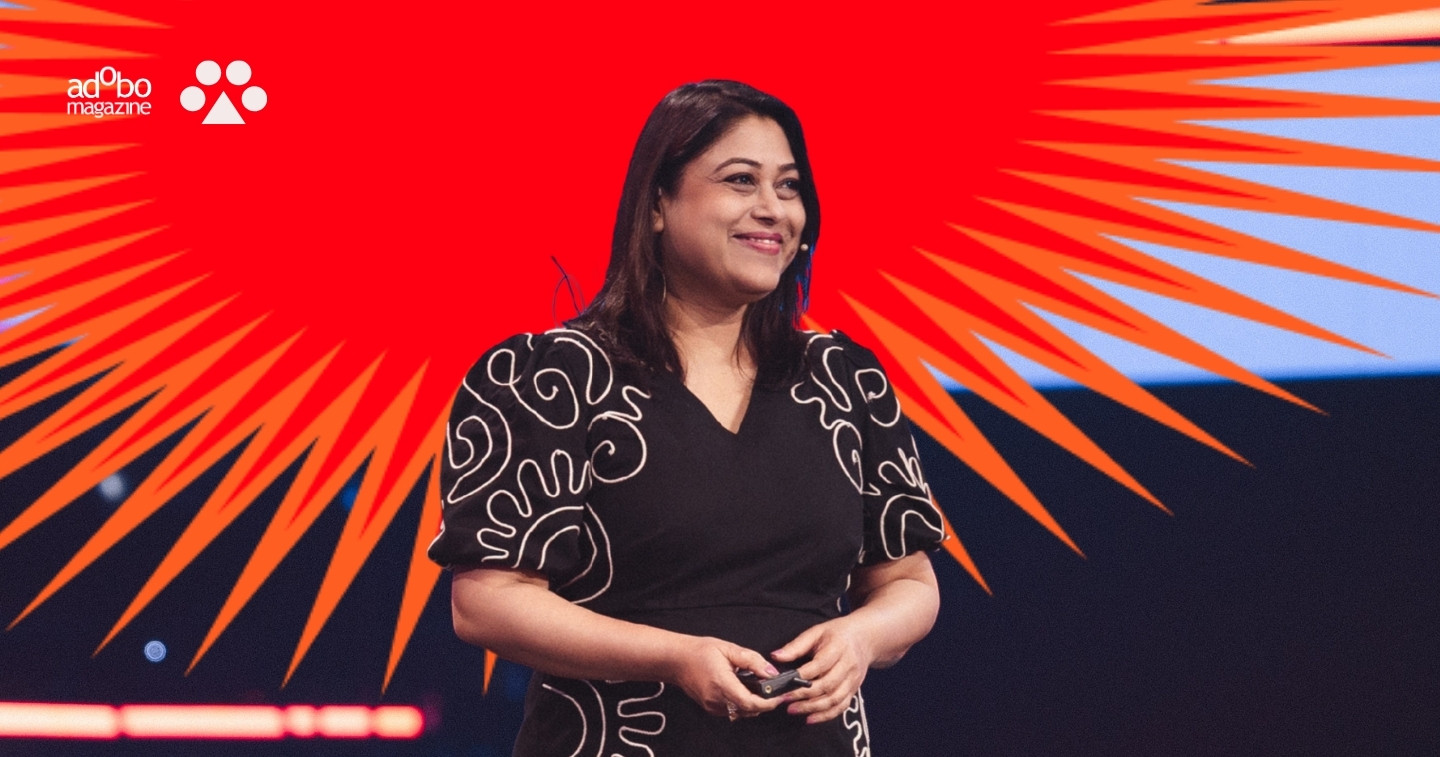
Mayuri Nikumbh, Chief Design Officer of Elephant Design India, recently served as Jolbors Award International Jury Chair of the Branding & Design category at Jolbors Festival 2026. She also delivered a keynote at the said festival, which was held from October 3 to 4 at ZOR TV in Tashkent, Uzbekistan.
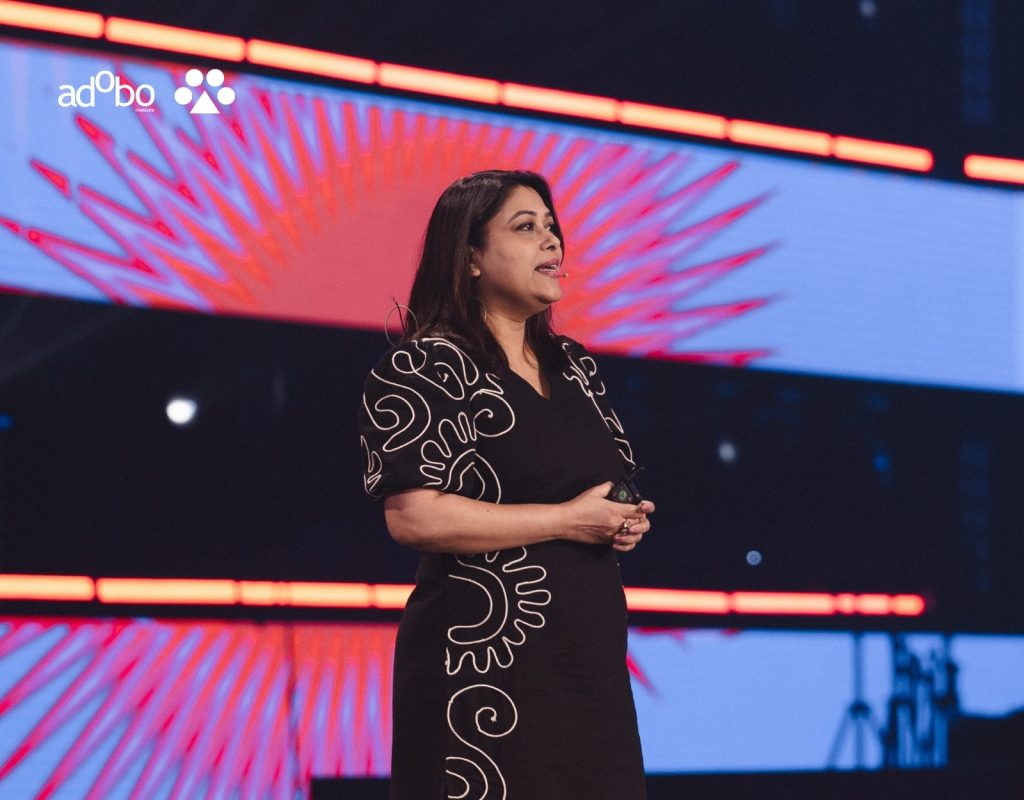
Mayuri began her talk with a warm greeting and a confession. It was her first time in Central Asia. “I am blown away by the creativity I have encountered,” she told the audience, speaking of both the work and the people.
Her session, “Culture as Design Narrative,” made one argument across several case studies: the stories brands need are often already in people’s own surroundings.
Founded in 1989 with a team of over 70 people, Elephant is one of India’s leading independent design agencies. Mayuri said the name has nothing to do with the elephant-headed god or Indian craft; it comes from the parable of the blind men and the elephant, in which each person touches a different part of the animal and describes it differently.
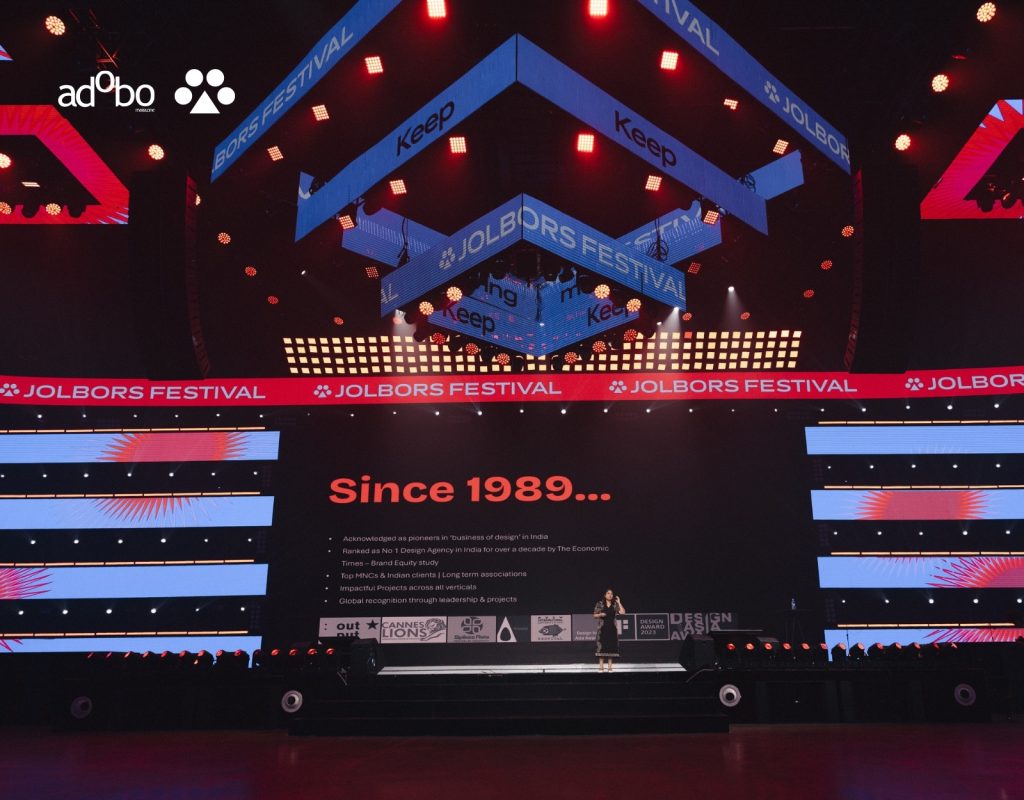
Each may be right from where they stand, but the full picture appears only when the pieces come together. At Elephant, she said, “Everyone brings a little piece of the puzzle.”
That thinking shapes how she works. “Look at your own backyard,” she said. The stories there can help designers speak more relevantly to audiences that matter.
In India, that means designing across nearly 30 states and many languages and religions, often solving for two Indias: a more affluent, Western-influenced India 1, and a larger, value-conscious India 2 in smaller towns and villages.
Her examples began with India 2. The aim, she said, was to make the good life more accessible not by pulling people into India 1 but by “participating in their own world.”
Stories from people’s own worlds
Buying something expensive in India is a ritual, Mayuri said, “almost like bringing a person into the household.” During the pandemic, used cars boomed, but used-car lots still looked like sheds.
For Car&bike, Elephant used the ampersand to unify a visual system that had to work across many locations and scripts, and built showrooms where customers could feel proud to walk into.
Mayuri also cited campaigns from other agencies as examples, including McCann Worldgroup India’s “Shagun Ka Lifafa” for Ujjivan Small Finance Bank, which turned the wedding cash envelope that traditionally carries a one-rupee coin into a bank-account opening form for women. The campaign reported that 232,000 women opened accounts.
Phool, a startup, collects sacred flowers from temples that would otherwise end up in the River Ganga and turns them into handmade incense. A line from the aarti tradition explained the idea: “What belongs to the gods goes back to the gods.”
The company collected more than 12 tons of flowers, and the work created livelihood for women.
Memory, packaged
Mayuri then shared a few innovations Elephant devised for some clients.
Elephant’s packaging for Tasty Tales regional ready-to-cook curries put a grandmother from each region on the pack and borrowed a detail from the old ceramic pots used for pickles. Packaging, Mayuri said, “can carry a story, not merely contain a product.”
For the Bhoomi range of cookware company Nirlep, Elephant paired a stoneware body with a food-grade Teflon non-stick surface, bringing some of the feel of clay cooking into a modern pan.
“It sold out,” Mayuri said.
Paper Boat began as a startup selling drinks mothers and grandmothers used to make at home. Elephant chose the paper boat—symbolic of childhood memories—as the key element of the brand’s visual identity. The packaging of the drinks are white, which many Indian FMCG brands avoid. Paper Boat’s products stood out on shelves crowded with dark cola packaging.
“There is nothing overtly traditional about the design,” Mayuri said. “The seed was simply an authentic story from our own backyard.”
Culture belongs to people
Mayuri’s last case study during her presentation was The Kolhapuri, created by VML India for Kalapuri. Kolhapuri chappals are handcrafted leather sandals from western India. In 2025, Prada showed similar sandals at Milan Fashion Week, initially failing to credit their origins.
VML India responded with an invitation instead of a protest in the form of a handcrafted book—designed like the sandals—in Marathi and English, naming the makers and documenting the craft.
Members of Prads’s team later visited Kolhapur. In 2026, the luxury brand announced a limited-edition collection made in India by artisan groups, and launched a training program for artisans.
Culture, Mayuri said, is not just a source of visual inspiration. “It belongs to real people and communities who carry it forward.”
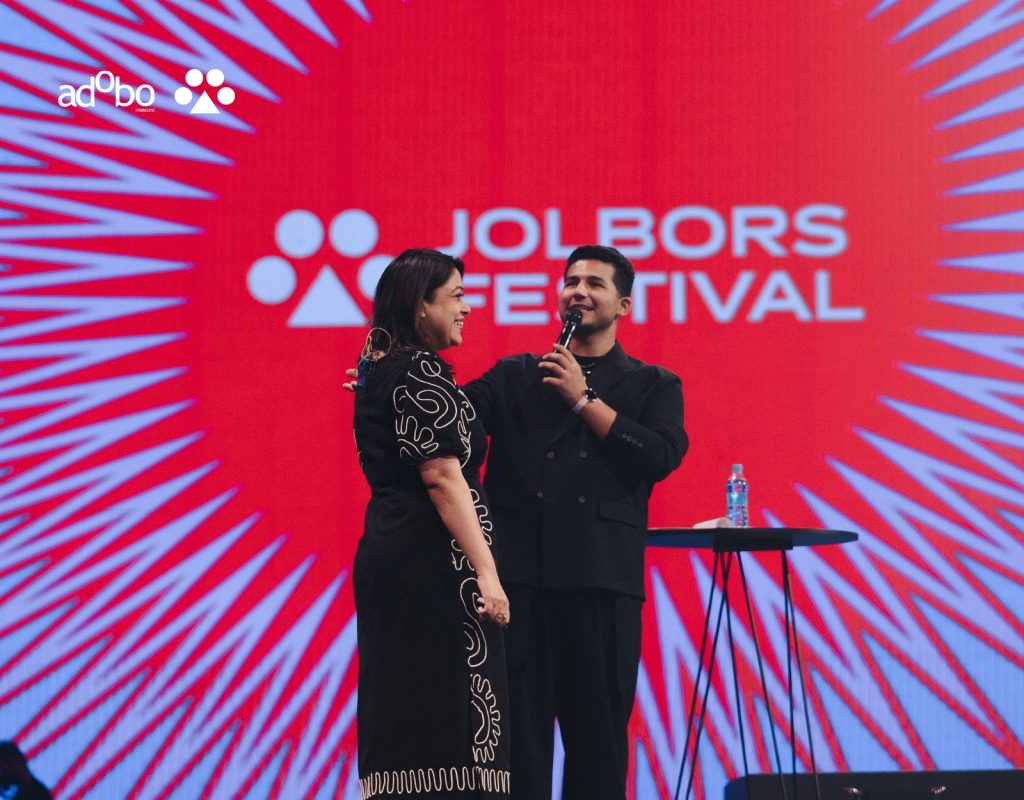
Mayuri concluded her presentation with a message on responsibility:, suggesting that creatives should look backward and inward to find local insights that help people and the planet.
“Let us keep watering our own roots,” she said.
adobo Magazine is an official media partner of Jolbors Festival 2026.
READ MORE
Thomas Hongtack Kim’s ‘4 Ways to Win in the Era of Marketing Chaos’ at Jolbors Festival 2026
Thailand wins the Grand Prix, Russia takes most wins at Jolbors Awards International 2026
SEED leads Jolbors Awards Central Asia 2026 with 13 wins, ahead of FCB Almaty, Ogilvy ATA