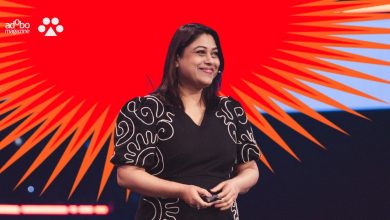

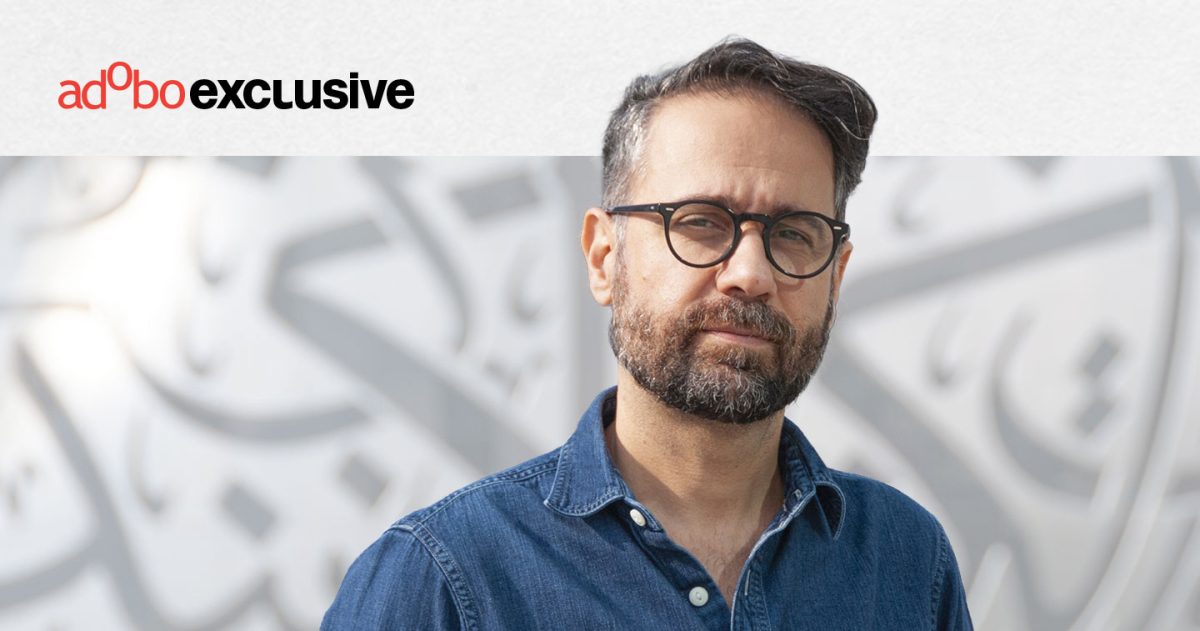
At a time when “impact” has become one of the advertising industry’s most overused words, Ali Rez is pushing for a far stricter definition of what meaningful change actually looks like.
As Jury President for the D&AD 2026 Impact categories in London, the IMPACT BBDO Group Chief Creative Officer helps lead conversations around work that goes beyond communications — ideas capable of driving measurable behavioral, environmental, social, or policy change.
Named Campaign’s Creative Person of the Year four times and widely regarded as the most awarded creative leader in the Middle East, Ali currently oversees creative output across the MENA region and in Pakistan for IMPACT BBDO. Under his leadership, the network has earned global recognition for work that merges business transformation with social impact — an ethos reflected throughout D&AD’s Impact, Future Impact, and Sustained Impact categories this year.
In an exclusive conversation with adobo Magazine Founder, President, and Editor-in-Chief Angel Guerrero during the D&AD Awards 2026 judging sessions in London, Ali unpacked why long-term commitment matters more than performative purpose, why diverse juries create stronger standards for impact work, and why creativity must play a larger role in empowering people through education and informed decision-making.
adobo Magazine: Last year’s Impact White Pencils ranged from Renault helping unemployed people access cars to Apple’s hearing health features to hyper-local sustainability projects. Is that breadth a strength of the category, or does it make “true impact” harder to define?
Ali: I think it’s indicative of the category, and this is something that we’re now looking to find in terms of diversity of ideas — whether they come from major brands or small grassroots initiatives. This is a very difficult category because not only do the ideas have to be innovative and well-crafted, but there’s also extra emphasis on how impactful the idea was and how truly demonstrated that impact was. So, there’s that layer to it, which makes it even harder to win.
adobo: You’ve said D&AD Impact brings in jurors beyond advertising to avoid industry bias. In 2026, what does that shift mean for the kind of work that should exist in this category — and the kind that doesn’t belong there?
Ali: It’s a very good question, and I think it’s very important for this jury to have that kind of diversity — not only from the perspective of having different viewpoints that aren’t just advertising or marketing-related, but also from a knowledge perspective. For instance, we have somebody from a medical background, which is very essential in understanding any case that is in that field. We also found ourselves reaching out to other juries in the same show just to gain a bigger understanding of the genre or expertise behind a piece of work.
So, for instance, with gaming, there was nobody from a gaming background on our jury, so we reached out to the gaming jury just to ensure that we understood the case and that it had a fair shot. I think that’s a major reason why diverse juries produce a richer collection of awarded work.
adobo: With “impact” increasingly used as a positioning tool, how do you separate work that genuinely solves real-world problems from work that doesn’t?
Ali: I think the differentiator is the commitment and investment. You can tell whether something is more long-term rather than just a flash in the pan — something done simply to gain PR and then walk away from. We find that the ideas in which the organizers have more skin in the game, whether they’ve invested more money, time, or initiative, tend to rise to the top rather than a very quick fix that somebody has done and then walked away from.
adobo: Future Impact rewards prototypes and pre-launch ideas. What makes for a credible future impact idea?
Ali: A credible Future Impact idea is something that is very innovative at its core. Firstly, it should make you think, “Wow, I didn’t think of this. Nobody thought of this approach to solving a certain problem.” Secondly, it should have a practical roadmap for how it could be developed. It shouldn’t come across as completely impossible to do, and there should be some thought given to a plan for how it will be implemented and brought out into the world.
These two factors are very important in awarding a Future Impact case so that something doesn’t seem too fantastical, even if it’s a good idea. There should be a well-thought-out plan for making it happen.
adobo: Is there any work you feel strongly deserves more recognition in the Impact category?
Ali: I think there is a good breadth of work as well. From a big-brand perspective, there’s work from AXA — the “Three Words” campaign, which addressed domestic violence in France — a wonderful idea entered into Impact. What I love about that campaign is that it’s not advertising; it’s a business decision and a business transformation, which is what’s so lovely about it. It proves that in today’s world, the best ideas are the ones that transcend mere communications and become part of how a company operates.
There’s a lovely campaign by Tiffany & Co. as well, which I quite like from a design perspective. What I like about that is that they’re heavily invested in what they’re doing in terms of ocean conservation. There are also some smaller groups with very nice campaigns, alongside culturally relevant work that’s part of the mix. Overall, I’m really happy with the breadth of work in there.
adobo: What, in your view, are the most urgent issues impact-driven creativity should be addressing right now? And what causes or issues do you feel are still missing from the entries
Ali: We have a number of issues affecting us right now. There are environmental issues, healthcare issues, and a lot of political conflict going on at the moment that are impacting millions of people. I think one place where we often forget to focus — or where I’d like to see more work — is that many of these issues are shaped by government decisions and the kinds of governments we choose to put in place.
That comes back to education, information, and the empowerment of people. I think that is an area where creativity, marketing, and advertising can play a major role in bringing awareness to who we select to make these decisions for us, decisions that ultimately impact all of these problems.
adobo Magazine is an official media partner of the 2026 D&AD Awards.
READ MORE:
Big ideas for big business results: D&AD Festival 2026 Creative Impact Accelerator
The rarest pencil in the room: Revisiting D&AD 2025’s three Black Pencil winners