

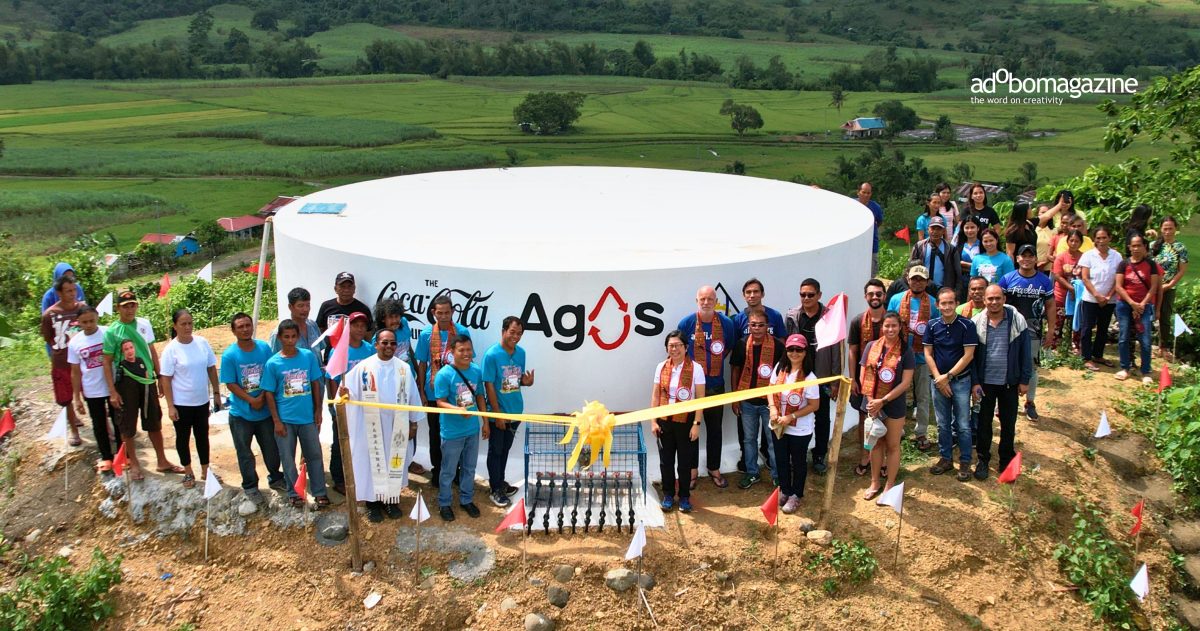

The Philippines sits amid abundant water sources. Lakes, rivers, springs, and coastlines line its more than 7,000 islands. And yet, access to clean water remains limited in many communities, particularly in remote upland areas and along the shores, where the nearest reliable water source is hours away.
Since 2009, the Coca-Cola Foundation Philippines, Inc. (CCFPI) has worked with partner organizations to help address these gaps through community-based water access projects. This effort has grown into one of the foundation’s longstanding programs.
CCFPI was established in November 1986 as the social investment arm of Coca-Cola in the Philippines. Water access has become one of its long-running focus areas, alongside community and partnership initiatives.
Supporting community water access over time
CCFPI’s primary water program, Agos, has supported hundreds of water projects across the Philippines — covering initiatives to improve community water access, strengthen water supply for food security and livelihoods, and advance watershed conservation.
These projects have supported water access efforts in communities across the country, and through them, CCFPI works with local partners to help improve the reliability of water sources over time.

“Our work primarily focuses on water access for communities with limited resources,” Cecile Alcantara, Executive Director of CCFPI, said in an exclusive interview with adobo Magazine. “We work with NGOs and local partners to support water systems that are appropriate for remote settings and designed for local maintenance.”
Agos focuses on three pillars:
- Safe Water Access, which focuses on domestic water needs
- Water for Food Security and Livelihood, which supports farmers with more consistent or alternative water sources
- Watershed Conservation, which centers on supporting watershed rehabilitation and management efforts to help maintain water availability.
Under Safe Water Access, CCFPI works with partners to install and maintain community-based water systems suited to local conditions. Initiatives such as the Ram Pump Project and Gravity-Fed Water System — both implemented in collaboration with the Alternative Indigenous Development Foundation (AIDFI) — use low-cost technologies to help bring water to upland and remote communities without relying on electricity. In peri-urban areas, the WASH program with Water Philippines supports household connections, hygiene facilities, and community education, helping communities improve daily access to water and sanitation.
For Water for Food Security and Livelihood, the programs focus on helping farming communities manage water resources alongside income-generating activities. Projects such as Partnership for Water and Economic Resilience (P4Water) combine water access solutions with livelihood support, working with local stakeholders to help communities develop more reliable water sources while supporting local livelihood activities.
In support of Watershed Conservation, initiatives are carried out with partners to support the management and rehabilitation of critical local water sources. Programs like Sustaining Watershed Health through Sustainable Livelihood and Agroforestry (SWATH) work with communities, local governments, and organizations to support agroforestry, resource management, and watershed rehabilitation efforts.


The Daloy 2 Project in Cebu, implemented in cooperation with the World Wide Fund for Nature Philippines (WWF-Philippines), focuses on water governance and stakeholder coordination, contributing to ongoing efforts to manage water resources at community level. CCFPI and WWF-Philippines also worked together on the Ipo Watershed, which is part of the Angat-Umiray-Ipo watershed system and an important water source for Metro Manila.
Alongside infrastructure, CCFPI and its partners support training and capacity-building within communities. This includes forming local associations, training residents to operate and maintain systems, and coordinating with local stakeholders.
These projects continue to be monitored with implementing organizations, helping support long-term use and community management.
Partners with a shared purpose
Water access work rarely happens through one organization alone. CCFPI works with NGOs, community groups, and local governments that bring technical expertise, established community relationships, and an understanding of what each area specifically needs. This collaborative approach ensures each project is designed around the realities of the communities they serve.
CCFPI is working with local and international partners across its water programs. These include AIDFI, Earth Day Network Philippines, the Philippine Business for Social Progress (PBSP), Water Philippines (formerly Water & Life Philippines), and WWF-Philippines, among others.


Understanding community impact
For CCFPI, the value of improved water access extends beyond installation. Local partners report that easier access to water can support more consistent day-to-day household activities across the communities involved.
For farming communities, more reliable access to water can help support day-to-day agricultural activities and local livelihoods over time. For some households, easier access to water may reduce time spent collecting water and support more consistent school attendance and daily routines.
According to Cecile, many children spent hours each day helping their families fetch water before their communities gained access to reliable water systems. Today, they get to devote some of that time to schooling, household routines, and other everyday activities within the community.
Where the journey continues
CCFPI is working to continue its water stewardship programs by helping younger generations and communities recognize the value of protecting natural water resources, and by supporting communities with limited access to reliable clean water sources.
Advancing water stewardship, however, isn’t the work of one organization. It’s a shared responsibility carried out with the NGOs, local governments, and communities CCFPI works with, each contributing the expertise and on-the-ground knowledge that make these projects possible.
Looking ahead, CCFPI and its partners aim to continue building on more than a decade of water access work, supporting locally managed water access initiatives in additional communities while continuing long-term stewardship efforts alongside local partners.