


In today’s evolving marketing landscape, the question is no longer whether brands should work with internal or external creative teams — but how both can coexist to build something stronger.
At the recently held adobo LIA Masterclass on Creativity, Maya‘s Group Chief Marketing Officer, Pepe Torres, unpacked why complex, platform-driven brands require both and how each brings a distinct advantage to the table.
“I don’t want to talk about whether internal and external views can be equally capable,” he said. “I just want to get that out of the way. I think the right people will always be equally capable.”
Pepe suggests shifting the focus to what each side can uniquely contribute. The distinction lies in closeness versus objectivity — or what he describes as “proximity and perspective.”
While he admitted, “I realized I hated the words proximity on perspective,” the idea behind them remains critical. Internal teams bring an intimate understanding of the brand, while external partners offer fresh, unbiased thinking.
Platform brands need more than campaigns
Not all brands operate the same way. Pepe drew a clear line between product brands and platform brands. Product brands typically revolve around a single offering and rely heavily on marketing communications. Platform brands, however, are far more complex — spanning multiple products, services, and touchpoints.

“Platform brands need both internal and external creators,” he emphasized.
In these environments, creativity doesn’t just live in advertising — it shapes the entire experience, from product design to user journeys and even company culture. This is where internal teams thrive.
Internal creative teams, deeply embedded within the organization, are uniquely positioned to influence beyond campaigns. One of their biggest contributions lies in building cohesive brand systems.
This clarity extends to everything — from visual identity to tone of voice. Even seemingly small decisions, like shifting from a colorful palette to a more focused black-and-green system, can define how a brand shows up in the world.
Such decisions are often easier to make internally, where teams can move quickly and confidently without over-deliberation.
Beyond identity, internal teams also shape product experiences. In one example, Maya’s team reimagined how to present a credit card installment feature — not just in terms of functionality, but language and user experience.
Instead of accepting industry jargon, the team developed a more intuitive and user-friendly approach, aligning the product with the brand’s voice. This kind of integration — where branding, product, and communication work seamlessly — is only possible with close collaboration across departments.
Creativity that shapes culture
Internal teams also play a crucial role in shaping company culture. From internal campaigns to employee experiences, creativity becomes a tool for alignment and engagement.
Whether it’s reimagining company events or designing employee initiatives, these efforts reinforce what the brand stands for — not just externally, but from within.
While internal teams bring depth, external agencies offer something equally valuable: distance. They challenge assumptions, introduce new ways of thinking, and elevate ideas beyond what may feel familiar.
This balance is essential. “I don’t think it should be either or…” Pepe said.
In fact, the most effective collaborations blur the lines between the two. When done right, it becomes difficult to distinguish where one team’s contribution ends and the other begins.
“What I genuinely enjoy is when, at our best, you don’t want to know where the contribution of what ends and another location,” he said.
This kind of synergy doesn’t happen by accident — it requires strong leadership and a shared sense of purpose.
One team, one goal
Ultimately, the success of this model depends on alignment. Internal and external teams must operate not as competitors, but as partners working toward the same goal.
“There’s definitely some healthy internal competition,” he admitted, “but we always know we’re one game.”
When both sides are aligned, the result is a more holistic and effective creative output — one that spans campaigns, products, and experiences.
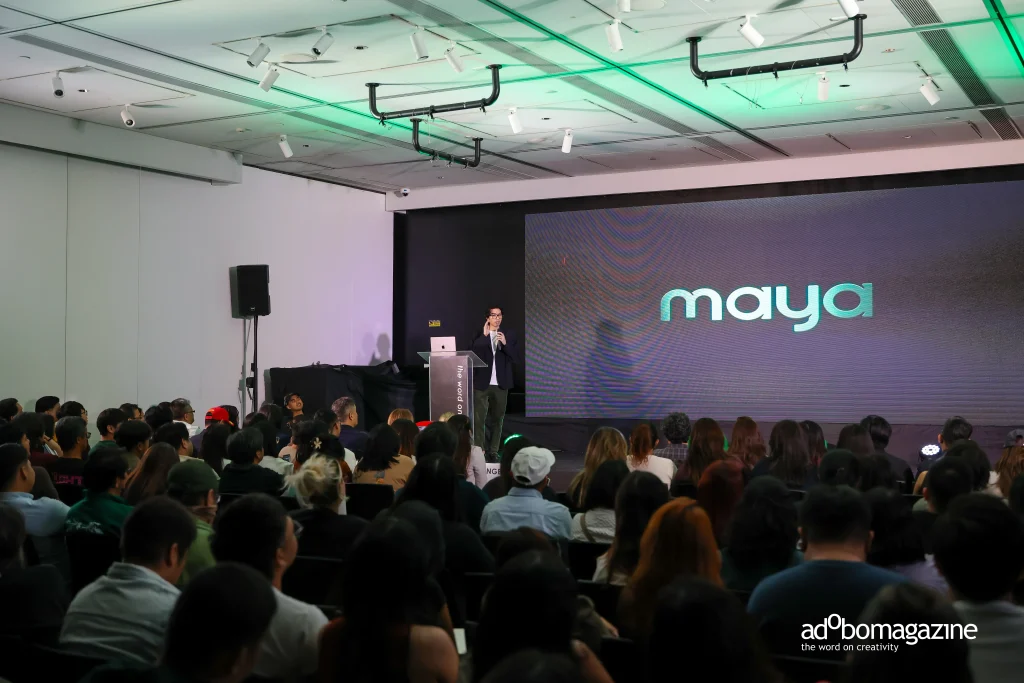
Pepe’s keynote concludes with a clear message: the future of creativity isn’t about choosing sides. It’s about integration.
“I don’t think this is about either or; it’s not about our internal themes, unthreatening.”
Instead, it’s about recognizing the unique strengths of each and creating an environment where both can thrive.
For brands navigating increasing complexity, this dual approach isn’t just beneficial — it’s necessary.
Because in the end, the most powerful ideas don’t come from isolation, but from collaboration.
READ MORE:
CMO Pepe Torres reveals how Maya transformed from #2 e-wallet to the top digital bank
Dentsu Creative Manila, Maya Bank redefine the black card for a new generation
Maya welcomes Maya Black: the credit card for the experience generation