
The Philippine media landscape is no longer TV-dominant. It is fluid, fragmented, and fiercely competitive, and for Fast-Moving Consumer Goods (FMCG) brands operating on tight budgets, every peso must now work harder than ever.
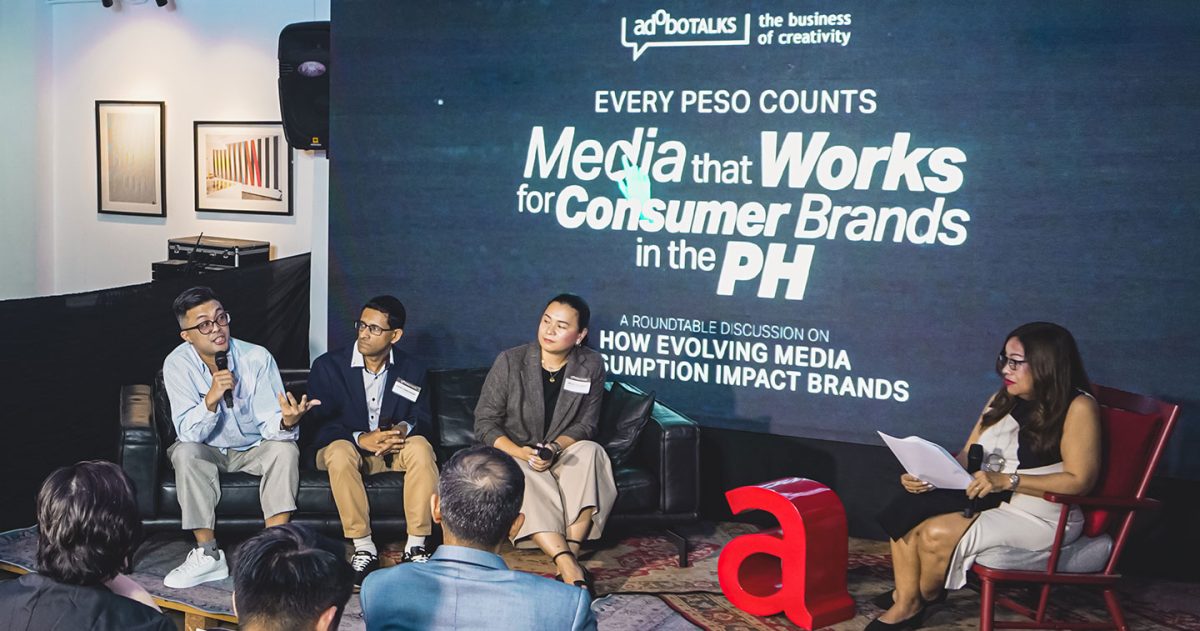
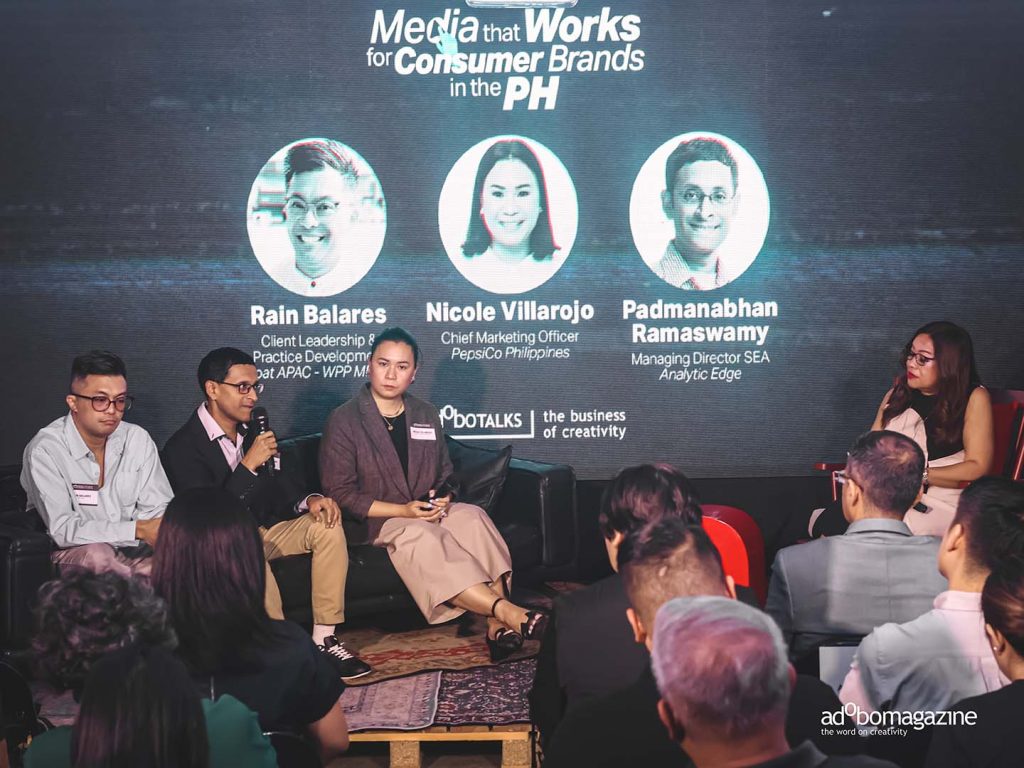
During the roundtable discussion titled “Every Peso Counts: Media That Works for Consumer Brands in the PH,” presented by adobo Magazine through adobo Talks: The Business of Creativity, industry leaders explored how evolving media consumption is reshaping the Philippine media landscape.
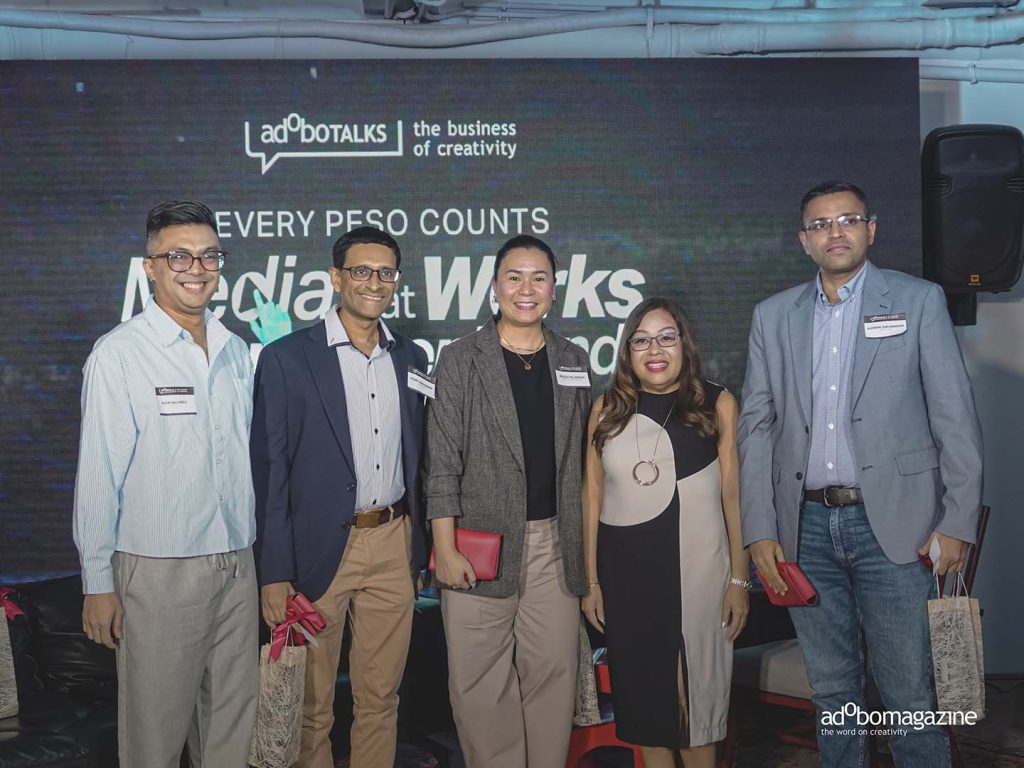
Hosted by adobo Magazine Founder, President, and Editor-in-Chief Angel Guerrero, the discussion drew from an analysis by Analytic Edge covering 11 Marketing Mix Modeling (MMM) studies across FMCG brands. It explored various ways of championing media sufficiency as a smarter investment framework, while highlighting evolving media trends and the role of full-funnel digital platforms in driving business growth.
TikTok is significantly outperforming TV in ROI
Analytic Edge Vice President for Client Consulting in Southeast Asia Ashwin Sukumaran anchored the session in hard data, cutting through assumptions with measurable insight.
In his discussion, he said that the country’s media landscape is undergoing a significant shift as consumer behavior moves rapidly toward mobile-first platforms. While television has long dominated advertising investments, new data suggests that audience attention and marketing efficiency are increasingly migrating to digital channels, particularly short-form video platforms.
“Engagement rates have dropped 9% year over year, and viewership has also dropped 9% year over year. If you look at the engagement rate, it’s highest for smartphones at 98%, whereas TV is well below that. The whole trend is changing not only in terms of viewership, but also in how consumers engage with platforms,” he shared.
Leveraging insights from multiple MMM studies covering 11 FMCG brands in the Philippines from 2021 to 2025, Ashwin also offers a clearer picture of how Filipino consumers engage with media today. For him, despite these shifts in audience behavior, advertising investments have been slower to follow. It shows that the 11 FMCG brands present that TV still commands the largest share of media spend.
On average, brands allocate 62% of their media investments to traditional media, with television taking the majority of the budget. Digital channels, meanwhile, account for a smaller but steadily growing portion of spending. Across the period studied, non-social digital platforms capture about 11% of budgets, social media around 9%, and TikTok roughly 5%.
This gap highlights a growing disconnect between where consumers spend their time and where advertisers place their budgets. However, when performance is measured through MMM, results suggest that digital platforms are delivering stronger efficiency.
Furthermore, across all channels studied, total media ROI averages around 1.05, meaning campaigns return slightly more than what is invested. But within that total, performance varies significantly.
Per Ashwin, TikTok delivers an ROI of approximately 2.1, nearly double the overall media average and significantly higher than many traditional channels. By contrast, television’s ROI falls below 1 on average across the benchmarked advertisers, suggesting that while TV still commands large budgets, it may not deliver the same efficiency as emerging digital platforms.
“The ecosystem has evolved, and spending shares have evolved as well. If we look at the data, it tells an interesting story. We are seeing improvements in social ROI. It has come down a bit, but remains relatively steady. Non-social ROI has increased, which is notable. Non-social spend share has also increased significantly year over year, reaching 26% in the latest period. As a result, we are seeing both ROI and efficiency increase,” Ashwin said.
He continued, “TikTok ROI is nearly double that of both social and non-social channels. It’s interesting to note that as spend share goes up, efficiency is also increasing — something many clients have been asking us about as well.”
Moreover, the analysis also suggests that there is still room for advertisers to scale their overall media investments while improving returns. However, when it comes to the greatest headroom for expansion and the highest potential upside, Ashwin’s findings point to TikTok as the platform with the strongest growth opportunity in today’s Philippine media landscape.
On media sufficiency
The conversation also introduced media efficiency, a concept that is increasingly shaping media strategy.
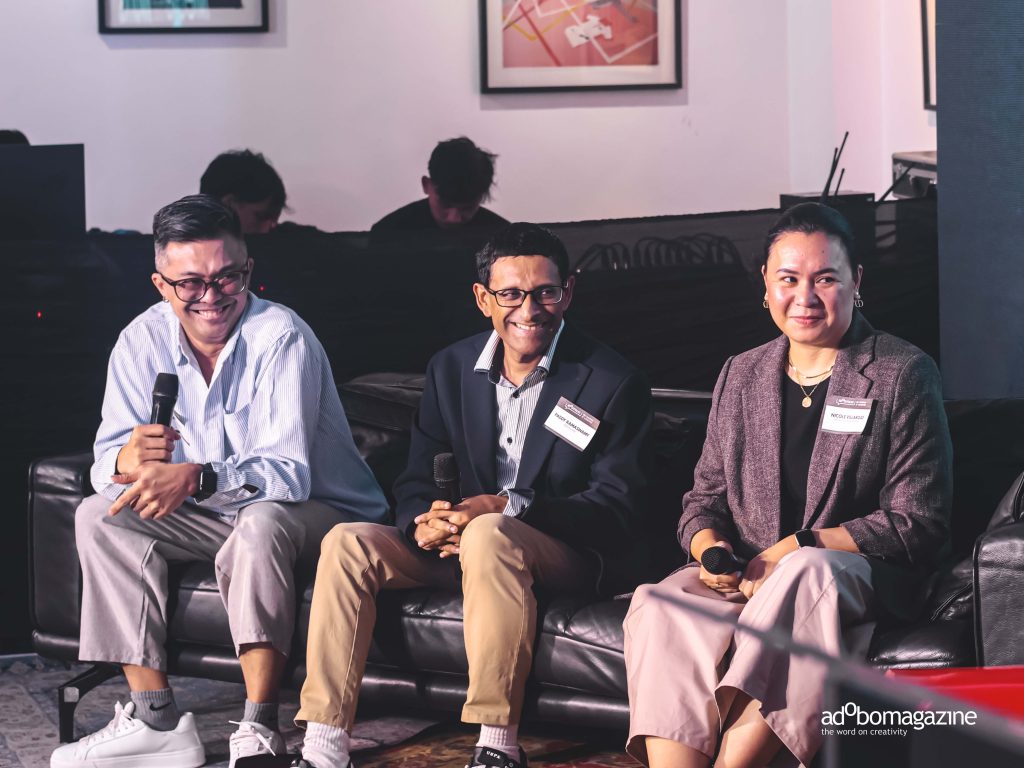
Analytic Edge Managing Director for Southeast Asia Padmanabhan “Paddy” Ramaswamy said that it is not simply about moving advertising budgets from one platform to another. Instead, it focuses on ensuring that each channel receives the right level of investment based on its performance and potential.
“Media sufficiency is not about pulling budgets from certain platforms and putting it on other platforms,” Patty explained. “It’s about identifying platforms which are under-invested and those which are over-invested.”
However, he warned of a common mistake in the industry, saying that there is too thin a spread on budget across too many channels. For him, rather than trying to be everywhere at once, it’s often more effective to focus on a few platforms, since allocating too little to any one channel may prevent it from achieving meaningful results.
“Instead of trying to spread your budget across all platforms, you’re probably better off picking a few platforms… because you’ll end up spending below minimum thresholds in certain platforms, which anyway is not going to give you a noticeable effect.”
Practically, Paddy said that marketers can begin experimenting with incremental changes rather than radical overhauls, demanding a new mindset around media planning.
“Maybe move 10% of the budget from a channel that is over-invested to a channel that looks like it’s under-invested and which has a good ROI. See the results, and then, if those results are moving in the right direction, continue to do that.”
“You can no longer take your media plan as a Bible. It has to be a bit more agile, continuously iterating on the go,” he added.
Understanding the consumer
PepsiCo Philippines Beverages Chief Marketing Officer Nicole Villarojo believes that a successful media strategy starts with one principle: understanding the consumer. For her, marketers must know that the platform should never dictate the approach.
“From a marketing standpoint, the conversations for me always start with a consumer first, versus looking just at media behavior,” she said.
Likewise, Nicole underscored two key factors that also shape media decisions, such as creative quality and distribution, implying that strong creative can make or break a campaign on a given platform.
“I will kill a media buying plan if I feel we don’t have the creative assets to do justice on that platform,” she said, explaining that without compelling creative execution, even the most strategically placed media may fail to engage the audience effectively. She also discussed the fundamentals of distribution among mass media.
“You cannot out-media your way out of bad distribution. So even if I put all the money and I am media-sufficient, if I am not in the store, it all doesn’t matter.”
For brands like PepsiCo, which rely heavily on nationwide sari-sari store networks, traditional channels still provide essential reach. “If you need the biggest reach, you’re still gonna get it from mass media… In rural areas, radio is still strong… I still sell my glass bottles in the farthest flung sari-sari store.”
At the same time, digital channels create opportunities for incremental reach — particularly among younger audiences.
“Thinking about incrementality of reach is really important. If you’re attracting the same kind of consumer and at the same behavioral touch point, you’re probably duplicating too much of your reach already.”
Moreover, Nicole delves into the creative shift toward short-form content. For her, short-form video is now central to many campaigns, forcing marketers to rethink how they develop creative assets.
“Today, short-form content, I’m asked to do a 6-second ad. It drives the importance of creativity to drive your ROI on top of your media efficiency and sufficiency.”
The change also affects how campaigns are conceived from the start. Rather than adapting TV-first ideas for social platforms, some marketers design stories for mobile viewing environments from the beginning.
“I think it has challenged us from the beginning, especially in our creative thinking. The fragmentation of consumer consumption demands a lot of agility — not just in media buying, but also in production.”
Trust and authenticity are reshaping media investment
As digital platforms continue to dominate the media landscape, creators and the communities they cultivate are becoming central to marketing strategies.
According to Rain Balares, Market and Product Lead and Client Leadership and Practice Development Lead for WPP Media subsidiary GOAT APAC, the key distinction between creators and traditional advertising lies in trust.
“One main difference between creators is that they are able to command trust that’s very different from a billboard that is quite impersonal. With the Creator, especially now on TikTok, the creators are starting to become much more, much more natural. They’re using the content spaces that they are accustomed to doing. And what’s very interesting is that when we work with the creators, it’s now about relevance over resolution,” he explained.
“It doesn’t matter if the creator does the content in the confines of their home, or if there is a rooster you can hear in the background; it only fuels the relationship.”
For Filipino audiences, per Rain, this relatability often translates into social proof. “In the context of Philippine culture, it’s like ‘Ginagamit pala niyon,’ and therefore it creates that sense of community with the creator.”
Hence, this shift is prompting marketers to rethink media investment itself. “The future media mix will always depend on where the trust is. Budgets will now be called content and community budgets,” Balares noted.
The power of combining old and new media
Despite TikTok’s strong performance, the conversation around media in the Philippines never framed the future as a battle between traditional and digital channels. Many brands are realizing that the strongest results come when both work together.
“There’s a lot of media synergy at play. For example, when TV ads run alongside TikTok campaigns, it delivers a much greater incremental lift,” Paddy said. Television, in particular, continues to hold a unique cultural role in legitimizing emerging talent.
This also rings true for Rain.
“What TikTok makes stars, TV anoints them,” he said, highlighting a shift from thinking in silos toward leveraging the complementary strengths of each medium. Digital platforms excel in engagement and precision, while television remains a trusted amplifier that reaches mass audiences.
Nonetheless, as platforms, formats, and consumer behaviors continue to evolve, flexibility has become essential in brand marketing and advertising. Brands can no longer rely on rigid annual plans or fixed budget allocations; strategies must adapt continuously as performance data and consumer behavior shift.
Nicole captured this mindset, noting, “Your 10% is your play money. If it burns, it burns, and you won’t get fired. And that is okay, you have to have a bit of a budget to play and learn.”
This approach reflects a broader transformation in how FMCG brands invest in media in the Philippines. Television still delivers mass reach, particularly outside urban centers, but digital platforms — especially TikTok — are emerging as powerful ROI drivers with significant growth potential. At the same time, creator ecosystems are reshaping how audiences trust and discover brands, making it clear that media plans must evolve continuously rather than remain fixed.
Ultimately, in an increasingly fragmented media environment, every marketing peso is presented with more possibilities. Brands that can balance data, creativity, and cultural understanding will succeed — ensuring that every investment reflects how Filipinos actually live, watch, scroll, and buy.
READ MORE:
TikTok Shop crowns first ‘Live to Shine’ winner, champions grassroots creators
TikTok, DepEd unite to strengthen digital literacy among Filipino teachers
Insight: Advertiser spend on TV and social media is twice as high as daily consumption