

If there was a defining idea that emerged from the opening day of MAD STARS 2026, it was this: creativity earns its place when it solves something real.
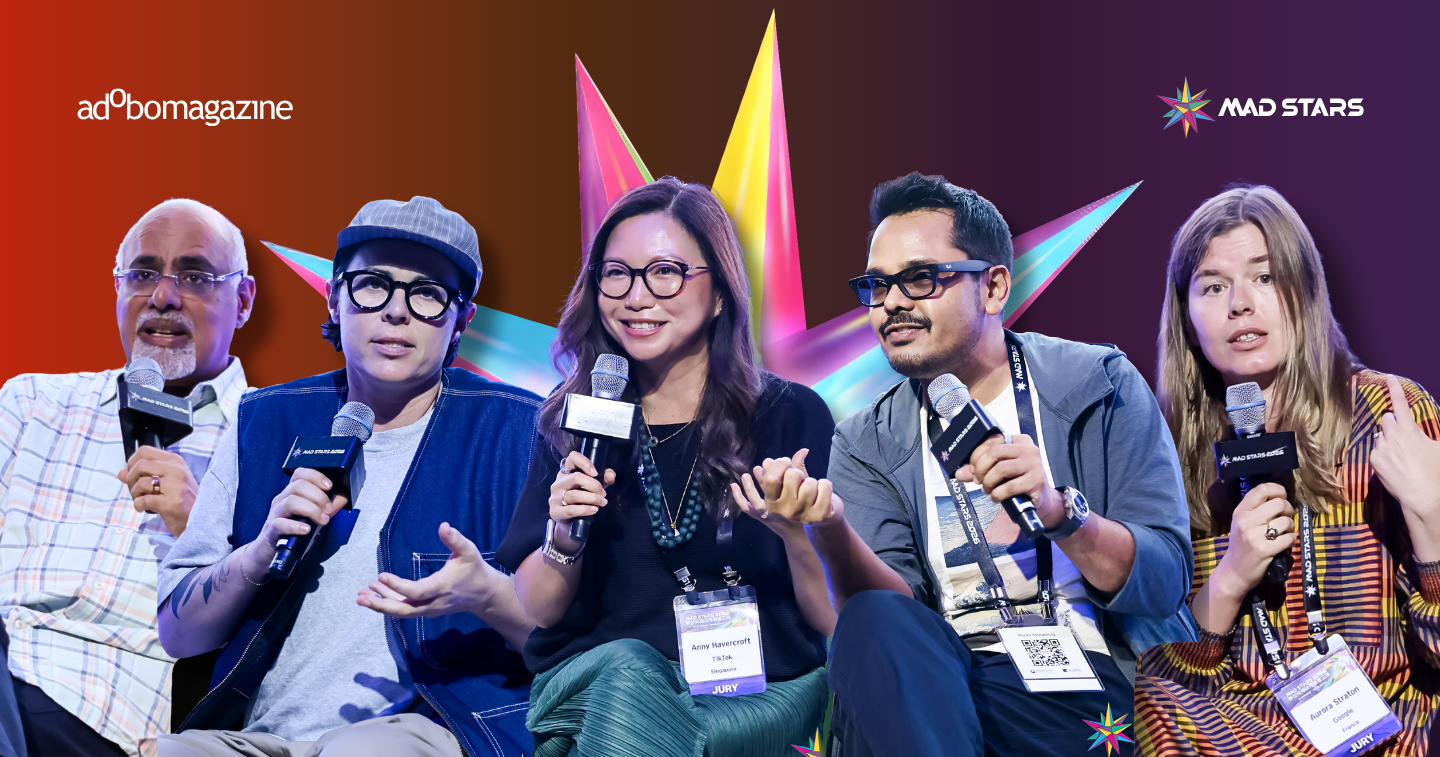
That philosophy shaped “Conversation with the Executive Jury,” one of the festival’s opening highlights, where five global creative leaders unpacked the work that lingered with them long after judging had ended. Moderated by Campaign Brief Asia Publisher and Editor Kim Shaw, the session brought together Sandipan Bhattacharyya, Chief Creative Officer at Monks; Raja Rajamannar, Senior Fellow and former Chief Marketing & Communications Officer at Mastercard; Anny Havercroft, Global Head of Product MarComs at TikTok; Tara McKenty, Chief Creative Officer at AKQA; and Aurora Straton, Creative Lead at Google.
Their selections varied across categories and markets, but they pointed to the same shift in creative excellence. The work that stood out wasn’t designed to chase attention. It addressed tangible business, cultural, and human challenges with insight, empathy, and purpose.
Culture as strategy
Bhattacharyya opened the discussion with “The Giant” by Ayudhya Capital Services Co., Ltd. and LEO Bangkok, a campaign built around a distinctly Thai cultural insight: unexpected financial burdens can feel like bad luck literally falling from the sky. The film transforms that familiar anxiety into a surreal yet strategically sharp reminder to secure a Personal Loan card before financial emergencies strike.
“Financial services is a tough category to stand out in, and the standard for humor within it is incredibly high,” Bhattacharyya said. “It’s absurd on the surface, but the more you watch it, the more strategic it becomes.”
Rajamannar’s choice, “Humanity Chain” by ForteBank and Progression CA, similarly found power in a universal emotional truth. Inspired by a real viral moment in which strangers formed a human chain to rescue a dog, the campaign immortalized the act through an interactive bronze sculpture, reinforcing ForteBank’s effort to forge deeper emotional connections as it expanded into retail banking.
“They took a moment of empathy and mutual support and memorialized it in bronze, creating something truly timeless,” Rajamannar said. “The theme is so universal that no matter where you’re from, you can’t help but connect with it. It leaves a lasting impact.”
The Philippines also found its way into the conversation through “Safetynovela” by Philippine Airlines and BBDO Guerrero. Selected by Havercroft, the campaign reimagined the routine in-flight safety demonstration by borrowing the emotional language of Filipino telenovelas, using familiar actors and melodramatic storytelling to improve passenger recall of safety instructions.
“The team tapped into culture to solve a very dry, functional problem,” Havercroft said, noting how the campaign transformed mandatory safety messaging into entertainment that audiences willingly engaged with and discussed.
Innovation beyond communication
Beyond storytelling, the Executive Jury also highlighted projects that extended creativity into product design, systems thinking, and business innovation.
McKenty singled out “TileChalk” by DBL Ceramics Limited and POP5, an initiative that converted ceramic manufacturing waste into non-toxic chalk. The solution simultaneously tackled industrial waste while creating opportunities for Bangladesh’s struggling chalk industry.
“Instead of just landing in the traditional space of communication, the agency saw this waste issue and stepped in to intervene,” McKenty said. “It solves a problem for one industry and consequently for another, empowering people to make an ethical choice. This is true APAC innovation that can be scaled to the world.”
Straton closed the session with “Radio Time Machine” by Nichii Gakkan Co., Ltd. and TBWA\HAKUHODO Inc., an AI-powered reminiscence therapy device for people living with dementia. Combining large language models and AI voice synthesis within the familiar form of a vintage analogue radio, the project demonstrated how technology can become most powerful when it quietly recedes into the background.
“This is user-first thinking, in the content and in the design,” Straton said. “What excited us most was the invisible technology. Without AI running quietly underneath it, this experience wouldn’t exist, but it never once feels like technology.”
A broader definition of creativity
Together, the five case studies reflected an evolution in how creative excellence is being evaluated. Strong ideas no longer rely on compelling storytelling alone; they build products, solve operational problems, strengthen communities, and create experiences where technology serves people rather than competing for attention.
The selected works, alongside this year’s finalists, are currently on display at the MAD STARS exhibition at SIGNIEL Busan. Running until August 28 under the theme “AMPLIFY,” the festival will continue with its networking event on August 27 before culminating in the 2026 Awards Show on the afternoon of August 28, where this year’s winners will be announced.