

Humor is something we all need in our daily lives — it lifts our spirits and gives us a much-needed release after a long, stressful day. A good laugh helps take the edge off our responsibilities and helps put things in perspective. It’s no surprise, then, that comedy has long been woven into Filipino pop culture, embedded in the movies we watch, the television shows we follow, the books we read, and even the advertisements that capture our attention.
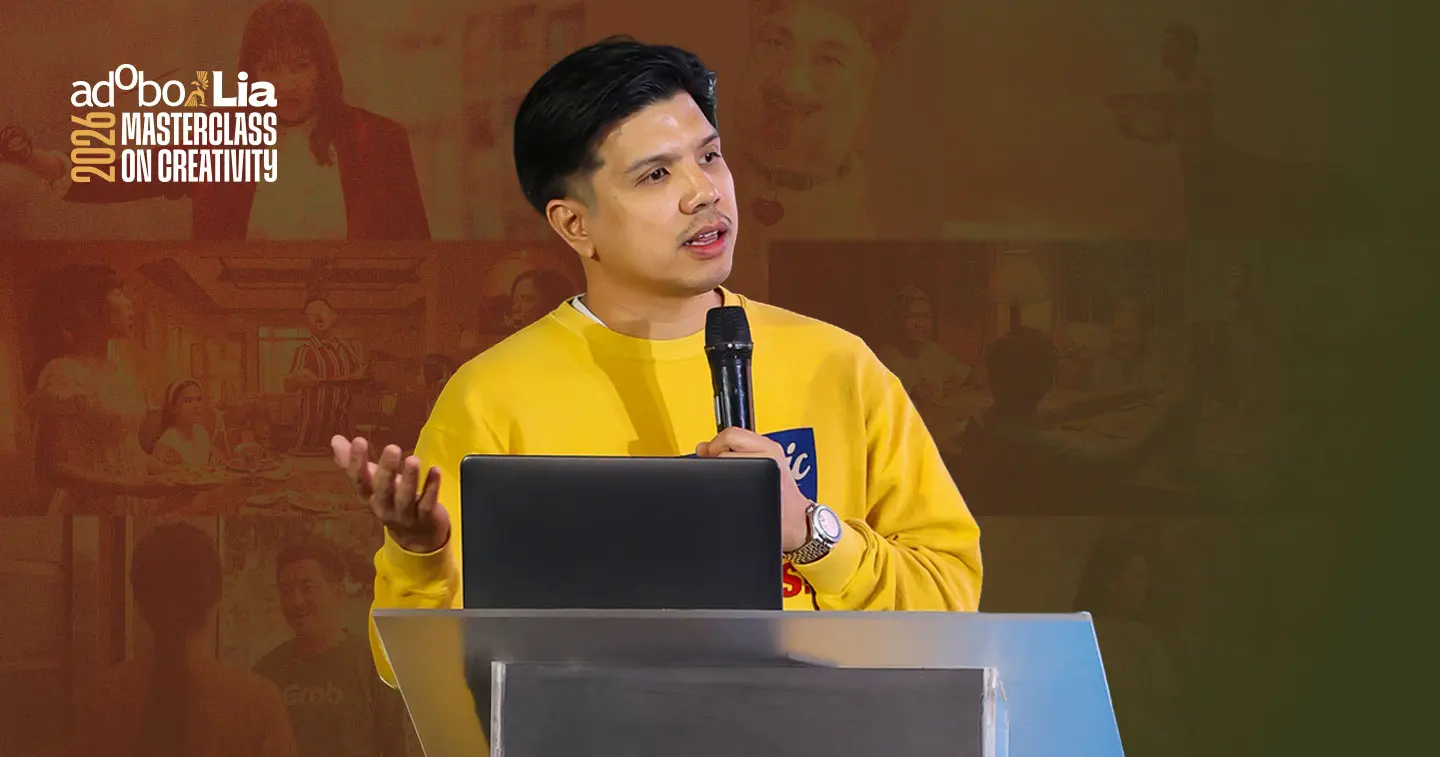
During his talk “Humor with Intent: Crafting Comedy in Film and Advertising” at the recently held adobo LIA Masterclass on Creativity, Marius Talampas, Director at Arcade Film Factory, illustrated how “kalokohan” (fooling around) can be harnessed and then elevated into a rigorous cinematic craft. At the heart of his philosophy is the idea that humor isn’t just about making people laugh—it’s a strategic tool for building connection and driving brand memorability, which requires cultural precision.
Humor as a sales tool
Marius believes that humor is the fastest way to lower a viewer’s defenses. When a brand makes someone laugh, the relationship between the brand and the audience shifts from a cold transaction to a warm connection, which makes the “hard sell” feel lighter.
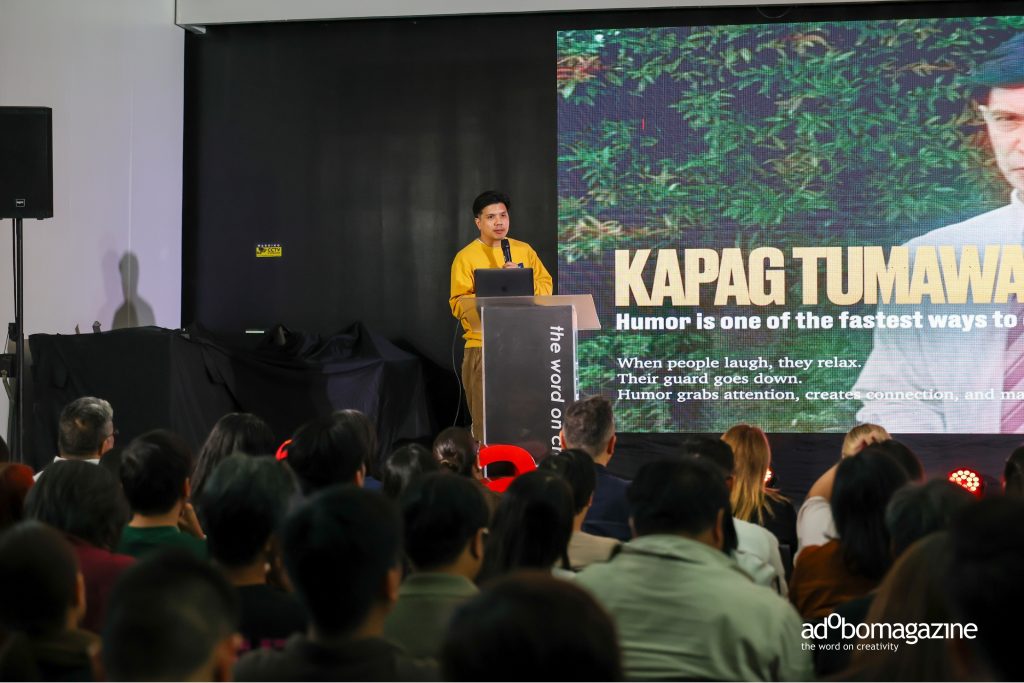
“If nakakatawa yung material mo, mas papalapit ka dun sa audience mo. Pag tumawa sila, mag-rerelax sila and pag nag-relax sila, mas madali na silang bentahan,” he said. (If your material is funny, you would connect to the audience. If they laugh, they will relax, and if they relax, it’s easy to sell them something.)
The power of using inside jokes
Although drama and action can be universal, Marius argues that comedy is most effective when it’s hyper-local. For him, the best jokes are rooted in shared experiences — ones the audience instantly recognizes, without needing any explanation.
One example he highlighted was GIGIL’s award-winning campaign, “Balot,” for RC Cola Philippines, which tapped into the distinctly Filipino inside joke of “Sharon”— the habit of taking home leftovers from a party. In the commercial, a mother doesn’t just bring home food; she takes the joke to the extreme by bringing home a clown, a singer, and even the person celebrating his birthday.
“Hindi mo na siya kailangan i-guess, gets na ng lahat. For me, pinaka-importante sa comedy is connected nga dun sa shared experience,” Marius said. (You don’t have to guess it, everybody gets it. For me, the most important thing in comedy is being connected to the shared experience.)
The script as a film craft
Comedy is a great starting point, but as Marius argued, “the comedy only works when film craft delivers.” This means the director must also be involved in the writing process. To him, a script isn’t just dialogue; it is the blueprint for the visual rhythm that makes or breaks a joke.
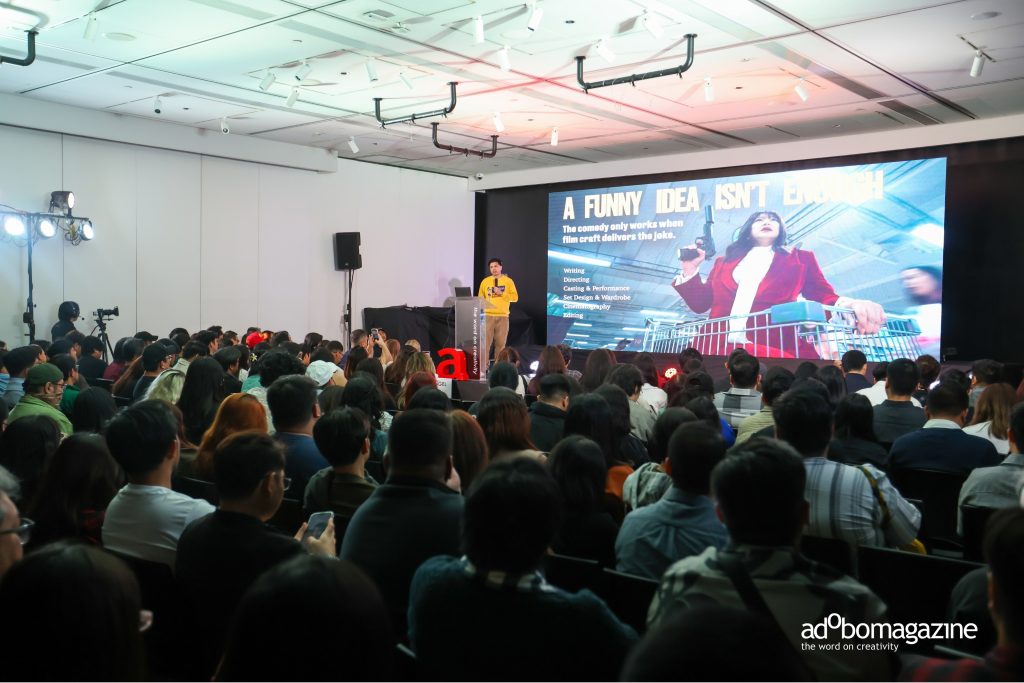
“The best comedy directors are also comedy writers. Ideally, the director tina-touch yung writing,” he said.
Marius recalls writing the script and directing his first movie. For the second one, he added to his contract that he would create the final draft of the script. After working through ten versions, he refined the last revision to ensure his humor translated clearly and effectively on screen.
Integrating the brand into the joke
An advertisement fails if the audience remembers the joke but forgets the product. For Marius, the solution is to make the product integral to the narrative, ensuring it is the reason the joke exists rather than an interruption.
“If the humor and the brand are disconnected, people remember the joke but forget the product,” he said.
Another example he presented was the “Safetynovela” campaign of BBDO Guerrero for Philippine Airlines, in which a traditional airline safety video was transformed into a Filipino telenovela. The project proved challenging for Marius, as many safety mandates had to be seamlessly embedded into the narrative.
“I think ‘yung pinaka-effective way to present your products is to make it part of the narrative,” he said. (I think the most effective way to present your products is to make it part of the narrative.)
Marius closed his talk by emphasizing that great comedy advertising begins with cultural insight and becomes truly powerful when the strategy for presenting the product or brand is clear.
In the end, humor is more than just a punchline; it is a blend of cultural empathy, disciplined film craft, and strategic storytelling. By making the product or brand an inseparable part of the narrative, creators can build a lasting connection that resonates after the laughter fades.
READ MORE:
GIGIL, Leo Manila score Silver and Bronze at Spikes Asia 2026