
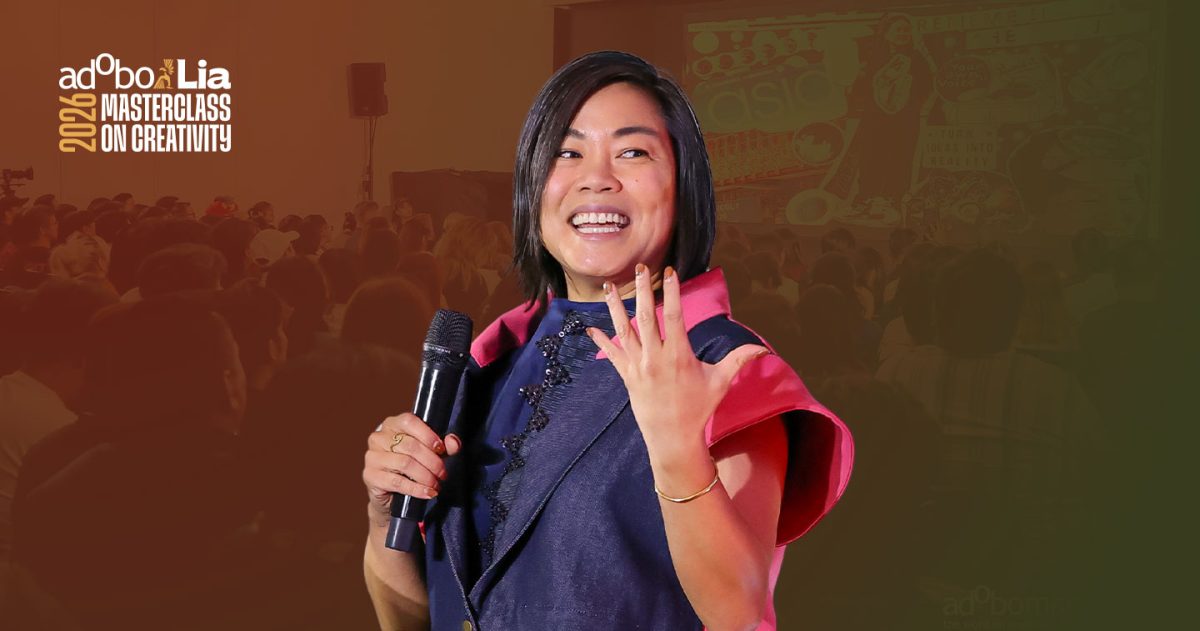
In an age of automation, where ideas can be generated in seconds and scaled infinitely, true value lies elsewhere — in perspective, in authorship, and in the ability to create meaning. Beyond the noise of machine-made content, creativity becomes something more deliberate and more human.
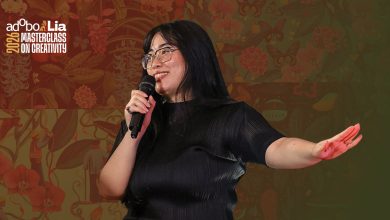
This is what Stories & Strategies Senior Director Sharon Panelo highlighted in her keynote, “Artful Intelligence,” at the adobo LIA 2026 Masterclass on Creativity held at the Ayala Museum on Tuesday, March 17. With a career that spans global agencies like McCann and The Martin Agency, and now as a Creative AI professor at Pratt Institute, Sharon brings a perspective shaped by both technological expertise and cultural insight.
Currently back in Manila for a creative residency, she draws from her family ancestry and from precolonial folklore, exploring how storytelling can evolve without losing its roots. It’s this intersection of tradition and technology that defines her thinking, and ultimately, her challenge to the industry.
“When we look at AI as a tool, I really see artful intelligence as the advantage,” she said.
Throughout her talk, Sharon addressed the tension surrounding artificial intelligence. In her experience teaching at Pratt, fear is the most common response of creatives to AI’s rapid rise.
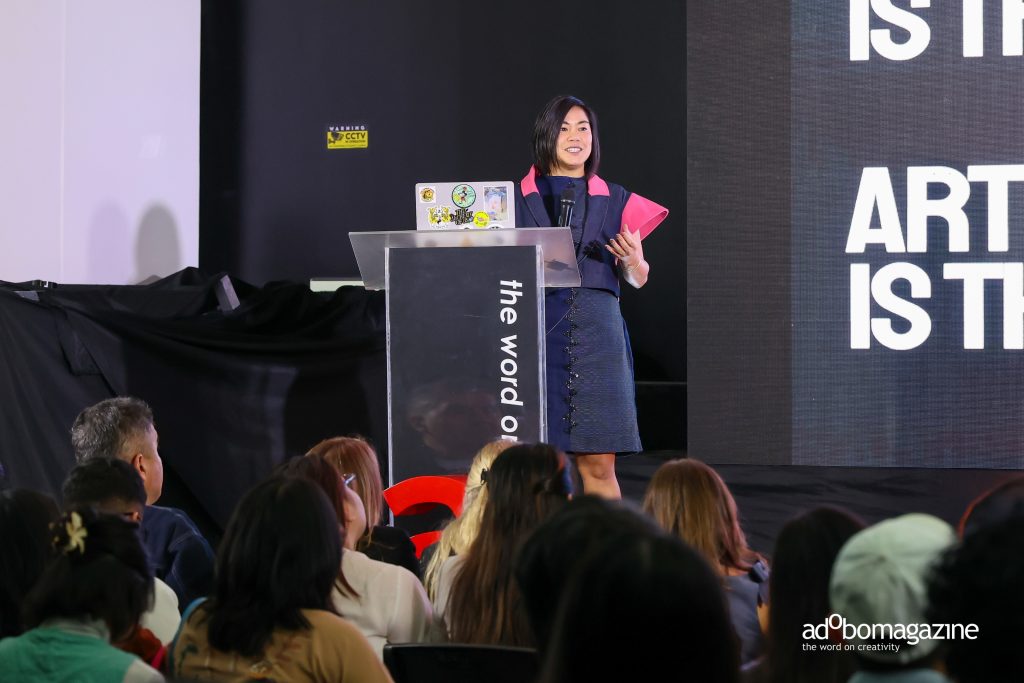
“The number one emotion that I feel teaching the AI course at Pratt on creativity is fear. There’s a lot of fear that AI will take our jobs, that it will be outsourced.”
But rather than reinforcing that narrative, she offered a different perspective — one grounded in the belief that creatives already possess the skills that matter most.
“I’d like to counter that fear by showing my own experience in this industry over 15 years has shown me: that you already have what is going to become most valuable in our industry over the next couple of years,” she explained.
“It’s not even that you can do what AI can’t, you really just are,” Sharon added, highlighting that creativity isn’t about competing with machines nowadays, but about recognizing what has always been uniquely human.
Building on what humans already do best
Sharon went on to explore the three roles she believes creatives must lean into: culture shapers, data storytellers, and systems thinkers. For her, these are not emerging skills, but enduring ones or areas where human intuition, context, and lived experience remain essential.
“These are three core skills that as humans, we are so much better at than the robots,” she said.
The Creative AI professor also suggests that creatives shift their focus toward interpretation and narrative rather than getting lost in analysis or production.
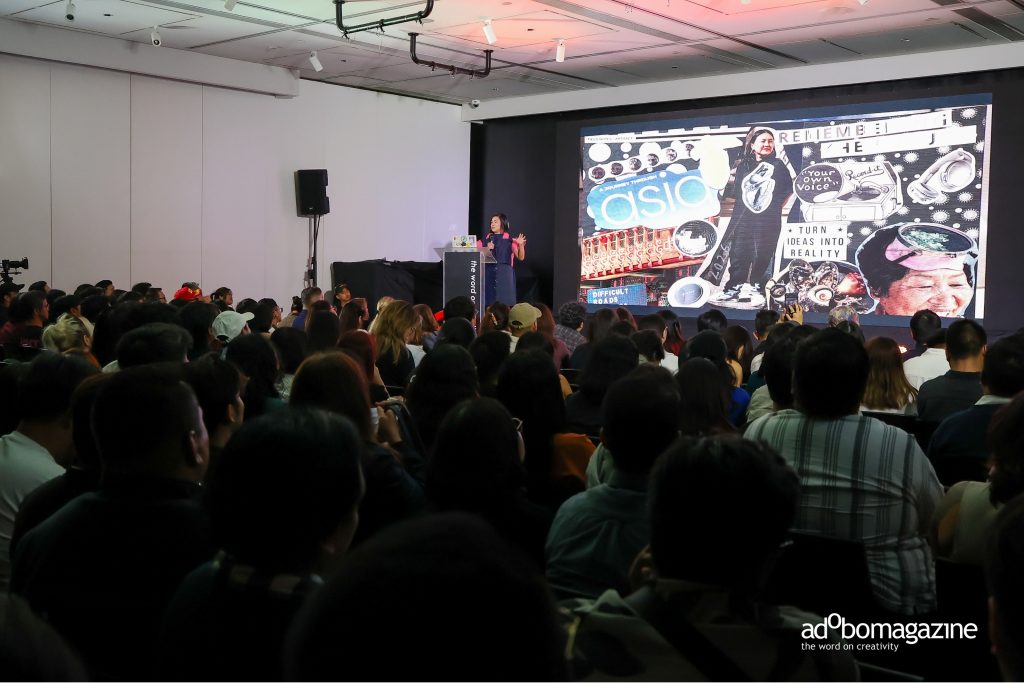
“You are now data storytellers, and you can now outsource the analysis to the bots,” she said.
“AI can do all of the generation, the analysis, the scaling. But you remain the expert on shaping culture, on taking data and turning it into a story that moves people,” she added.
Still, Sharon was clear-eyed about the risks. The accessibility of AI tools, she noted, has led to an overwhelming flood of low-quality, indistinguishable content. For her, the problem isn’t the technology, it’s how it’s being used. When creatives rely on AI too early in the process, they risk losing the very thing that makes their work distinct.
“My rule before you go to ChatGPT or Claude, I force myself to write the idea by my own hand. That is how I know that I have made a human idea first, and I didn’t just type it in and get some AI slop back,” she shared.
Sharon then illustrated this balance through a personal creative experiment — an AI-assisted music project built around an alter ego. Despite not speaking Spanish, she used AI tools to translate lyrics, generate visuals, and produce sound.
“You should see the prompt,” she said of her work with Suno AI. “It’s a poem in itself. It gets so deep and so detailed, and only a human could have written this prompt.”
Ultimately, Sharon believes that creatives should not resist AI but should reclaim authorship within it. As tools become more powerful, the responsibility to stay grounded in human perspective becomes even more critical.
“For all of us, finding that balance from artificial intelligence to artful intelligence is about how you weave both together, but you don’t lose yourself as the soul of it,” she said in conclusion.
READ MORE:
Marius Talampas shares why humor with intent is an effective creative strategy