
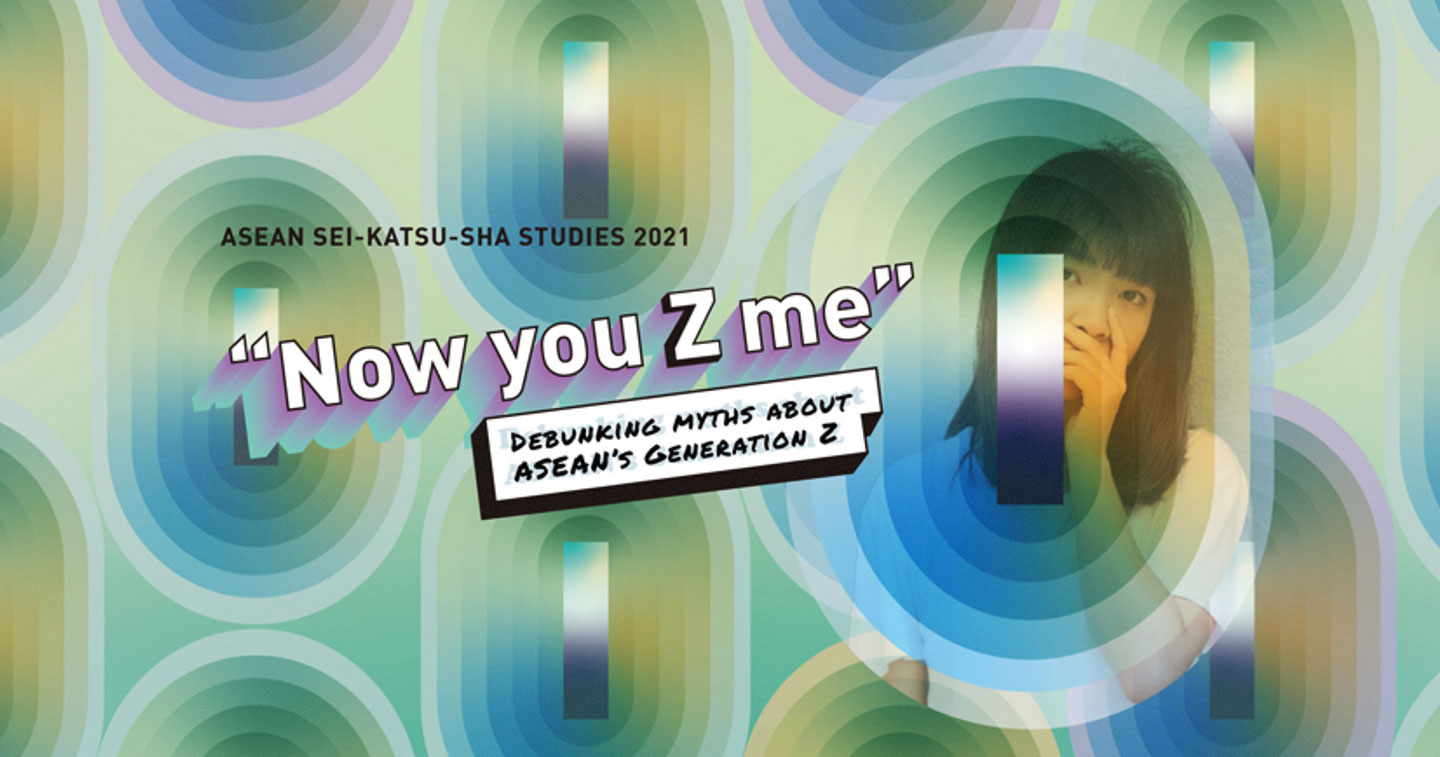
TOKYO, JAPAN – Hakuhodo Institute of Life and Living ASEAN (HILL ASEAN) held ASEAN SEI-KATSU-SHA FORUM 2021, announcing findings from surveys and research into the attitudes and behavior of ASEAN sei-katsu-sha—Hakuhodo’s term for the holistic person—and hints for marketing. The topic was “Now you Z me: Debunking myths about ASEAN’s Generation Z.”
In ASEAN, “Generation Z” refers to those born 1997–2012 and ranging in age from 9 to 24 in 2021 (Note 1).
Gen Zers make up a relatively large proportion of the ASEAN’s population. Estimated at 24% of the population, it is a generation that has an impact on society and the economy.
Findings from quantitative and qualitative surveys in six ASEAN countries (Note 2) uncovered that as ASEAN’s Gen Z encounters information and news from around the world via their smartphones and dispassionately take a bird’s-eye view of the words and deeds of previous generations, they want to solve the social challenges caused by previous generations by valuing themselves, their families and others around them equally and harmonizing with them while recognizing each other’s differences.
HILL ASEAN has dubbed these Gen Zers who value harmony and synergy SynergiZers, and analyzed their personal connections, life values and media attitudes and behaviors. Findings from this research are available on the HILL ASEAN website. This report covers some of the findings.
Note 1: The generations mentioned in this study follow Pew Research Center definitions
Note 2: Countries studied: Thailand, Singapore, Indonesia, Malaysia, Vietnam, Philippines
The SynergiZers
A generation that creates synergies within harmony. Balancing various aspects of themselves (work, dreams, passions, mental health, economic stability, among others), they create synergies between themselves, their families and society in the hopes of influencing the world and people around them in a positive way.
■ SynergiZer characteristics
Personal connections
・Generally, ASEAN Gen Zers were raised with casual relationships with their parents, have a lot of freedom in their lives, and were encouraged to have their own opinions. 46% agreed with the statement “I was encouraged to question things, form arguments, and have a point of view.”
・At the same time, 63% agreed that they were “Encouraged to follow traditions and norms set by others.” They emphasize following traditional values to maintain good relations with society and those around them.
・67% agreed that “Success is making family and friends proud.” They strongly retain the ASEAN family-first ethos. It is clear they value harmony with those around them a great deal.
Life values
・86% agreed with each of the statements “Life is about fulfilling responsibility” and “Life is about self-love.” They value both themselves and their families. They think those around them can’t be happy if they are not happy.
・74% agreed that “Success is being happy with who I am despite what others say,” indicating that high positions and making money are not the only “proof of success” to them. In terms of their careers, too, one characteristic of this generation is that many can be said to emphasize their own satisfaction and seek to gradually advance up the ladder by setting achievable goals.
Social media
・They understand the rules (how to behave) on the various social media platforms, and keep distinct identities for each in line with these. But none of these identities is false; they’re all their real selves. 82% agreed with the statement “When posting on social media, I’m very conscious about my character,” and 68% agreed with “I want to show my natural self on social media.”
・Compared to older generations, they prefer posting in formats that can be enjoyed intuitively and sensorially, like Stories (Note 3) and memes (Note 4). The top three content they prefer to view on social media were 1. Text and photos, 60% (Generation Y: 65%); 2. Videos, 52% (Generation Y: 49%); and 3. Stories, 46% (Generation Y: 41%).
Note 3: Short video content that disappears in 24 hours. Available on Instagram and Facebook
Note 4: Photos and videos with strongly topical comments
Interest in social issues
In interviews that were conducted in conjunction with our quantitative survey, while some said they had concerns about the future, many said they wanted to work on social issues.
Gen Zers live in a society with countless issues caused by previous generations, including economic and political concerns, inequality, human rights issues and COVID-19, to name a few, but it appears that they are keen to solve these social issues together with their friends. (See “Desire to solve social issues” in the reference data on p. 6 for further details)
Brands
・85% agreed they were Willing to pay 10% more if a brand contributes to social issues in the community. They have high expectations of brands and look to them to fulfill many roles.
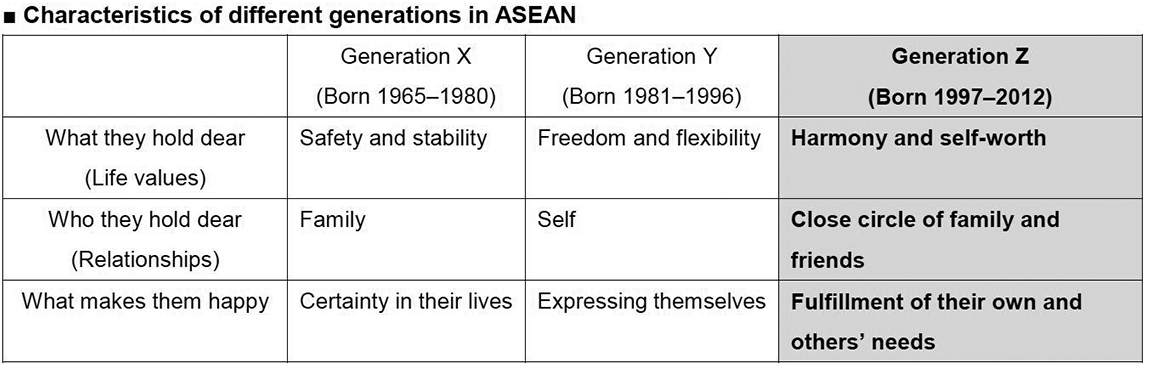 Note: Characteristics of Generation X and Generation Y excerpted from Hakuhodo Institute of Life and Living ASEAN’s ASEAN Millennials: One Size Fits All?, 2017
HILL ASEAN will continue to support the marketing activities of companies in ASEAN through research into the perceptions and behavior of ASEAN sei-katsu-sha. Findings of this study, an explanation of the research content and hints for marketing going forward can be found on a dedicated page on the Hakuhodo Institute of Life and Living ASEAN website: http://hillasean.com/