
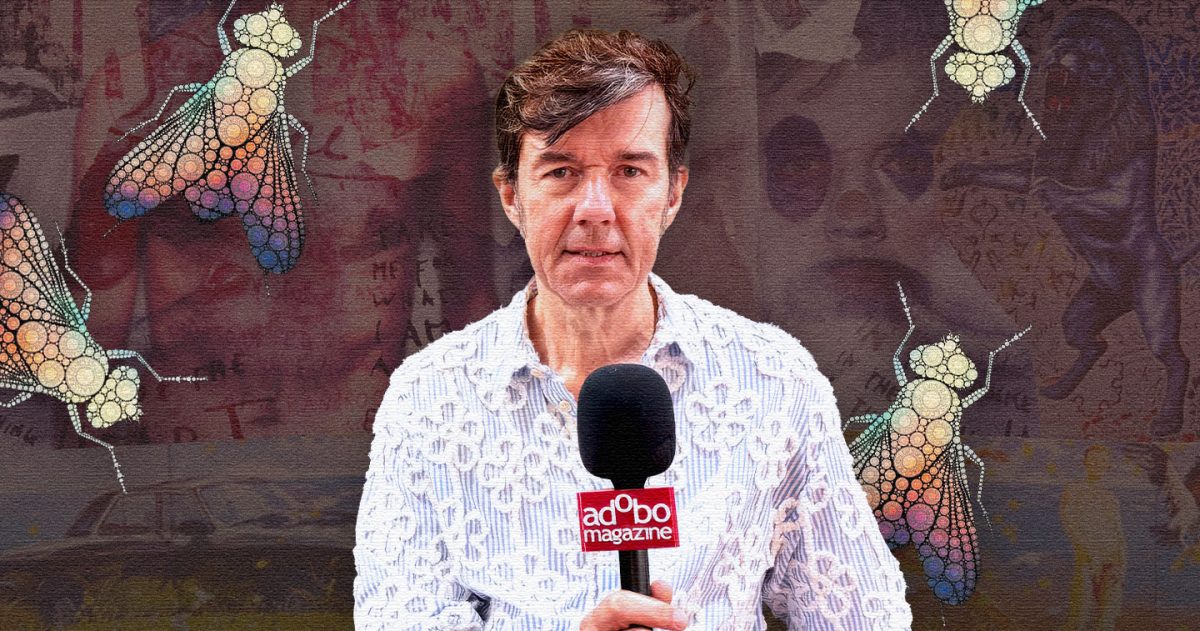
New York-based Austrian designer Stefan Sagmeister needs no further introduction. His reputation and philosophical, introspective take on creative thinking precede him. His decades-long career milestones and body of work have made him one of design’s most influential figures. An epitome of creative excellence.
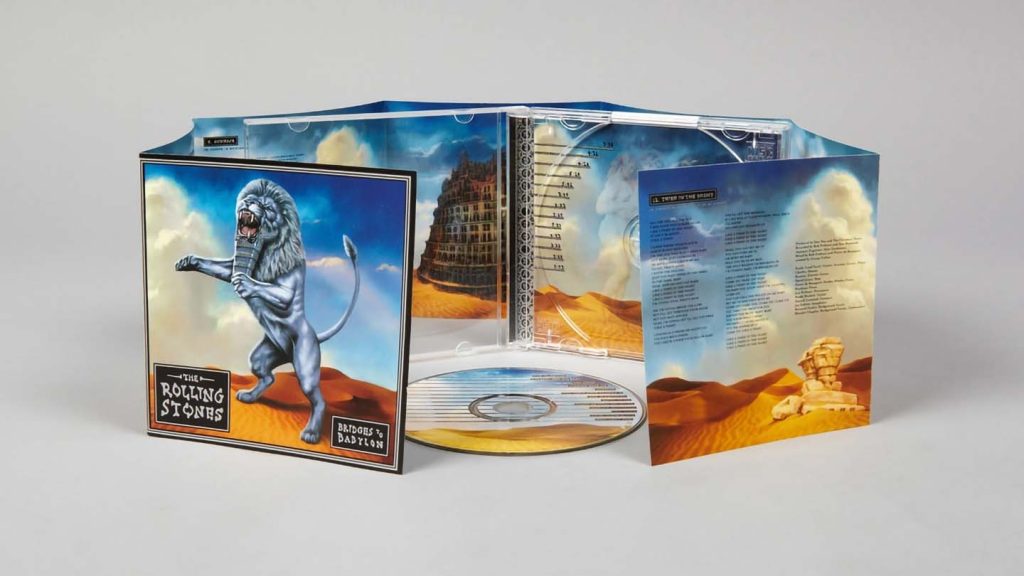
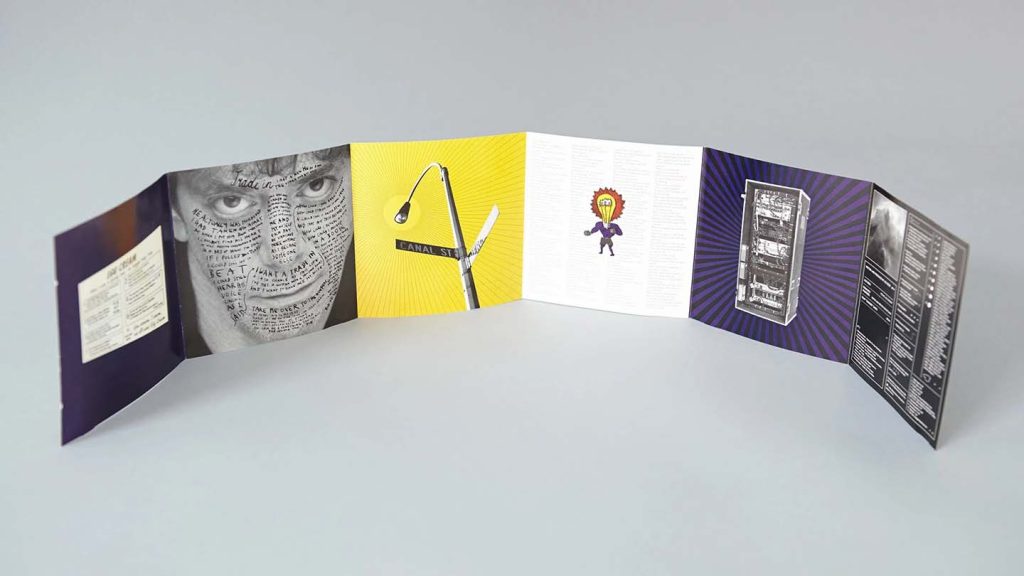
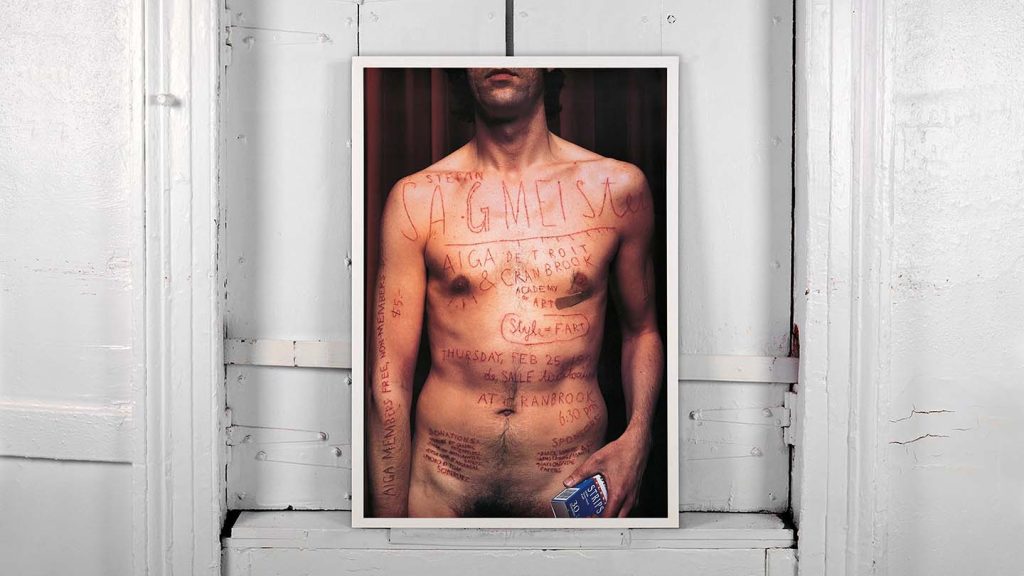
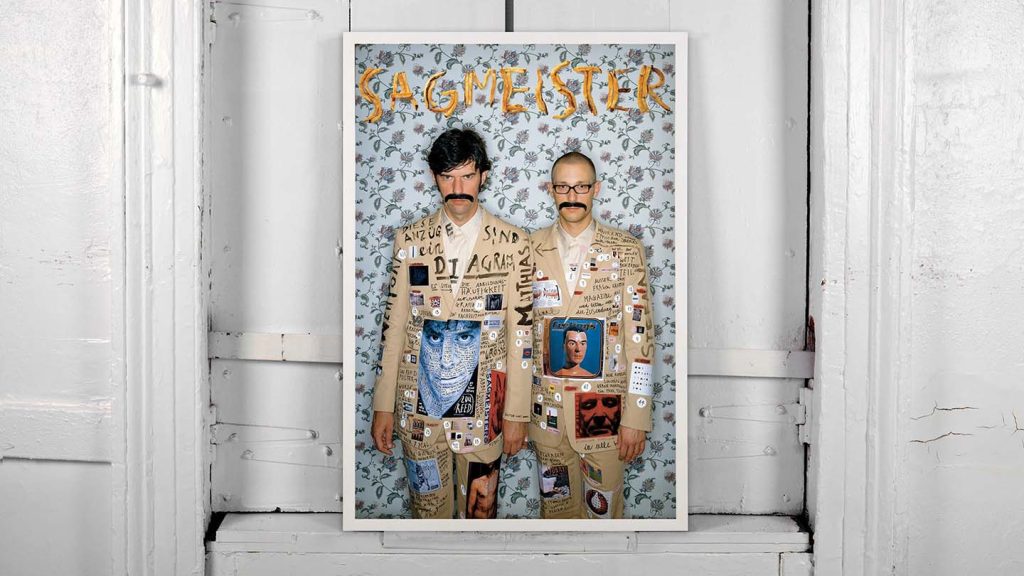
Stefan founded Sagmeister Inc., where he built a reputation for creating album covers for artists such as The Rolling Stones, Talking Heads, and Lou Reed. His love for typography often surfaces in his work — that album cover for Reed’s Set the Twilight Reeling, as well as the AIGA Detroit poster, are but two examples. And then there’s his big-brand commercial portfolio: Levi Strauss & Co, BMW, HBO, EDP (Energias de Portugal), The Guggenheim, and more. Add to that his books, exhibits, and films.
The devil is in the details. Stefan’s work stands out in a room of one hundred because it always comes across as highly experimental and radically creative, and as a form of self-expression, blending art, psychology, and philosophy—even if it is commercial. Need proof? Check out his brand collab with Levi’s and hear yourself mutter, “What the actual fuck?”
Suffice to say, his path to commercial success was long and eventful, so it’s a bit baffling to hear him say that he no longer walks that path.
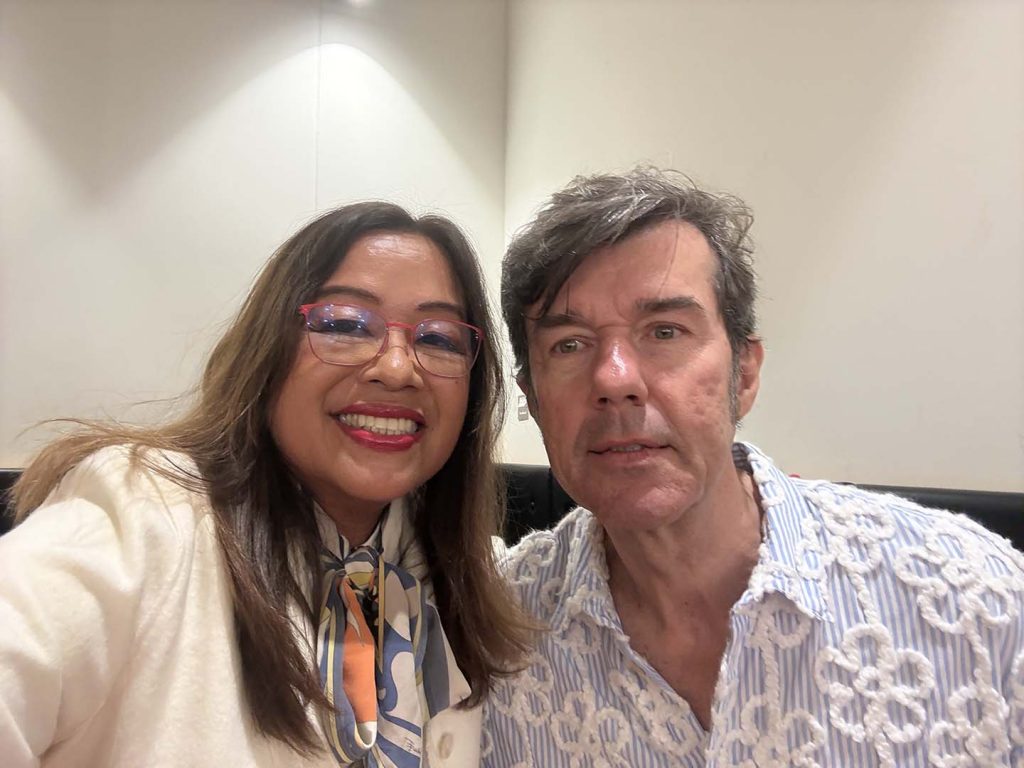
In an exclusive interview, adobo Magazine Founder, President, and Editor-in-Chief Angel Guerrero — in between the D&AD Design Awards sessions in London in May — asked the renowned designer, typographer, and artist which job title suits him best at this point in his career.
His response was immediate.
“I’m a designer, and I would say that, maybe unusually, I run a design studio that doesn’t do commercial work.”
He doesn’t miss commercial work at all. “Zero,” he said.
Not because he “savagely” hates it, but because he feels he believes he’s done his share.
He explains, “It was getting repetitive, and you know, just like album cover number 50 wasn’t as interesting as album cover number one, commercial campaign number 50 wasn’t as interesting, so I think I’ve done mine.”
He is, however, still happy to see other designers excelling at commercial work and recognizes how their work drives positive impact in the creative space — and yes, on humanity.
“It has a huge influence on how kids grow up, because you know you don’t have to go into a museum to see it,” he said.
Long-term thinking trumps short-term crap
In his studio, he and his team develop themes they themselves would find intriguing and use the language of design to create projects beyond the realm of promotion and advertising—work they hope will resonate just as strongly with their audience.
At the moment, that theme is “long-term thinking,” which, according to Stefan, is about looking at humanity and seeing that “short-term everything is crap, long-term everything is fantastic.”
He relates this to how people consume both social and traditional media and is alarmed by the observation that audiences are increasingly drawn to short-term content. This fixation on the immediate, he suggests, makes things, in general, seem worse than they actually are.
“The news is getting more and more negative behind this system, not because the world is getting more negative but because the system is getting more negative,” he lamented. “Because even print media, let’s say a daily newspaper, is very, very much reliant on their online version. Everybody there knows that what we click on and read — including myself — click on negative stories.”
Stefan believes that good things, in media or otherwise, need time to become actually good, and in that process, may lose their way or fall out of cycle as they try to materialize. When that happens, all that people see and consume is the short-term content that’s easy to produce.
“Now everything is about the second. It’s easy to see, for example, if you look at a weekly magazine, by design, it will be more positive than Twitter, simply because it can’t really go about the itsy-bitsy scandal that happened 20 seconds ago. It’s not interesting for them. It has to be at least the overview of a week.”
Stefan cautions against the repercussions of overly consuming short-term media, or what he simply refers to as “crap.” Citing US President Donald Trump’s “Make America Great Again” campaign as an example, he implies that having a bleak view of one’s circumstances makes one susceptible to false propaganda.
“You know, ‘Make America Great Again’ only works if half or more than half of the population thinks that things are really shitty and they used to be much better in the past,” he said.
Stefan diligently applies the principle of “long-term thinking” in his design projects, but doesn’t claim that his work can drastically alter the narrative or change people’s perceptions.
“I think I can offer a tiny bite of the carrot versus the gigantic stick that we eat every single day, by online and offline,” he said.
There is, after all, so much content being produced. It would be tedious and difficult to compete with all that noise. Stefan isn’t the type to bother, though. He will continue to do his own thing as he pleases, but beautifully — with his principles and values firmly in place.
“I try to make as big or as little of a difference as I can in pretty much all media.”
Finally, something good
As a designer who now uses the art scene as a platform for his work, Stefan is deliberate in using media that are “long-term” in nature. For a current series, he purchases centuries-old paintings at auctions, cuts them up, and adds new elements to create new artwork. These elements, he explains, when translated, are ultimately data visualizations that show many things that are much better now than they were a hundred or two hundred years ago.
Explaining what he did to a specific set of paintings from the 1800s — an extremely violent period characterized by relentless warfare, imperial expansion, and internal rebellion — he contextualizes his process: “I put new elements that look kind of like minimal art into it that stand out, stick out of that painting just slightly, that show how violence decreased.”
These paintings, alongside other works—paintings, sculptures, installations, and whatnot—will be part of “Finally, Something Good,” a forthcoming exhibition in Paris.
The works, however, are intended for exhibits in both museums and commercial art galleries. Although Stefan’s studio currently does not engage in commercial, brand-driven, or client-commissioned projects, it does need funding to operate, and proceeds from the sale of the reconstructed artwork make this possible.
Being great vs. being good
Stefan believes that design has always evolved in step with technological advancement. He cited the Romans, the Serif font, the Gutenberg Press, desktop publishing, and artificial intelligence as examples to illustrate his point.
He does acknowledge, however, that such advancements may not always be ideal for artists or designers, or for creatives in general.
“Right now, we are in a phase where it’s terrible, where basically people do use the technology to do the same shit they did 10 years ago, but faster and cheaper, and that’s super uninteresting.”
To him, the uncertainty of today’s creative climate makes it increasingly difficult to predict what lies ahead for designers. For creatives to thrive, he suggests adopting a generalist mindset — cultivating and demonstrating a broad range of knowledge, skills, and interests — rather than limiting one’s focus as a specialist. Everyone has to upskill and catch up.
Despite this acknowledgement, Stefan remains optimistic.
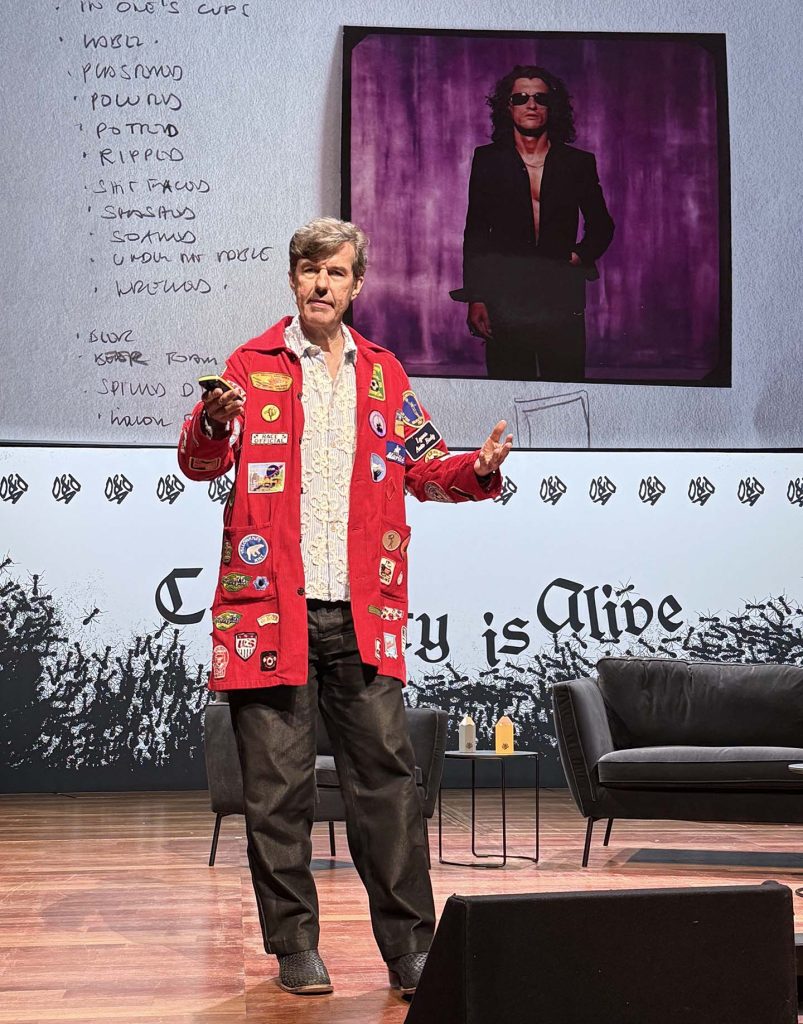
To him, more advanced, more modern ways of doing things do not necessarily render the old guard obsolete. He even pointed to the invention of the first practical camera in the 1800s — likely referring to George Eastman’s Kodak No. 1—as an example of how new technology often sparks fears that existing creative practices will disappear. Painting, many believed, was destined to die. It did not. As Stefan noted, some 50,000 artists continued to practice their craft at the time. More than a century later, painting remains very much alive, with demand for traditional and handmade art continuing to grow.
Stefan’s optimism overflows, and perhaps the reason lies in a simple yet powerful belief he articulated during the interview. Part reminder, part encouragement, he said: “Everything that’s good was developed by optimists. None of it was done by a pessimist. None of it.”
Thus, he remains excited about the future of visual culture and expresses it with such gusto.
“I would say that one of the incredible consequences of the fact that there are five million artists working today is that there is also an incredible amount of great work,” he said. “I’m absolutely convinced and know that more great work will be done. It’s going to be super fascinating to see what great work comes out of the new technology—so far not much—but I’m quite positive about that, too.”
This story was written by Jill Tan Radovan, referencing a transcription of an exclusive, in-person interview conducted by Angel Guerrero.
READ MORE:
The biggest threat to art direction and craft is not AI
In the age of AI and algorithms, the human POV is the real advantage
How ‘intra-tainment’ is changing the way audiences engage with entertainment