

The greatest challenge in digital is no longer simply getting people to watch, but making them care enough to remember a story, understand its significance, and take action beyond the screen.
For Erwan Heusaff, founder of FEATR, food offers a powerful entry point into that conversation. Behind every ingredient, recipe, and regional specialty are people whose livelihoods and cultural knowledge depend on being recognized and valued.
By documenting these stories, Erwan found ways to connect digital storytelling with the realities of running a business. It allows him to create opportunities for Filipino food traditions to reach wider audiences without losing sight of the communities that sustain them.
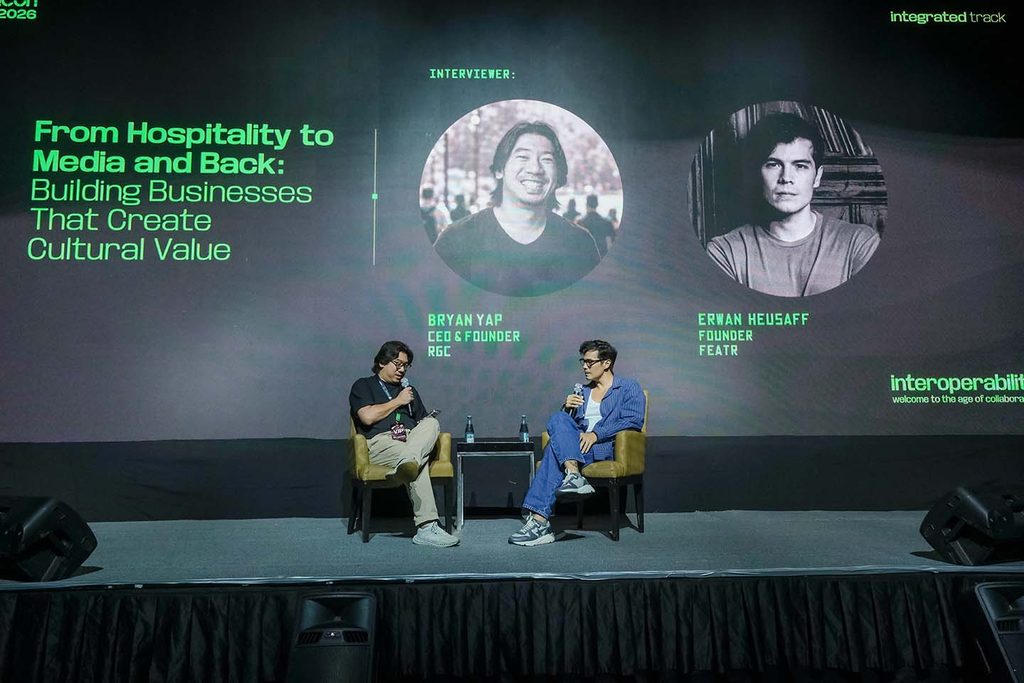
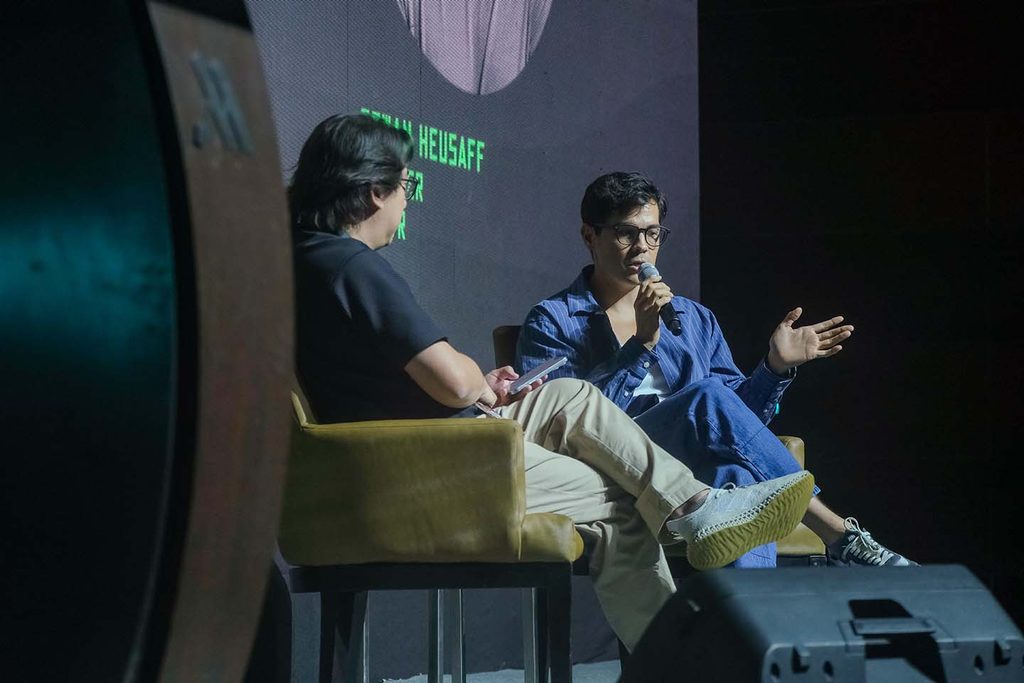
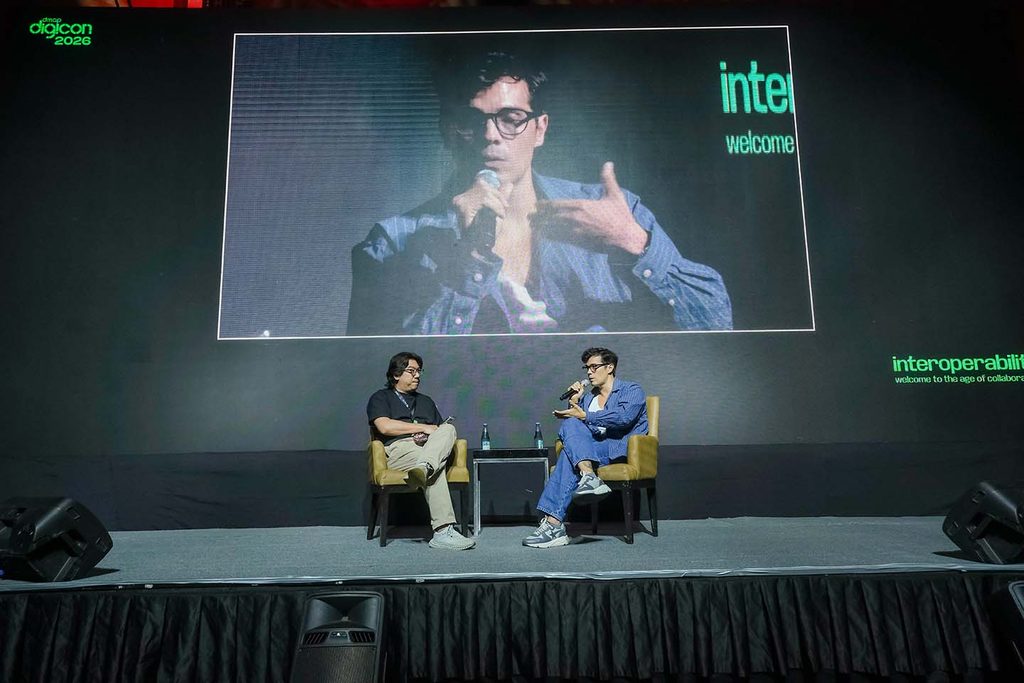
At Digicon 2026, Erwan sat down with Bryan Yap, Managing Director of Republiq Group of Companies (RGC), to discuss how his work across hospitality and digital media evolved into a model that brings together content production, cultural preservation, and commercial enterprise.
Erwan believes that storytelling becomes more meaningful when it creates value beyond visibility.
His journey into digital storytelling began in 2009 and 2010, long before content creation became a recognized profession. While based in Russia, he managed large-scale catering operations for oil rigs, mining camps, and business centers. His work revolved around feeding people, but it was not necessarily the kind of cooking he was passionate about.
Living alone in a place with limited cooking ingredients available, he began cooking for himself and documenting the process in videos. He shared recipes using whatever ingredients were available, and published his work on early online platforms such as Tumblr and WordPress.
At the time, the digital landscape was still taking shape. The distinction between a personal blog, an online publication, and a content-driven business had yet to become clear.
Erwan’s early videos existed alongside the internet’s lighter, more informal content. There was no established blueprint for turning online storytelling into a sustainable enterprise, much less one that could operate alongside a hospitality business.
“There were no conversations about what a content creator was or even what a YouTuber was.”
What connected his work in food and media, however, was the value he could offer people. Through hospitality, that value came from feeding them. Through digital media, it came from sharing recipes and giving the audience something they could recreate themselves.
The relationship between the two industries became clearer after Erwan returned to the Philippines and put up his own restaurants. Food was no longer simply something to serve. It was also a story to tell—one that could help the audience understand the people, processes, and cultural influences behind what they ate.
Making people care about stories behind Filipino food
For Erwan, one of the most significant food storytelling opportunities lies in helping the audience recognize the value of products and traditions they may have long overlooked. He illustrated this through FEATR’s work documenting the Philippine salt industry.
Despite the country’s extensive coastline, local salt producers have faced difficulty competing with imported products. Erwan cited a figure from the a time when approximately 96% of the salt consumed in the Philippines was imported. He pointed to an outdated regulatory framework dating back to the 1990s-era iodized salt debate, which he said had created significant challenges for traditional producers. The issue ultimately became part of a wider discussion about the future of local salt production.
FEATR began documenting salt-making communities across the country, showing the skill and labor required to produce different varieties of salt. These stories revealed an overlooked contradiction wherein a country surrounded by water had salt-making traditions struggled to receive recognition and market support.
The problem, Erwan explained, was not necessarily the quality of the product. It was the lack of awareness surrounding its value.
“How do you make people care? You kind of have to make stories and noise about it,” he said.
By showing how local salt was made and introducing the audience to the people behind it, FEATR helped bring the industry into a broader cultural conversation. The content then reached chefs and restaurants, some of which began incorporating locally produced salt into their menus. These businesses, in turn, introduced the ingredients to customers, creating new opportunities for consumers to understand and appreciate their origins.
The issue also gained wider public and political attention as discussions around the industry’s challenges continued. Nonetheless, Erwan was careful not to position FEATR as the sole catalyst for change, describing its work instead as a contribution to a larger movement.
“I’m not going to say that we were the catalysts that started this, but we contributed to the conversation as it was happening,” he said.
Moreover, making a story visible is not always an uncomplicated achievement. A viral video can bring attention to a small business or a traditional producer, but that attention can also create demands the featured individual may not want or be prepared to manage.
Erwan recalled approaching an older restaurant owner whose food deserved wider recognition, only to discover that she was ready to retire rather than expand her business. The experience reinforced an important principle for FEATR.
“We’re very careful in terms of talking to our subjects, and I think showing our subjects respect in that way is very key.”
This respect extends to the information included in a video. Some of FEATR’s stories may attract substantial online attention without providing a subject’s contact number, precise location, or address. These details are sometimes deliberately withheld when the person being featured does not want the sudden influx of visitors that online exposure might bring.
Erwan also acknowledged the risk of making documentary subjects feel exploited, particularly when outside organizations arrive to document local cultures without fully considering the consequences.
For FEATR, meaningful storytelling therefore begins with conversations about what the people involved actually want. The objective is to keep their stories alive, inspire others to appreciate their craft, and respect their right to decide how much visibility they are willing to accept. In an environment that often rewards maximum reach, this approach offers a reminder that responsible content creation must account for the people who live with the consequences of a story’s success.
Giving the Philippines’ diverse food cultures room to be seen
The Philippines presents a particularly complex storytelling challenge. Its many islands, provinces, and linguistic communities contain an enormous range of food traditions, ingredients, and production methods. Reaching these communities requires research, travel, and resources that cannot always be deployed everywhere at once.
To address this, FEATR approaches original programming in thematic seasons. Instead of trying to cover every province simultaneously, the team develops a selection of stories designed to represent different regions over time.
Erwan described the process as borrowing from the way agencies organize campaigns. The team plans its programming around a defined set of locations, balancing more familiar provinces with smaller or less frequently featured communities. Geographic and linguistic diversity also inform these decisions, helping the team avoid focusing it coverage on only the most accessible or recognizable destinations.
This structure makes the task of documenting Filipino food culture more manageable while giving the team a framework for sustained exploration. It also recognizes that cultural representation is shaped by what the audience repeatedly encounter. When certain places and traditions dominate the national conversation, others risk remaining invisible, regardless of their historical or cultural significance.
Taking cultural storytelling beyond the screen
As digital platforms become increasingly saturated with content, Erwan is exploring how stories can move from online discovery into physical experiences.
The challenge is familiar to anyone working in digital media. A video can introduce the audience to a rare ingredient or a regional specialty, but interest may quickly fade if people have no way of experiencing it themselves.
Erwan believes that connecting cultural stories to tangible products and experiences can help audiences retain what they learn and encourage businesses to support the communities behind those stories.
He illustrated this through the satsuma oranges grown by farmers in Isabela. At a recent shoot, FEATR documented farmers facing displacement linked to large-scale development. The team saw an opportunity to do more than tell audiences about the fruit and the people cultivating it.
Through Cariton, a homegrown ice cream brand, Erwan’s team planned to introduce a satsuma orange sorbet, using the remaining stock from a particular farmer as the growing season came to an end.
The initiative offered a way to bring the ingredient to consumers while creating additional value for the farmer’s harvest. Rather than the ingredient simply becoming a figment of online discovery, the by-product lets people experience the it for themselves.
The idea reflects a broader connection between Heusaff’s hospitality and media ventures. Content introduces the story, while a physical product gives audiences another way to engage. That experience may then inspire other businesses to source the ingredient, incorporate it into their offerings, and introduce it to new markets.
Finding the human story in every business
For business owners who believe they have a good product but don’t know how to tell its story, Erwan’s advice is this: Start with the process of making it.
Not every product comes with a long heritage or a dramatic history. But every business has people working behind the scenes, making decisions, solving problems, and navigating the uncertainty of building something from the ground up.
“If it’s someone that you know has a good product, doesn’t know where to start with content, I would say start with building a lot,” he said, encouraging business owners to document the journey of creating their products and businesses.
The approach shifts the focus away from presenting a finished product as something flawless. Instead, it invites the audience into the process, showing the effort, setbacks, and decisions that shape the final result.
This human element, Erwan argued, will become even more important as artificial intelligence changes how content is created.
“People at the end of the day, you know whether it’s a budding entrepreneur or a large company, people want to understand the human side of things,” he said.
adobo Magazine is an official media partner of DigiCon 2026.
READ MORE