
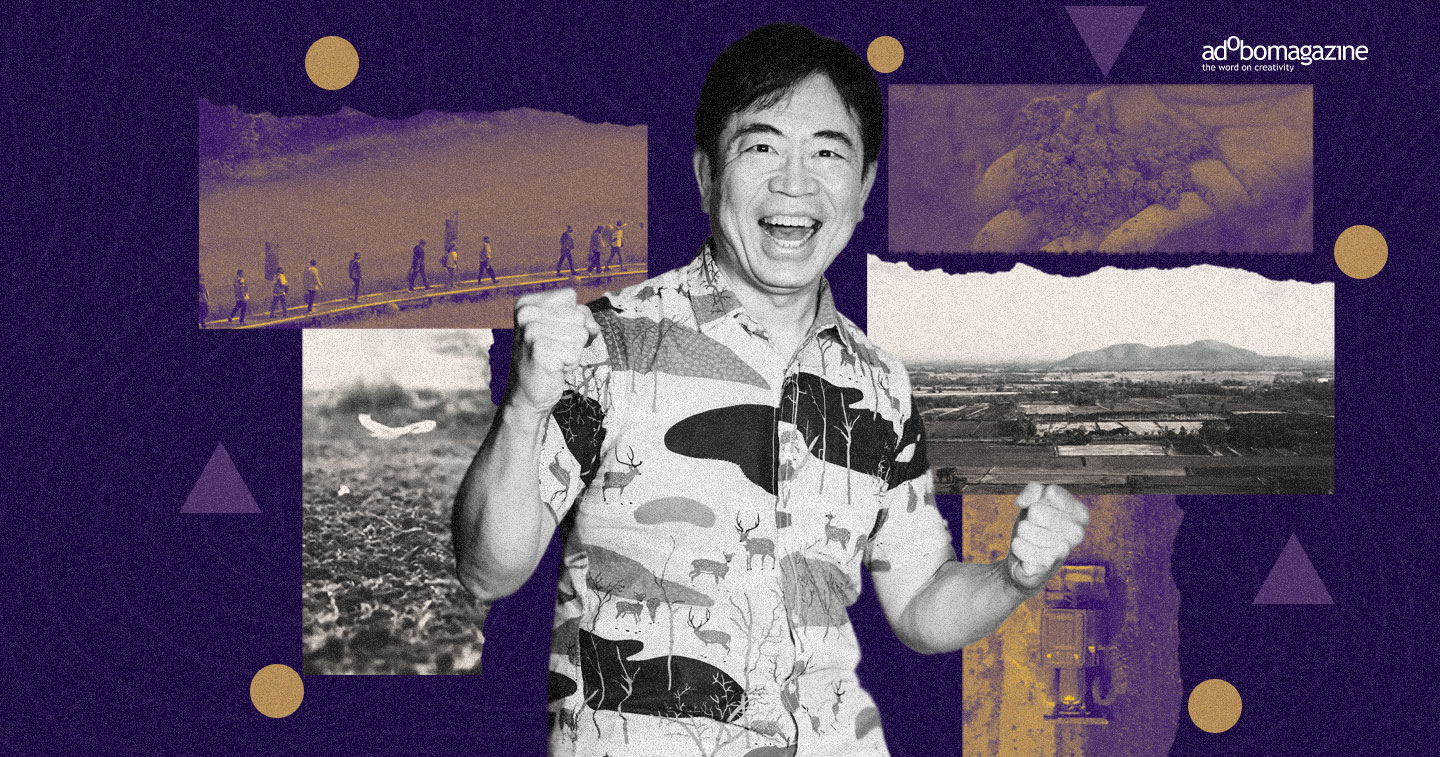
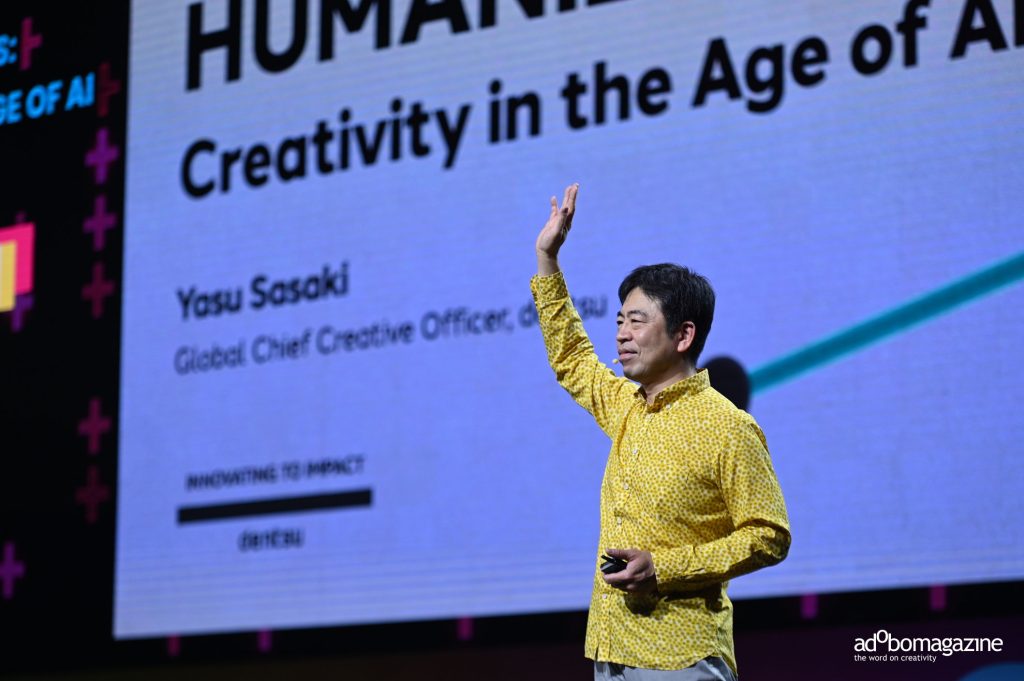
Yasuharu Sasaki doesn’t start with ideas. He starts with passion. It’s a distinction that matters, especially coming from someone who guides creative strategy across one of the world’s largest networks — dentsu — and has just finished weighing what makes work truly exceptional at ADFEST 2026.
“The most important thing is passion,” he says. “Humans have passion, which AI doesn’t have. We can passionately look into the world and search for the issues in the world, and passionately find a great idea which seems difficult to implement, and passionately make that happen.”
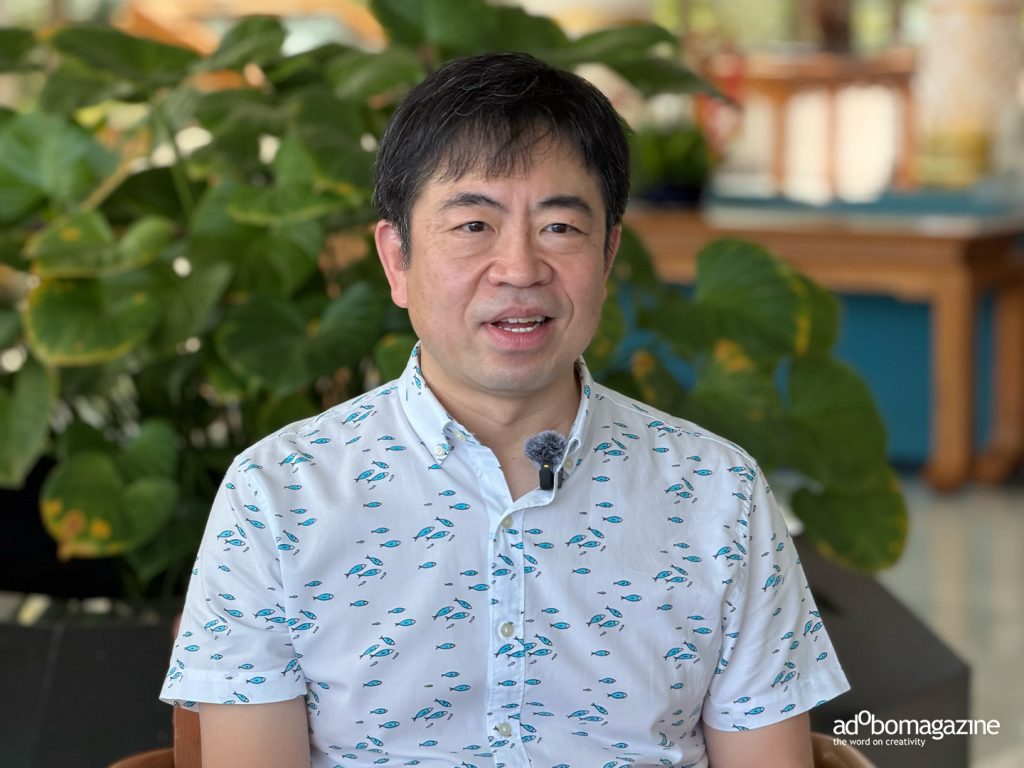
It’s a philosophy that runs deeper than corporate speak. Yasu, Global Chief Creative Officer at dentsu and Grand Jury President of ADFEST 2026, has spent his career watching what separates work that matters from work that merely exists. And his answer is consistent: passion is the operating system of everything else — something that AI can and will never generate.
When craft moved from making to meaning
In his career, Yasu has watched creative excellence transform. “Many years ago, creative excellence was about the execution quality,” he explains. “But now it’s moved to the meaning. It’s not just making great quality work, but how we can keep the meanings in the expression, how we can have a depth of the meanings.”
This shift shapes how he thinks about AI’s role in creativity. AI is capable of generating options at scale, but it operates on probability — the most statistically likely answer. Humans bring something else: the ability to hold a question, sit with discomfort, and chase an idea that seems illogical until it becomes inevitable.
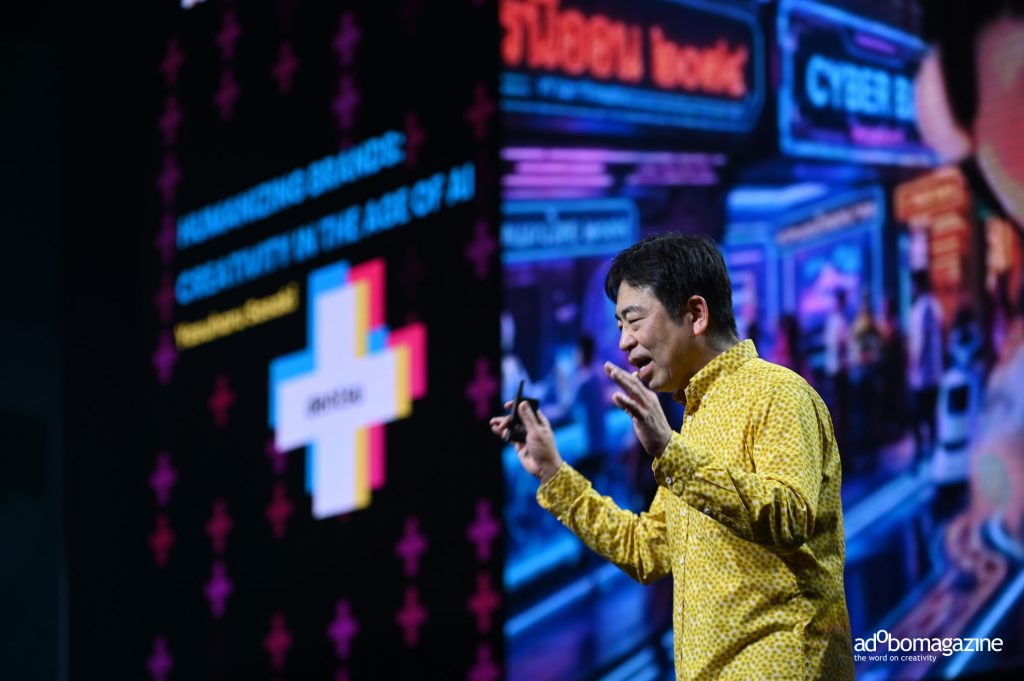
At dentsu, Yasu doesn’t try to keep AI at arm’s length. Instead, he inverts the relationship. “If we just use AI with a perfect prompt, the answer becomes very similar,” he notes. “So we often try to teach AI to enhance each other. AI will enhance our capability, and we can enhance AI’s capability. The important thing is to teach and enhance each other using AI.”
This isn’t about AI as a tool or AI as a threat. It’s about treating AI as a collaborator that needs education. Just as a copywriter can teach an AI system how great copywriting actually works — not just the syntax but the thinking — human creators can make AI smarter, more specific, more human.
The industry’s broken engine
But there’s a problem Yasu sees everywhere: the creative industry is burning through its young talent. “Now this industry, the people in this industry are very busy, so there is a lot to do, a lot to see,” he says. “Sometimes young people are not creating, but just executing. So there are less opportunities for their growth, then the young people will leave.”
This isn’t a soft retention issue. This is an existential threat. If young creators are only executing, they’re not learning how to think. They’re not developing the judgment, the intuition, or the passion that separates craft from labor.
“The important thing is to give the opportunity to grow and opportunity to take on bigger challenges with a lot of different talent,” Yasu insists. At dentsu Japan specifically, his approach is deliberate: assign copywriters projects beyond copy. Ask strategists to think about product innovation. Bring scientists and technologists into rooms with creatives. Create friction through diversity.
The most dangerous mindset a young creative can adopt, in his view, is the pursuit of quick answers. “They may be looking for the right answers quickly. They often just look for the right answer using the internet, using AI,” he warns. “But this industry is not just giving the right answer. We are looking for a surprising and unexpected, great answer.”
Asia’s unique vantage point
Yasu speaks with careful precision when discussing Asian creativity — perhaps because he’s lived the transition from regional player to global voice. “Asian creativity starts from empathy,” he observes. “Looking into people with a deeper understanding of people, we create ideas with a higher care about empathy, and also we create work with white space to think about.”
That white space — the incompleteness that invites participation — is distinctly Asian. Western design often follows a philosophy of closure and clarity. Asian approaches often embrace ambiguity, allowing audiences to complete meaning themselves.
“Sometimes it looks unclear to Western people, but that white space is very necessary to make people think about the issue together and join in that activity together,” says Yasu.
The industry has moved past catching up to the West. “We passed the catching up stage from the West, and now we have an original Asian stage to provide the creativity,” Yasu notes. “Asian creativity starts from empathy. We can look into very detailed, defined cultural issues and find solutions to solve that with cultural understanding, so that kind of defined point of view and defined question, we can bring a different question to the table.”
At dentsu, this philosophy shapes everything. The goal is to be “Asian partners to solve global challenges together with global clients.” Diversified perspectives, different skills — design, innovation, experience — and deep cultural understanding allow the network to offer solutions that resonate across cultures while remaining rooted in particular truths.
The creative future belongs to the unpredictable
When asked to complete a sentence about the future of creativity, Yasu offered a simple truth: “The future of creativity lies in the unpredictability of the human mind.”
In a world where AI can generate the probable, human creativity becomes a function of our capacity to imagine what shouldn’t be possible. Our willingness to ask questions that don’t have statistical answers. Our passion for exploring what’s uncertain. The machine learns from what exists. The human creates what doesn’t yet.
One of Yasu’s favorite campaigns at ADFEST came from a place of that exact thinking: “Soil Stay” by VML Thailand, which enables local people to nurture agricultural skills not through traditional education, but through collective exploration.
“People can bring their own soil and share the information together and enjoy the excursion in an area to learn about how to grow their skills,” he explains. “It’s not like one education, but kind of a sharing and collecting data together to create a greater impact in society.”
It’s work that couldn’t exist if someone had asked AI for the most efficient way to teach farming. It required passion and patience. The belief that the most powerful ideas come from creating space for people to discover them together.
That’s the creativity Yasu believes in. Not as a competitive advantage, but as a human responsibility.
READ MORE:
dentsu advances global business growth with full-scale rollout of ‘Culture For Growth’ program
Tra Mongkut Fertilizer, VML launch ‘Soil Stay,’ Thailand’s first data-driven farm-stay program