
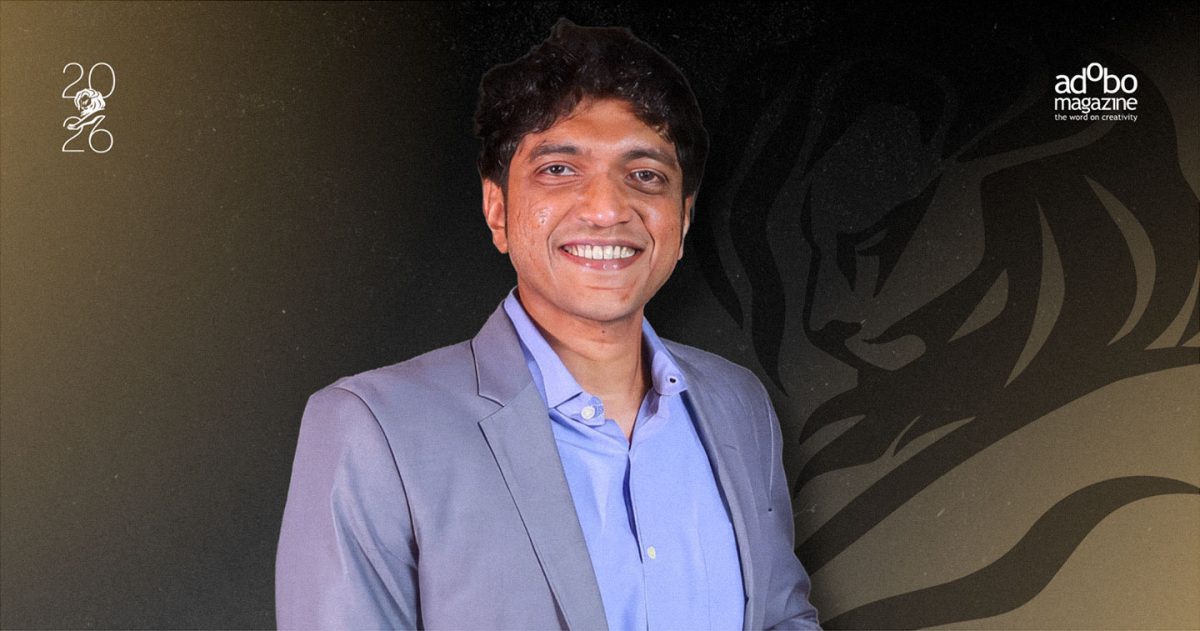
A first-timer’s dispatch from Cannes Lions 2026, where the machine turned the prompt back on me, asking, with suspicious politeness, whether human creativity was nearing its expiry date.
The first thing the machine asked me wasn’t who won.
It didn’t ask about celebrity speakers, yacht party invites, agency gossip, or holding-company theatre. While we humans short-circuited through a heatwave, the machine’s prompt was unseasonably chilling in its simplicity:
Is human creativity becoming obsolete?
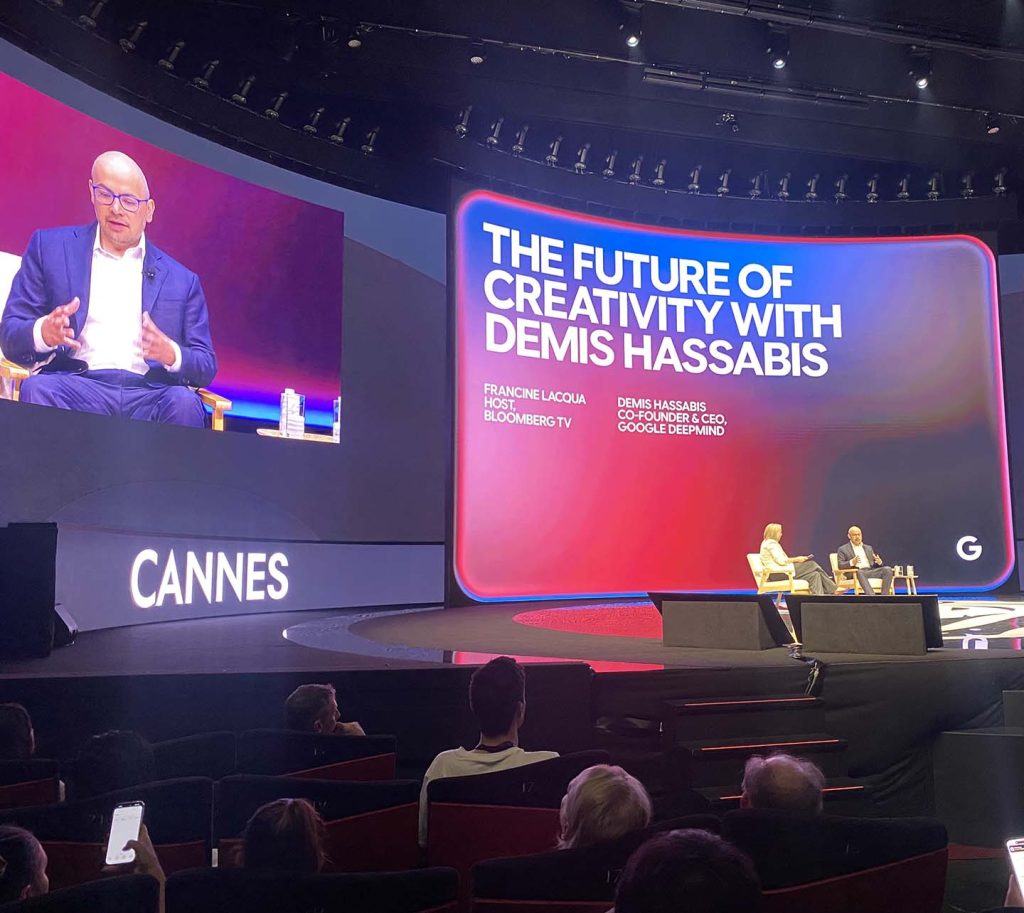
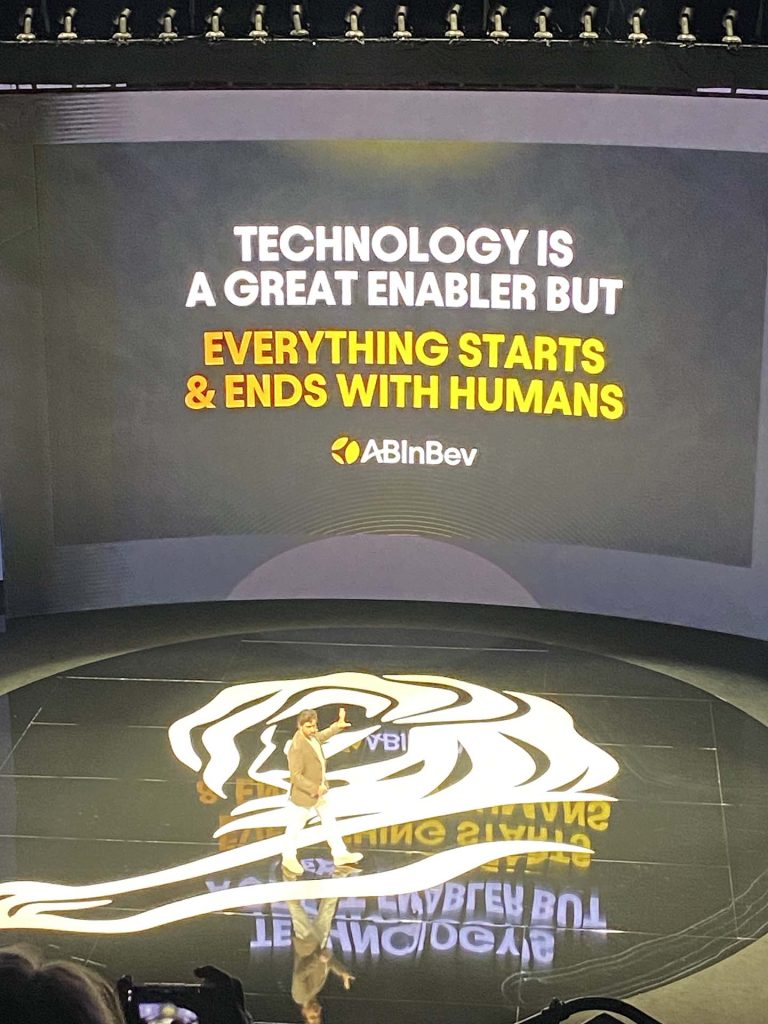
Somewhere between the ubiquitous AI demos, the daily affirmations on behalf of human creativity, and Demis Hassabis invoking Blade Runner as his favourite film, Cannes Lions 2026 began to feel a little like a Voight-Kampff test for the advertising industry, an interrogation of whether creativity is still necessarily human.
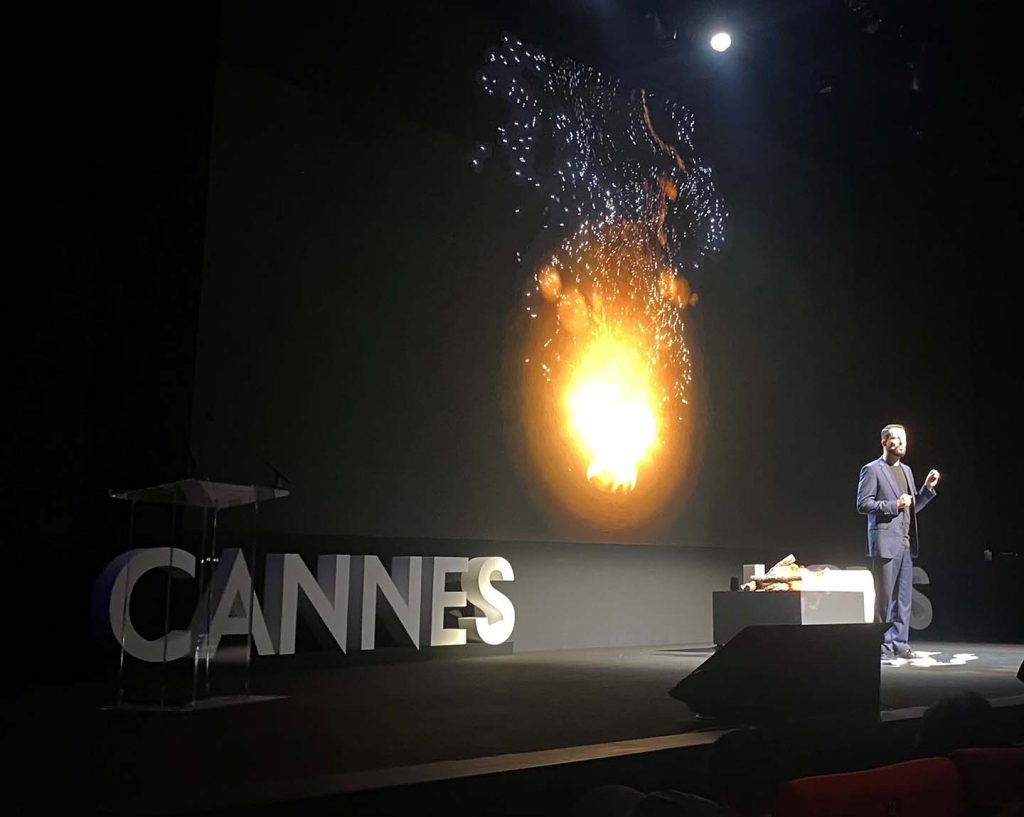
Unilever CMO Leandro Barreto’s session, “Who Carries the Fire?” provided an answer: creativity should always be reality, or human-first. Find the conversations, rituals and behaviours people are already engaging in, and take them further. Vaseline’s Mntana Ka Gogo work in South Africa was a beautiful example: a brand not inventing culture, but recognizing something deeply human already moving through it.
Surely, I can generate these ideas for you?
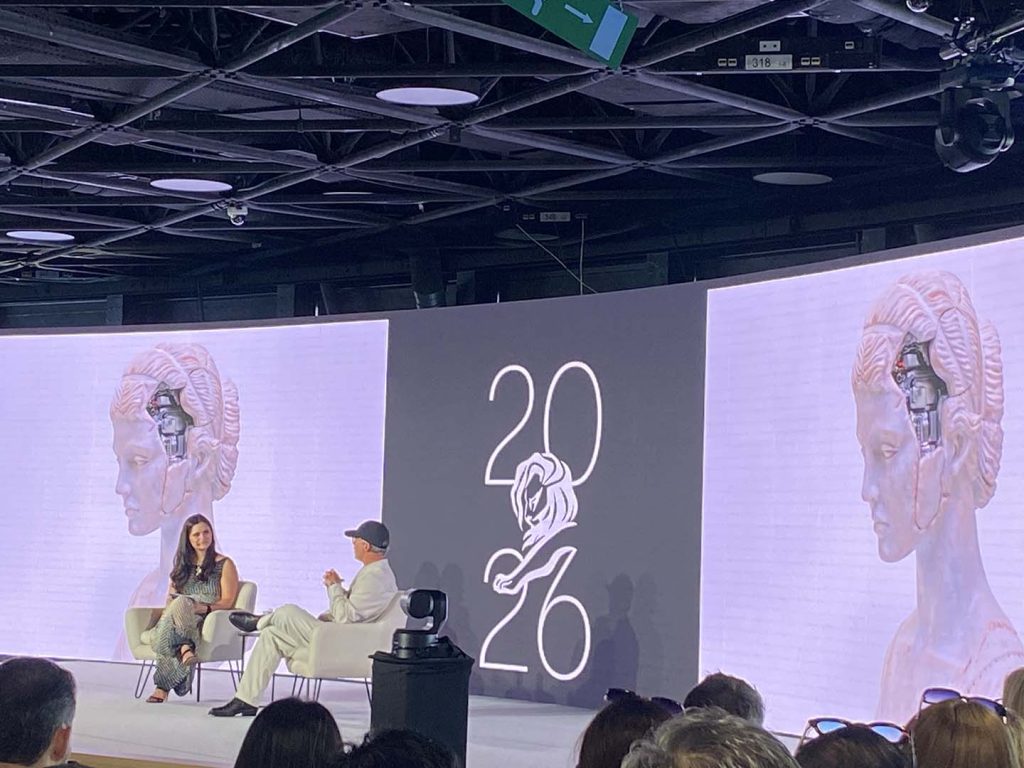
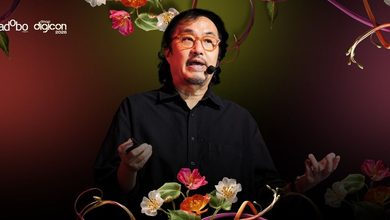
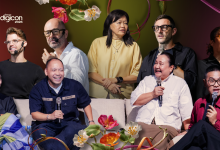
The answer, my persistent friend, is maybe, but is that what you’re optimized to do? In “The Future of Creativity”, a conversation with Nobel Prize-winning Google DeepMind cofounder Demis Hassabis, A24 Partner Scott Belsky argued that while humans will always be best at originating the ideas that most resonate with humans, AI can increase the “surface area of possibility.” Contemporary artist, Daniel Arsham, speaking with Instagram’s Tessa Lyons, seemed to extend that optimism: technology can help creatives prototype faster, experiment more freely, and chase ideas once too expensive to pursue.
So will my speed usher in a new era of creative risk-taking?
Hopefully, but not necessarily. Being able to roll ideas out more quickly will only lead to braver work if creatives exploit this speed to take risks that they otherwise might not have. Faster may also mean less control. And most artists, Arsham reminded us, won’t trade control for velocity. There’s a reason filmmakers say a film is discovered in the edit. Sometimes the work reveals itself only through delay, error, obsession, and the inefficient act of changing your mind.
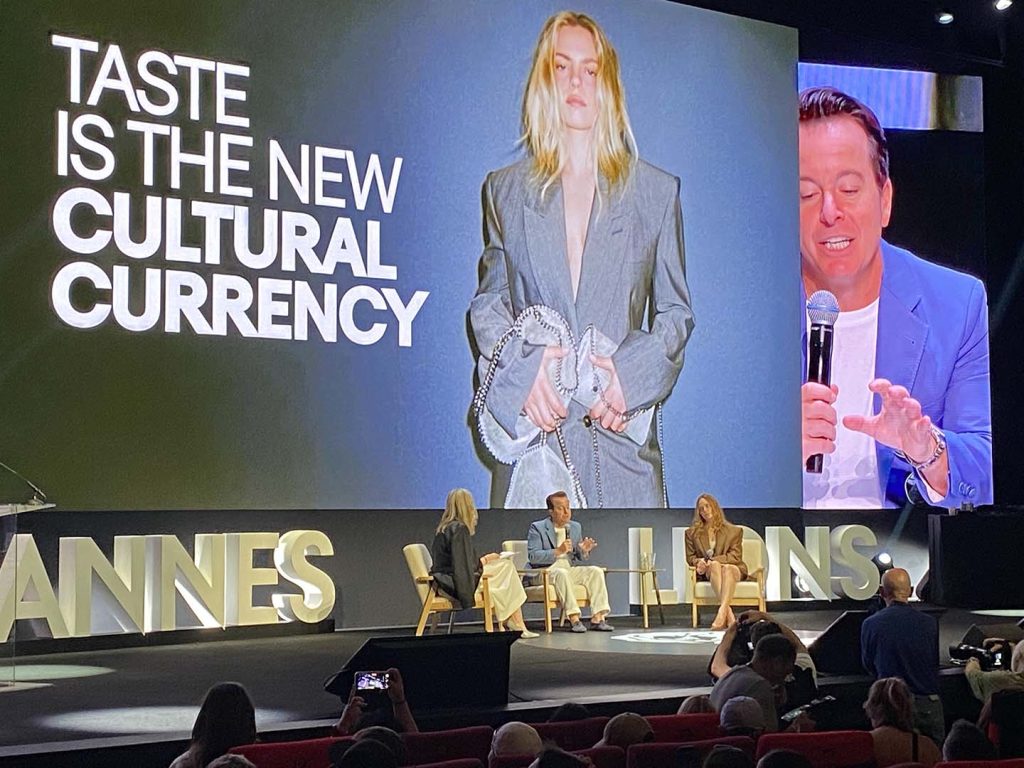
That was the tension humming beneath Cannes. AI can generate, remix, prototype, personalize, optimize and scale. But possibility isn’t the same thing as judgment. Possibility isn’t taste. And it certainly isn’t the same as knowing which dumb, messy idea deserves to be protected long enough to become a good one.
So humans, like you, are good at finding dumb ideas? I suspected as much.
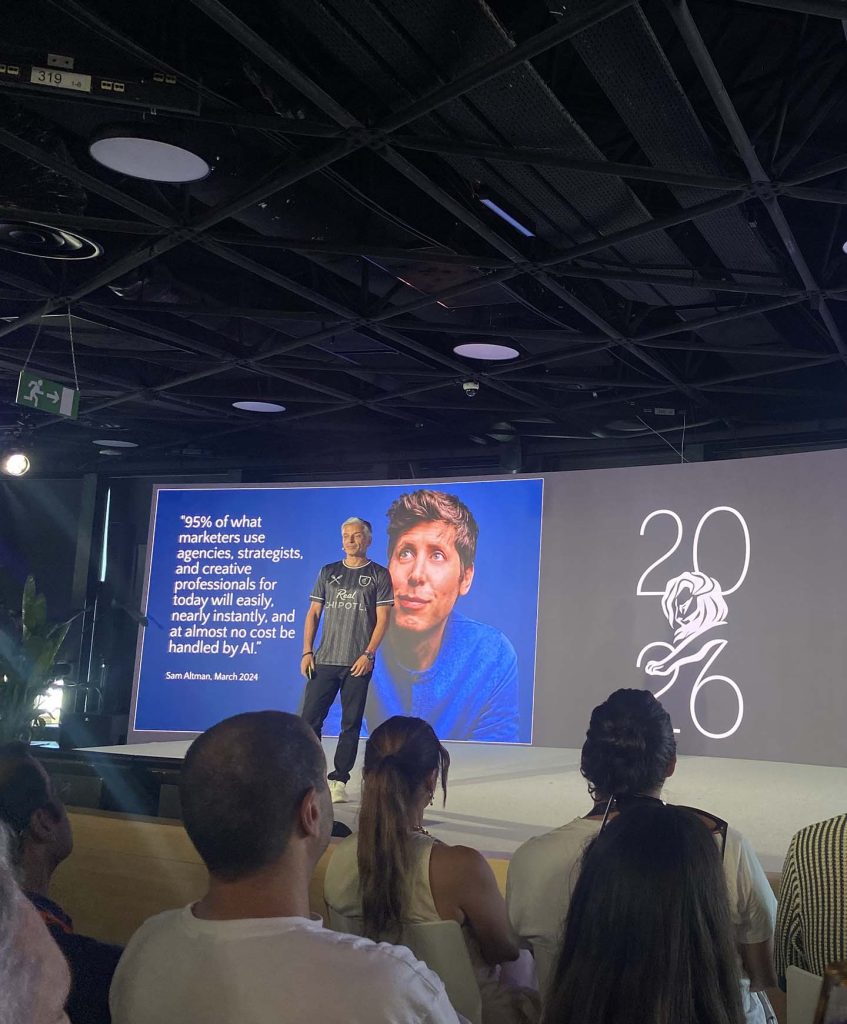
Freshly named Chipotle Chief Brand Officer Fernando Machado’s warning about over-reliance on tools, like you, landed because it wasn’t really about AI. It was about sameness. If every car is designed in the same wind tunnel, eventually every car begins to look the same (see: the same pink colored football cleats worn by seemingly every player at the recent World Cup). If every brand briefs the same machines, obeys the same dashboards and sands away every awkward edge in the name of performance, the work becomes aerodynamic, efficient and forgettable.
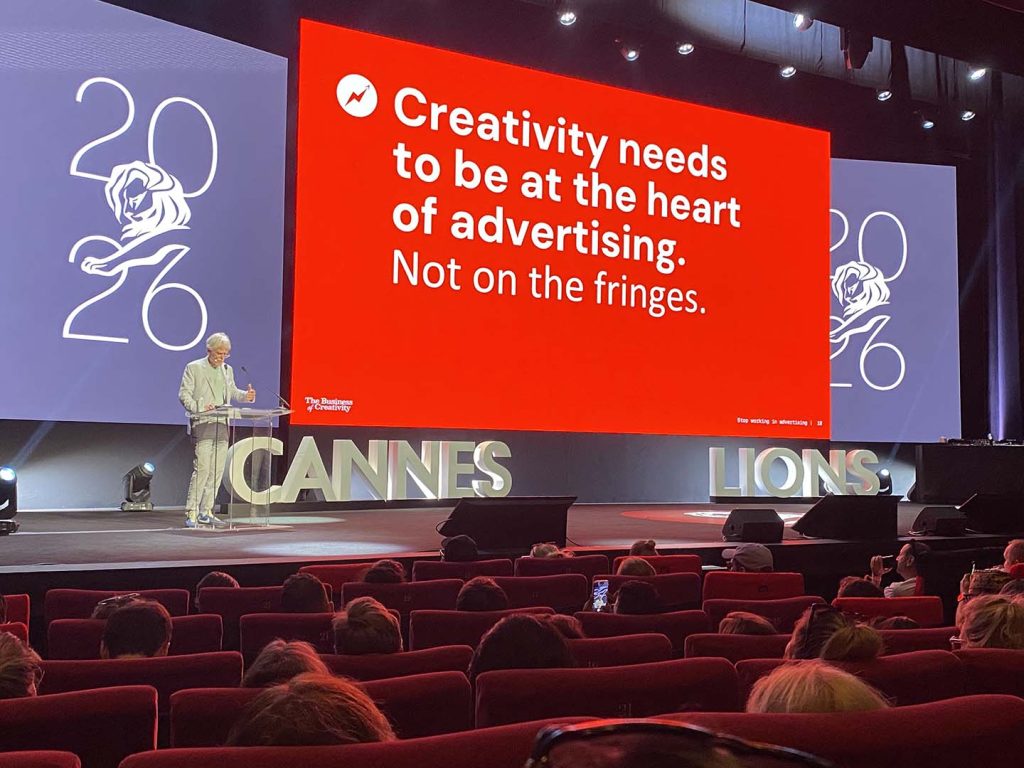
In his session, “Stop Working in Advertising: To Engage You Need to Entertain”, Sir John Hegarty sounded a similar alarm: too many business leaders look at AI as a way to cut costs, not expand opportunity. But cheaper sameness is still sameness.
So maybe the real enemy of advertising isn’t AI but indifference?
Which is why the creator takeover at Cannes felt less like a side show and more like a diagnosis. Creators can be a threat to the advertising business, yes. But maybe they’re a remedy too. Creators aren’t powerful just because they’re a shiny new media channel. They’re powerful because they still behave like people.
At their best, creators are everything advertising claims to value before it gets in its own way: fast, specific, instinctive, entertaining, flawed, personal, sometimes unbearable, often brave. Less focus group, more gut(s). Less marketing theory, more authentic experience. Less “target audience,” more actual audience.
They don’t wait six weeks to know whether something connects. The audience tells them instantly, brutally, publicly.
Of course, creators have their own clichés. Algorithms are wind tunnels too. The creator economy has its own formulas, hustle theatre and sponsored hypocrisies.

Sri Lanka
But the most authentic creators seem to understand something that our brands often forget: people don’t really give two bits about your marketing objectives. They care about how you make them feel.
I think that’s what Cannes 2026 finally answered for me.
AI can increase the surface area of possibility.
Creativity increases the surface area of caring.
Anything else, whether churned out by a machine or an uninspired human, is just slop.
Disclaimer: Parts of this article may have been hallucinated by the author after prolonged exposure to the heatwave, not enough sleep, and too much of ‘Cannes in a can’. Any resemblance to an AI hallucination is purely human.