
At 2026 Cannes Lions International Festival of Creativity, the Sustainable Development Goals Lions recognized creative work that went beyond raising awareness to create measurable, lasting impact.
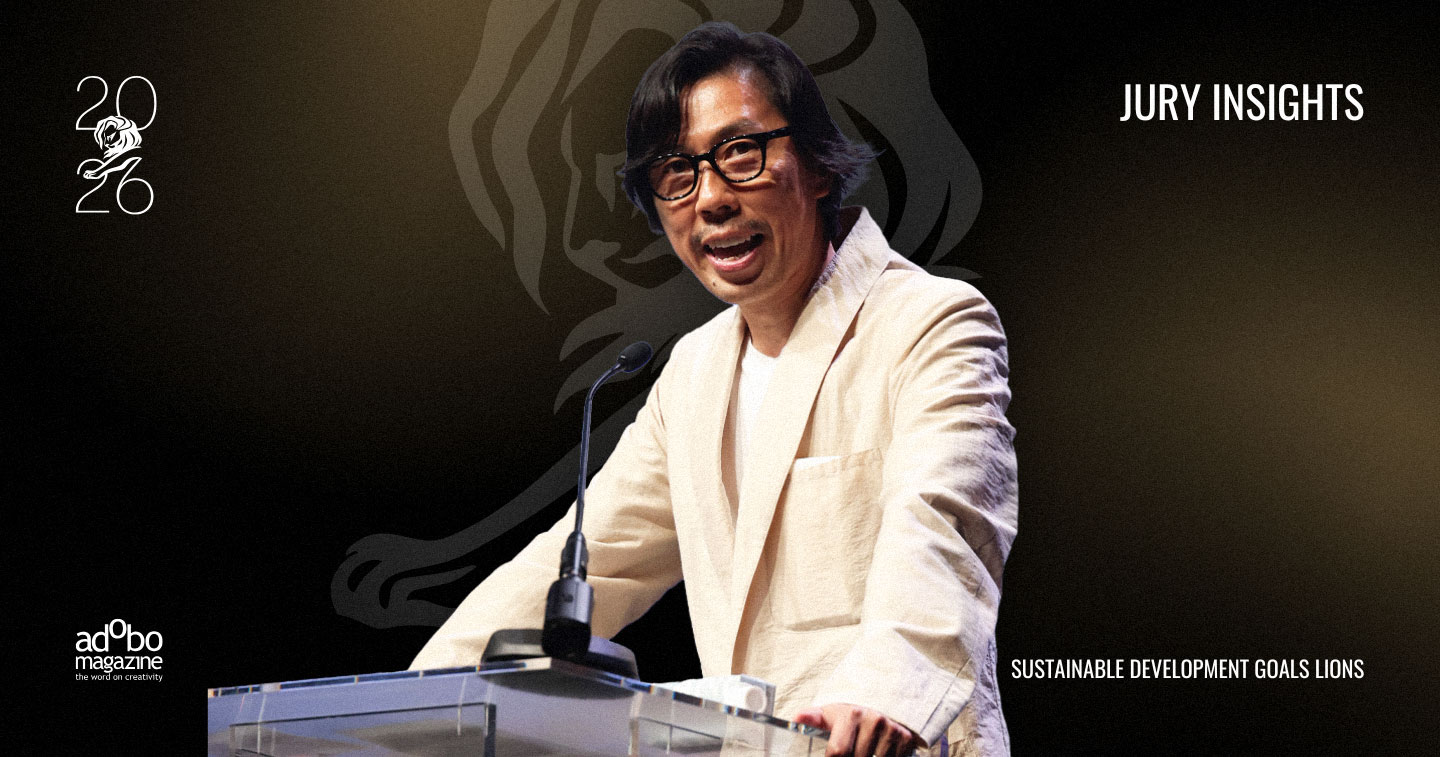
For Jury President Kazoo Sato, Chief Creative Officer and Chief Executive Officer of Earth Centric Design Japan, the strongest entries weren’t simply memorable campaigns – they were ideas designed to become part of everyday systems, capable of creating change long after the festival ended.
Speaking exclusively to adobo Magazine, Sato shares why this year’s jury looked beyond short-term success and what creativity must deliver as the world approaches the UN Sustainable Development Goals’ 2030 deadline.
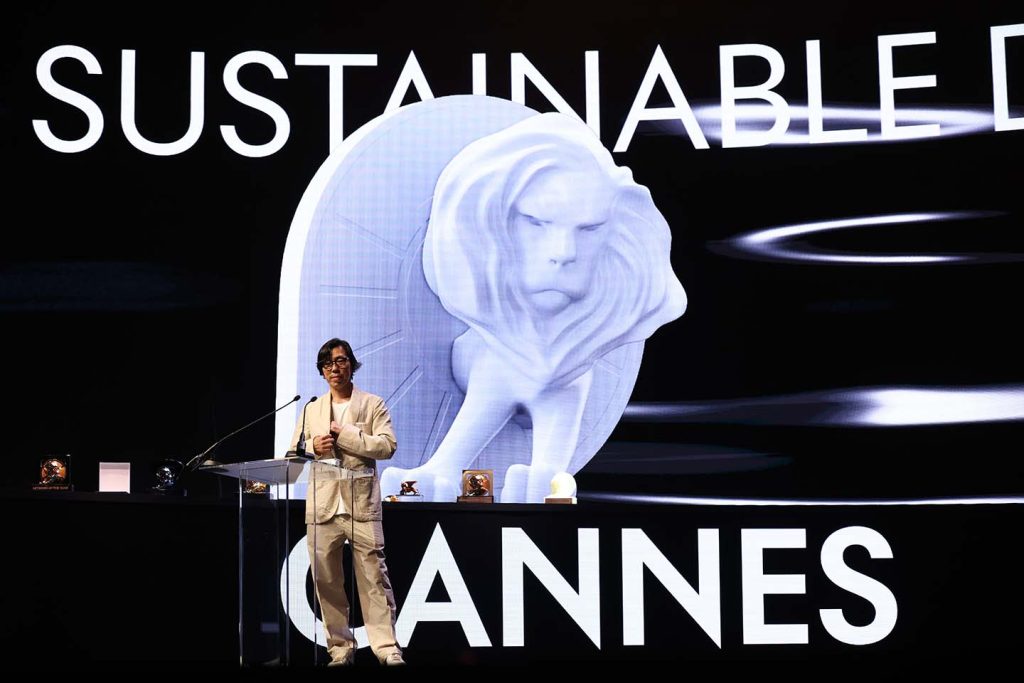
That philosophy also defined his remarks during the SDGs Lions ceremony, where he questioned the industry’s tendency to celebrate ideas that quickly fade after making headlines. While many campaigns claim to have changed behavior or the world, Sato challenged creatives to ask a more important question: “Will this idea last?”
For the jury, lasting change – not fleeting attention – became the benchmark for recognizing the year’s most impactful work.
adobo Magazine: What criteria were most important in selecting the Lion-deserving campaigns in the SDGs category at Cannes?
Kazoo Sato: Our discussions consistently came back to three questions. First, did the work go beyond awareness and create real change? Second, did it have the potential to change the system behind the problem rather than simply address its symptoms? And third, could the impact grow and last over time?
For me, creativity is entering a new chapter. For many years, we celebrated creativity for changing perceptions. Today, the best work is beginning to change systems.
adobo: What were the most prevalent SDG issues observed from the entries, and what trends did you observe?
Sato: The topics ranged from climate action and healthcare to inclusion and economic opportunity. But the bigger trend wasn’t the issues themselves—it was how creativity is evolving.
We saw fewer awareness campaigns and more ideas that became products, services, policies or business models. Another noticeable trend was removing trade-offs. Instead of asking people to choose between sustainability and economic growth, the strongest work showed that creativity can generate value for both.
adobo: Can you tell us about a couple of the campaigns that deserved Gold, and what were the areas for debate?
Sato: Two Gold winners stood out for different reasons.
“The Māori Roll” demonstrated how creativity can strengthen democracy by redesigning the electoral process itself, making participation more accessible for Māori communities.
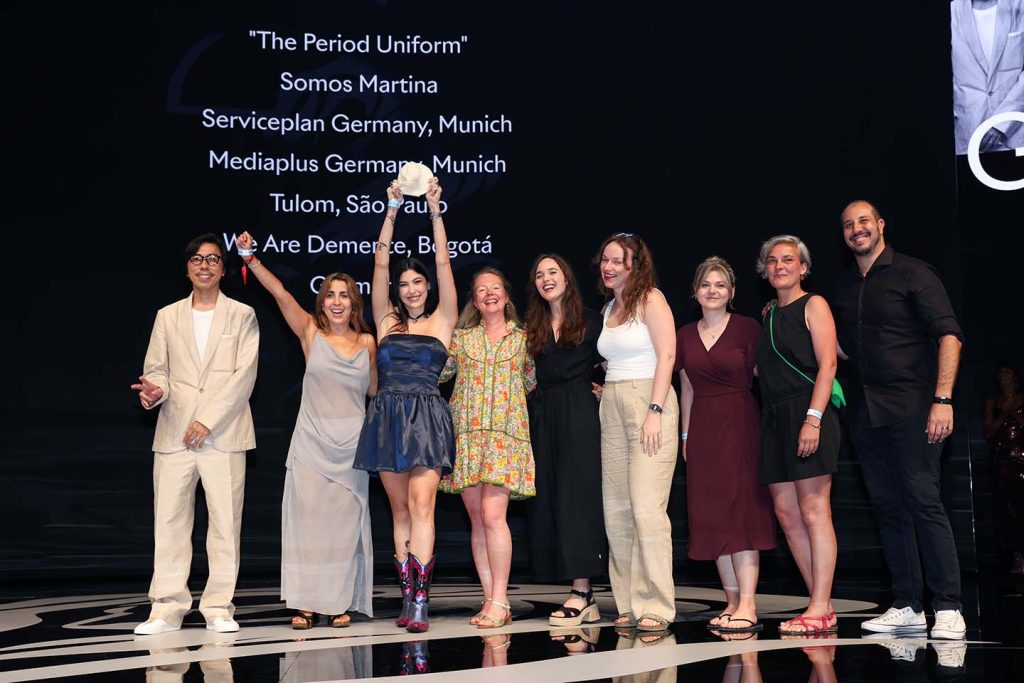
“The Period Uniform” showed that innovation isn’t always about inventing something new. Period underwear already existed, but embedding it into the school uniform system gave the idea the potential to become part of everyday life rather than remain a campaign. For the SDGs, practical ideas that become part of a system are often more powerful than awareness alone.
The debate was rarely about creativity itself. It was about whether an idea had the potential to become a lasting system rather than a successful campaign.
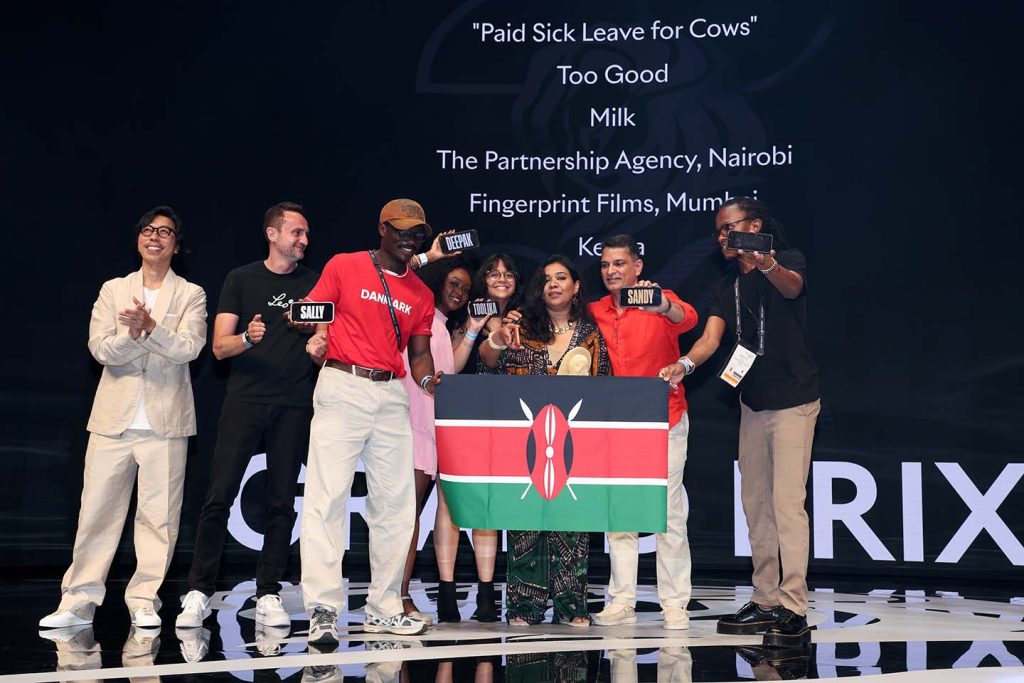
adobo: The Grand Prix in Sustainable Development Goals went to “Paid Sick Leave for Cows Too.” In your words, why did it deserve the Grand Prix?
Sato: Besides our three judging criteria, the deciding factor was the originality of the idea.
The concept is brilliantly simple yet completely unexpected. It transforms an apparent trade-off between animal welfare and economic growth into shared value for both.
More importantly, it demonstrates that sustainable growth doesn’t always require sacrifice. Sometimes it comes from redesigning the system itself. That combination of a powerful creative idea and a replicable, scalable system made it a deserving Grand Prix.
adobo: What are your observations on the Cannes Lions Festival of Creativity this year?
Sato: One of the most exciting developments this year was the growing convergence of creativity and science.
AI appeared in many entries, but in the SDGs category I believe its greatest value lies not in generating creative output, but in helping us understand complex challenges, define problems more accurately, and measure impact with greater confidence. It has the potential to make creativity not only more imaginative, but also more evidence-based.
I was also encouraged by the growing collaboration between agencies and climate-tech companies. Projects like “Faroe Islands Space Program” and “Birdwatcher” demonstrated how technological innovation becomes far more powerful when combined with compelling narrative design.
Finally, Kenya’s first-ever Grand Prix was a reminder that great ideas can come from anywhere. I hope this recognition inspires more creativity across Africa, and that ideas like this travel beyond their country of origin to become best practices around the world.
As the industry looks beyond Cannes Lions 2026, Sato believes the next era of creativity will be defined less by campaigns that generate attention and more by ideas that become embedded in the systems people rely on every day.
For him, the most successful creative work is not measured by how loudly it launches, but by whether it continues creating change years after the applause has faded.
Read Sato’s full Cannes Lions 2026 speech below:
Every year at Cannes, we celebrate incredible ideas.
And in the entry videos, we often hear the same things.
This changed the world.
This changed behavior.
This was the world first of its kind.
And of course, many of those claims are true.
And I’m sure they have created real impact to the world we live in.
But I always had one question.
How many of them are still alive today?
They became famous.
They inspired people.
But many of them disappeared a year later.
That is why our jury spent a lot of time discussing one simple question.
Will this idea last?
Because the Sustainable Development Goals have a deadline, 2030.
And we have only four years left.
What we need now is not another moment. We need lasting change.
So what we were looking for was work that goes beyond awareness.
Work that creates real change.
Work that changes behavior, culture, and even the systems that shape our society.
And the work we are celebrating tonight showed us that this is possible.
So tonight, I want you to give it up everyone coming to pick up the trophies.
Because the work they created, will continue creating change, long after this trophy is handed out.