
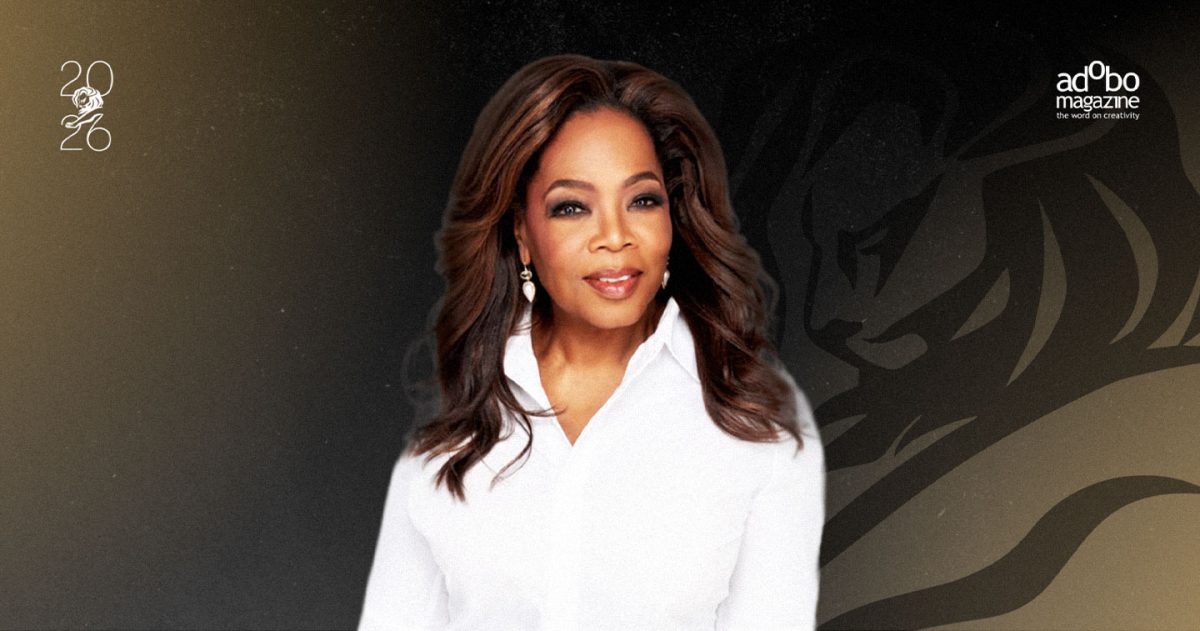

At the Cannes Lions International Festival of Creativity, Oprah Winfrey brought the focus back to something far more foundational: intention. Receiving the 2026 Cannes LionHeart Award, she joined Phil Thomas at the Lumière Theatre for a conversation that was less about milestones and more about the principles that have guided her across media, philanthropy, and cultural influence. Over three decades, she has built one of the most enduring personal brands in modern culture, not through strategy first, but through alignment, consistency, and purpose. That, she made clear, is where everything begins.
‘My heart is my brand’
When Phil asked how she built “Oprah” into one of the most recognizable personal brands in the world, her answer came without hesitation: she never set out to build a brand at all. For years, she resisted the term entirely. When The Oprah Winfrey Show became a national phenomenon in the late 1980s and people began describing her work as a brand, she felt the word reduced something she experienced as deeply human and relational. Only later did she reframe it.
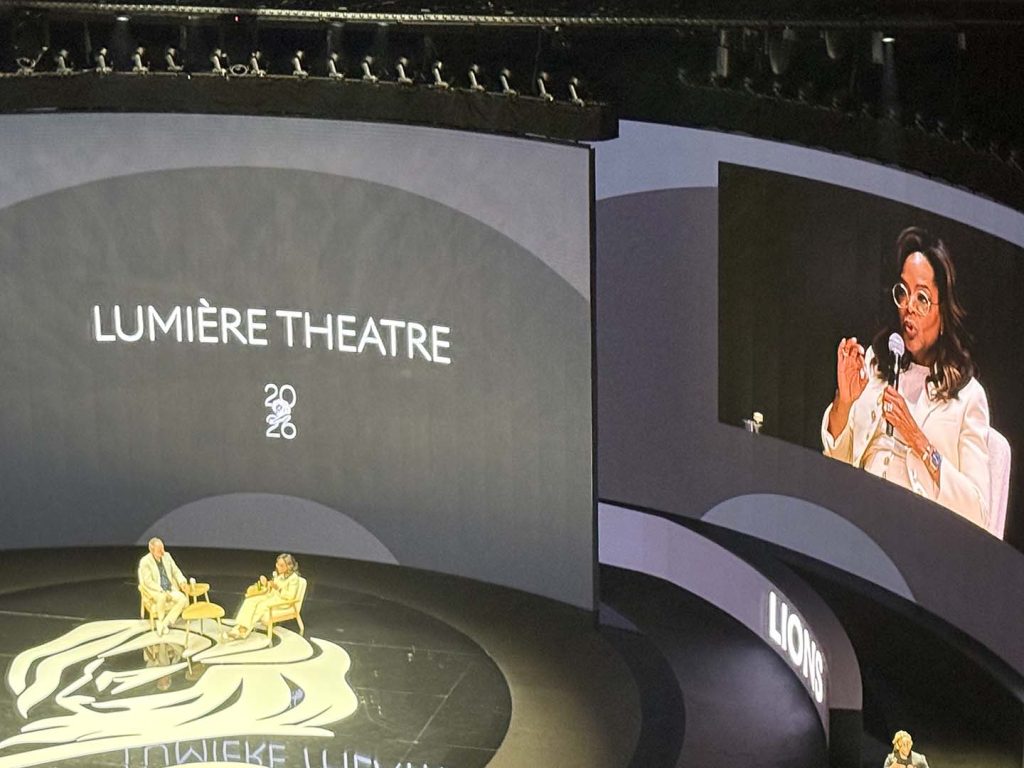
“My heart is my brand,” she said, a statement that distilled the entire arc of her career into a single idea. What has sustained her influence is not visibility alone but consistency of values, the refusal to separate what she believes from what she builds. Whether through television, podcasting, or philanthropy, she explained, everything originates from the same place: the heart, expressed through action.
Authentic empowerment starts with alignment
Oprah traced the intellectual turning point of this philosophy back to The Seat of the Soul by Gary Zukav, which she read in 1989 and credits with giving language to something she had already begun to understand intuitively. The book’s idea of authentic empowerment — “when your personality comes to serve the energy of your soul,” became a framework for how she approached decision-making in both life and work. For Oprah, empowerment is not rooted in external validation such as ratings, subscriptions, or awards, all of which fluctuate, but in alignment: the degree to which your work reflects your inner truth. That alignment, she suggested, is the only sustainable form of power, because it cannot be taken away or diminished by external conditions. In a room full of marketers and creators, the implication was direct: influence without alignment is inherently fragile.
Intention is everything
A defining thread of the conversation was intention, which Oprah described not as philosophy but as practice. Before every significant interview or show, she would ask her team one question: “What is the intention?” Afterward, she would ask whether it had been fulfilled. This discipline reframed her work from output-driven entertainment into purpose-driven storytelling. She illustrated this through an interview with a mother whose daughter had been murdered by an abusive boyfriend. Rather than center the violence itself, Oprah asked why the mother had agreed to appear.
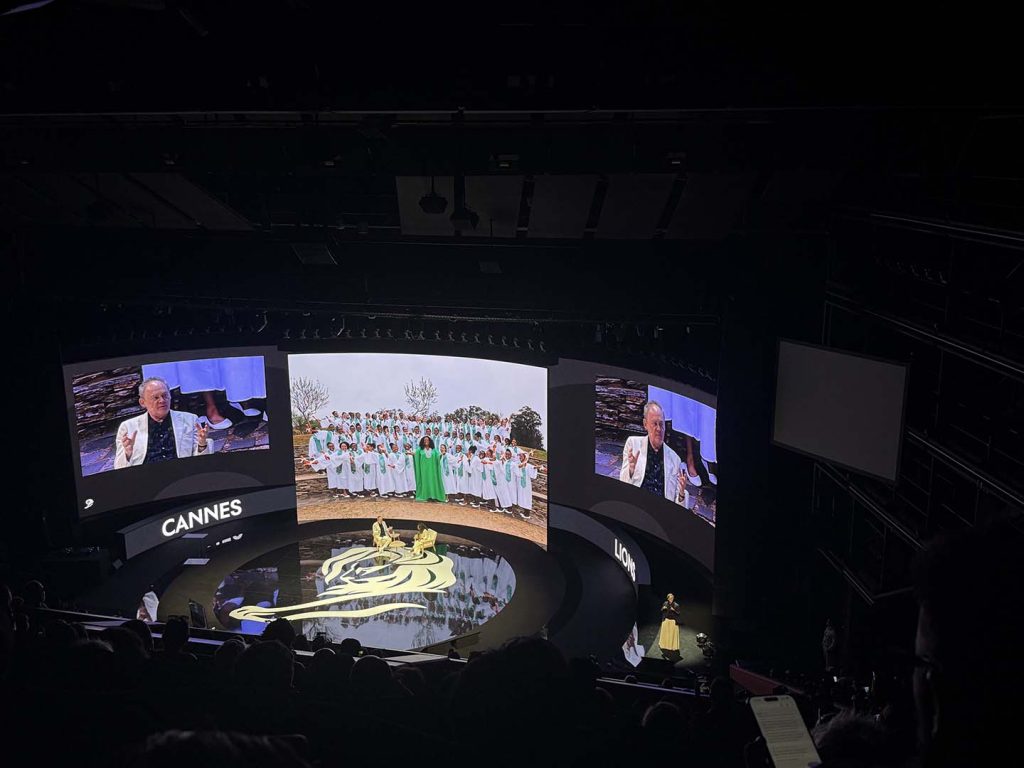
The answer—that she wanted the world to remember her daughter’s life, not just her death—shifted the entire editorial frame. The interview became about presence, memory, and humanity rather than spectacle. For Oprah, this is the practical difference intention makes: it determines whether a story extracts or serves, and whether attention is consumed or transformed.
Validation is the common human need
Across decades of interviewing global figures and everyday individuals, Oprah observed a recurring pattern that transcends status, geography, or profession: a universal need for validation.
Beneath ambition, conflict, or performance, she argued, people are asking the same underlying questions: Do you hear me? Do you see me? Does what I say matter?
Even the most powerful figures, she noted, often seek reassurance in quieter moments after public appearances—not for approval, but for confirmation of connection. This insight reframed communication itself: not as persuasion, but as recognition. For creators and communicators, it suggests that the most resonant work does not simply demand attention, it reflects lived experience back to people in a way that makes them feel understood.
Listening is how you build trust
Oprah shared that one of the most formative habits in her career was staying behind after tapings of The Oprah Winfrey Show to speak directly with audience members. What began as casual interaction evolved into a consistent practice of listening — asking where people came from, what they were carrying, and what they hoped to take away. These conversations became an informal but essential feedback loop, shaping editorial direction far more authentically than traditional research ever could.
In her view, listening is not passive; it is the foundation of trust. It keeps creators close to the reality they claim to represent and prevents storytelling from drifting into abstraction. In an era dominated by data dashboards and audience metrics, she positioned proximity to people as the more reliable intelligence system.
Service gives success meaning
The discussion then turned to philanthropy and the Oprah Winfrey Leadership Academy for Girls, which Oprah framed not as an extension of her career but as a continuation of her personal history. Growing up in poverty in Mississippi without running water or electricity, she recognized her younger self in the girls she later sought to support. The decision to build the school came from lived memory rather than abstract giving. She recalled one of the most formative experiences of her childhood: discovering there was no Santa Claus, only for nuns to arrive at her home with gifts that same night.
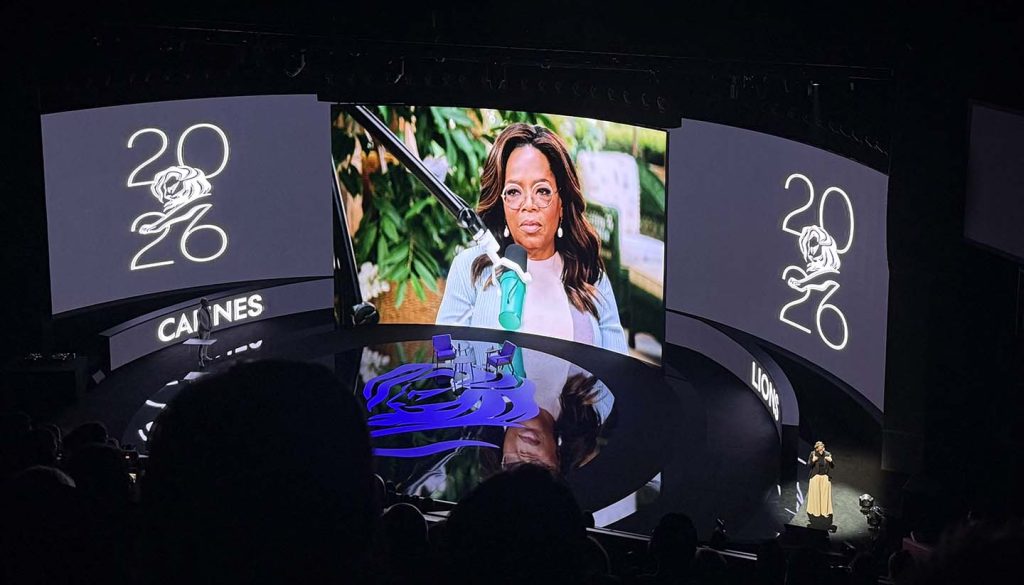
What stayed with her was not the objects themselves, but the act of presence — someone showing up to communicate that she mattered. That experience shaped her understanding of service as recognition rather than transaction, and as a way of restoring visibility to those who are often unseen.
Your legacy is every life you touch
Toward the end of the conversation, Oprah reflected on a moment with Maya Angelou after opening the academy, when she told Angelou she believed the school would define her legacy. Angelou rejected the idea. Legacy, she reminded her, is never singular or contained in one institution or achievement. It is cumulative and lived—it exists in every life you influence, directly or indirectly.
For Oprah, this reframed success away from permanence and toward impact. Legacy is not what is named after you, but what continues because of you: the decisions people make, the paths they choose, the perspectives that shift because something you said or built entered their lives. In Cannes, that idea landed not as sentiment, but as a challenge to a room built on influence and creative output.
The message was clear: the work matters, but its deeper value lies in what it makes possible for others. And all of it, she reminded the audience, begins with intention.